Standing Deep Breathe And Prayer Pull
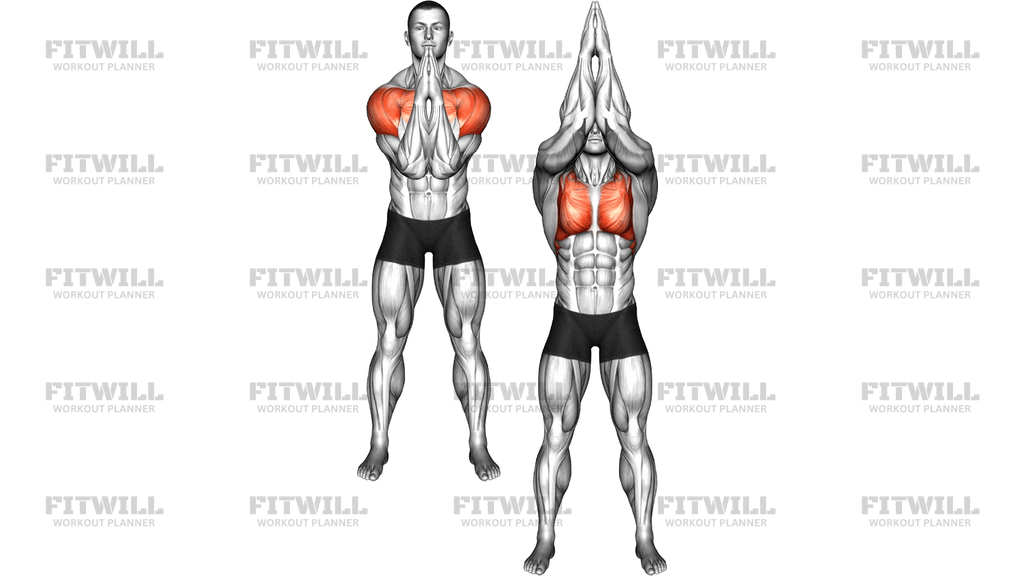
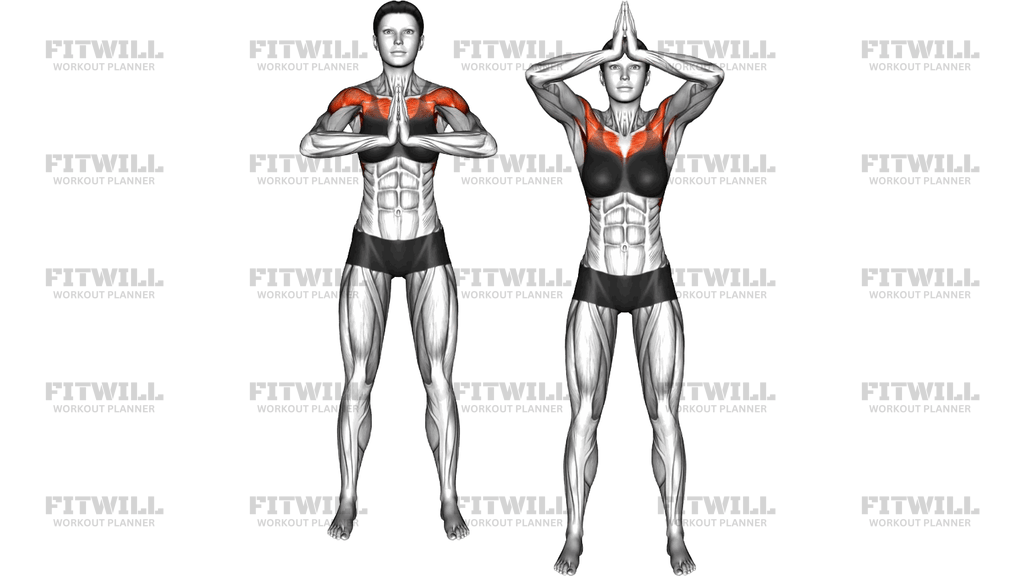
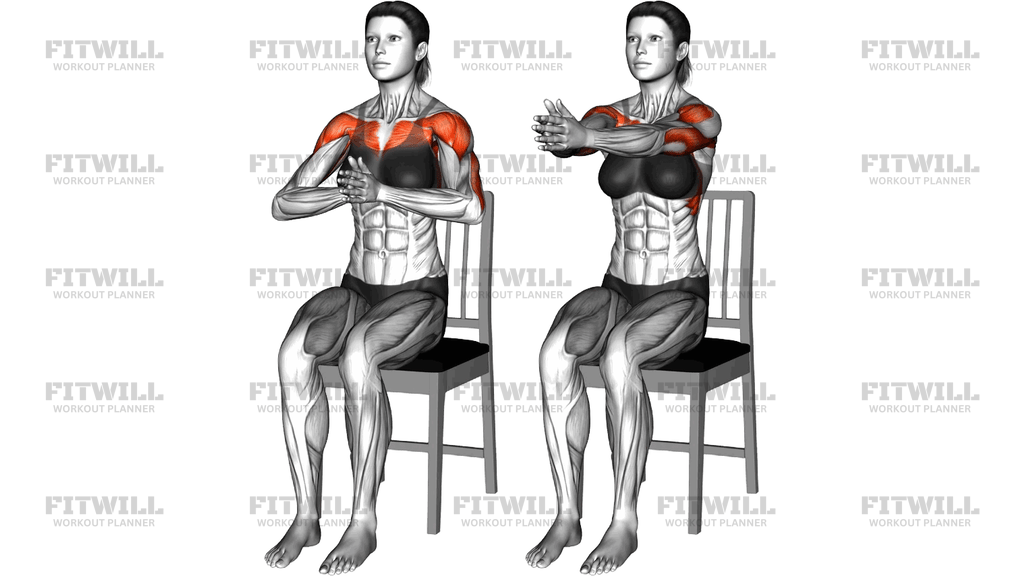
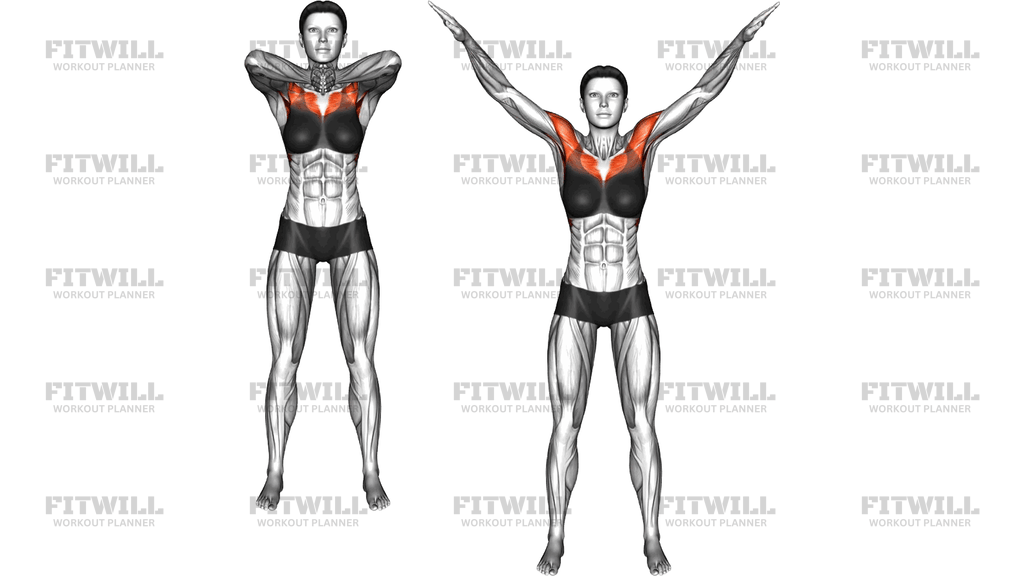
The Standing Deep Breathe And Prayer Pull is a bodyweight chest-opening drill that pairs a slow, full inhale with a deliberate sweep of the arms from a prayer position at the chest out to a wide V overhead. Standing tall with your feet about hip-width apart, you press your palms or interlaced fingers together in front of your sternum, take a deep breath in, and as you breathe out you pull the hands apart and raise the arms up and out until they stretch diagonally above your shoulders. It looks simple, but the combination of rib expansion and arm travel gives the chest and front shoulders a genuine opening effect.
This movement is especially useful for people who spend long hours sitting at a desk, driving, or hunched over a phone. Those habits pull the shoulders forward and shorten the pectoral muscles, which gradually rounds the upper back. The Standing Deep Breathe And Prayer Pull works in the opposite direction: it lengthens the chest, encourages the shoulder blades to settle back, and trains you to fill the rib cage fully instead of shallow breathing into the upper chest. Because it requires no equipment and very little space, it fits easily into a morning routine, a warm-up before pressing exercises, or a cooldown after upper-body training.
The main muscles involved are the pectorals, particularly the upper chest fibers near the collarbone, along with the front of the shoulders. The breathing component also brings the muscles between the ribs and the diaphragm into play, and holding a tall standing posture quietly engages the core and the muscles along the spine. You are not forcing a heavy load here; the value comes from range, control, and breath timing rather than effort or speed.
Setup matters more than it first appears. Your feet position, spinal posture, and hand placement all determine how much opening you actually get. If you stand slack with a rounded upper back, the arms can move but the chest gains little. Stand with weight evenly distributed, ribs stacked over the pelvis, and start each rep from a genuine prayer position at the breastbone so the pull-apart travels through a full, symmetric path.
To execute it well, keep the movement slow and synced to your breathing: inhale deeply at the prayer position, then exhale as the arms sweep out and up, and finish each rep with a brief hold in the wide V before drawing the hands back. Avoid shrugging toward the ears and avoid arching the lower back to lift the arms higher. Most people do well with five to ten slow repetitions, and you can use it daily since the demand on the body is gentle and recovery is rarely an issue.
Safety-wise, this is a low-risk movement, but move within a comfortable stretch. If you feel pinching at the front of the shoulder or strain in the neck, reduce the height of the arms or narrow the angle of the V slightly. Keep the jaw and face relaxed as you breathe, and let the exhale guide the arm sweep rather than muscling the arms into position.
[ Workout Log & Planner ]
Put your next workout in Fitwill
Keep your plan and training log ready when you are.


Instructions
- Stand upright with your feet about hip-width apart, weight spread evenly across both feet, and let your arms hang relaxed for a moment.
- Bring your palms together, or interlace your fingers, in front of your chest at sternum height so the hands rest lightly against the breastbone in a prayer position.
- Draw your shoulders back and down, lengthen the back of your neck, and stack your ribs over your hips so you are standing tall without leaning backward.
- Inhale slowly and deeply through the nose, feeling the rib cage expand sideways and into the chest while the hands stay pressed together.
- As you begin to exhale, pull the hands apart and sweep both arms out to the sides and upward along a wide diagonal path.
- Continue until the arms form a V above shoulder height, palms facing outward or upward, and hold that open position for one to two seconds.
- Keep the shoulders away from the ears throughout the sweep so the opening comes from the chest and shoulder blades, not from shrugging.
- On the next inhale, slowly draw the arms back down and bring the palms together in front of the chest to return to the prayer position.
- Complete five to ten slow, controlled repetitions, matching one full breath cycle to each arm sweep.
- After the final rep, lower the arms to your sides, take one normal breath, and notice the difference in chest and shoulder position before moving on.
Tips & Tricks
- If your shoulders creep up toward your ears as the arms rise, pause at the point where the shrug starts and only work within that range for the first few sessions.
- Resist the urge to lean your upper body backward to get the arms higher; that arches the lower back and replaces chest opening with spinal extension.
- Press the palms firmly together during the inhale — a light press heightens awareness of the sternum and makes the pull-apart feel more deliberate.
- Breathe in through the nose and out through the mouth; the longer exhale naturally matches the outward arm sweep and helps the chest release.
- If interlaced fingers bother your wrists or shoulders, keep the hands unclasped and simply press the fingertips together at the sternum instead.
- Keep the feet planted and the knees soft but not bent deeply; shifting weight foot to foot breaks the symmetry of the arm path.
- A common mistake is rushing the sweep so it becomes an arm raise — if you cannot finish the exhale before the arms reach the top, slow the arms down.
- If you feel a pinch at the front of one shoulder, lower the final arm angle so the V ends nearer shoulder height rather than overhead.
- Use this before bench presses, push-ups, or overhead work as a warm-up, or after them as a way to restore chest length while breathing settles.
Frequently Asked Questions
Which muscles does the Standing Deep Breathe And Prayer Pull work?
It primarily targets the chest, especially the upper pectoral fibers, while the front shoulders assist the arm sweep. The breathing element also involves the diaphragm and the muscles between the ribs.
Is the Standing Deep Breathe And Prayer Pull suitable for beginners?
Yes, it is very beginner-friendly because it uses only body weight and the resistance is your own range of motion. Beginners should focus on slow breathing and stop the arm sweep at whatever height feels like a comfortable stretch.
Why do my shoulders shrug when I raise my arms into the V?
The upper traps take over when the chest and shoulders lack the mobility to reach that height. Narrow the angle of the V and consciously keep the shoulder blades drawn down until your range improves.
Should the prayer pull be done on the inhale or the exhale?
Take the deep breath in with the hands pressed together, then sweep the arms apart and up during the exhale. Exhaling as the chest opens helps the rib cage expand without tension.
How many repetitions of the Standing Deep Breathe And Prayer Pull should I do?
Five to ten slow repetitions work well, with one full breath per rep. Since the movement is gentle, you can repeat it daily or use it before and after upper-body sessions.
Can I do this exercise if I have tight shoulders or a rounded upper back?
Yes, and it is one of the better choices for that situation, as it directly lengthens the chest and encourages the shoulder blades to sit back. Keep the arm path comfortable and progress the height gradually rather than forcing the overhead V.
What can I use instead if the prayer position bothers my wrists?
Skip the interlaced fingers and simply press the palms or fingertips together at the sternum, or perform the same arm sweep with open hands. The chest-opening benefit comes from the breath and arm path, not from the hand clasp.
Is it normal to feel lightheaded during the deep breathing?
Occasional light-headedness can happen if you breathe too forcefully or hold your breath between reps. Breathe smoothly rather than maximally, keep each rep flowing, and sit down if the sensation continues.
When is the best time to use the Standing Deep Breathe And Prayer Pull in a workout?
It works well as a warm-up before pressing or overhead movements and as a cooldown to restore chest length afterward. Many people also use it standalone in the morning to counteract sleep-round posture.