Single Arm Wall Push Up
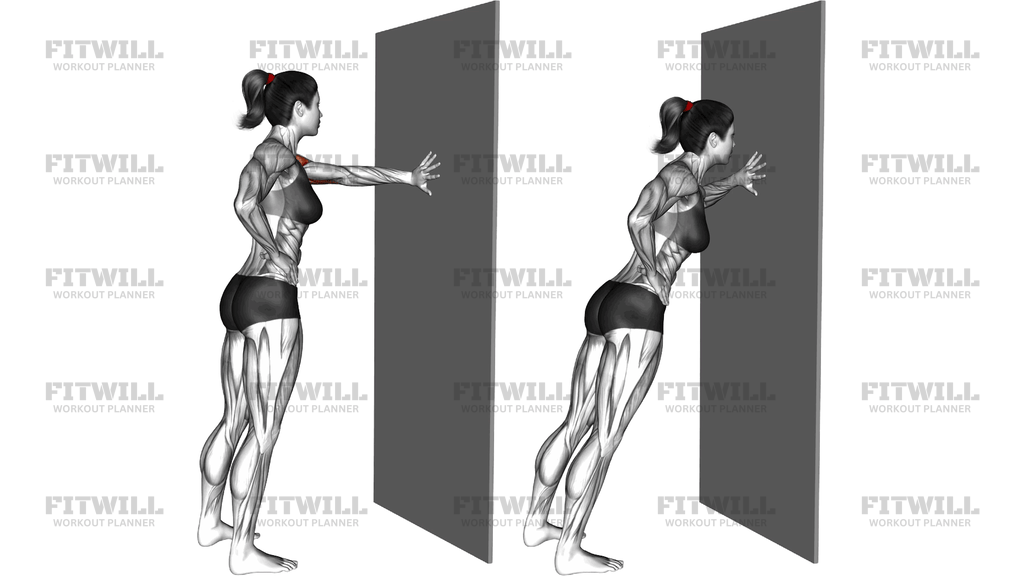
The Single Arm Wall Push Up is a one-sided pressing exercise performed against a wall, making it one of the most accessible ways to load the chest, shoulder, and triceps without any equipment. You stand facing the wall with one palm planted flat at shoulder height, place your free hand on your hip, and lean your body toward the wall by bending the working elbow before pressing firmly back out to the starting distance.
Because only one arm is doing the work, this movement is noticeably harder than a standard two-arm wall push up, even though the wall removes most of your body weight from the equation. It is a smart progression for anyone building toward floor push ups, and it is equally useful as a rehabilitation-friendly press, since the upright position keeps stress off the lower back and wrists. The single-arm setup also challenges your trunk to resist rotation, so your core works quietly throughout every rep.
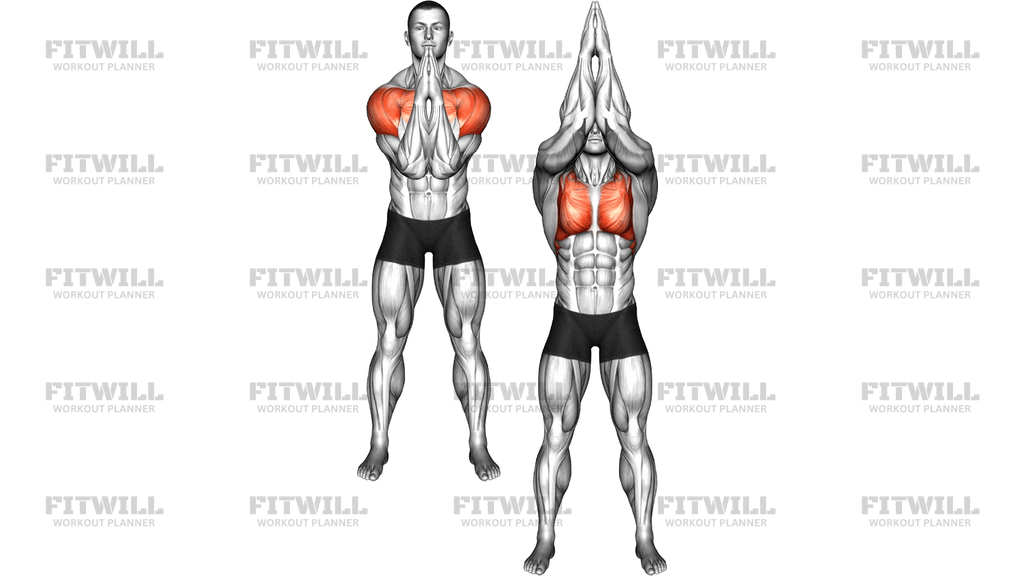
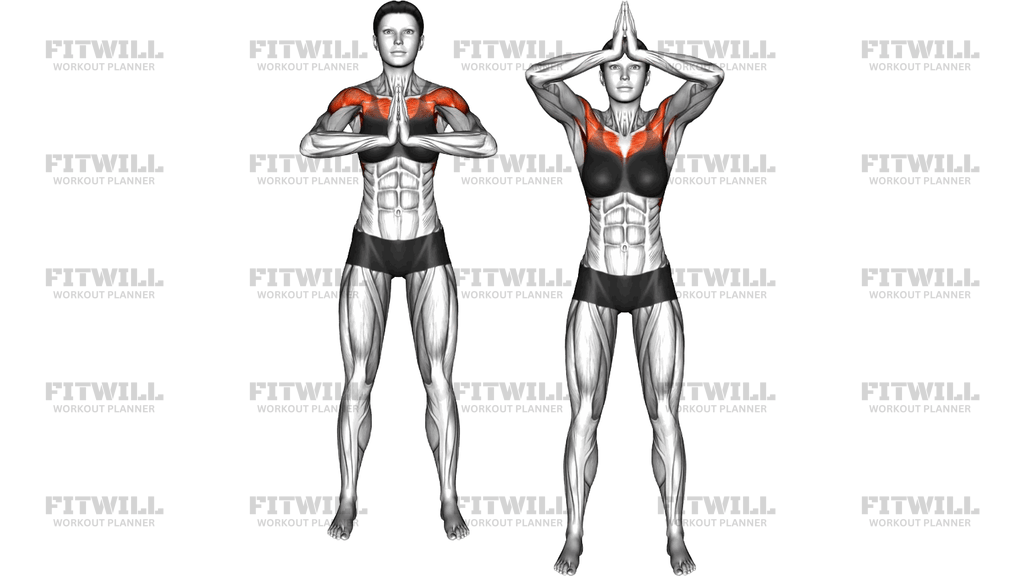
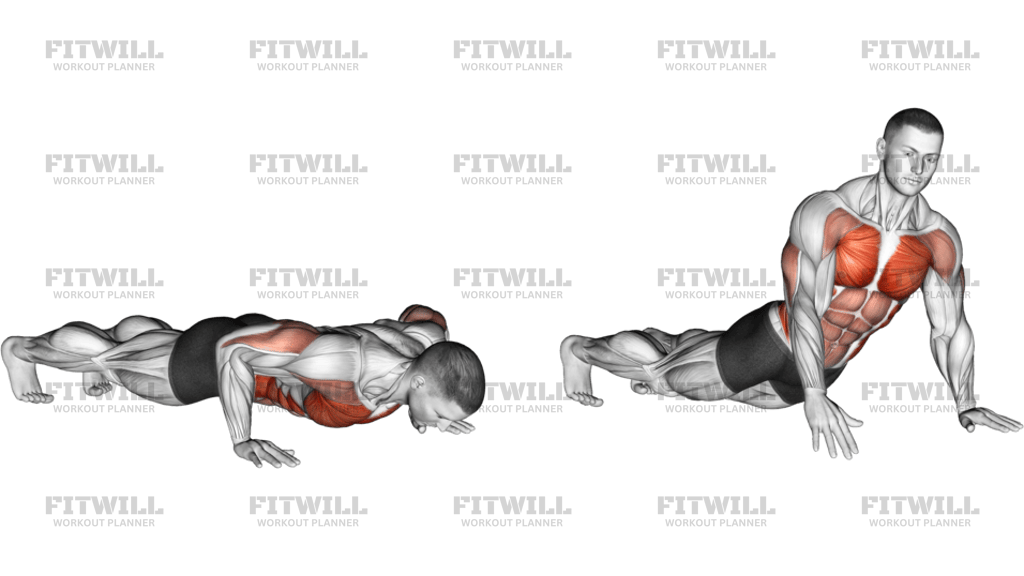
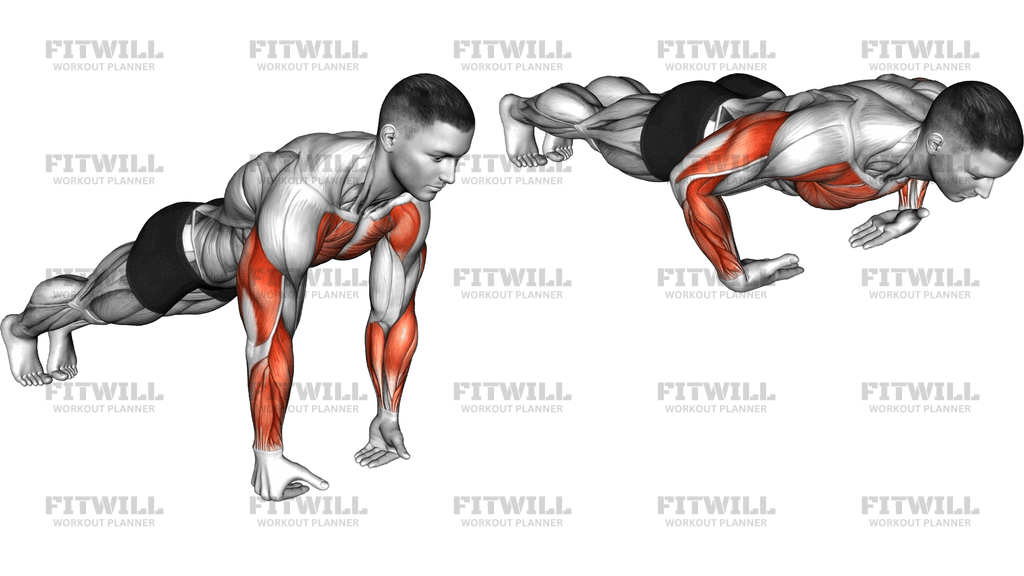
The highlighted work in this movement comes mainly from the chest and front of the shoulder as the arm extends across and into the wall, with the triceps straightening the elbow on each press. Your standing stance, usually staggered with the feet a comfortable step apart, anchors the lower body while the upper body moves.
Setup matters more than it might seem. The height of your hand on the wall, the distance of your feet from the wall, and the angle of your torso all act as the resistance dial. Standing closer with your arm nearly straight makes the exercise easier; stepping further back increases the lean and the load. A palm placed at chest to shoulder height keeps the shoulder joint in a comfortable pressing angle.
To execute it well, keep the working wrist stacked under or slightly in front of the shoulder, elbow tracking down and inward rather than flaring wide, and move the whole body as one stiff unit instead of letting the hips lag behind. The free hand on the hip is not just for balance, it also helps you notice if your torso starts twisting.
This exercise suits beginners, people returning from upper-body injuries or long breaks, older adults who want a safe pressing pattern, and intermediate lifters who want extra volume for the chest without loading the joints. It also fits well into warm-ups before heavier pressing, priming the chest and shoulders with low joint stress.
[ Workout Log & Planner ]
Put your next workout in Fitwill
Keep your plan and training log ready when you are.


Instructions
- Stand facing a clear, solid wall and place one palm flat on the wall at chest to shoulder height, fingers spread and pointing upward.
- Step your feet back until your arm is nearly straight and your body forms a firm diagonal line from head to heel, then stagger your feet about a natural step apart for a stable base.
- Place your free hand on your hip and brace your stomach so your ribs, hips, and shoulders move together as one block.
- Bend the working elbow and let your whole body lean toward the wall until your nose or forehead is close to the wall and the elbow is bent to a comfortable depth.
- Keep the elbow tracking down and slightly inward toward your ribs rather than flaring out to the side.
- Press through the palm, pushing the wall away until the arm is almost straight and you are back at your starting lean.
- Exhale as you press out, inhale slowly as you lower in toward the wall.
- Keep your free shoulder pulled back so the torso does not rotate toward the working arm.
- Complete all repetitions on one side, then switch the hand on the wall, reposition your feet, and match the number of reps on the other side.
- When finished, step toward the wall before taking your hand off it so you never lose balance at full arm extension.
Tips & Tricks
- The most common mistake is twisting the torso toward the working arm, which turns the exercise into a partial press. Keeping the free hand firmly on the hip gives you instant feedback if your shoulders start to rotate.
- If your wrist aches, angle your fingers slightly outward or place the palm a little lower on the wall so the wrist sits in a straighter line during the press.
- Resist the urge to nod or poke your chin at the wall; lead the descent with your chest so the shoulder and elbow stay in one plane.
- Control the return instead of springing off the wall. A slow three-count lean in makes the single-arm version far more demanding without changing your foot position.
- When the exercise feels too easy, step one foot further back rather than lowering your hand. This lengthens the lever and increases the load on the chest smoothly.
- Lock the ankles and knees so the legs act as a pillar. Soft, wandering knees let the hips collapse and steal tension from the press.
- If you feel the movement mostly in the back of the shoulder instead of the chest, shorten the range slightly and focus on pressing the palm through the wall rather than just touching it.
- Match reps exactly between sides. The weaker arm should set the number so you do not drift into an imbalance.
- Near the end of a set, if your body starts sagging away from the straight line, finish the set rather than bending at the hips to keep going.
Frequently Asked Questions
Which muscles does the Single Arm Wall Push Up work?
The chest is the primary muscle, supported by the triceps and the front of the shoulder. Your core and standing leg stabilizers also work to keep the torso from rotating during the single-arm press.
How far should my feet be from the wall for the Single Arm Wall Push Up?
Start with your feet about an arm's length back so the working elbow is nearly straight at the top. The further back you stand, the more body weight the pressing arm has to handle, so adjust distance before adjusting anything else.
Is the Single Arm Wall Push Up good for beginners?
Yes, it is one of the best entry points into one-sided pushing. The wall supports most of your body weight and the upright stance removes pressure from the wrists and lower back, letting beginners build pressing strength safely.
Why does the Single Arm Wall Push Up feel harder than a two-arm wall push up?
With one arm lifted and placed on the hip, the working side carries all of the pressing load on its own and your core has to fight rotation at the same time. The same body weight is now moving on half the support.
Should my elbow flare out to the side during the Single Arm Wall Push Up?
Keep the elbow angled down and slightly inward toward the ribs instead of flaring wide. This keeps the press in a comfortable path and reduces strain around the shoulder.
What can I use instead of a wall if none is available?
A sturdy door, a solid counter edge, or a heavy piece of gym equipment at a similar height works, as long as it will not slide or tip. Anything you can press into at chest height with a firm, immovable surface is a valid substitute.
How do I progress from the Single Arm Wall Push Up to harder push ups?
Step your feet progressively further back over several weeks to increase the lean and load, then move to a lower surface such as a countertop, then a bench, and finally the floor. You can also slow the lowering phase to add difficulty without changing position.
My shoulder pinches when my hand is high on the wall. What should I change?
Lower your hand to mid-chest height and keep the range shallow at first. A lower hand position and a smaller bend of the elbow usually place the shoulder in a more comfortable pressing angle.
How many reps of the Single Arm Wall Push Up should I do?
Start with 8 to 12 controlled reps per side for 2 to 3 sets, adjusting your foot distance so the last two reps feel challenging but still smooth. Beginners can begin closer to the wall and simply accumulate more reps.
Do I need to keep my free hand on my hip during this exercise?
It is strongly recommended. The hand on the hip keeps that shoulder pulled back, limits unwanted torso rotation, and makes it easy to feel when your body starts twisting away from the straight pressing line.