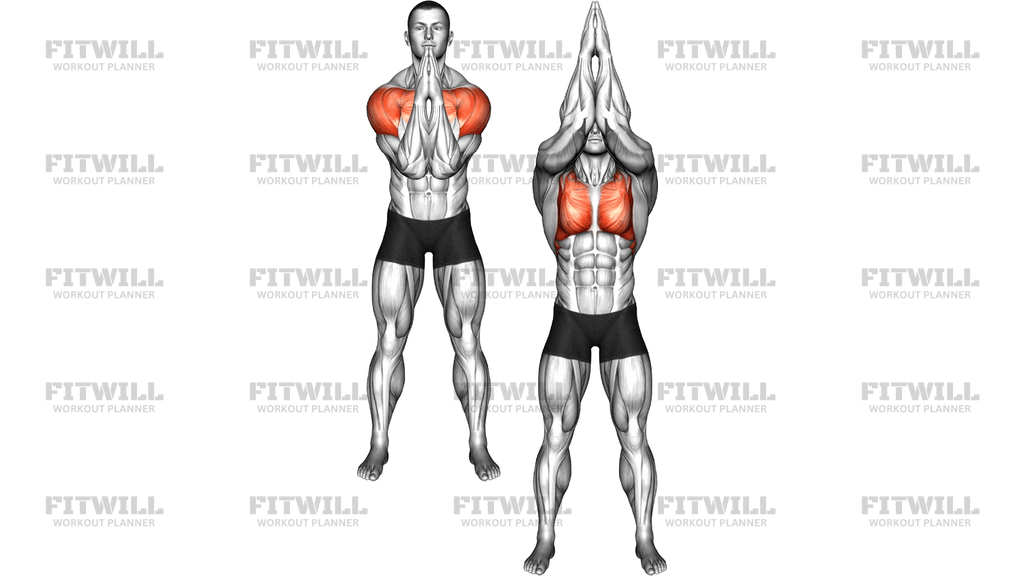
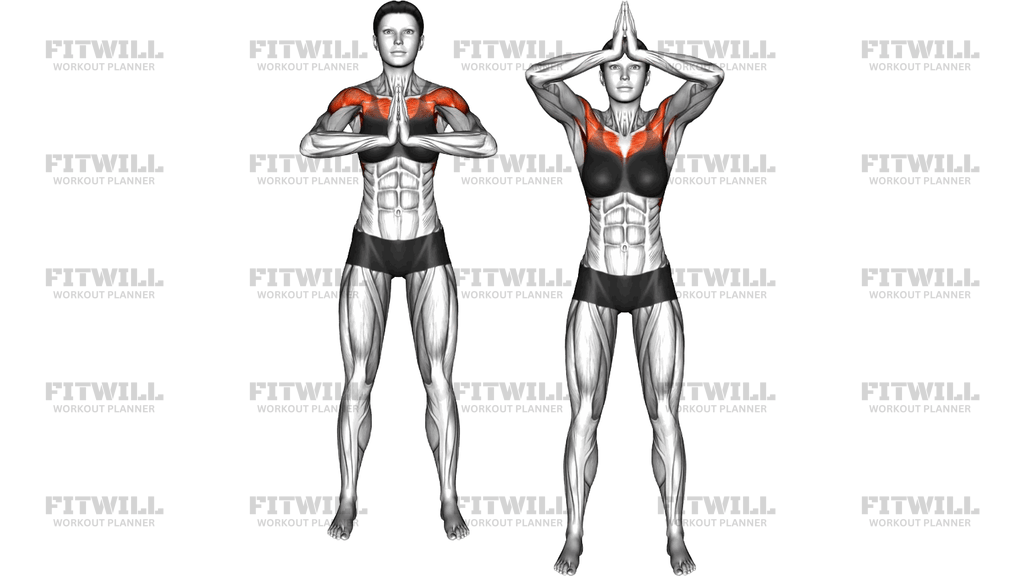
Standing Triple Straight Arm Chest Fly
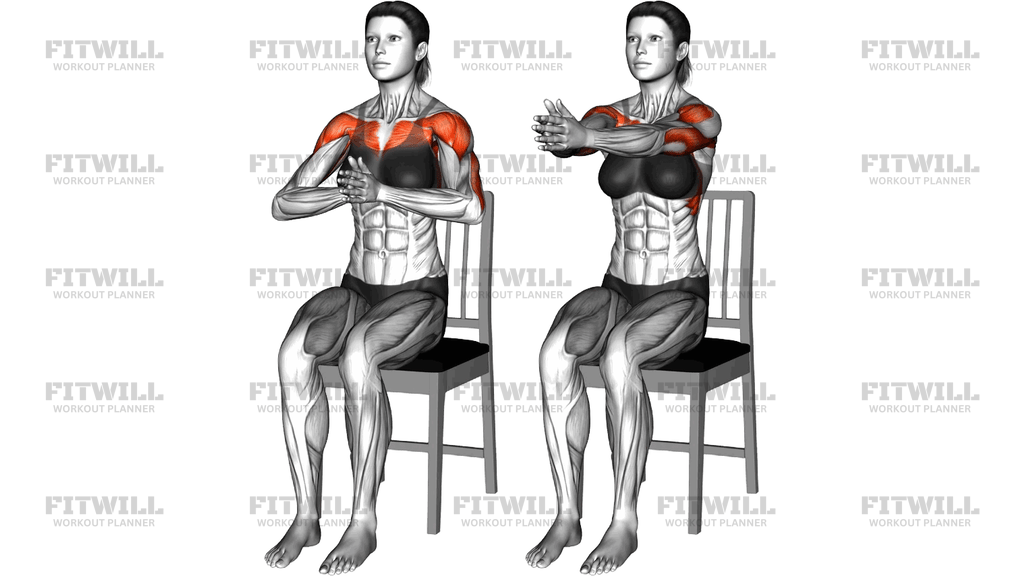
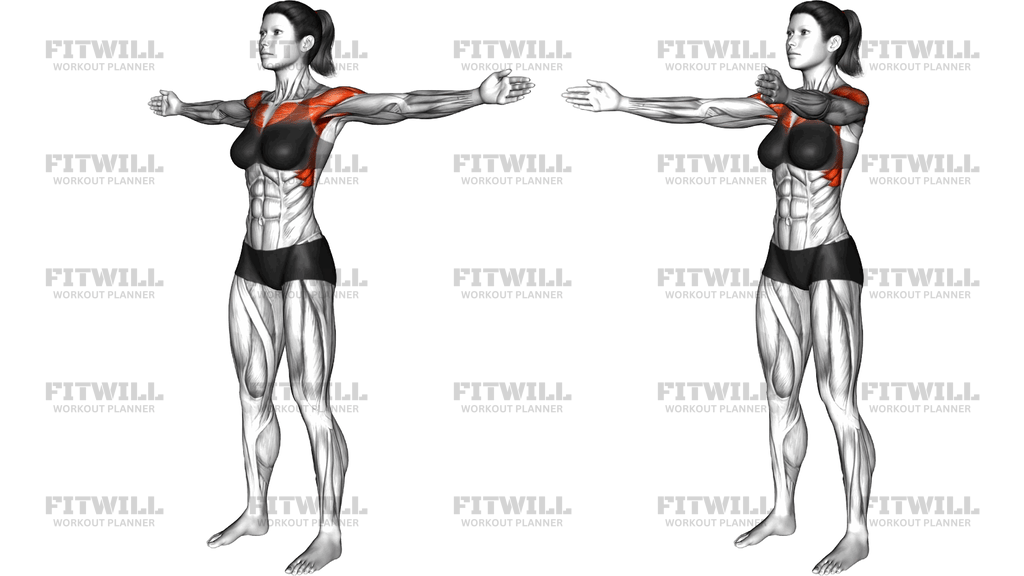
The Standing Triple Straight Arm Chest Fly is a body weight movement performed from an upright stance with the arms held straight out to the sides at shoulder height. From that open position, you sweep both arms forward through a wide arc until your hands come together in front of your chest, then return them along the same path. The "triple" refers to performing the fly in repeated repetitions or sets of three within the standing set, keeping continuous tension on the chest rather than resting between sweeps.
Because there is no external load, the resistance comes from actively squeezing the arms toward each other against the tension you create in your own chest and shoulder muscles. This makes it a low-impact chest activation drill rather than a heavy strength builder. It works well as a warm-up before pressing exercises, as an activation set between heavier bench or push-up work, or as a standalone movement for beginners who want to learn what a proper chest squeeze feels like before adding cables, bands, or dumbbells.
The primary muscles working are the pectorals, which drive the horizontal adduction of the arms toward the midline. The front delts assist as the arms travel forward, and the muscles of the upper back and core work isometrically to keep the torso tall and stable while the arms move. Keeping the elbows locked straight is what separates this from a conventional fly and forces the chest to do the work instead of the arms.
Setup matters more than it looks on paper. A staggered or hip-width stance with a braced torso stops you from rocking backward as the arms swing forward, and holding the arms at true shoulder height keeps the sweep in line with the chest fibers rather than turning it into a front raise. Let the shoulders creep up toward the ears and the movement loses its chest focus quickly.
Execute the fly with intent rather than speed. Think of pushing your palms together through an invisible resistance as they approach each other in front of your sternum, pause briefly, then open the arms under control until you feel a comfortable stretch across the chest. The return is just as important as the squeeze, because rushing it removes most of the training effect.
Common use cases include warm-ups, rehabilitation-friendly upper body circuits, travel or home workouts with no equipment, and high-rep finishers after pressing work. If you feel the effort mostly in the front of the shoulders or the neck, reduce the speed, lower the arm height slightly, and consciously relax the upper traps before continuing.
[ Workout Log & Planner ]
Put your next workout in Fitwill
Keep your plan and training log ready when you are.


Instructions
- Stand upright with your feet hip-width apart or in a small staggered stance, knees soft, and your weight balanced over the middle of both feet.
- Raise both arms straight out to your sides until they are level with your shoulders, palms facing forward, elbows fully locked and wrists in line with the forearms.
- Draw your shoulder blades down and back, lift your chest, and brace your core so your torso stays tall and still throughout the set.
- Sweep both straight arms forward in a wide arc, as if hugging a large barrel, until your hands meet or cross in front of your sternum at chest height.
- Squeeze your palms toward each other for a brief pause at the front, actively pressing them together to maximise the chest contraction.
- Slowly open the arms back along the same wide arc until they return to the fully extended starting position at shoulder height, feeling a light stretch across the chest.
- Exhale as the arms sweep forward and squeeze, inhale as you control them back open.
- Keep the elbows locked and the arm path level for the full set of three repetitions, resisting the urge to swing or let the arms drop below chest line.
- At the end of the set, lower the arms to your sides, shake out the shoulders, and reset your stance before starting the next triple.
Tips & Tricks
- If you feel this in the front of the shoulders instead of the chest, lower your arms a few degrees below shoulder line and focus on pushing the pinky sides of the hands toward each other.
- Shrugging is the most common fault here. Before each sweep, take a breath and drop the shoulders away from the ears so the upper traps cannot take over.
- Do not let the torso lean back as the arms come forward. A slight forward lean of the chest over the sternum keeps the squeeze honest and prevents the core from turning it into a balance drill.
- A soft elbow bend of a few degrees is acceptable if your joints complain about full lockout, but keep the bend identical on every rep so the arc stays consistent.
- Press your palms actively against each other for a full second at the front of the movement. Without equipment, that voluntary squeeze is the only resistance, so treat it as the heart of the exercise.
- Slow the opening phase down to two or three seconds. Most people rush the return and lose the stretch-loaded part of the rep entirely.
- If your arms fatigue and start to drop below chest height mid-set, stop and rest rather than finishing the triple with a lower, sloppier arc.
- Use this before bench press, push-ups, or cable flies as an activation primer; the chest responds better to heavy pressing when it is already been taught to squeeze.
Frequently Asked Questions
Which muscles does the Standing Triple Straight Arm Chest Fly work?
The pectorals are the primary movers, driving the arms toward the midline. The front delts assist during the forward sweep, while the upper back and core stabilize the torso.
Why must the arms stay straight during this fly?
A straight arm removes the biceps and elbow flexors from the equation, so horizontal adduction at the shoulder does the work. Bend the elbows and it becomes a standard fly that leans on the arms instead of the chest.
Can beginners do the Standing Triple Straight Arm Chest Fly?
Yes, it is one of the safest ways to learn chest activation because there is no external load. Beginners should focus on slow tempo and a deliberate squeeze rather than speed or rep count.
What does the "triple" in the exercise name mean?
It refers to performing the fly in repeated triples, meaning three consecutive sweeps per set before resetting. You can build volume by completing multiple triples with short rests between them.
Where exactly should my hands finish at the front of the movement?
They should meet or lightly cross in front of your sternum at chest height, not at your face or waist. Keeping the finish at nipple-to-collarbone level keeps the load on the chest fibers.
My shoulders burn more than my chest. What am I doing wrong?
This usually means your arms are set too high or you are shrugging into the movement. Drop the arms slightly below shoulder line, relax the upper traps, and slow the forward sweep down.
What can I use instead if body weight resistance is not enough?
Cable crossover flyes, resistance band chest flyes, or light dumbbell flyes on a flat bench all replicate the same adduction pattern with added load. The standing straight-arm version still works well as a warm-up for those.
Is it safe for the shoulders to lock the elbows completely?
For most people a straight but not strained arm is fine, since the load is light. If full lockout causes discomfort at the elbow or shoulder joint, keep a tiny fixed bend and shorten the arc slightly.
Should I lean back to get a stronger squeeze?
No. Leaning back turns the movement into a torso-driven swing and takes tension off the chest. Stay tall with a braced core and let the arms do the traveling.