Standing Deep Breathe And Prayer Pull
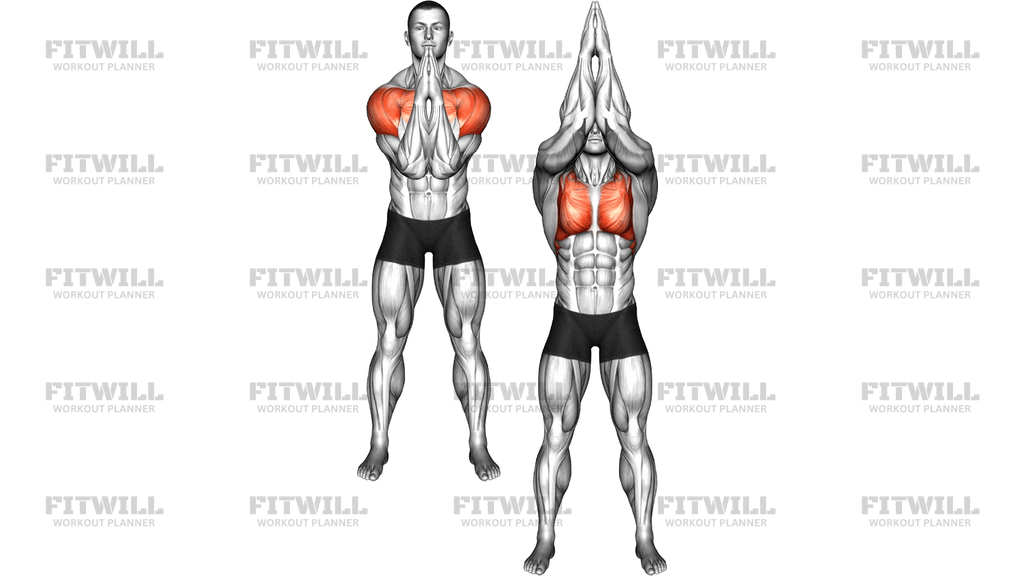
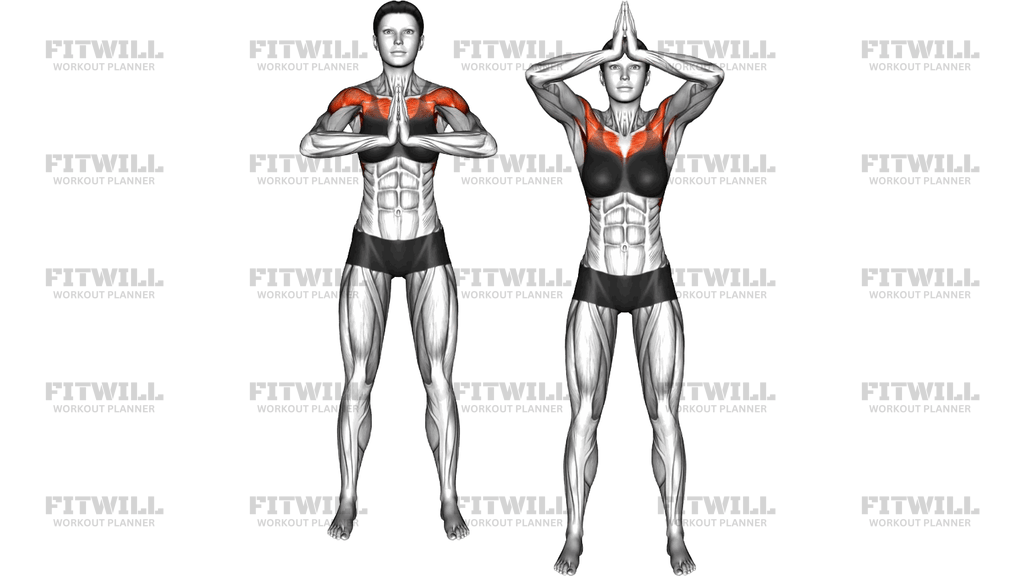
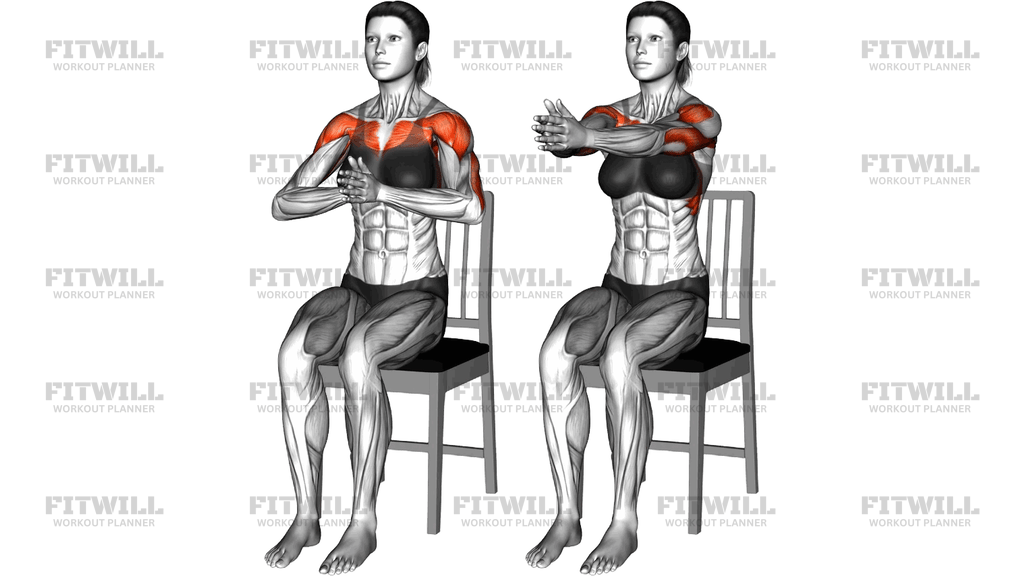
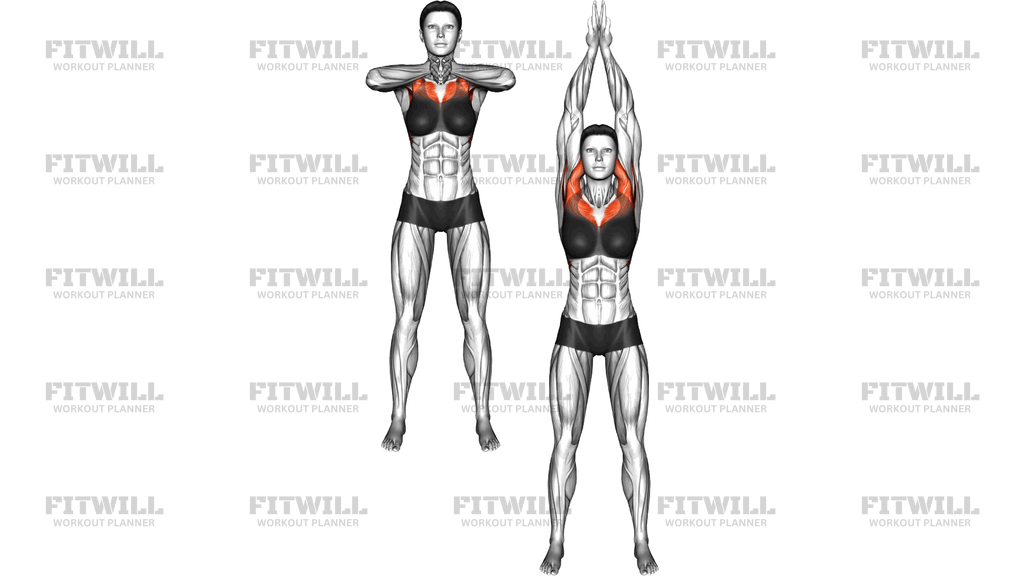
The Standing Deep Breathe And Prayer Pull is a bodyweight breathing and mobility drill performed from an upright stance with the palms pressed firmly together in a prayer position. You begin with your hands gathered in front of the upper chest and elbows lifted out to the sides, take a slow, deep breath in as you sweep the pressed palms up overhead, then exhale while pulling the hands back down along the front of your body to the starting point. It looks simple, but the constant palm pressure and the coordinated breath make it a surprisingly effective way to open the chest and wake up the upper back.
This movement is especially useful for people who spend long hours sitting at a desk, driving, or looking down at a phone, because those habits tend to round the shoulders forward and compress the rib cage. The overhead reach stretches the chest and front shoulders, while the pulling phase brings the elbows down and back, encouraging the upper back muscles to engage. It is also a common warm-up before pressing or pulling workouts, and a common cool-down after them, since it combines gentle stretching with rhythmic breathing rather than heavy loading.
Setup matters more than it appears to. Standing tall with feet about hip-width apart gives your rib cage room to expand, and pressing the palms together with real effort creates tension that travels through the chest, shoulders, and upper traps. If you let the palms slide or the elbows drift, the drill loses most of its purpose. Keeping the neck long and the ribs stacked over the pelvis ensures the breath moves into the upper chest and back instead of just lifting the shoulders toward the ears.
To execute it well, move slowly enough that one full repetition takes several seconds. Inhale through the nose as the arms rise, filling the chest as fully as feels comfortable, then exhale through the mouth as the hands pull down in front of the face and chest. The end position has the hands gathered at the upper chest with elbows wide, which is exactly where the next breath and the next repetition begin. Because there is no external load, the main safety concerns are neck tension and dizziness from breathing too forcefully, both of which are avoided by keeping the breath smooth and the shoulders relaxed away from the ears.
You will see this drill used in general warm-ups, in posture-focused routines, in yoga-style flows, and as a low-effort movement break during the workday. It requires no equipment and very little space, so it fits easily into almost any setting. Done for a handful of slow, focused repetitions, it leaves the upper body feeling taller and looser rather than fatigued, which is precisely the point.
Fitwill
Log Workouts, Track Progress & Build Strength.
Achieve more with Fitwill: explore over 9600 exercises with images and videos, access built-in and custom workouts, perfect for both gym and home sessions, and see real results.
Start your journey. Download today!




Instructions
- Stand upright with your feet about hip-width apart, weight spread evenly across both feet, and your spine tall without arching the lower back.
- Press your palms together firmly in a prayer position, fingers pointing upward, and bring the hands in front of your upper chest.
- Lift your elbows out to the sides so the upper arms are roughly level with your shoulders and the backs of the hands rest near the chest and throat area.
- Draw your shoulders down away from your ears and lengthen the back of your neck before you begin moving.
- Inhale slowly and deeply through your nose as you sweep the pressed palms straight up overhead, keeping the hands in contact with each other the entire way.
- At the top, reach gently upward with the arms alongside the ears while the breath fills the chest, without shrugging the shoulders or leaning back.
- Exhale steadily through your mouth as you pull the pressed hands back down in front of your face and chest, letting the elbows widen as the hands descend.
- Finish the pull with the hands back at the upper chest and elbows out wide, which returns you to the exact starting position.
- Repeat for several slow, continuous repetitions, letting the breath set the pace rather than counting speed.
- After the final repetition, lower the hands to your sides and take one or two relaxed breaths before moving on.
Tips & Tricks
- Keep genuine pressure between the palms for the whole repetition; when the hands merely touch without pressing, the chest and upper back stop doing their part.
- If you feel the shoulders creeping up toward your ears as the arms rise, pause at the top, lower them slightly, and restart the rep with a longer neck.
- Avoid leaning the torso backward as the hands go overhead; the reach should come from the shoulders and rib cage, not from arching the lower back.
- Breathe in through the nose and out through the mouth at a comfortable pace. Forcing huge gulps of air is the most common cause of light-headedness in this drill.
- The pulling phase in front of the face should stay close to the body. Letting the hands drift forward turns the movement into a loose arm swing and loses the upper back engagement.
- If tight shoulders prevent the palms from staying together overhead, bring the hands only as high as you can while keeping contact, and improve the range gradually.
- Move at the speed of your breath rather than the clock. A slow, controlled sweep of roughly three to five seconds in each direction works far better than quick reps.
- Keep the ribs stacked over the pelvis and the abdominal muscles lightly engaged so the deep breath expands the chest instead of pushing the belly and lower ribs forward.
- If you feel pinching at the front of the shoulders overhead, lower the range slightly and angle the arms a touch forward rather than forcing them directly behind the ears.
Frequently Asked Questions
What muscles does the Standing Deep Breathe And Prayer Pull work?
It primarily involves the chest, especially the upper portion, along with the upper traps and the muscles of the upper back that control the shoulder blades. The shoulders assist as the arms sweep overhead and pull back down.
Is this exercise suitable for complete beginners?
Yes. It uses no equipment and no external load, so the only challenges are coordination and breathing control. Beginners should simply start with a smaller overhead range and a comfortable breath depth.
Why do my palms need to stay pressed together during the Standing Deep Breathe And Prayer Pull?
The palm pressure creates continuous tension through the chest, shoulders, and upper traps, which turns a simple arm raise into an active mobility drill. Once the hands separate, the movement loses that engagement.
Should I inhale on the way up or on the way down?
Inhale slowly through the nose as the hands sweep overhead, and exhale through the mouth during the pulling phase back to the chest. Matching the breath to the movement is the core of the exercise.
Can I get dizzy while doing this drill?
Some people do if they breathe too forcefully or too quickly. Keep the inhale and exhale smooth and moderate, and stop and breathe normally if you feel light-headed.
How many repetitions of the Standing Deep Breathe And Prayer Pull should I do?
Around five to eight slow repetitions works well as a warm-up or cool-down. Since each rep takes several seconds, quality of breath and movement matters far more than rep count.
My shoulders are too tight to keep my palms together overhead. What should I do?
Only raise the hands as high as you can while maintaining palm contact and a relaxed neck, then increase the range over time. A slightly narrower or lower arc still delivers most of the benefit.
Can I use this as a warm-up before bench pressing or overhead pressing?
Yes, it is a good low-effort way to open the chest and activate the upper back before pressing work. Pair it with a few shoulder circles or band pull-aparts for a more complete warm-up.
What is the most common mistake with this exercise?
Shrugging the shoulders toward the ears and letting the hands drift away from each other are the two most frequent errors. Both are fixed by keeping steady palm pressure and consciously drawing the shoulder blades down.
Is the Standing Deep Breathe And Prayer Pull a strength exercise or a stretch?
It sits between the two: the bodyweight tension gives the upper back some light work, while the overhead reach stretches the chest and front shoulders. It is best treated as a mobility and breathing drill rather than a muscle-building movement.