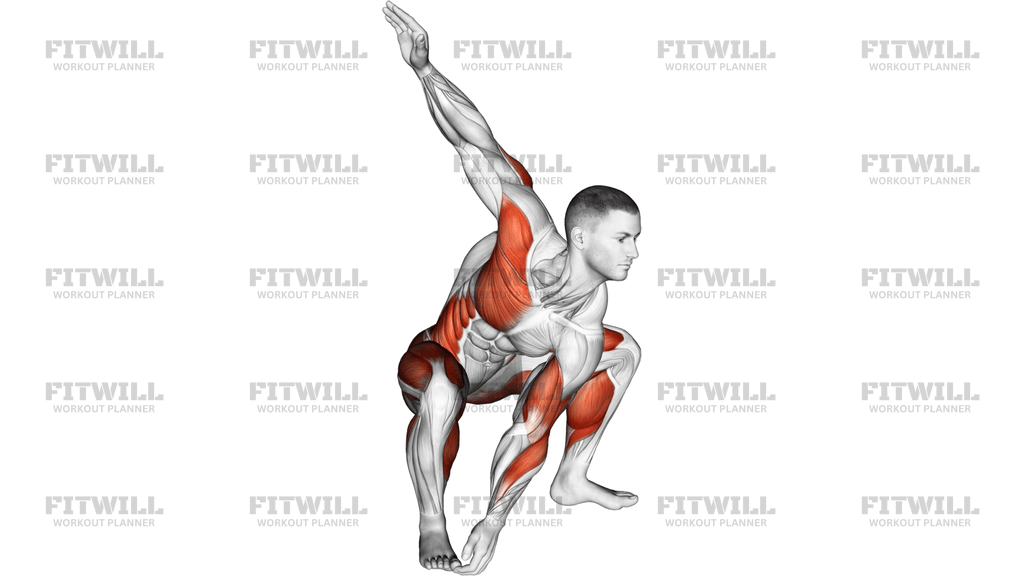
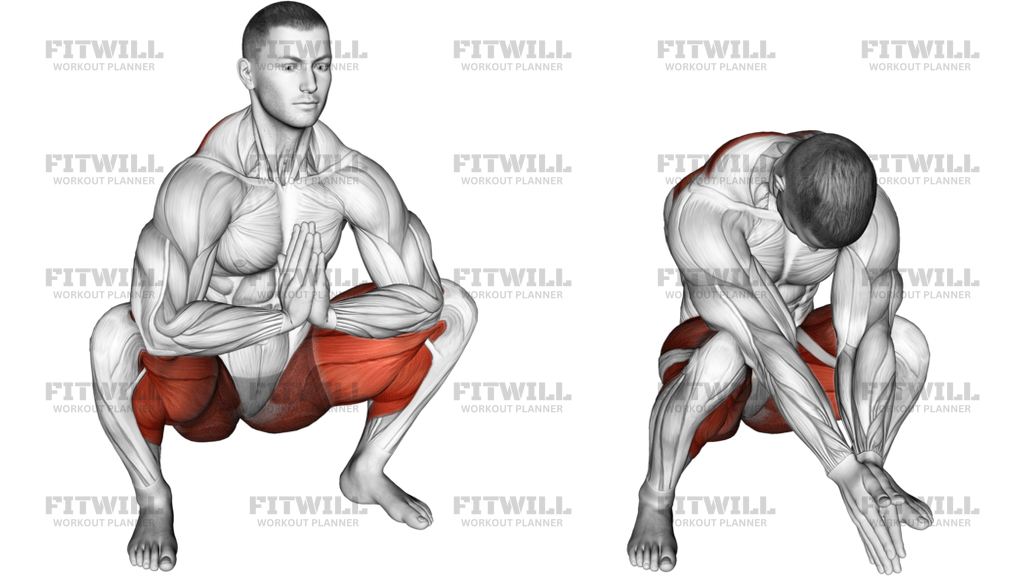
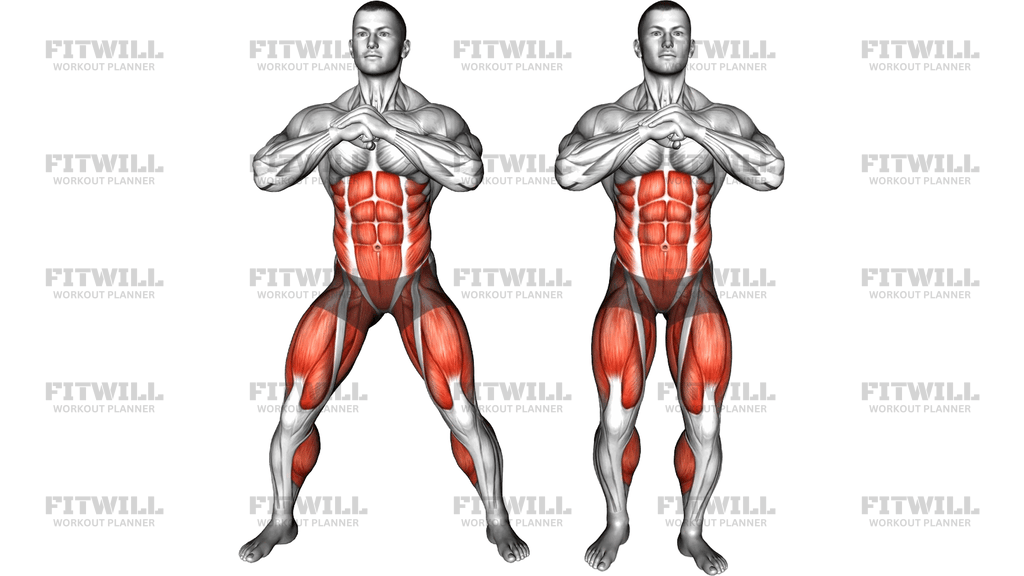
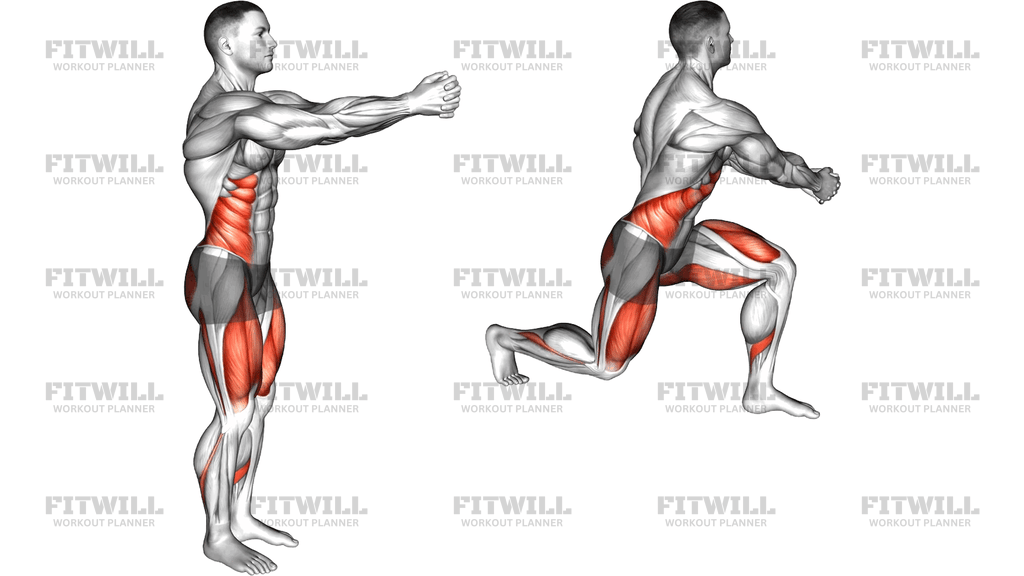
Sitting Legs Extended To Butterfly Stretch
Sitting Legs Extended To Butterfly Stretch is a seated, body-weight mobility drill that flows between two hip positions in one controlled cycle. You start sitting tall with both legs stretched straight out in front of you, hands planted on the floor beside or slightly behind your hips for support. From there you draw your heels in toward your body and let your knees fall open and out to the sides until you reach the classic butterfly position, soles of the feet together, before extending the legs back out flat.
The stretch lands hardest on the inner thigh muscles that pull your legs toward the midline, along with the deep muscles of the hip that control outward rotation of the thigh. The extended-leg phase adds a mild lengthening demand through the hamstrings and calves, while the supported seated position keeps your lower back working gently to hold your torso upright. Because you move between the two shapes rather than freezing in one, the tissue gets loaded gradually and you can map where your range actually ends.
This movement suits anyone whose hips feel permanently compressed by sitting: desk workers, drivers, and lifters who squat or hinge heavy but never take those joints through the opposite range. It is also a common warm-up choice before lower-body training, and a useful cooldown after running or cycling, where the adductors and hip rotators tend to stay in a narrow groove for long stretches.
Setup matters more than most people expect. Sitting on your sit bones rather than behind them, with a tall spine and hands genuinely supporting some of your weight, changes whether this feels like a hip stretch or a lower-back complaint. Keep the pelvis neutral as the legs travel in and out; if your torso slumps every time the knees drop, that is the cue to reduce the range rather than force it.
Execution is deliberately slow. Think of the knees drawing an arc through the air as the heels glide toward and away from your body, breathing steadily the whole time. A common error is bouncing the knees up and down or letting the head and shoulders round forward to chase a deeper look. Resist both. Two or three smooth cycles, holding the butterfly end point for a comfortable breath or two, is usually plenty, and you can repeat the sequence later in the session if the hips respond well.
[ Workout Log & Planner ]
Put your next workout in Fitwill
Keep your plan and training log ready when you are.


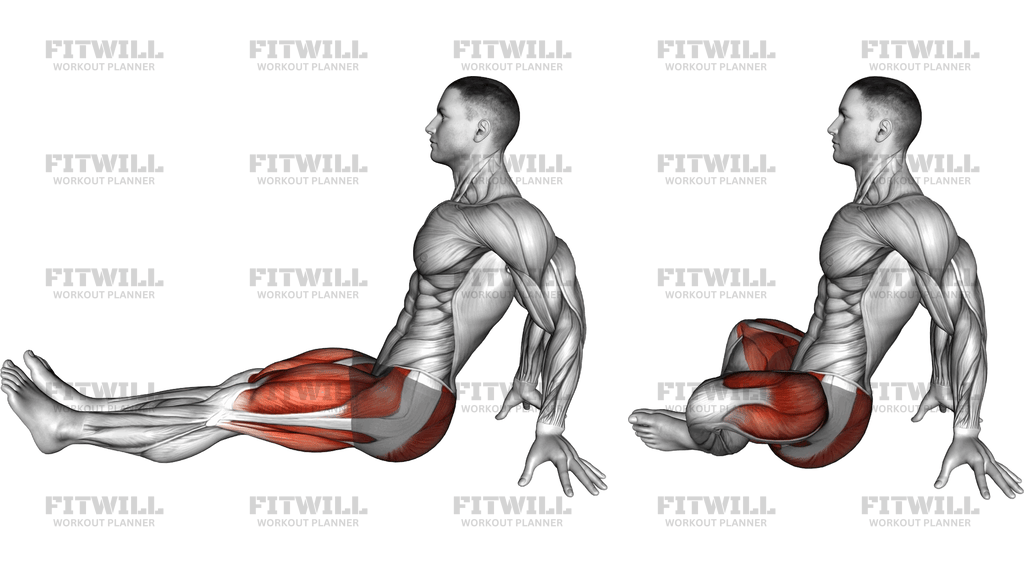
Instructions
- Sit on the floor with your legs extended straight in front of you, feet hip-width apart and toes pointing up.
- Place your palms flat on the floor beside your hips, fingers spread, and press lightly so your arms share the load of keeping your torso tall.
- Sit up onto your sit bones with your spine long and shoulders relaxed down away from your ears.
- Brace your core gently and keep your chest open so your breathing stays easy throughout the movement.
- On an exhale, bend your knees and slide your heels in toward your body, letting the knees travel out to the sides in a smooth arc.
- Continue until the soles of your feet meet and your knees reach a comfortable open position, keeping your torso upright rather than folding forward.
- Pause in the butterfly position for one or two slow breaths, letting the hips settle without pushing the knees down.
- Reverse the path with control: open the knees, straighten the legs, and glide the feet back out to the extended position.
- Exhale as the knees come in, inhale as the legs return out, keeping the rhythm even.
- Complete 2-4 cycles, then rest. If you want more, reset your posture on the sit bones before starting the next set.
Tips & Tricks
- If your lower back rounds every time the knees drop, sit on the edge of a folded towel or low cushion to tilt the pelvis upright before starting.
- Do not bounce the knees at the bottom of the butterfly position; a steady hold lets the adductors release instead of tightening up in response to the push.
- Keep the heels close to your body only as far as your hips allow; dragging the feet in past your real range just shifts the strain into the knees.
- Press the outer edges of the feet together rather than letting the ankles collapse, which protects the ankle joints as the knees open.
- Keep the arms as active props, not passive anchors; if the shoulders creep up toward the ears, soften the pressure through the palms and re-lengthen the neck.
- Aim the knees toward the floor with gravity, not with your hands; pressing down on the thighs is a fast route to an adductor strain.
- If straightening the legs pulls your posture backward, allow a small bend at the knees during the extended phase and work toward straighter legs over weeks.
- Slow the transition between positions rather than rushing the cycle; the in-and-out travel is where most of the mobility benefit lives.
Frequently Asked Questions
Which muscles does the Sitting Legs Extended To Butterfly Stretch target?
It primarily targets the inner thighs, along with the deep rotators of the hips. The extended-leg phase also lengthens the hamstrings and calves, and the upright torso keeps the muscles along the spine lightly engaged.
Is this stretch suitable for complete beginners?
Yes, it is one of the more accessible hip stretches because your own hands and arms control the load. Beginners should simply use a smaller knee range and keep the torso tall rather than chasing the knees to the floor.
Should I hold the butterfly position or keep moving?
The value of this exercise is the travel between the extended and butterfly positions, so keep the cycles slow and continuous. Pausing for one or two breaths at the butterfly end point is enough; long static holds turn it into a different stretch.
Why do my knees stay high and never reach the floor?
Tight adductors and hip rotators are the usual reason, and the fix is time and consistency, not force. Let gravity do the work, keep the soles of the feet together, and expect the knees to lower gradually over weeks of regular practice.
Can I do the Sitting Legs Extended To Butterfly Stretch every day?
Yes, gentle daily cycling through the positions is reasonable for most people, especially if you sit for long hours. Keep the intensity low so the hips respond with mobility rather than soreness.
What is the most common mistake with this movement?
Pushing the knees down with the hands or bouncing them to force range. Both irritate the inner thigh tissue; a supported, patient hold produces better results with far less risk.
When should I do this stretch, before or after training?
It works well as part of a warm-up for squats, lunges, or running because it takes the hips through their outer range, and equally well as a cooldown. Before training, keep the cycles moving; afterward, linger a breath longer in the butterfly position.
What can I use if sitting on the floor is uncomfortable?
Sit on a thin cushion, folded towel, or the edge of a low step to raise the hips and make the upright position easier to hold. The movement itself stays exactly the same.
Is this stretch safe if I have a knee injury?
The butterfly position places rotational stress on the knees, so reduce the range so the knees never feel twisted or pinched, and stop if symptoms appear. If a knee injury is recent or ongoing, clear the movement with a qualified professional first.