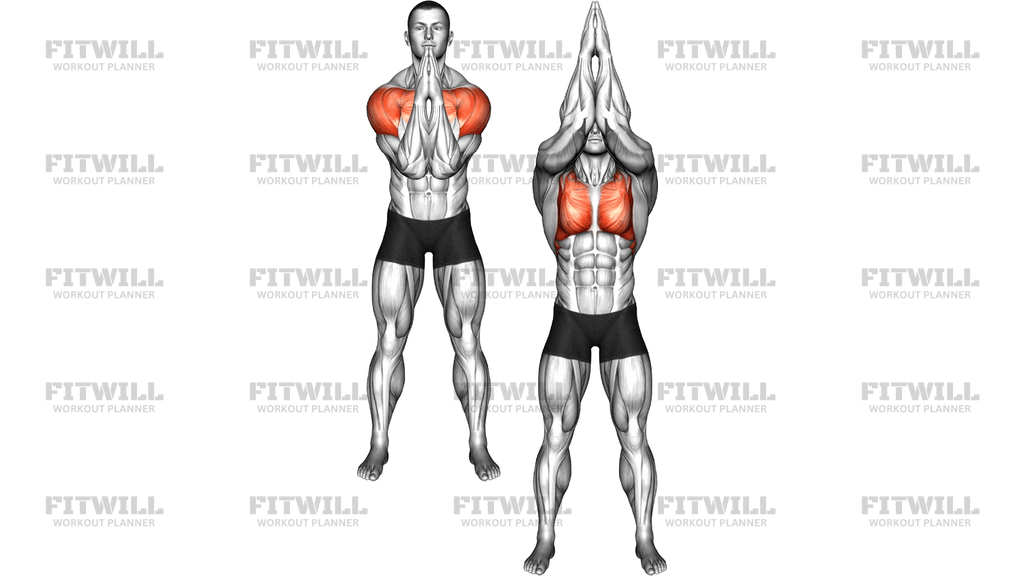
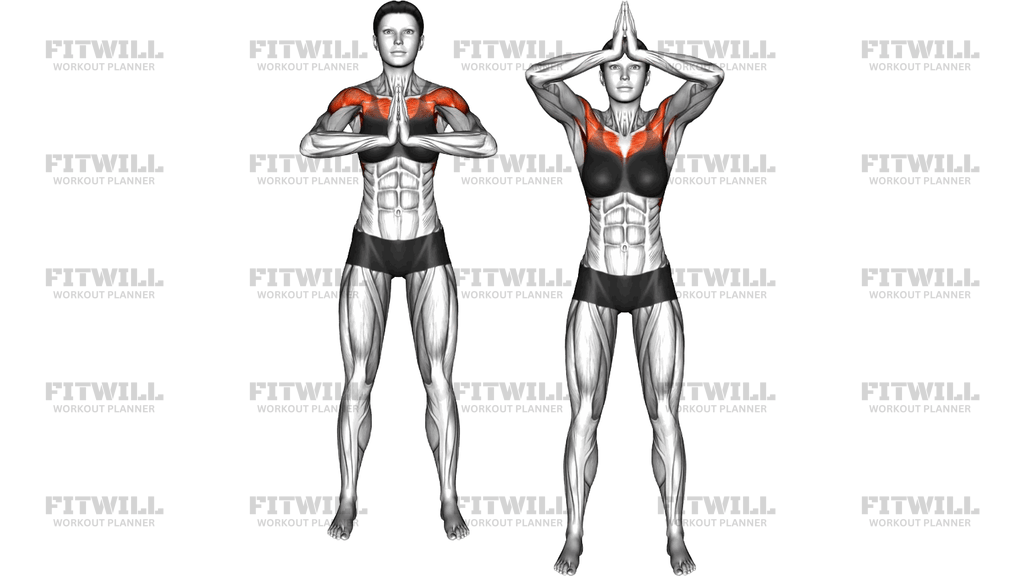
Standing Hands Behind Chest Stretch
The Standing Hands Behind Chest Stretch is a bodyweight chest opener performed from a tall standing position. You bring your hands behind your body toward your chest line, straighten the arms, and gently draw the shoulder blades together to lengthen the pectoral muscles across the front of the ribcage. Because no equipment or floor space is required, it is one of the easiest ways to reverse the rounded, closed-shoulder posture that comes from sitting, typing, driving, or pressing movements in the gym.
This stretch is especially useful for people who spend long hours at a desk, lifters who bench or perform a lot of pushing work, and anyone whose shoulders tend to roll forward. When the chest muscles tighten, they can pull the shoulders into internal rotation, which makes it harder to stand tall and can limit overhead arm positions. Lengthening the chest helps restore a more neutral shoulder position and gives the upper back muscles a chance to work from a better alignment.
The main tissue under stretch is the pectoralis major, with the smaller pectoralis minor and the front of the shoulder also lengthening as the arms travel behind the body. At the same time, the muscles between the shoulder blades contract gently to pull the shoulders back, so the stretch works both sides of the joint: the front lengthens while the back engages. This combination makes it a productive warm-up primer before upper-body training as well as a cooldown release afterward.
Setup matters more than most people expect. Your stance should be comfortable with feet about hip-width apart, ribs stacked over the pelvis, and the neck relaxed. A common error is arching the lower back to fake extra chest opening; bracing the trunk lightly and keeping the ribs down forces the stretch into the chest where it belongs. The hands only need to reach as far behind the body as feels comfortable — forcing the lift higher than your shoulder range allows shifts tension into the shoulder joint itself.
To execute well, breathe steadily and let the stretch build gradually. Lift the chest slightly and ease the hands back a little further with each exhale rather than yanking into the position. Hold for twenty to thirty seconds, release slowly, and repeat two to three rounds. You can adjust intensity by how far you bring the hands behind you, how much you lift the chest, and whether you keep the arms bent or straighten them.
Use this stretch between desk sessions, before pressing workouts to prepare the chest and shoulders, or after pull-ups, rows, and pushing exercises when the front of the shoulder feels congested. Stop if you feel pinching in the front of the shoulder, tingling in the arms, or any sharp pain — a productive stretch should feel like a broad pull across the chest, never a joint stress.
[ Workout Log & Planner ]
Put your next workout in Fitwill
Keep your plan and training log ready when you are.


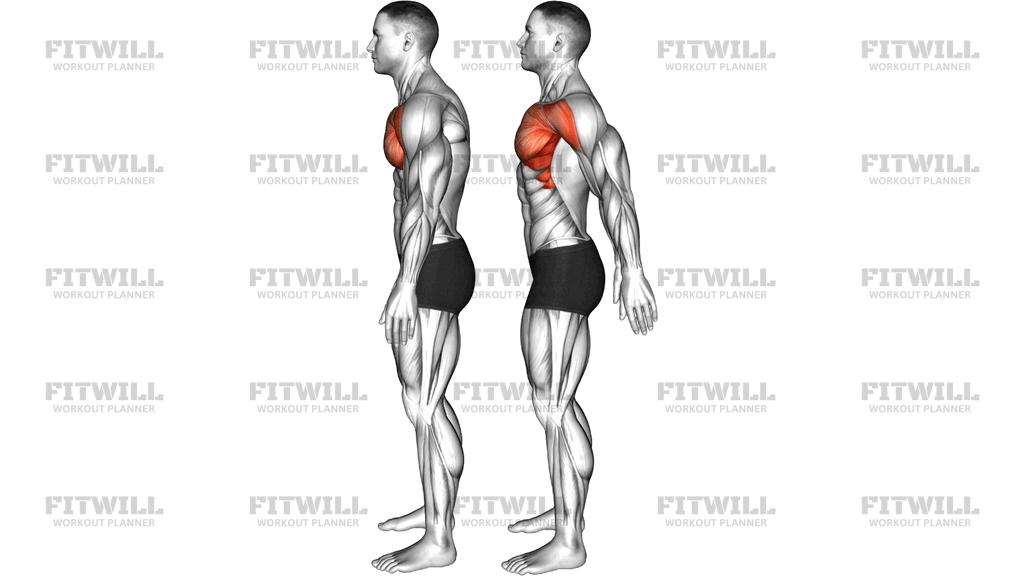
Instructions
- Stand with your feet about hip-width apart, weight even across both feet, and your head stacked over your ribcage.
- Reach both hands behind your body and bring them toward the back of your chest line, either clasping the fingers together or holding opposite forearms if your shoulder range is limited.
- Gently brace your trunk and keep your ribs down so the lower back does not arch as you set up.
- Draw the shoulder blades toward each other and let the shoulders roll back and down, away from the ears.
- Straighten the arms as far as comfortable and lift the chest slightly until you feel a broad stretch across the front of the chest.
- Hold the end position for twenty to thirty seconds, keeping the neck relaxed and the jaw loose.
- With each exhale, ease the hands a little further behind you or lift the chest slightly to deepen the stretch gradually.
- Slowly release the hands forward and let the shoulders return to neutral without letting them snap back.
- Shake out the arms, reset your standing posture, and repeat for two to three rounds.
Tips & Tricks
- If clasping the fingers behind your back is uncomfortable, hold a towel between your hands — this lets you adjust the distance and keeps the shoulders from being forced into end-range rotation.
- Keep the ribs down: most people lose the chest stretch by arching the lower back, which turns it into a spine extension exercise instead.
- Do not let the head jut forward as the chest lifts; imagine the crown of the head rising while the chin stays level.
- If you feel a pinch at the front of the shoulder, bend the elbows slightly and reduce how far the hands travel behind the body before progressing again.
- Start with the arms bent and straighten them only after the shoulders have settled — straightening too early is the most common reason the stretch feels sharp rather than broad.
- Keep some tone in the muscles between the shoulder blades rather than hanging passively; the active pull-back is what separates this from a loose arm swing.
- Breathe into the side of the ribs instead of shrugging the shoulders upward with each inhale, which would release the tension you are trying to hold.
- Avoid locking the knees hard; a soft knee keeps the pelvis neutral and prevents the lower back from compensating.
- If one shoulder is tighter, work with the range of the tighter side and let the looser side match it rather than overriding it.
Frequently Asked Questions
Which muscles does the Standing Hands Behind Chest Stretch target?
It primarily lengthens the pectoralis major across the front of the chest, with the pectoralis minor and the front of the shoulder also under stretch. The muscles between the shoulder blades work gently to hold the shoulders back.
Can beginners do the Standing Hands Behind Chest Stretch?
Yes. Beginners can keep the elbows bent and only reach the hands partway behind the body, using a towel between the hands if clasping the fingers is not yet comfortable.
How long should I hold the Standing Hands Behind Chest Stretch?
Twenty to thirty seconds per round works well for most people, repeated two to three times. In a warm-up, shorter holds of ten to fifteen seconds with more repetitions are also effective.
Why do I feel the Standing Hands Behind Chest Stretch in my lower back instead of my chest?
That usually means the ribs are flaring and the lower back is arching to create the illusion of chest opening. Lightly brace the trunk, keep the ribs stacked over the pelvis, and reduce how far the hands travel behind you until the pull returns to the chest.
What can I use instead of clasping my hands behind my back?
Hold opposite forearms, grip a towel between the hands, or simply reach both arms behind the body unclasped. Each option changes the intensity without changing the stretch's purpose.
Is it safe to do the Standing Hands Behind Chest Stretch every day?
For most people, yes, especially those with desk-bound routines. Keep the intensity moderate and stop if you notice pinching at the front of the shoulder or tingling down the arms.
Should my arms be straight or bent in the Standing Hands Behind Chest Stretch?
Start with slightly bent elbows and straighten them gradually as the shoulders settle. Locking the arms straight immediately often pushes stress into the shoulder joint rather than stretching the chest.
When is the best time to use the Standing Hands Behind Chest Stretch?
It works well as a warm-up before bench pressing, push-ups, or overhead work, and as a cooldown release after pulling sessions. It is also a practical reset to do during long stretches of sitting.
What is the most common mistake in the Standing Hands Behind Chest Stretch?
Forcing the hands higher behind the back than the shoulder range allows, which causes the lower back to arch and the head to jut forward. Prioritize a tall spine and a broad, even pull across the chest over how far the hands reach.