Dumbbell Alternating Arm Thruster
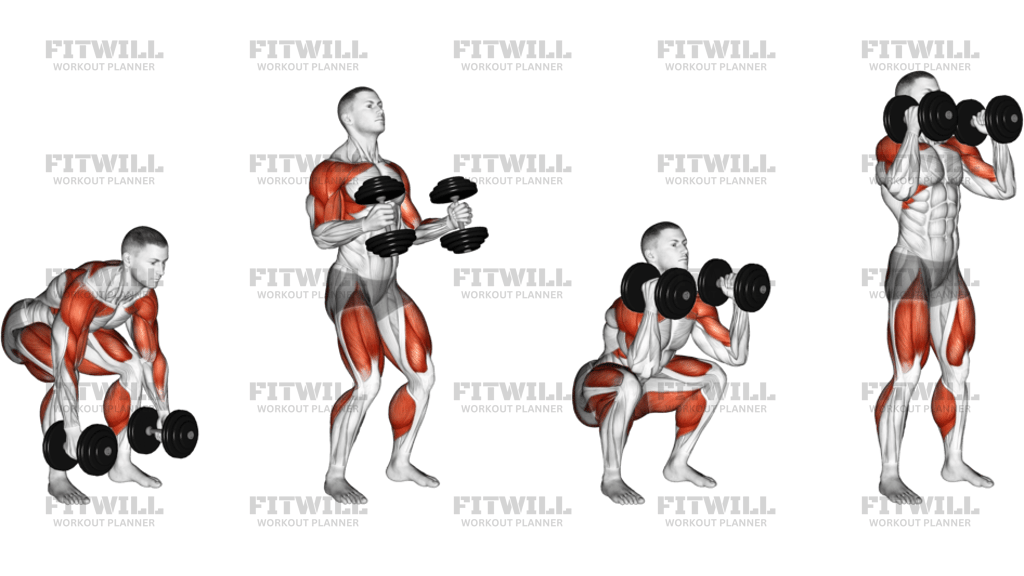
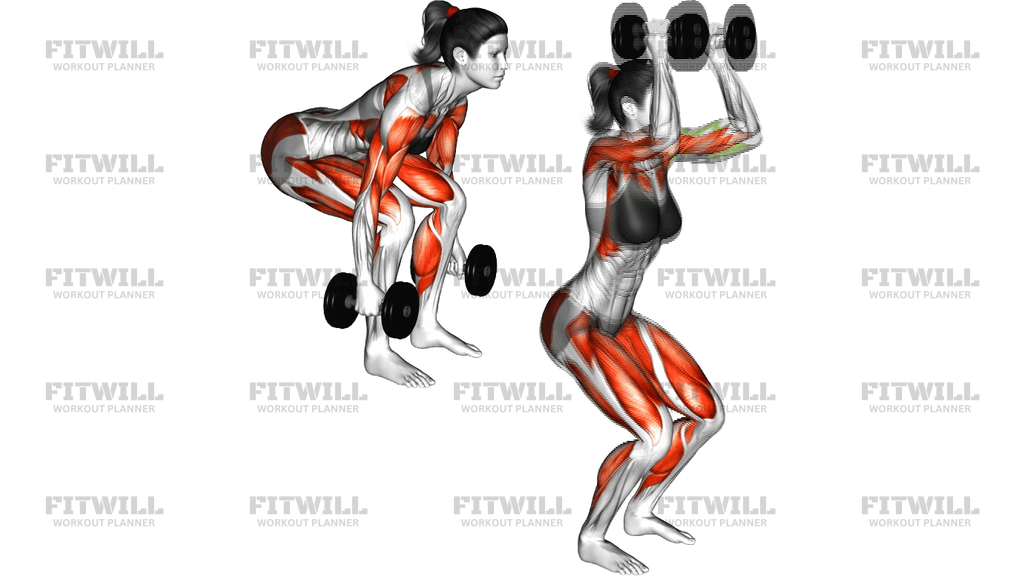
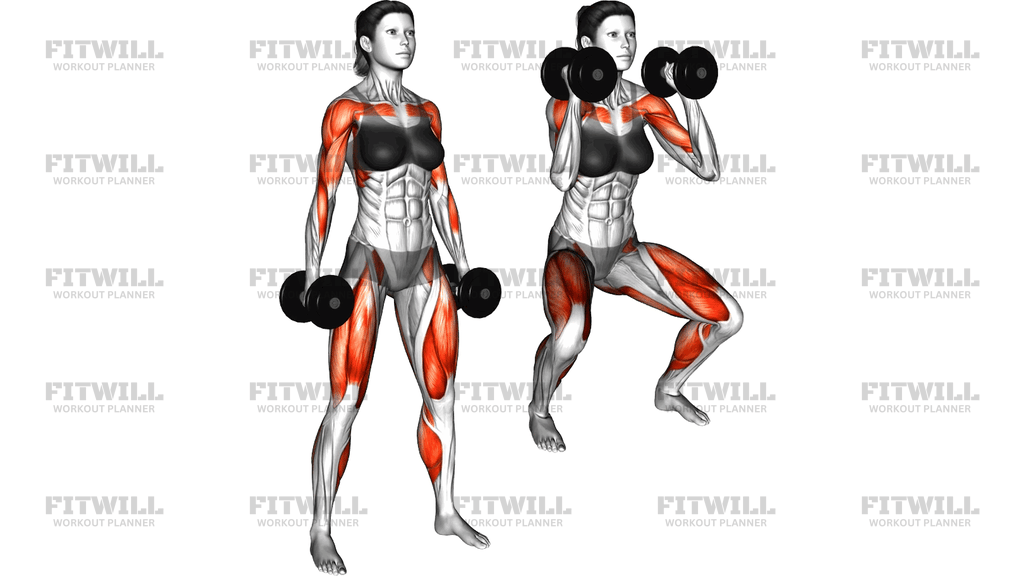
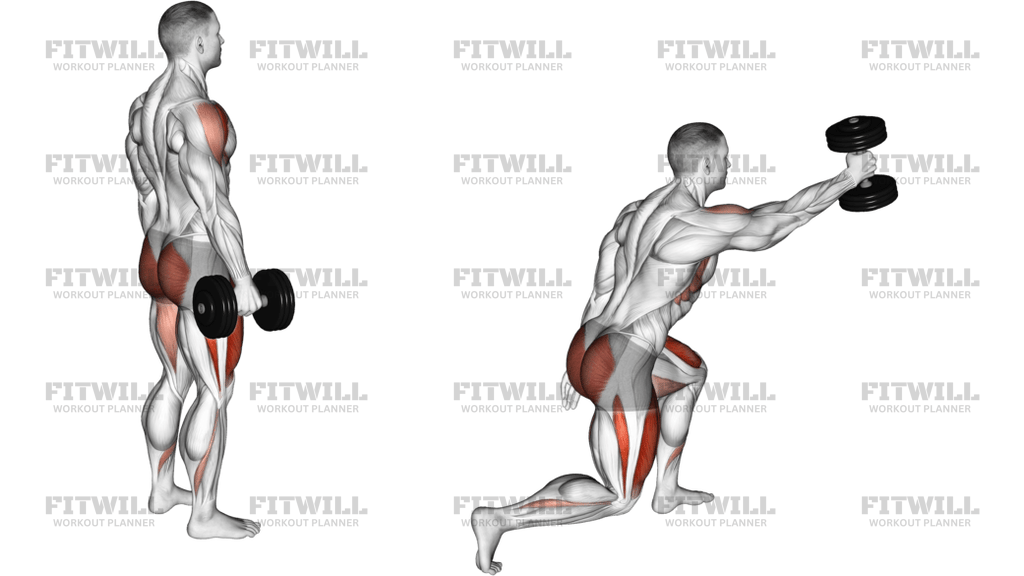
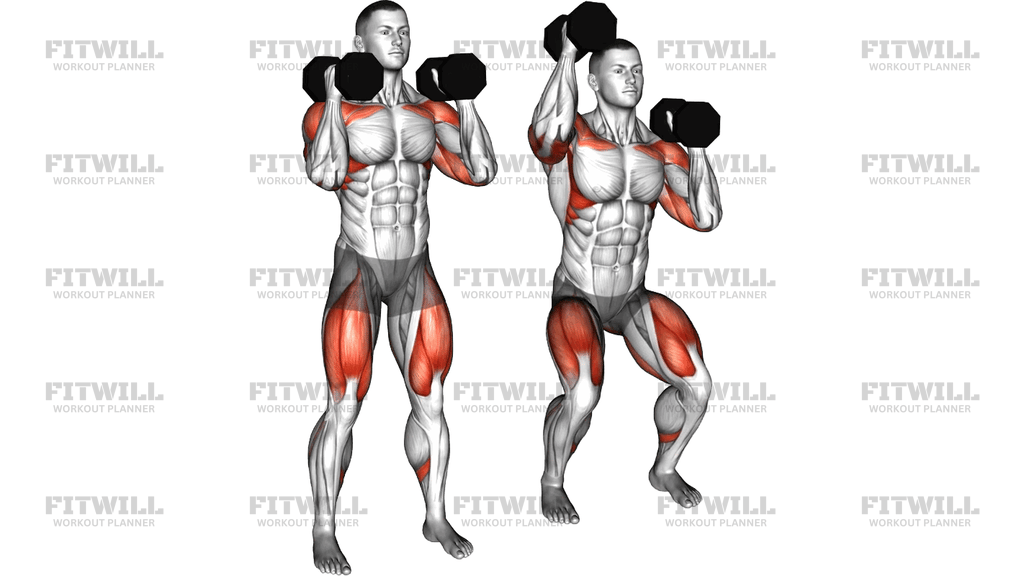
The Dumbbell Alternating Arm Thruster is a full-body compound lift that combines a squat with an overhead press, performed one arm at a time. You hold a dumbbell in each hand at shoulder height, dip into a partial squat, then drive up through your legs while pressing one dumbbell straight overhead. On the next rep you press with the opposite arm, so the pressing work alternates side to side while both legs power every repetition.
This movement is useful for anyone who wants a lot of training effect in a small window of time. Because your legs generate the force and your arm simply delivers it overhead, you can use it as a strength builder with heavier dumbbells and lower reps, or as a conditioning tool with lighter weights and continuous reps for time. It shows up in circuit training, general strength programs, and sport preparation where repeating explosive full-body efforts matters.
The muscles involved span nearly the whole body. Your quads and glutes handle the dip and drive, your hamstrings and calves assist the extension, and your core braces hard to transfer force from the ground to the pressing arm. The working shoulder and triceps press the dumbbell overhead while the non-working side holds its dumbbell at the shoulder, which builds anti-rotation control through your trunk and obliques.
Setup matters more than people expect. A stance about shoulder-width apart with your weight spread across your whole foot gives you a stable base for both the squat and the drive. Keeping both dumbbells racked at your shoulders, elbows tucked slightly in front of the body, keeps the weights close to your center of mass and protects your lower back from being pulled forward. If the weights drift away from your body, every rep gets harder on the spine and less efficient through the legs.
Execution is a rhythm, not two separate exercises glued together. Dip by bending your hips and knees a few inches, then reverse the direction aggressively and let that upward momentum carry the dumbbell overhead as your legs finish extending. Punch the ceiling with one arm, lower the dumbbell back to the shoulder as you reset your stance, and repeat with the other arm. The legs and press should finish together at the top.
A few practical points keep this safe and productive. Choose weights you can press with control even when fatigued, keep your torso upright through the dip rather than folding forward, and stop the set when your squat depth or pressing line starts to break down. Breathe steadily throughout, exhaling as you drive up, and use a flat, non-slip surface with clear space overhead.
[ Workout Log & Planner ]
Put your next workout in Fitwill
Keep your plan and training log ready when you are.


Instructions
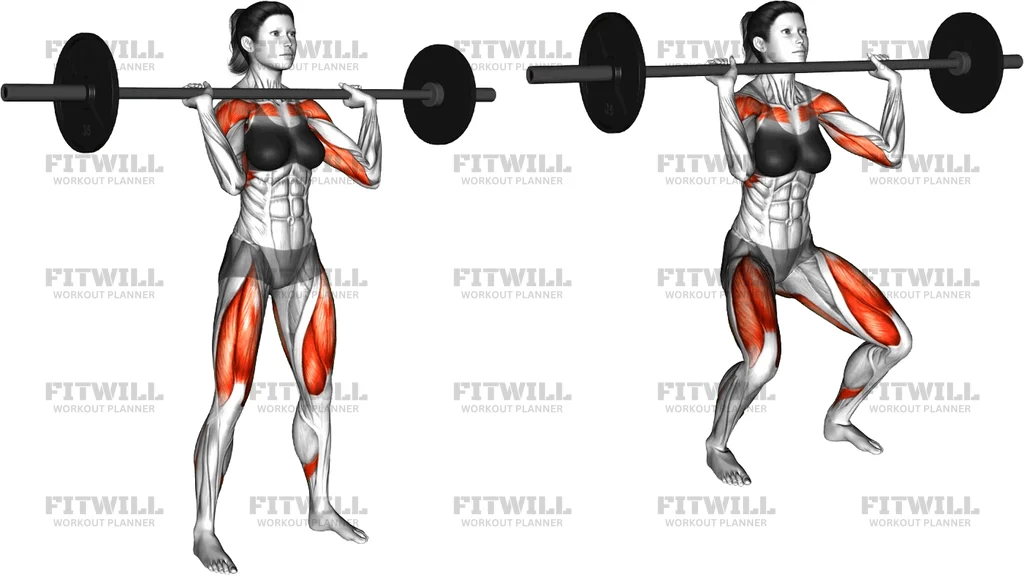
- Stand with your feet about shoulder-width apart and hold a dumbbell in each hand, resting the weights on the fronts of your shoulders with your elbows down and slightly in front of your ribs.
- Set your weight evenly across both feet, soften your knees, and brace your abdominal muscles as if preparing for a light push to the torso.
- Push your hips back and bend your knees to lower into a shallow squat, keeping your chest tall and both dumbbells racked at your shoulders.
- Drive forcefully through your heels and mid-foot to stand back up, letting the leg extension power the movement.
- As your legs extend, press the dumbbell in one hand straight overhead, rotating your palm to face forward and finishing with the arm locked out beside your ear.
- Lower the pressed dumbbell back to your shoulder under control as you settle into your next shallow dip, keeping the other dumbbell racked at the opposite shoulder.
- Repeat the dip and drive on the following rep, pressing with the opposite arm so the work alternates left and right.
- Exhale as you drive up and press; inhale as you lower into the dip and bring the dumbbell back down.
- Keep your knees tracking over your toes and your torso upright throughout, finishing each rep standing fully tall with hips and knees extended.
- When the set ends, step the dumbbells down to the floor one at a time by hinging at the hips rather than bending over with a rounded back.
Tips & Tricks
- The most common fault is turning this into an arm press. If the dumbbell stalls halfway up, use a deeper dip and a faster drive from the legs instead of muscling it with the shoulder.
- Let the non-pressing elbow drop if it drifts high while the other arm works, since a raised elbow on the racked side pulls your torso into a lean.
- If your lower back arches at the top of the press, squeeze your glutes as your legs finish extending; that locks your pelvis under the overhead position.
- Alternating arms creates a slight twist each rep. Keep your chest facing forward and your feet planted rather than rotating your whole torso toward the pressing side.
- Speed comes from the transition, not the descent. Dip smoothly, but reverse direction sharply so the legs do the launching.
- If you lose balance when pressing, widen your stance slightly and check that your weight is in your whole foot rather than rocking onto your toes.
- For conditioning, keep the dumbbells light enough that your squat depth stays consistent late in the set, when the alternating pattern tempts you to rush.
- Rest the dumbbells on your shoulders between reps instead of holding them floating with your arms, which spares your upper traps and extends your working time.
Frequently Asked Questions
What muscles does the Dumbbell Alternating Arm Thruster work?
Your quads and glutes drive the squat, while the pressing shoulder and triceps move the dumbbell overhead. Your core, hamstrings, and calves stabilize and assist throughout, making it a genuine full-body lift.
Why press with one arm at a time instead of both?
Alternating arms means one side of your upper body is loaded overhead while the other stays racked, so your trunk has to resist rotation. That adds an anti-rotation challenge for the obliques that a two-arm thruster does not provide.
How deep should the squat be in the Dumbbell Alternating Arm Thruster?
A shallow to quarter squat is enough, since the goal is a quick dip and drive rather than a deep squat. Go slightly deeper only if it helps you generate a stronger leg drive.
Is the Dumbbell Alternating Arm Thruster suitable for beginners?
Yes, with light dumbbells. Beginners should first learn the dip-and-drive timing and an overhead press separately, then combine them slowly before using the movement for conditioning.
How heavy should the dumbbells be?
Pick a weight you can press cleanly for all planned reps with your weaker arm, since the alternating pattern exposes side-to-side differences. For conditioning sets, err lighter and prioritize consistent squat depth.
Should my breathing follow the arm switch?
Breathe with the rep, not the arm: exhale as you drive up and press, inhale as you descend into the dip. Continuous, rhythmic breathing matters more than matching each breath to a specific side.
Can I do the Dumbbell Alternating Arm Thruster if my shoulders hurt when pressing overhead?
Discomfort overhead is a signal to stop and reassess. You can substitute a push press to a lower pressing height or a front squat plus separate pressing work, but persistent pain should be checked by a professional before continuing.
What is the most common mistake with this exercise?
Rushing the transition and pressing with the arm before the legs have contributed, which turns it into a slow shoulder press. Drive from the legs first and let the arm finish the momentum the squat created.
How do I program the Dumbbell Alternating Arm Thruster for conditioning?
Use light-to-moderate dumbbells and perform continuous alternating reps for set time blocks, such as 20 to 40 seconds of work, keeping the dip depth and press path consistent from first rep to last.