Kettlebell Bottoms Up Single Arm Overhead Carry
The Kettlebell Bottoms Up Single Arm Overhead Carry is a loaded carry variation where you press a kettlebell upside down straight overhead and walk with it. Holding the bell by the handle with the round body sitting above your fist completely changes the demand of the carry: the offset mass is constantly trying to tip sideways, so your shoulder, upper back, and grip have to make hundreds of small corrections every few steps. It looks like a simple walk, but it behaves more like a moving stability test.
This exercise is best known for what it does to shoulder control. Because the bell sits above your hand rather than hanging below it, the stabilizing muscles around the shoulder joint and the muscles of the forearm and hand work far harder than in a standard overhead carry. At the same time, holding one bell overhead on one side forces the trunk to resist side bending, which challenges the obliques and deep core with every step.
The setup matters more here than in almost any other carry. If you rush the press or start walking before the bell is stacked over your wrist and shoulder, the wobble starts before you take a step and never really settles. A clean press, an active shoulder packed up toward the ear, and a vertical forearm underneath the bell give you the best chance of controlling it. The walking path should be flat and clear, since any trip or sudden stop with an inverted bell overhead ends badly.
To execute it well, clean the kettlebell to your shoulder, flip it bottoms up, press it overhead until your elbow is locked and the bell is directly over your shoulder joint, then walk with short, deliberate steps. Keep your ribs down, your torso tall, and your free arm relaxed but slightly out for balance. When you finish the distance, stop walking first, lower the bell under control to your shoulder, then bring it down to the floor before switching sides.
This movement is popular with lifters who want sturdier overhead pressing, climbers and racket-sport players who need grip endurance and shoulder stability, and general trainees who want carry work that also trains the trunk. Because the load has to stay light compared with a regular overhead carry, it is a good way to practice overhead positioning without heavy spinal loading.
Treat it as a skill as much as a strength exercise. Start with a weight you can hold upside down in the rack position without the bell flopping, master short distances, and only progress the load or distance once the wobble is quiet. If the bell starts to lose its inverted position, bring it down rather than fighting it overhead.
[ Workout Log & Planner ]
Put your next workout in Fitwill
Keep your plan and training log ready when you are.


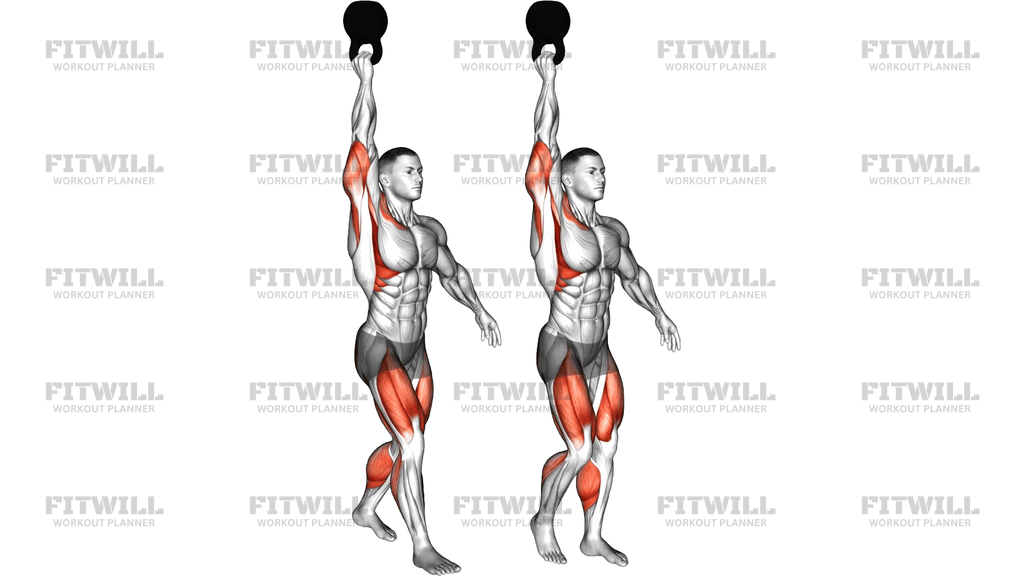
Instructions
- Place a kettlebell on the floor between your feet, stand tall with feet about hip-width apart, and set up on a flat, clear walking path.
- Hinge slightly and clean the kettlebell to your shoulder, gripping the handle firmly so the bell body sits above your fist in the bottoms up position.
- Brace your core, pull your ribs down, and squeeze the handle hard before pressing.
- Press the kettlebell straight overhead until your elbow is fully locked and the bell is stacked directly over your wrist, elbow, and shoulder joint.
- Keep your working shoulder lifted toward your ear, bicep close to your ear, and your forearm vertical so the inverted bell stays balanced on your fist.
- Let your free arm hang relaxed at your side or hold it slightly out from your body for balance.
- Walk forward with short, controlled steps, keeping your torso tall and level, avoiding any lean to the left or right as the bell shifts.
- Breathe in a shallow, steady rhythm through your trunk while walking; do not hold your breath for the whole set.
- When you reach your target distance, stop walking, lower the kettlebell under control back to your shoulder, then bring it down to the floor.
- Reset your grip and repeat on the other side, carrying the same distance and load.
Tips & Tricks
- Choose a much lighter kettlebell than you would use for a regular overhead carry; if the bell cannot stay inverted in the rack position, it is too heavy to learn with.
- Squeeze the handle as if trying to crush it. Most of the wobble in a bottoms up press comes from a lazy grip, and a tight fist steadies the bell immediately.
- Stack the bell over the shoulder joint, not out in front of your face. A bell that drifts forward pulls your ribs up and arches your lower back.
- If the bell tips toward your thumb or pinky side, correct with small wrist adjustments rather than bending your elbow or leaning your torso.
- Take shorter steps than you think you need. Long strides exaggerate the side-to-side sway of the hips and make the overhead bell much harder to control.
- Watch for shrugging the opposite shoulder up as you fatigue; keep the non-working side long and relaxed so your torso stays level.
- Do your first sets near a rack or wall-free open area with nothing overhead, so a dropped bell has a safe landing.
- If the bell starts rotating out of the upside down position mid-walk, stop, lower it to your shoulder, and reset instead of pushing through a losing battle.
- Progress distance before weight. Adding five to ten meters of controlled walking builds more stability than jumping to a heavier bell and fighting it.
Frequently Asked Questions
What muscles does the Kettlebell Bottoms Up Single Arm Overhead Carry work?
The main work is done by the shoulder stabilizers and deltoids of the working arm, along with the forearms and grip. The upper traps support the overhead position, and the obliques and deep core work to keep your torso from bending away from the load.
Why hold the kettlebell bottoms up instead of right side up?
With the heavy body of the bell sitting above your hand, the load is unstable and constantly pulls off-center, which forces your grip, wrist, and shoulder stabilizers to work much harder than in a normal overhead carry. It turns a simple walk into a stability drill.
Is the Kettlebell Bottoms Up Single Arm Overhead Carry suitable for beginners?
Yes, but only with a light kettlebell and short distances. Beginners should first be comfortable holding a bell bottoms up at chest and shoulder height before pressing it overhead and walking.
How heavy should the kettlebell be for this exercise?
Use a weight you can hold upside down at your shoulder for several seconds without the bell flopping over, which is usually far lighter than your regular overhead press weight. Distance and control should progress before load.
How far should I walk during each set?
Start with 10 to 20 meters per side and build toward 30 to 40 meters as control improves. The set is over when the bell becomes hard to keep balanced, not when your legs are exhausted.
Why does my shoulder shake so much during the carry?
Shaking is a normal sign that the small stabilizing muscles around the shoulder are being challenged, especially with the inverted bell. Reduce the weight or shorten the distance until the shaking is manageable, and it will improve with practice.
What is the most common mistake in the Kettlebell Bottoms Up Single Arm Overhead Carry?
The most common mistake is letting the bell drift forward of the shoulder and arching the lower back to compensate. Keep the bell stacked directly over your shoulder joint with your ribs pulled down and your torso vertical.
What can I substitute if I cannot control the bottoms up position yet?
Carry the kettlebell normally overhead with the bell resting on the back of your wrist, or use a bottoms up rack carry at shoulder height. Both build the grip and trunk control needed before walking with an inverted bell overhead.
Is this exercise safe for the shoulder joint?
When performed with an appropriate weight and a stacked overhead position, it is generally well tolerated and is often used to build shoulder stability. If pressing overhead causes pain, lower the load, reduce the range, or consult a qualified professional before continuing.
Should I switch sides during a set or complete one side first?
Complete the full distance on one side, lower the bell safely, then carry with the other arm. Always start with your weaker or less stable side so both sides get equal quality work.