Standing Chest Cross Stretch
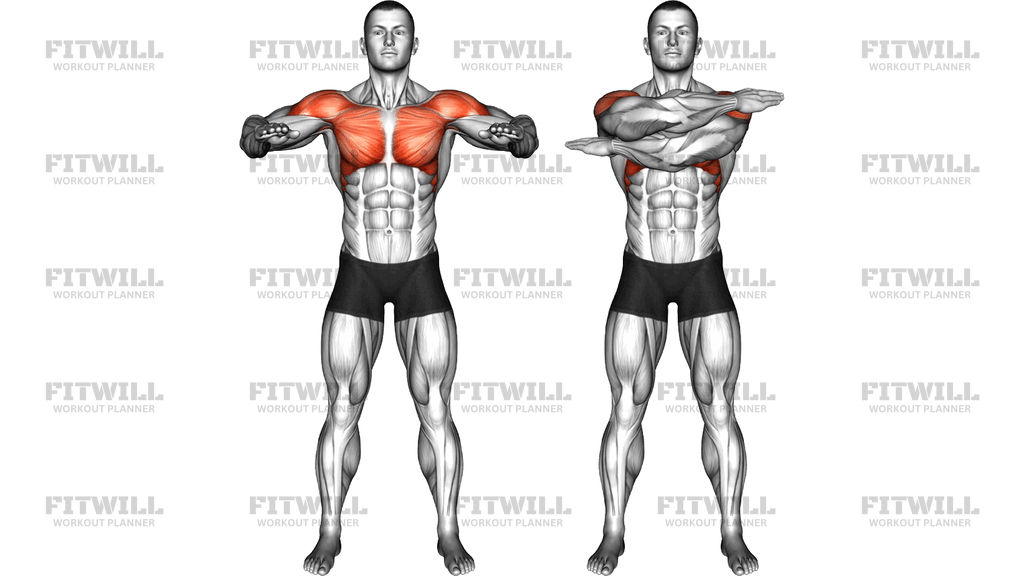
The Standing Chest Cross Stretch is a simple body weight stretch performed from a tall standing position. You raise both arms to shoulder height, cross them in front of your torso, and draw them gently in toward your chest to create a broad stretch through the chest, the front of the shoulders, and the muscles between the shoulder blades. Because it requires no equipment and very little space, it is one of the easiest upper body stretches to slot into a warm-up, a cool-down, or a mid-day break from desk work.
This stretch is especially useful for anyone whose daily posture rounds the shoulders forward: office workers, drivers, and people who spend long hours on a phone or laptop. It also fits naturally before and after pressing sessions, such as bench presses, push-ups, and overhead work, where the chest and shoulder muscles are loaded heavily. Swimmers and racquet sport players often appreciate it as well, since their sports keep the chest muscles in a shortened, dominant position.
Setup matters more than it looks. Standing tall with the ribs stacked over the pelvis keeps the stretch in the intended tissues; if you slump or flare the ribs, the movement loses its focus and the lower back can pick up unwanted stress. Keep the arms relaxed and at roughly shoulder height as you cross them, and let the stretch come from bringing the arms in, not from forcing the shoulders forward with a hard shrug.
To execute it well, breathe steadily and ease into the position over a few seconds rather than yanking the arms in. You should feel a broad, comfortable pull across the upper chest and around the shoulder area, never sharp pain in the shoulder joint itself. Hold for twenty to thirty seconds, then switch which arm is on top so both sides get an even stretch, since the crossed-arm position can feel slightly different depending on the arrangement.
Common use cases include general flexibility routines, pre-training mobility work, and recovery days when you want gentle movement without loading the joints. It pairs well with doorway chest stretches and wall slides if your goal is to open up tight chest muscles. As a safety point, anyone with a recent shoulder injury, shoulder impingement, or rotator cuff irritation should keep the arm position low and the pull light, or choose a different stretch entirely if crossing the arms provokes discomfort.
Fitwill
Log Workouts, Track Progress & Build Strength.
Achieve more with Fitwill: explore over 9600 exercises with images and videos, access built-in and custom workouts, perfect for both gym and home sessions, and see real results.
Start your journey. Download today!




Instructions
- Stand upright with your feet about hip-width apart, knees soft, and your weight balanced evenly across both feet.
- Draw your shoulder blades down and back slightly, tighten your abdominal muscles lightly, and keep your ribs stacked over your hips instead of arching the lower back.
- Raise both arms straight out in front of you to about shoulder height, palms facing down and elbows almost locked into a long, relaxed line.
- Cross your right arm over your left arm at mid-forearm or wrist level, keeping both arms at shoulder height.
- Exhale and gently draw both crossed arms in toward your chest, letting your upper back round slightly as the arms squeeze inward.
- Hold the end position where you feel a broad, comfortable stretch across your chest and around both shoulder areas, without any pinching at the front of the shoulders.
- Keep your neck relaxed and your gaze forward; avoid shrugging your shoulders up toward your ears as you pull the arms in.
- Breathe slowly and evenly throughout, and deepen the stretch slightly on each exhale if it stays comfortable.
- After twenty to thirty seconds, slowly release the arms back out to shoulder height, then re-cross with the left arm on top and repeat for a balanced hold.
Tips & Tricks
- A common mistake is pulling the arms in with brute force; the stretch should build gradually over the hold, so use about half the effort you think you need at first.
- If you feel a pinch at the front of one shoulder, lower your arms a few inches below shoulder height before crossing them, which shifts the tension away from the joint.
- Do not let your chin jut forward or your head drop toward the arms; a forward head posture cancels out the tall spine this stretch is trying to reinforce.
- Watch for your hips drifting backward as you pull the arms in. Keep your weight centered over your mid-foot so the rounding happens in the upper back, not the hips.
- Exhale fully as you draw the arms in; a full exhale naturally lets the ribs drop and makes the chest tissues easier to lengthen.
- Because the crossed-arm position is slightly asymmetric, always hold both versions, one with each arm on top, or one side will stay tighter than the other.
- If your shoulders round so far forward that your elbows collapse below your wrists, you are over-rounding; reduce the pull until the arms stay roughly level with the floor.
- Use this stretch between sets of pressing exercises as an active recovery reset, but save longer holds of thirty to forty-five seconds for cool-downs when the muscles are warm.
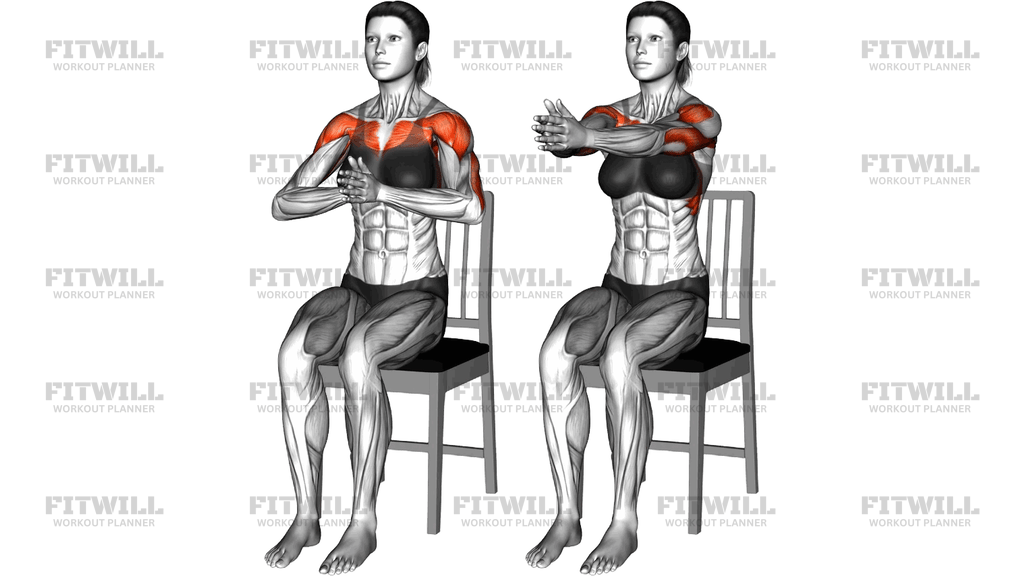
- For a gentler version at a desk or when standing is uncomfortable, perform the same crossed-arm pull while seated tall on a firm chair with both feet flat on the floor.
Frequently Asked Questions
Which muscles does the Standing Chest Cross Stretch target?
The main target is the pectoralis major across the upper chest, with the front of the shoulders working through the same crossed-arm position. The muscles between the shoulder blades, such as the rhomboids, also lengthen as the upper back rounds slightly.
Is the Standing Chest Cross Stretch good for beginners?
Yes, it is one of the simplest upper body stretches to learn because it uses no equipment and the range is self-limiting. Beginners should start with a light pull, short holds of fifteen to twenty seconds, and attention to staying tall through the spine.
Should I cross the right arm over the left or the left over the right?
Do both, one after the other, because each arrangement lengthens the shoulders and chest slightly differently. Holding both versions keeps the stretch balanced from side to side.
Why do I feel the Standing Chest Cross Stretch more in my shoulders than in my chest?
This usually means your arms are pulled in too far or too high, shifting tension into the shoulder joints. Lower the arms slightly below shoulder height and reduce how tightly you draw them in until the pull spreads across the chest.
How long should I hold the Standing Chest Cross Stretch?
Twenty to thirty seconds is a solid default for most people, repeated two to three times per side. In a cool-down or flexibility session, longer holds of thirty to forty-five seconds can feel more productive once the muscles are warm.
Can I do the Standing Chest Cross Stretch before a bench press workout?
Yes, shorter holds of ten to fifteen seconds work well as part of a warm-up to loosen the chest and shoulders before pressing. Save the longer, deeper holds for after training, when longer-duration stretching will not temporarily reduce force output.
What is a good substitute if crossing my arms hurts my shoulders?
A doorway chest stretch, where the forearms rest on the door frame and the chest gently opens forward, targets the chest without compressing the shoulder joint. A wall angle stretch with the arms raised against a wall is another comfortable option.
How often should I perform the Standing Chest Cross Stretch?
It is gentle enough to do daily, which makes it a good fit for people with desk-bound posture. One to three holds per side on most days is a realistic routine that keeps the chest and shoulders from getting progressively tighter.
Is it safe to do the Standing Chest Cross Stretch with a rotator cuff issue?
Crossing the arms in front can compress tissues at the front of the shoulder, so anyone with rotator cuff irritation or impingement should keep the pull very light, lower the arms, and stop if symptoms appear. When in doubt, get cleared by a healthcare professional before adding it to your routine.