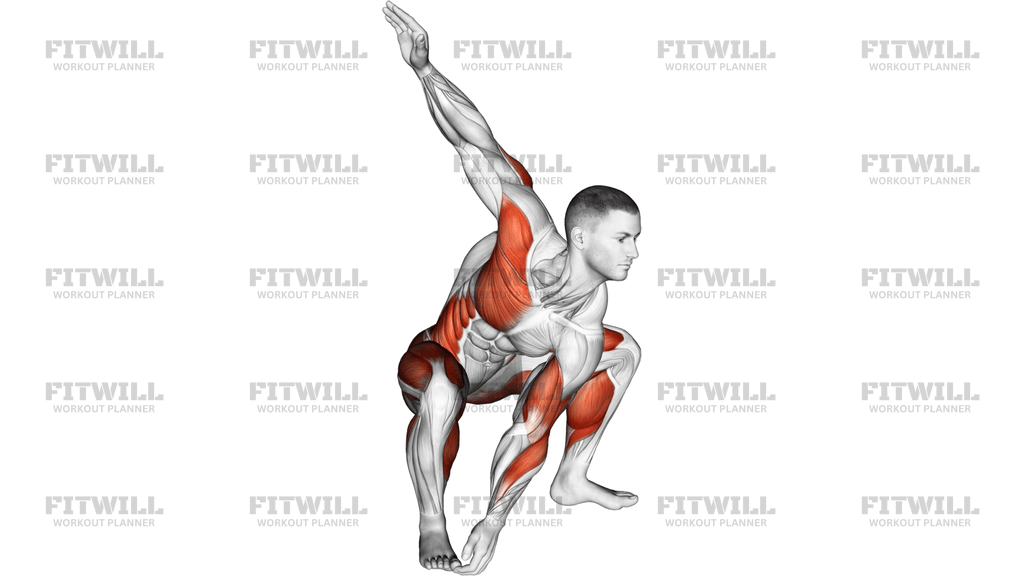
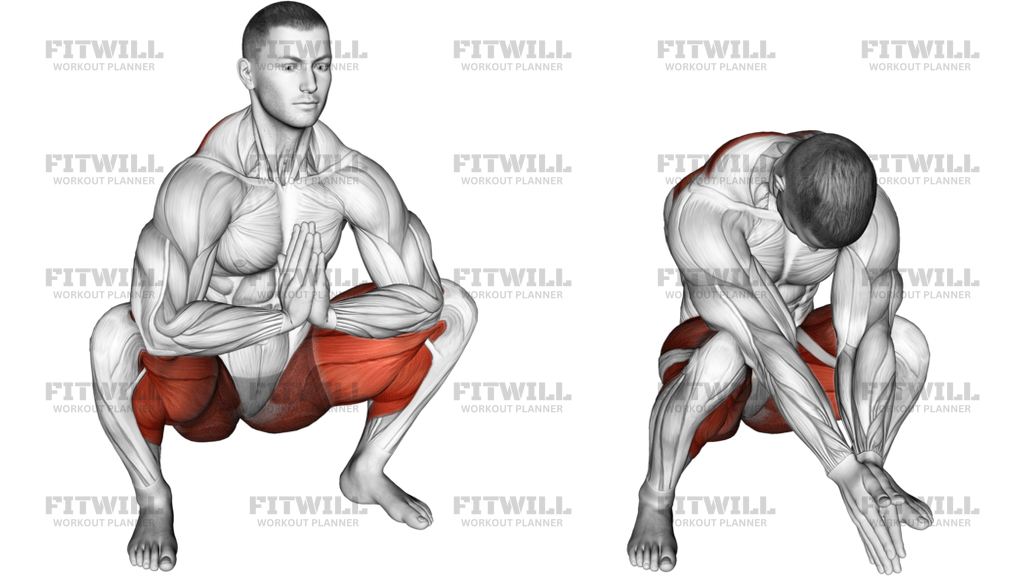
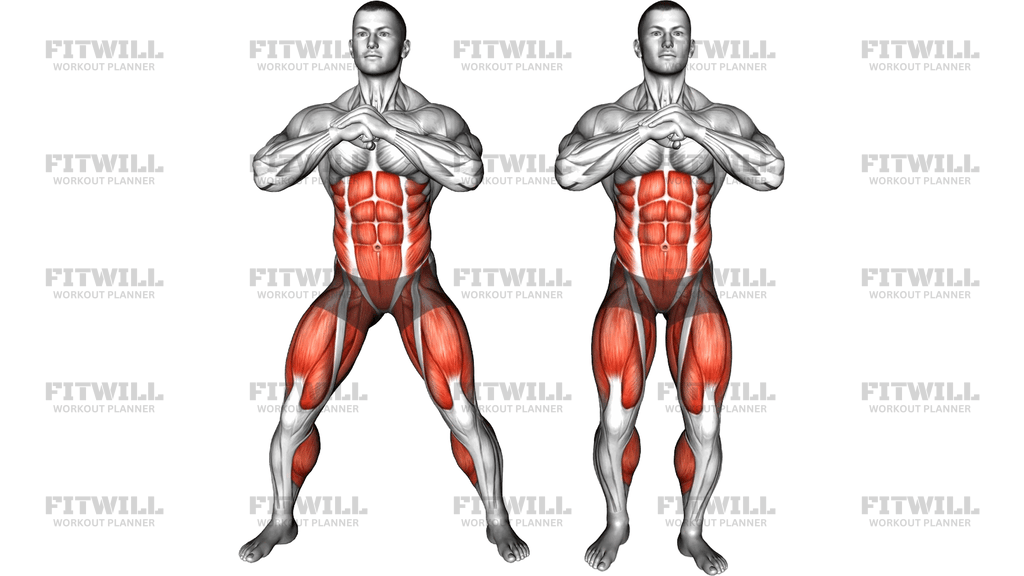
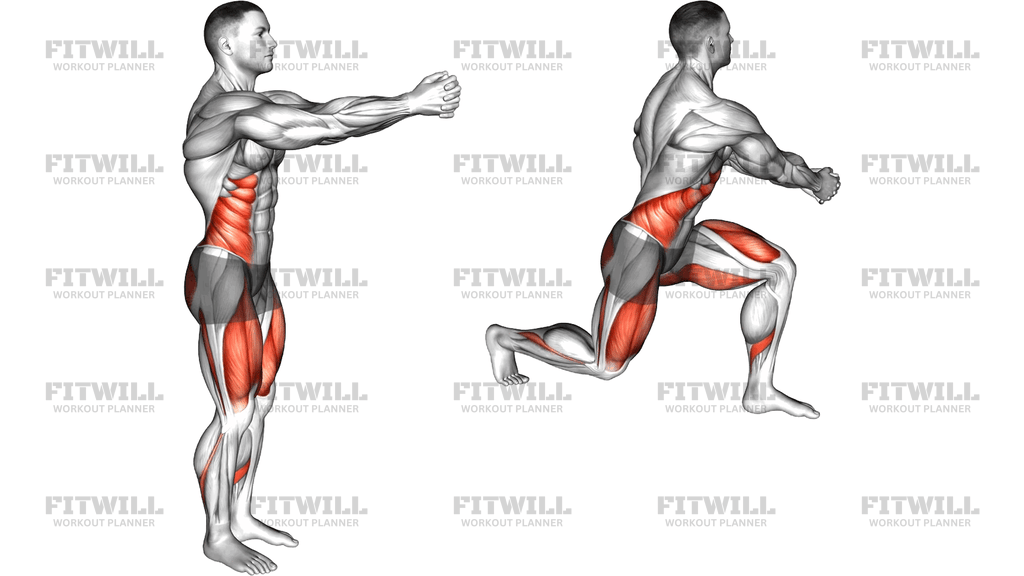
Lying Frog Push Abduction
Lying Frog Push Abduction is a bodyweight movement performed on your back that takes the legs from a frog position—knees bent outward with the soles of the feet pressed together—to a fully extended, wide V shape above the hips. The push out and the controlled draw back in both load the inner thigh muscles, which rarely get direct, isolated work in standard lower body training.
The exercise is especially useful for anyone who feels their adductors are the weak link in squats, lunges, or changes of direction, and for people who sit for long hours and have lost easy range in the hips. Because you are lying down, the spine is supported and the hip joints can move freely without the balance demands of standing abduction work, which makes it approachable for beginners while still giving advanced lifters a targeted pump for the inner thighs.
The main muscles at work are the adductors on the inside of the thigh—the adductor longus and adductor magnus in particular. As the legs open into the wide V, the outer hip muscles help control the path, and the deep core works steadily to keep your low back from arching off the floor as the legs extend away from the body. It is a small-feeling movement with a very specific target.
Setup matters more here than in most floor exercises. Your distance from the floor to your legs, the bend of your knees at the start, and the position of your pelvis all determine whether the hips do the work or your low back compensates. Keep the pelvis neutral and the ribcage settled down toward the floor throughout; the moment the lower back lifts, the legs are traveling too far or too fast for your current control.
To execute it well, think of pushing the feet away from each other along an arc rather than simply straightening the knees. The legs should glide open to the sides as they rise, ending in a deliberate V with the kneecaps pointing up or slightly outward. On the way back, reverse the same arc—bend the knees outward and let the soles find each other again with control rather than letting gravity snap them together.
You will see this movement used in warm-ups before lower body sessions, in Pilates-style hip and core circuits, and as a finisher for inner thigh work when standing variations have already been trained. Two to four sets of ten to twenty slow repetitions is a reasonable range, and it pairs naturally with glute bridges or clamshells to balance the front and back of the hip.
Fitwill
Log Workouts, Track Progress & Build Strength.
Achieve more with Fitwill: explore over 9600 exercises with images and videos, access built-in and custom workouts, perfect for both gym and home sessions, and see real results.
Start your journey. Download today!




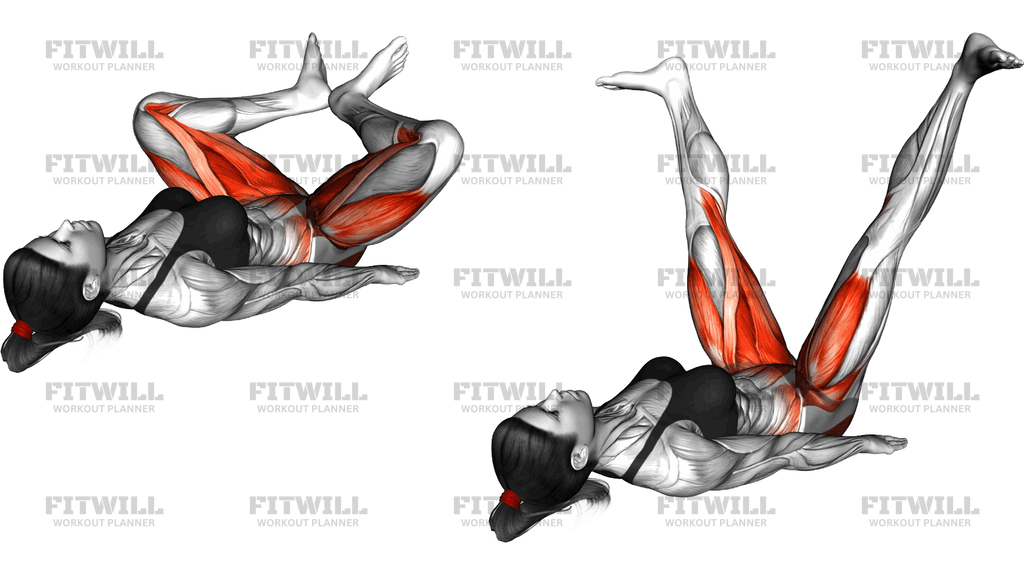
Instructions
- Lie on your back on an exercise mat with your legs bent, knees open to the sides, and the soles of your feet pressed together in a frog position, drawn in close to your hips.
- Rest your arms on the floor alongside your body, palms down, and let your head and shoulders stay relaxed against the mat.
- Set your pelvis in a neutral position and gently draw your belly button in so your low back stays in contact with the floor before you start moving.
- Exhale and press your feet away from each other, sliding the legs out along an arc so they open to the sides as they straighten.
- Continue until the legs are fully extended in a wide V above your hips, with the kneecaps facing up or angled slightly outward and the toes gently pointed or flexed consistently on both sides.
- Pause for a beat at the top of the V and feel the inner thighs holding the legs against the pull of gravity.
- Inhale and reverse the arc with control, letting the knees bend outward and the soles of the feet come back together without dropping or clapping them.
- Keep your ribcage down and your low back on the mat through the entire rep; if the back arches, shorten the range slightly.
- Complete your repetitions with the same tempo both directions, then lower one leg at a time to the floor and shake out the hips before the next set.
Tips & Tricks
- If your low back lifts off the mat as the legs push out, stop the V a little narrower—full extension is a goal to earn, not a requirement on day one.
- Avoid letting the feet simply snap together on the return; the inward draw is where the adductors work hardest, so give it the same two-count you give the push.
- Keep the knees opening outward during the frog setup rather than collapsing inward, or the start position loses the stretch on the inner thighs that sets up the push.
- Do not grip the floor with your arms to muscle the legs around—the arms are there for balance, and the hips should be the only engines.
- If your hips feel pinched at the top, reduce the width of the V and keep the knees soft rather than locking them out hard.
- Move slower than feels necessary; because there is no external load, tempo is the main tool for making the inner thighs work.
- Watch for one leg opening wider than the other—a common sign of a tighter hip on one side—and match the weaker side rather than letting the looser side set the range.
- Breathe out on the push and in on the return; holding your breath usually coincides with the ribcage flaring and the back arching.
- Place a thin cushion under your head if your chin juts toward your chest, so your neck stays long and relaxed throughout the set.
Frequently Asked Questions
Which muscles does the Lying Frog Push Abduction work?
The primary muscles are the adductors on the inside of the thigh, especially the adductor longus and adductor magnus. The outer hips assist in controlling the wide V, and the deep core stabilizes your pelvis and low back while the legs move.
Why does the exercise start with the feet together in a frog position?
The bent-knee, soles-together setup lengthens the inner thighs first and lets the hips open externally. Pushing out from that position takes the adductors through a full arc from stretch to shortened, which is hard to achieve in standing abduction exercises.
Is the Lying Frog Push Abduction suitable for beginners?
Yes. Because you are lying on your back with no equipment or balance demand, it is one of the more accessible ways to train the inner thighs. Beginners should simply use a narrower V and fewer reps until the low back stays anchored comfortably.
My lower back arches when my legs extend into the V. How do I fix it?
Shorten the range so the legs stop before the back starts to lift, and brace the deep core by gently drawing the belly in before each rep. As your control improves, you can gradually widen the V.
Should my knees be straight or slightly bent at the top of the movement?
Fully straight is the target, but a soft knee is fine if locking out feels pinchy in the hip joint. The important part is that both legs reach the same width and the knees do not collapse inward on the way back.
What can I use instead of the Lying Frog Push Abduction?
Supine frog stretches, seated butterfly pulses, standing cable or band adduction, and side-lying hip circles all train similar tissue. The lying push version is the best pick when you want the adductors worked through a long arc with the spine supported.
How many reps and sets should I do?
Two to four sets of ten to twenty slow repetitions works well, since the movement uses only your leg weight as resistance. Prioritize a smooth two-count in each direction over squeezing out extra reps.
Can I do this exercise every day?
For most people, yes—it is a low-load bodyweight movement and often used in daily mobility routines. If your inner thighs feel sore or the hips feel irritated, give them a rest day as you would with any strength work.
Do I need a mat, or can I do it on the floor?
A mat is strongly recommended because the back of your pelvis, spine, and arms rest on the floor for the whole set. It cushions the contact points and gives you a clearer sense of whether your low back is staying down.