Cable Standing Single Delt Row
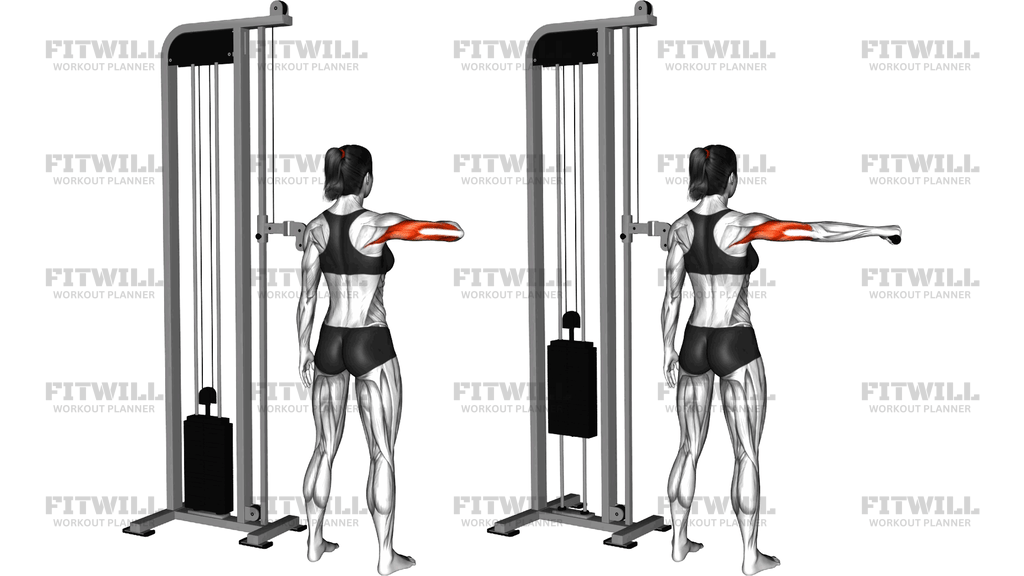
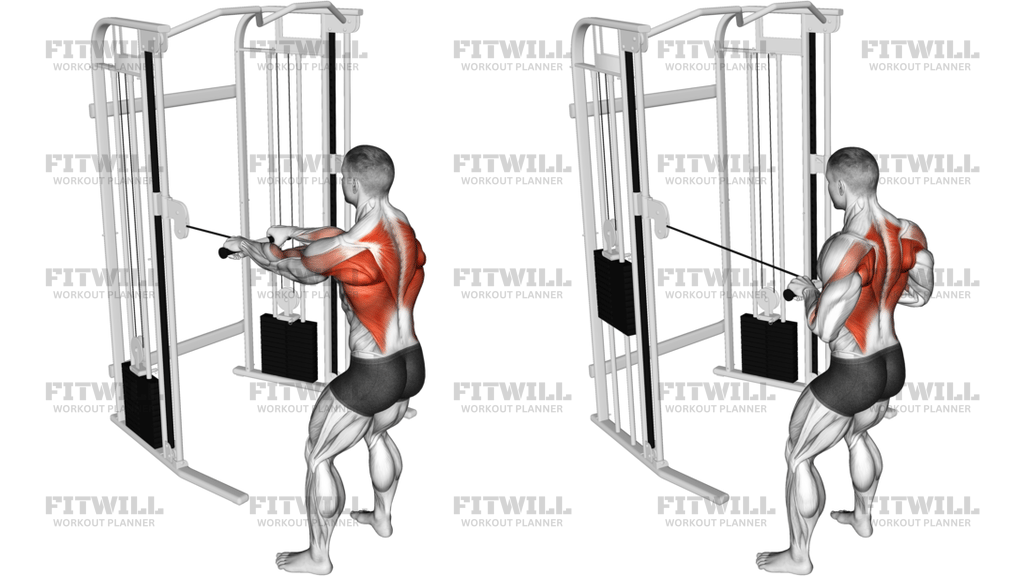
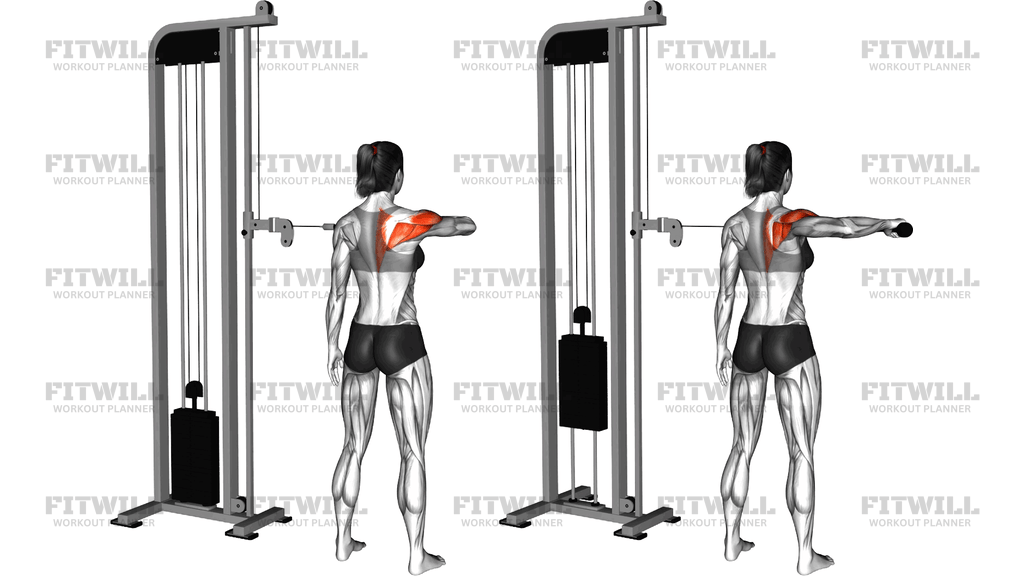
The Cable Standing Single Delt Row is a one-arm cable exercise performed with the pulley set at shoulder height. You stand side-on to the machine, hold a single handle with the far arm, and pull the handle horizontally out and away from your body until your working arm is extended out to your side at shoulder height. Because the cable runs across the front of your torso, the movement is essentially a horizontal abduction of the shoulder, which places direct tension on the rear deltoid with support from the mid-back muscles.
Most people train the front of the shoulders with pressing movements and leave the rear delts underdeveloped, which can contribute to rounded shoulders and uneven shoulder development. This exercise fills that gap with a smooth, consistent resistance profile. Unlike dumbbells, where tension fades at certain angles, the cable keeps loading on the rear delt throughout the entire arc, especially at the fully extended position where other tools tend to slack off.
The single-arm setup matters for two reasons. First, standing sideways to the stack means the cable pulls across your body, so you get a long stretch on the rear delt before you pull. Second, working one side at a time exposes and corrects left-to-right differences, which are common in shoulder training. Your stance and a braced torso are what keep the work on the shoulder instead of letting your trunk twist into the pull.
To execute it well, keep the pull at shoulder height and think about sweeping the arm wide in an arc rather than dragging it back toward your hip. The elbow stays nearly straight but not locked, and your shoulders stay level and square to the front. Control matters more than load here; the rear delt is a small muscle, and heavy weights almost always recruit the traps and torso rotation instead.
This movement fits well as an accessory on upper body or pull-focused days, typically for moderate to higher reps. It is also a practical option for people who find bent-over rear delt raises uncomfortable in the lower back, since the standing supported position removes that demand entirely.
[ Workout Log & Planner ]
Put your next workout in Fitwill
Keep your plan and training log ready when you are.


Instructions
- Set the pulley of a cable machine to shoulder height and attach a single handle.
- Stand sideways to the machine with the cable side toward your working arm; grip the handle with that hand and take one or two steps back so there is light tension with your arm reaching across the front of your body at shoulder height.
- Place your feet about hip-width apart, stagger them slightly if you need more stability, and keep your free hand at your side or on your hip.
- Brace your core and level your shoulders so your torso stays square and does not rotate toward or away from the stack.
- Start with your working arm across your chest at shoulder height and a slight bend in the elbow.
- Pull the handle out to your side in a wide arc, keeping it level with your shoulder, until your arm is extended out to the side at roughly shoulder height.
- Pause briefly at the outer position and squeeze the back of your shoulder without shrugging it toward your ear.
- Slowly let the arm travel back across the front of your body under control until you feel a stretch in the rear delt, without letting the weight stack slam down.
- Exhale as you pull out to the side and inhale as the arm returns across your body.
- Complete all repetitions on one arm, then switch sides so the other arm works against the same cable path.
Tips & Tricks
- Keep the handle at shoulder height the whole way through. If the arm drifts upward, the upper traps take over and the rear delt loses tension.
- If you feel the exercise mostly behind your neck or in your upper back, you are shrugging. Set the shoulder blade down and back before the first rep and keep the space between your ear and shoulder.
- A small elbow bend is fine, but do not bend the elbow more as you pull. That turns the movement into a rowing press and shifts work toward the arms.
- Do not twist your torso into the pull. If you have to rotate to finish the rep, the weight is too heavy; your torso is the frame, not a mover.
- Slow down the return. The stretch back across your body is where the rear delt is challenged the most, and dropping it fast cuts the range in half.
- Stand far enough from the stack that you get tension with your arm already reaching across your chest. Too close and the first half of the rep has no load.
- Use a lighter weight and higher reps than you would for a two-arm row. Eight to fifteen controlled reps per side usually works better than chasing load.
- If your shoulder pinches at the end of the arc, stop just short of full extension and work in that slightly shorter range without pain.
- Rest the non-working hand lightly on your hip or the machine frame for balance, but avoid leaning on it to the point of twisting your spine.
Frequently Asked Questions
What muscles does the Cable Standing Single Delt Row work?
The main muscle is the rear deltoid at the back of the shoulder, with the rhomboids and middle traps in the upper back assisting as the shoulder blade moves. The side deltoid contributes as the arm reaches the fully extended position.
Why is the cable pulley set at shoulder height for this exercise?
A shoulder-height pulley makes the cable pull horizontally across your chest, so the arm sweeps in a wide arc at shoulder level. That line of pull matches the rear delt's job of horizontal abduction far better than a low or high pulley would.
Is the Cable Standing Single Delt Row suitable for beginners?
Yes, it is beginner friendly because the machine controls the resistance path and the standing position does not require balance or lower back strength. Start with a light weight and focus on keeping the pull at shoulder height without twisting.
How is this different from a regular cable row?
A regular row pulls the handle toward your torso with a bent elbow and targets the lats and mid-back. In the Cable Standing Single Delt Row the arm stays nearly straight and sweeps out wide, which isolates the rear deltoid instead of the larger back muscles.
Why do one arm at a time instead of using both handles?
Working one side lets you stand sideways to the stack, which gives a longer pre-stretch across the chest and a cleaner arc. It also reveals and helps correct strength differences between your left and right shoulders.
My upper traps burn when I do this. What am I doing wrong?
That usually means you are shrugging or letting the arm drift above shoulder height. Lower the weight slightly, keep the handle level with your shoulder, and consciously pull your shoulder blade down before each rep.
Can I substitute the Cable Standing Single Delt Row with dumbbell rear delt raises?
Yes, bent-over or chest-supported rear delt raises hit similar muscles, but the cable version keeps steady tension through the stretched position and does not load your lower back. It is a good alternative when dumbbell raises feel awkward or strain your lower back.
How many sets and reps should I do?
Two to four sets of 10 to 15 reps per side works well as an accessory on shoulder or pull days. Because the rear delt is small, prioritize smooth, controlled reps over heavy loading.
Is it safe if I have shoulder discomfort with overhead pressing?
Many people tolerate this movement better because the arm stays at shoulder height and never goes overhead. Still, if you have a current or past shoulder injury, get clearance from a qualified professional and work in a pain-free range.
Should I step back from the cable machine before pulling?
A small step or two back is helpful because it keeps tension on the rear delt even when your arm starts across your chest. If you stand too close, the first part of the rep is unloaded and you lose half the range.