Standing Butt Kick Kickback
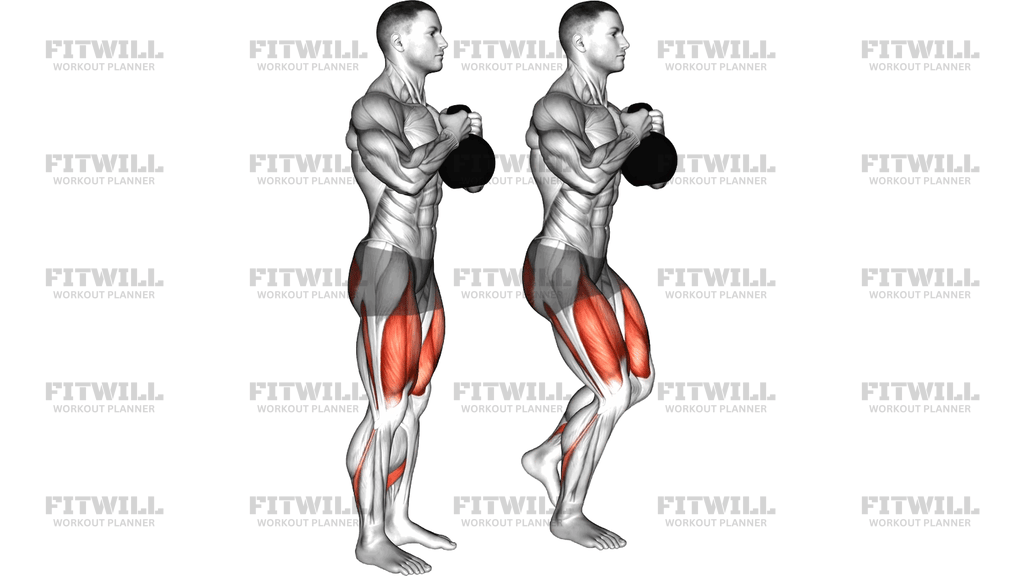
The Standing Butt Kick Kickback is a bodyweight movement performed from an upright standing position, where you balance on one leg while driving the opposite heel up and back behind your body toward your glutes. It blends two familiar actions: the butt kick from warm-up drills and the hip extension of a glute kickback. The result is a simple but effective way to wake up the glutes and hamstrings while challenging your balance on the supporting leg.
This exercise is useful as a warm-up primer before squats, lunges, or running, and it also works as a standalone activation drill for people who sit for long hours and struggle to feel their glutes during training. Because it requires no equipment and very little space, it fits easily into home workouts, hotel room sessions, or the first five minutes of a lower body day.
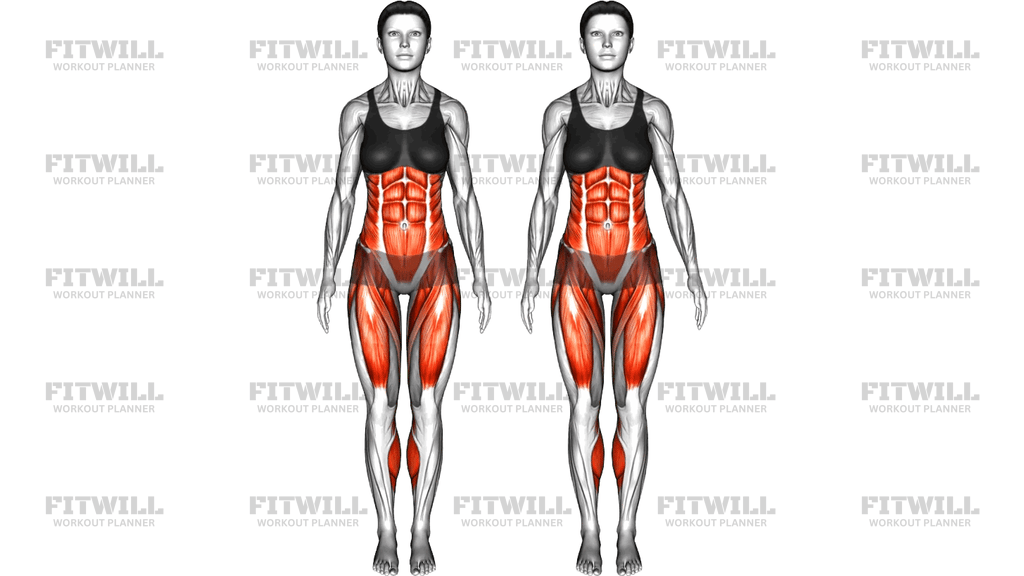
The main muscles at work are the glutes, particularly the gluteus maximus, which extends the hip as the heel travels back. The hamstrings assist by flexing the knee and helping pull the heel toward the glutes, the calves engage to control the foot, and the core works continuously to keep your torso tall while you balance on a single leg. The supporting leg's hip stabilizers also get quiet but meaningful work holding your pelvis level.
Setup matters more than it looks. A tall spine, soft bend in the supporting knee, and a braced midsection give the moving leg a stable platform to work from. If you lean your torso forward or arch your lower back to chase range, the emphasis shifts away from the glutes and toward the lumbar spine, which is the most common fault with this movement.
To execute it well, shift your weight fully onto one leg, brace your core, and bend the free knee to lift the heel up and back with intent, squeezing the glute of the moving leg at the top rather than just letting momentum swing the foot. Pause briefly, lower the foot under control, and either complete all reps on one side or alternate legs. Keep the movement crisp but not rushed.
In practice, the Standing Butt Kick Kickback is most often used in warm-up circuits, glute activation blocks, low-impact conditioning rounds, and beginner lower body routines. Start with bodyweight only and higher reps, and prioritize a deliberate glute squeeze over speed or height.
Fitwill
Log Workouts, Track Progress & Build Strength.
Achieve more with Fitwill: explore over 9600 exercises with images and videos, access built-in and custom workouts, perfect for both gym and home sessions, and see real results.
Start your journey. Download today!




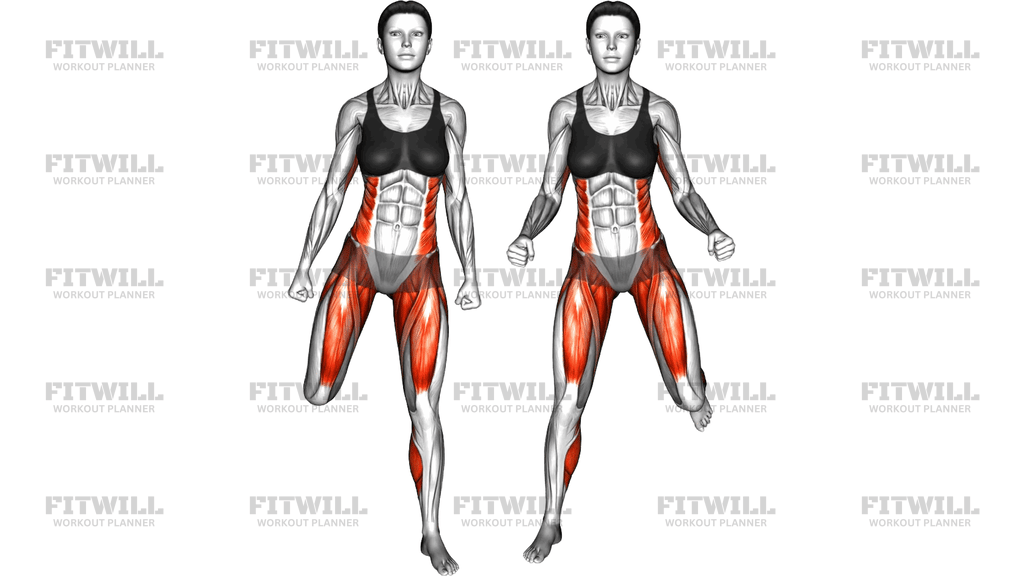
Instructions
- Stand upright with your feet hip-width apart, arms relaxed at your sides, and your weight evenly distributed before you begin.
- Shift your weight fully onto your left leg and allow a small, controlled bend in that supporting knee.
- Brace your core and pull your ribs down slightly so your torso stays tall and your lower back does not arch.
- Bend your right knee and lift your right heel up and back behind you, driving the movement from your glute and hamstring rather than swinging from the knee alone.
- At the top, your heel should be near or toward your glutes and your right glute should feel an obvious squeeze; avoid letting your torso lean forward as the leg lifts.
- Hold the top position for a brief pause of one to two seconds to emphasize the glute contraction.
- Lower your right foot back to the floor under control, resisting the urge to let it drop.
- Exhale as you lift the heel back, and inhale as you return the foot to the starting position.
- Either repeat all reps on the right side before switching, or alternate legs rep by rep, re-bracing your core each time you reset your stance.
Tips & Tricks
- If your torso tips forward as the heel lifts, shorten the range slightly and imagine a string pulling the crown of your head toward the ceiling.
- A common mistake is letting momentum swing the foot up; drive the heel back deliberately so the glute, not gravity, controls the rep.
- Keep the supporting knee soft but not locked; a locked knee makes balance harder and reduces hip stability.
- If your lower back arches at the top of each rep, tighten your brace and think about tucking your pelvis slightly under before you lift.
- Point your toes down slightly as the heel rises to feel a stronger calf and hamstring involvement, or keep the foot neutral to isolate the hip extension more.
- Wobbling on the standing leg is normal at first; fix your eyes on a stationary point ahead of you and spread the toes of your support foot for stability.
- Do not chase heel height at the expense of the squeeze; a shorter rep with a clear glute contraction beats a big swing with none.
- Hold onto a wall or chair with one hand only if your balance genuinely fails; wean off the support as soon as you can stand steadily.
- Use this movement before heavy lower body lifts as a high-rep activation set, around 12 to 15 controlled reps per side.
Frequently Asked Questions
Which muscles does the Standing Butt Kick Kickback target most?
The glutes, especially the gluteus maximus, are the primary movers, with the hamstrings assisting on the knee bend. The calves and core contribute to control and balance throughout the set.
Is the Standing Butt Kick Kickback good for beginners?
Yes, it is low-impact, requires no equipment, and the balance demand is manageable for most people. Beginners can hold a wall lightly for support until single-leg stability improves.
How is this different from a regular butt kick during a warm-up jog?
A regular butt kick is a fast, rhythmic drill driven mostly by the hamstrings, while the Standing Butt Kick Kickback is a deliberate, slowed rep with an intentional glute squeeze at the top. The paused version shifts the focus toward hip extension and glute activation rather than leg speed.
Why do I feel this more in my hamstrings than my glutes?
The knee bend naturally involves the hamstrings, but if they dominate, focus on driving the heel back and slightly up rather than straight up, and squeeze the glute of the moving leg at the top. Slowing the tempo usually helps the glutes take over.
Should I alternate legs or complete all reps on one side first?
Both work. Completing all reps on one side makes it easier to feel and correct each side, while alternating keeps the rhythm continuous and adds a mild conditioning effect.
How many reps and sets should I do?
For glute activation or a warm-up, 2 to 3 sets of 12 to 15 controlled reps per side works well. For a standalone home session, you can go slightly higher, up to 20 reps per side.
My balance is shaky on the standing leg. Is that a problem?
Some wobble is expected when you first train single-leg stance. Fix your gaze on a fixed point, keep a soft bend in the support knee, and lightly touch a wall with one fingertip until your stability improves.
Can I add resistance to the Standing Butt Kick Kickback?
Yes, an ankle weight on the moving leg is the simplest progression once bodyweight reps feel easy. Keep the same paused tempo rather than adding speed to handle the extra load.
Is it safe for my knees and lower back?
The movement is gentle on the knees when performed with control, and keeping your core braced with a tall torso protects your lower back. If either area bothers you, reduce the range and avoid arching back as the heel lifts.