Decline Cross Sit Up
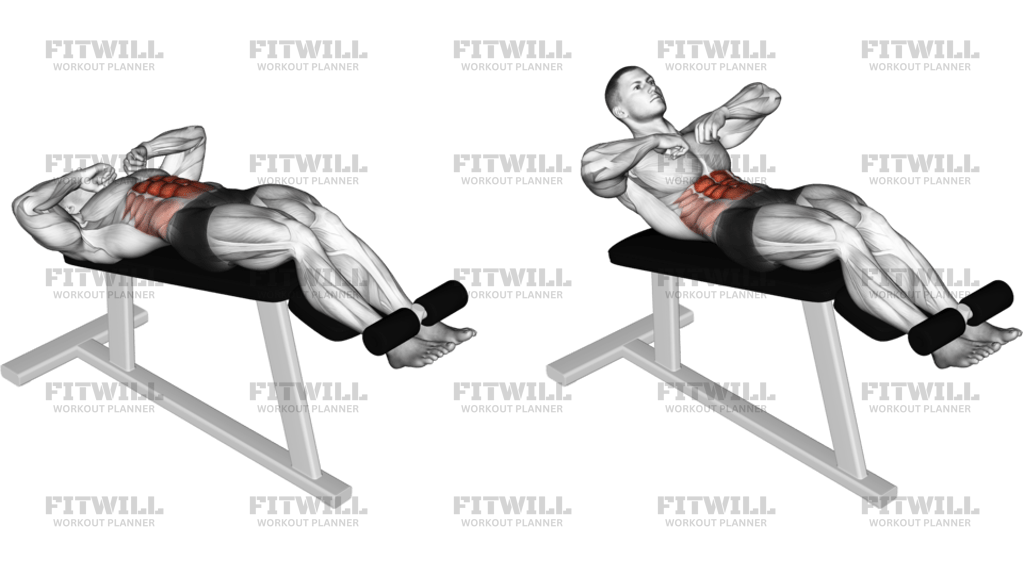
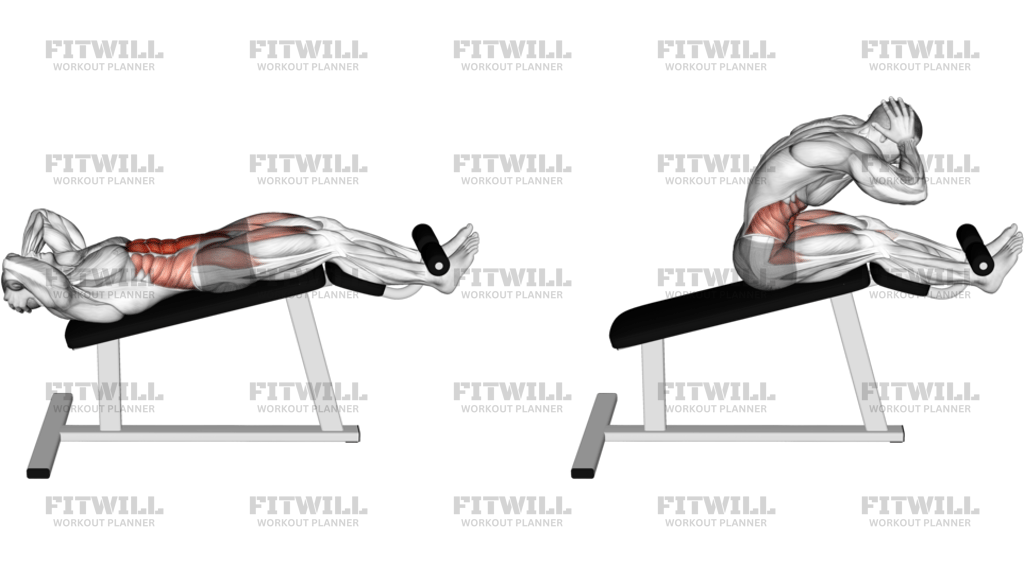
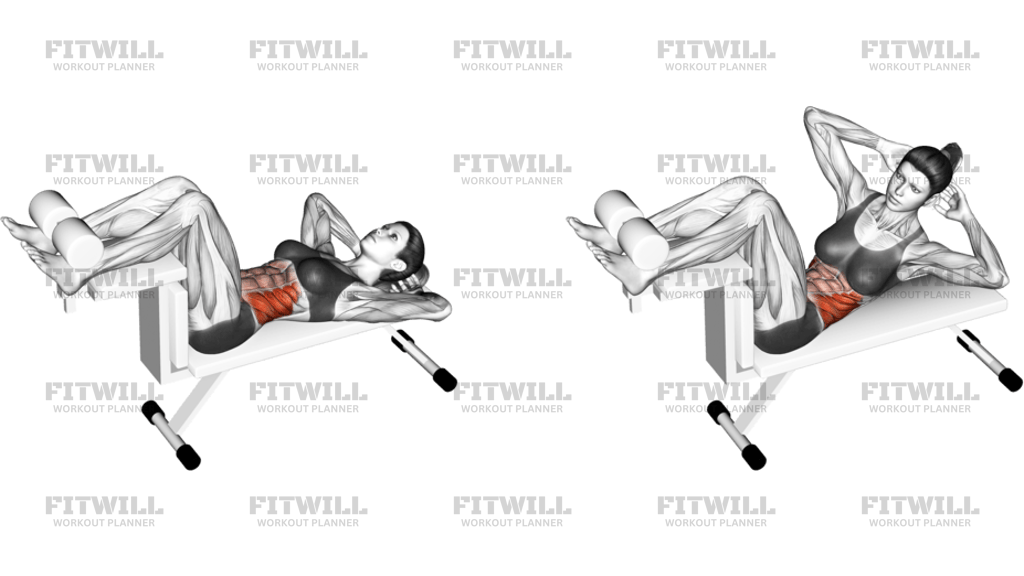
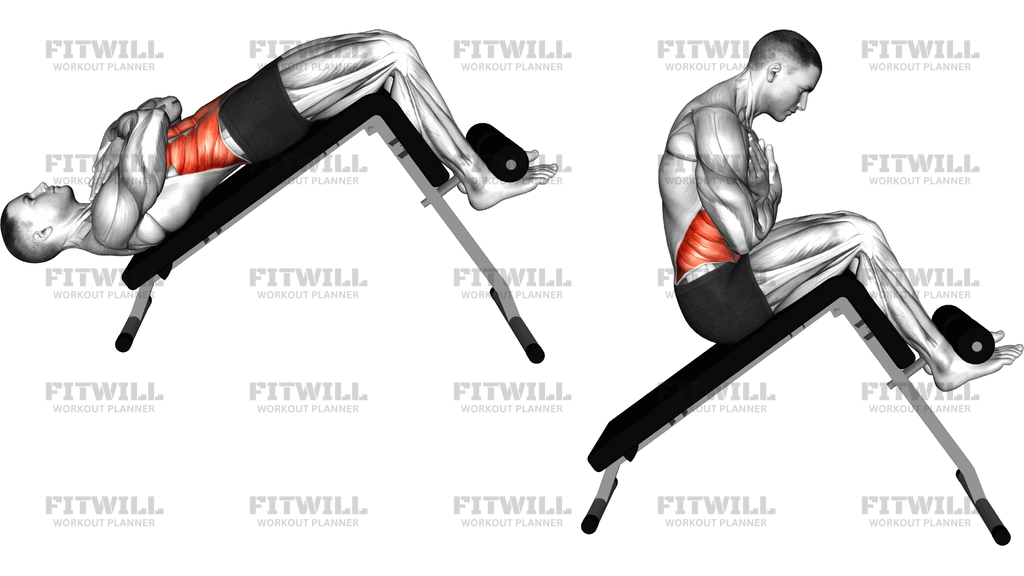
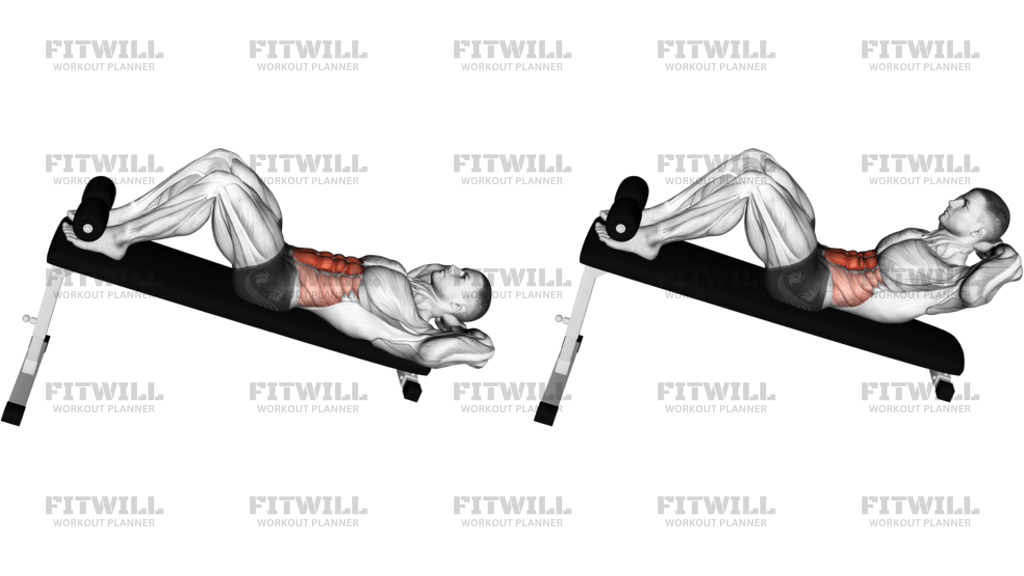
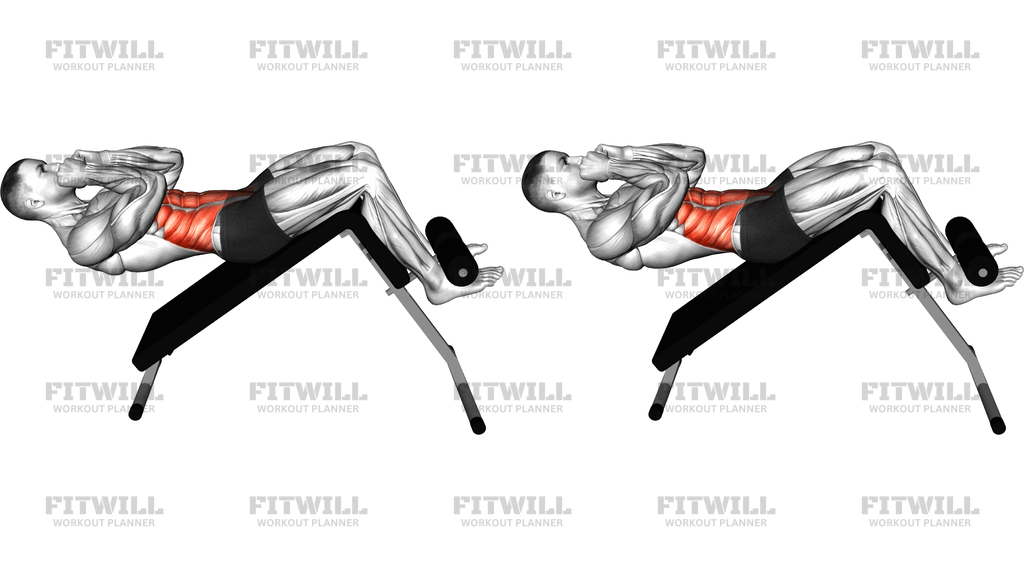
The Decline Cross Sit Up is a bodyweight abdominal exercise performed on a decline bench with the feet anchored under the roller pads. Because the bench angles your torso below your hips, your abs have to work against gravity through a much longer range than a floor sit-up, and the crossed-arm position keeps you from pulling on your head or neck. The name comes from crossing the arms over the chest or across the face, which is exactly the hand position shown in this movement.
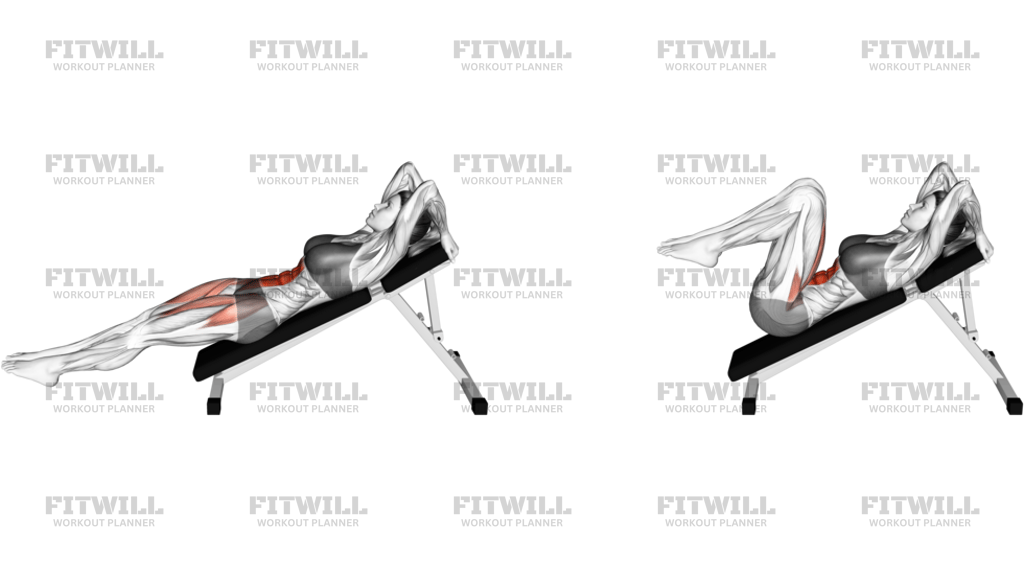
This exercise primarily targets the rectus abdominis, with a strong emphasis on the lower portion of the muscle since the decline angle forces you to curl up from a stretched, head-below-hips position. The obliques assist with stabilizing the torso, and the hip flexors help once your spine has finished flexing. Because the trunk does most of the work rather than the hips, it is a more rectus-dominant movement than a full decline sit-up done with straight arms pulling forward.
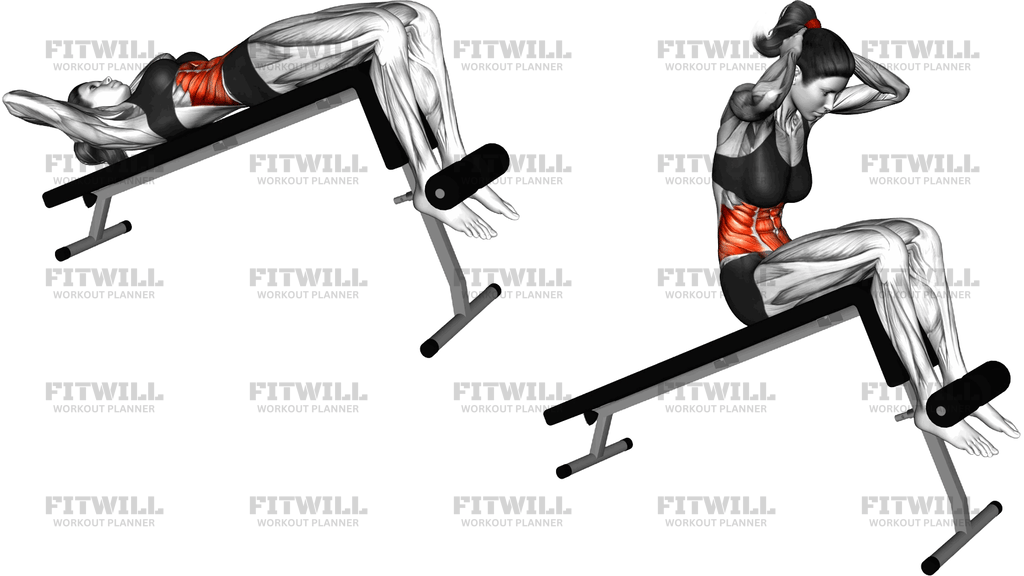
The decline setup matters a lot here. The roller pads are what allow you to hinge at the hips safely and control the lowering phase; without secure foot placement you would slide down the bench or lose tension at the bottom. A moderate decline of roughly 30 to 45 degrees is a good working angle. Steeper angles increase the difficulty and the stretch on the abs, so start conservative and adjust as your control improves.
To execute it well, think of it as a spinal flexion exercise, not a hip tug-of-war. Curl your shoulder blades off the bench by rounding the upper back, keep the ribs moving toward the pelvis, and avoid jerking the torso up with momentum. At the top, your elbows should travel toward your thighs while your lower back stays supported by the bench. Lower yourself back down one vertebra at a time until your trunk is fully reclined, then reset before the next rep.
The Decline Cross Sit Up suits lifters who have outgrown floor crunches and want a harder midsection exercise without extra equipment beyond the bench. It fits well at the end of a push or full-body session as a focused ab finisher, and the ability to progress by raising the bench angle or adding a plate held at the chest makes it useful for long-term strength development. Stop the set if you feel strain in your lower back rather than your abs.
[ Workout Log & Planner ]
Put your next workout in Fitwill
Keep your plan and training log ready when you are.


Instructions
- Set a decline bench to roughly 30-45 degrees and sit on the high end, then hook your feet under the roller pads with the pads resting on your ankles or lower shins.
- Lie back so your hips, back, and shoulders are supported by the pad, then cross your arms over your chest or across your face with each hand gripping the opposite upper arm.
- Brace your abdominals lightly and tuck your chin so there is a fist-sized space between chin and chest before you begin moving.
- Curl your head, shoulders, and upper back off the bench by rounding your spine forward, keeping your arms crossed and your feet anchored under the rollers.
- Continue curling until your elbows approach your thighs and your lower back is just about to leave the bench; pause briefly at the top and squeeze your abs.
- Lower yourself back down slowly, unrolling the spine vertebra by vertebra until your trunk is fully reclined on the bench with your head near the low end.
- Exhale as you curl up and inhale as you lower back down, keeping the breath steady rather than holding it through the rep.
- Pause for a beat in the fully reclined position to stop momentum, re-brace, then start the next repetition from a dead stop.
- After your final rep, sit up, release your feet from the roller pads one at a time, and step off the high end of the bench.
Tips & Tricks
- If your feet pop out of the rollers at the bottom, reposition the pads so they sit over the ankles rather than the middle of the foot, and angle your toes slightly up.
- Do not crank the torso up by yanking the hip flexors; if your thighs feel like they are doing the work, reduce the bench angle and shorten the range until the abs dominate.
- A common mistake is bouncing out of the stretched bottom position, which lets momentum replace ab tension; come to a complete stop before each curl.
- Keep the arms crossed tightly against the chest. If your elbows flare out as you fatigue, the movement turns into a swing — shorten the set instead.
- Round the upper back deliberately at the start of the rep. Leading with the chest, neck, or chin reduces the flexion the abs actually get.
- If your neck aches, check the chin tuck and the arm cross; an open cross with hands pulling on the head is the usual culprit.
- Progress by raising the bench angle one notch at a time, then by holding a small plate or dumbbell against your chest under the crossed arms.
- Lower in two to three seconds. The decline angle makes the eccentric phase the hardest part, and rushing it wastes most of the exercise.
- Skip this movement or use a very mild decline if you feel pinching or arching pain in the lower back at the stretched position.
Frequently Asked Questions
What muscles does the Decline Cross Sit Up work?
The rectus abdominis is the prime mover, with the lower abs working hard because you curl up from a head-below-hips position. The obliques stabilize the trunk and the hip flexors assist near the top of the rep.
Why cross the arms instead of holding them behind the head?
Crossing the arms over the chest removes the temptation to pull on your neck, keeps the elbow position consistent, and makes the movement self-limiting as you fatigue.
Is the Decline Cross Sit Up suitable for beginners?
Yes, but set the bench to a mild decline of about 20-30 degrees and control the range first. Once you can complete solid sets with a slow lowering phase, increase the angle gradually.
How high should I curl up at the top?
Curl until your elbows approach your thighs and your lower back is just about to leave the pad. Going much beyond that shifts work into the hip flexors rather than the abs.
What is the most common mistake on a Decline Cross Sit Up?
Bouncing out of the stretched bottom position or jerking the torso up with momentum. Pause for a beat when fully reclined and start each rep from a dead stop to keep tension on the abs.
How do I keep my feet secure under the roller pads?
Place the pads over your ankles or lower shins, hook the tops of your feet up against the underside of the rollers, and bend the knees fully as shown in the setup.
What can I substitute if I do not have a decline bench?
Do cross-arm crunches on the floor, or lie on a stability ball with the hips lower than the shoulders to recreate a similar angle. A roman chair set at a shallow angle is another option.
How should I breathe during the Decline Cross Sit Up?
Exhale as you curl up and inhale as you lower down. Avoid holding your breath, especially at the stretched bottom position.
How many reps and sets should I do?
Two to four sets of 10-20 controlled reps works well as an ab finisher. Because the decline angle makes the eccentric phase demanding, prioritize a slow lowering over chasing high numbers.
Is it safe for the lower back?
For most people with healthy backs, yes, as long as the movement is controlled and the range stays within spinal flexion you can manage. Use a milder angle, keep the core braced, and stop if you feel sharp discomfort or arching in the lower back.