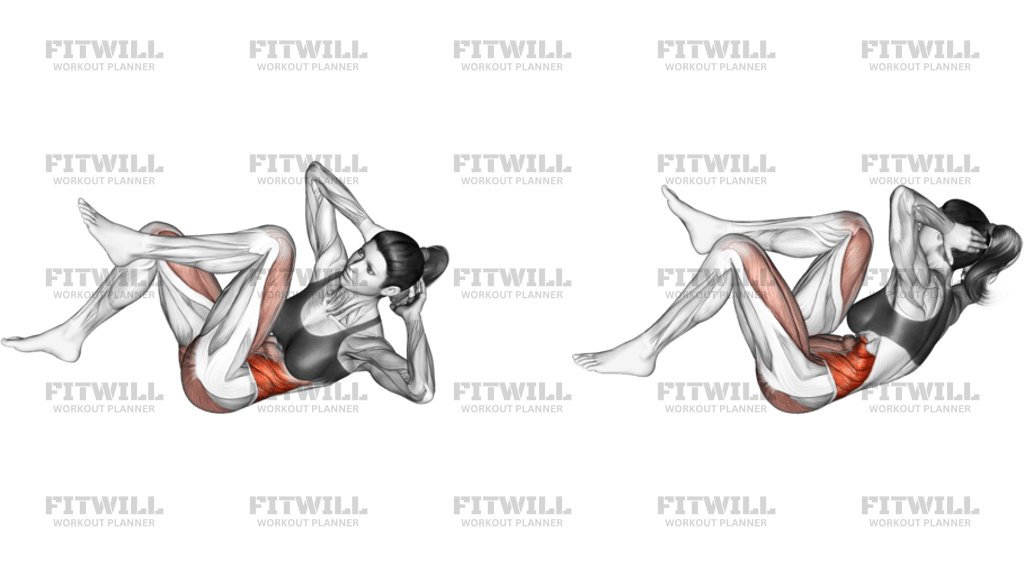
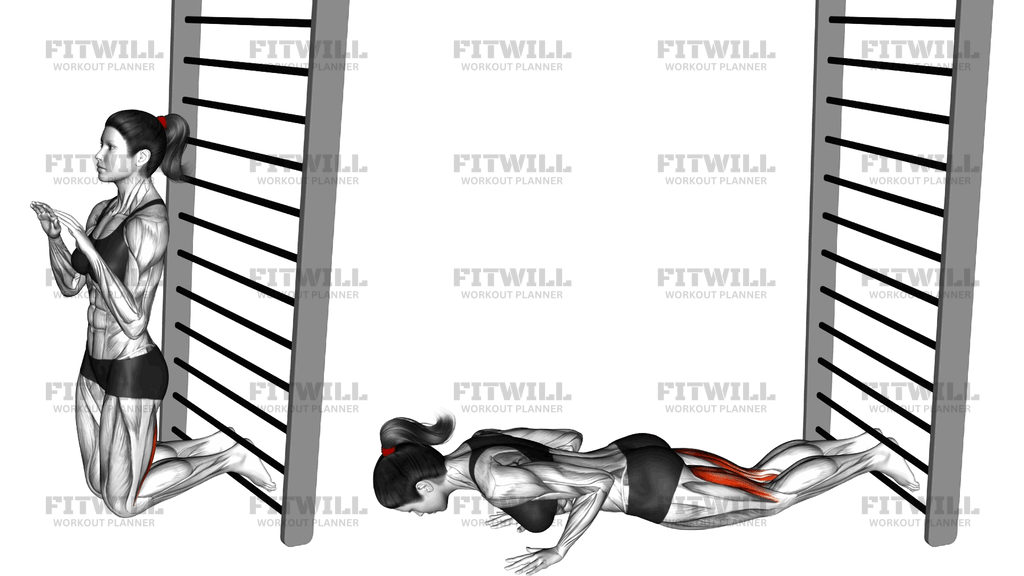
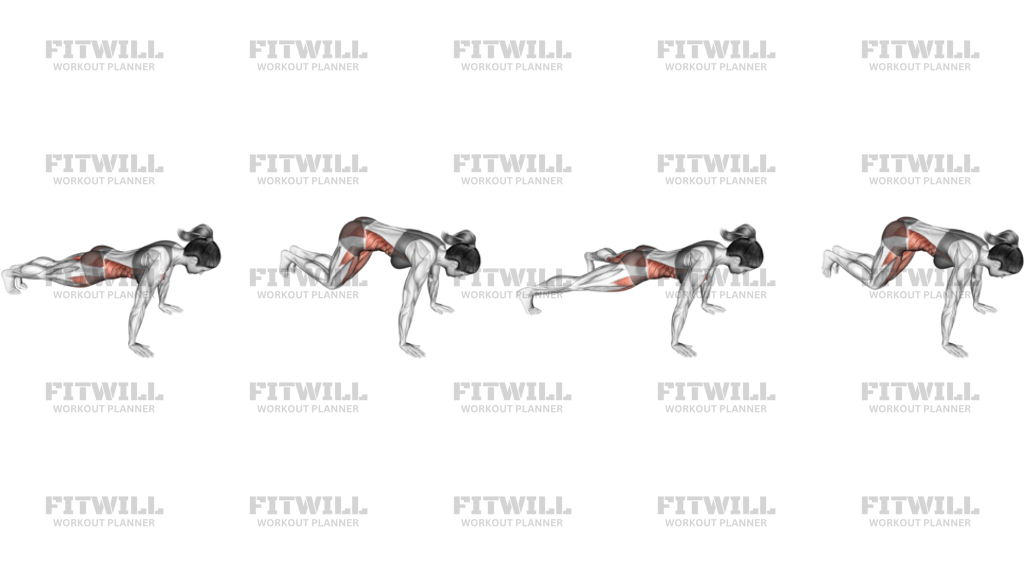
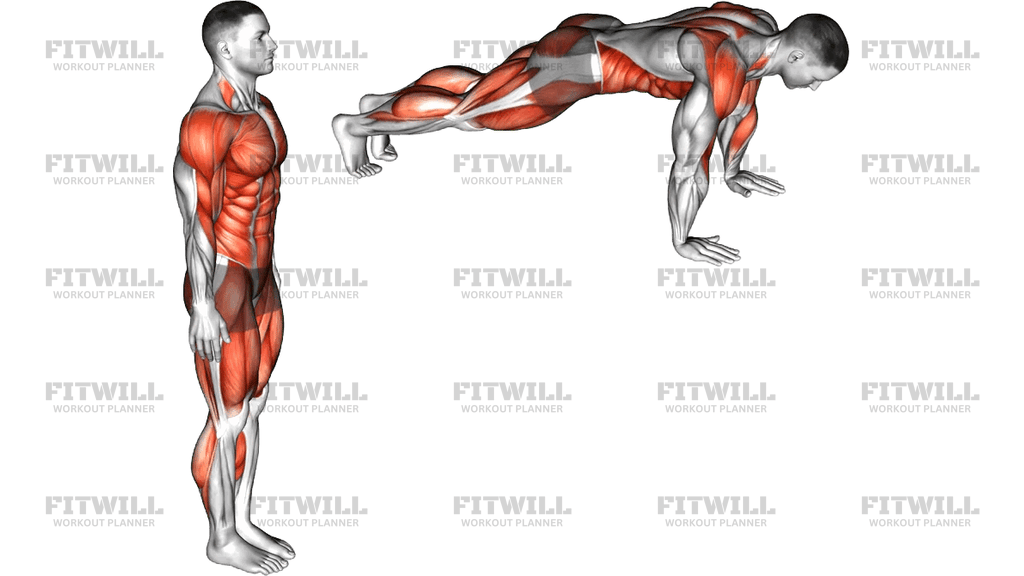
Decline Sit-Up Version 3
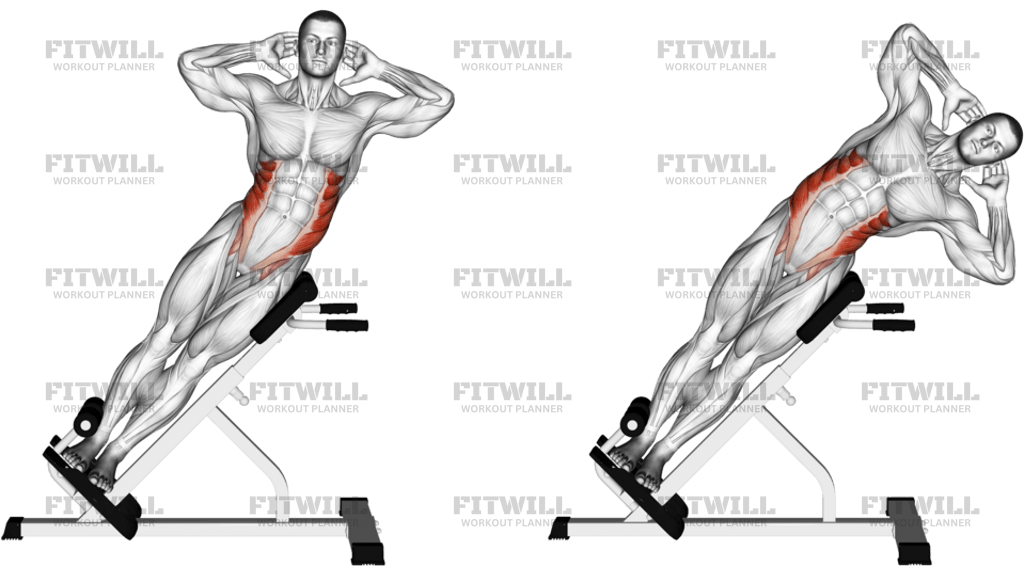
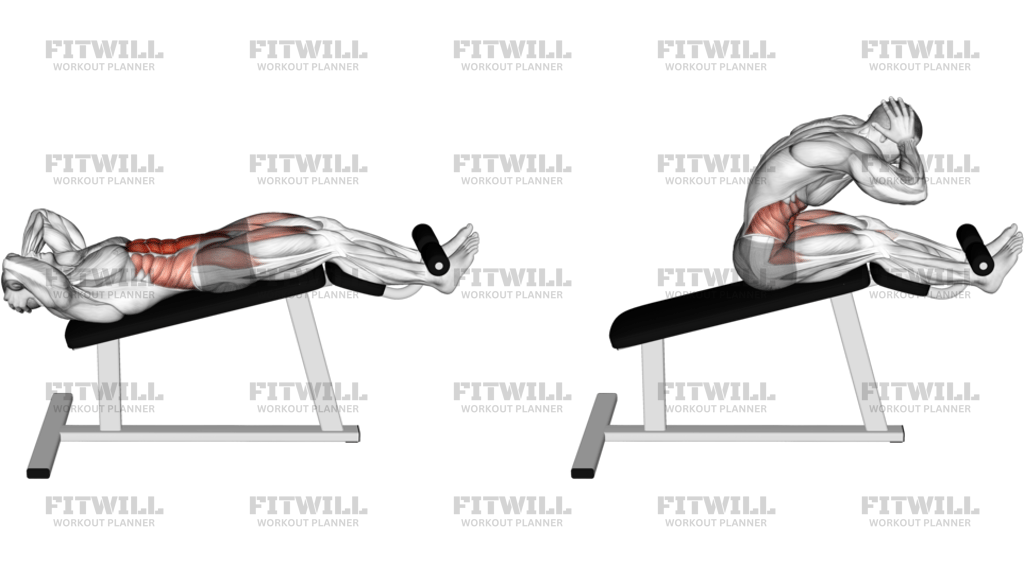
Decline Sit-Up Version 3 is a bodyweight abdominal exercise performed on a decline bench with the feet secured under the rollers and the torso moving against gravity. The sloped setup increases the challenge compared with a flat-floor sit-up because every rep has a longer lever and a harder starting position. That makes the movement useful when you want direct trunk flexion work without needing external load.
This version emphasizes the muscles around the waist and front of the trunk, with the hip flexors and other stabilizers helping to keep the body organized as you sit up and lower back down. Because the feet are anchored, the exercise can become more about momentum than control if you rush the rep. The most productive version is the one that keeps the ribs, pelvis, and neck moving together instead of letting the lower back or hips take over.
The setup matters before the first rep begins. Lie back on the decline bench with your head lower than your hips, hook your feet securely under the pads, and place your hands lightly by the sides of your head or behind the ears without pulling on the neck. From there, keep the ribcage down, brace the midsection, and start from a long but controlled position so the torso can curl cleanly off the bench.
As you lift, think about bringing the ribcage toward the pelvis rather than throwing the chest upward. The shoulders should peel off the bench first, then the upper back, until you reach a strong seated crunch position without collapsing into the hip flexors. On the way down, lower one segment at a time and keep tension in the abs instead of dropping back quickly.
Decline Sit-Up Version 3 fits well in core-focused sessions, abdominal finishers, or general strength work when you want a simple but demanding trunk exercise. It can also be scaled by adjusting the bench angle or shortening the range if the full sit-up pulls on the neck or lower back. The goal is not just to get upright, but to control every inch of the rise and return so each rep trains the midsection rather than momentum.
[ Workout Log & Planner ]
Put your next workout in Fitwill
Keep your plan and training log ready when you are.


Instructions
- Adjust the decline bench so your feet are locked under the rollers and your head starts lower than your hips.
- Lie back with your knees slightly bent, place your hands lightly by your temples or behind your ears, and keep your lower back in contact with the pad.
- Set your ribcage down, tuck your chin slightly, and brace your midsection before the first rep.
- Exhale and curl your torso upward, lifting your shoulders and upper back off the bench before the rest of your spine follows.
- Keep your feet anchored and your elbows wide so your hands do not pull your head forward.
- Continue curling until you reach a strong seated position with your abs shortened and your hips still controlled.
- Pause briefly at the top without collapsing backward or bouncing off the bench.
- Inhale and lower your torso one vertebra at a time until your shoulders and upper back return to the pad.
- Reset your brace at the bottom and repeat for the planned number of repetitions.
Tips & Tricks
- Keep the movement strict enough that your feet stay planted under the rollers; if they start lifting, the bench is too steep or the rep is too aggressive.
- Think about curling the ribs toward the pelvis, not swinging the chest toward the ceiling.
- Keep your fingertips light behind the head so the neck stays relaxed instead of being yanked forward.
- Slow the lowering phase to make the abs do the work instead of dropping back under gravity.
- If your hip flexors dominate, shorten the range slightly and stop before the torso gets too low on the descent.
- A steeper decline makes the exercise harder; a shallower angle is usually better when you are learning the pattern.
- Exhale through the hardest part of the curl so the trunk stays tight as you rise.
- Do not let the lower back pop off the bench early and turn the rep into a hip-flexor swing.
- Keep the chin gently tucked so the top of the movement stays in the abs, not the neck.
Frequently Asked Questions
What does Decline Sit-Up Version 3 train most?
It mainly trains the abdominal muscles that flex the trunk, with the hip flexors and other stabilizers helping to control the bench path.
Why use a decline bench instead of a flat floor sit-up?
The decline angle makes the lever longer and the starting position harder, so each rep demands more control from the trunk.
Should my feet stay locked under the rollers?
Yes. The rollers give you a stable anchor so you can focus on curling the torso instead of trying to balance through the feet.
Where should I feel Decline Sit-Up Version 3?
You should feel the front of the trunk working hard, especially as you curl up and control the lower back down.
Can beginners do this exercise?
Yes, but start with a shallow decline and a short range of motion until you can keep the neck and lower back relaxed.
What is the most common mistake on this movement?
Pulling on the head, swinging the torso, or dropping back too fast are the biggest problems.
Can I hold a plate or dumbbell on Decline Sit-Up Version 3?
You can, but only after you can do clean bodyweight reps with no neck strain or loss of control on the way down.
What can I do if the decline bench bothers my lower back?
Reduce the angle, shorten the descent, or switch to a flatter abdominal variation until you can keep the pelvis and ribcage controlled.