Side Plank Clamshell
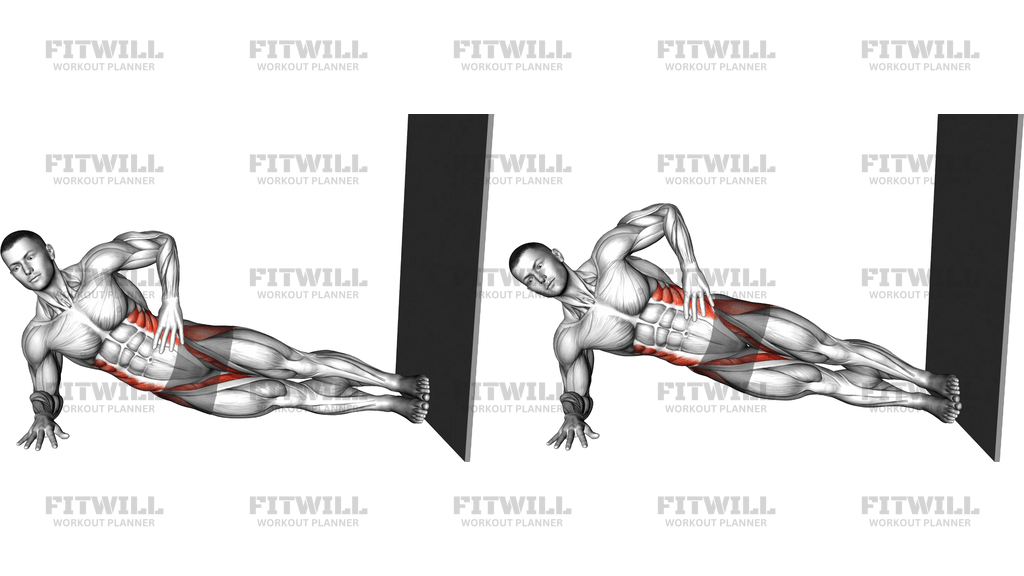
The Side Plank Clamshell combines two of the most effective lateral-chain exercises into one: you hold a full side plank while opening and closing your top knee like a clamshell, keeping your feet stacked and together the entire time. It looks simple from the outside, but holding the plank while rotating at the hip forces your obliques to stabilize your trunk against sagging while the upper glute of your top leg does the opening work. The figure in the demonstration supports the body on the bottom forearm and hand, which is the longer-lever version of the movement and noticeably harder than the bent-knee version many people start with.
This movement earns its place in a program because it trains two things that rarely get challenged together: lateral core stability and hip abduction strength. The gluteus medius and other outer-hip muscles control knee alignment and pelvic stability during walking, running, squatting, and climbing stairs, while the obliques and deep core resist side-to-side collapse. Runners, people rehabbing or preventing lateral knee and hip complaints, and anyone whose training is heavy on forward-plane work will get a lot out of adding this to their warm-ups or accessory work.
Setup matters more here than in most core exercises. Your elbow should sit directly under your shoulder, your body should form one straight line from head to heels, and your hips should be lifted off the floor before the first rep begins. If your hips sit low or your top shoulder rolls forward, the plank portion loses its purpose and the clamshell becomes a hip movement done in a collapsed position, which defeats the point of combining them.
To execute it well, keep your feet in contact with each other and lift the top knee by rotating at the hip only, without letting your torso roll backward or your hips drop. The opening range is usually smaller than people expect; going too far almost always means the trunk is rotating instead of the hip. Slow, deliberate reps with a brief pause at the top beat fast flapping every time.
A few practical points will keep this safe and productive. Support yourself on your forearm and hand with the wrist in a comfortable, neutral position, and switch sides before your bottom shoulder fatigues, since a tired support arm usually causes the torso to twist as compensation. Start with short sets of five to eight controlled openings per side, and only add reps or a resistance band around the thighs once you can hold the plank position with zero sagging or rolling for the whole set.
[ Workout Log & Planner ]
Put your next workout in Fitwill
Keep your plan and training log ready when you are.


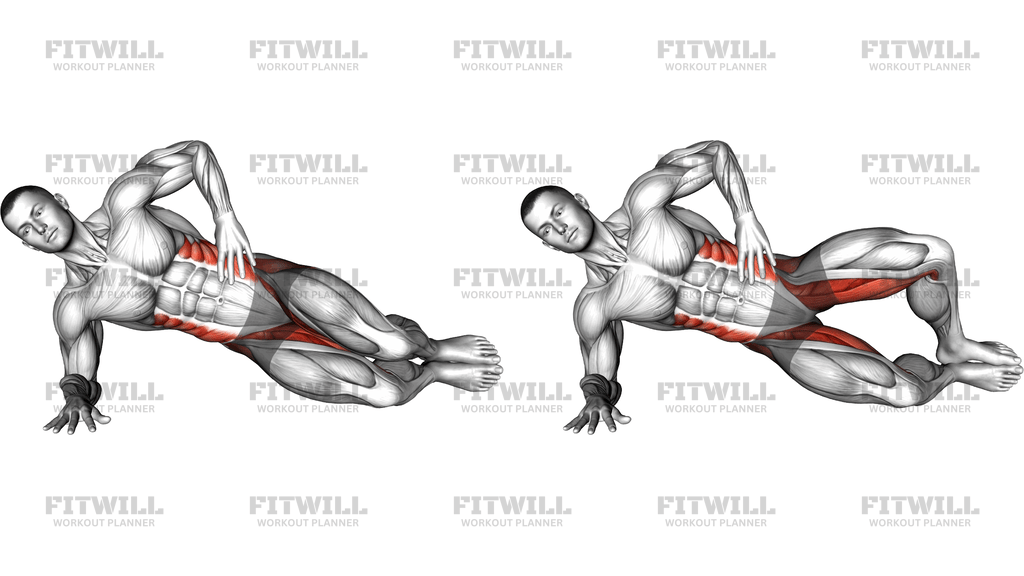
Instructions
- Lie on your right side on an exercise mat with your legs fully stacked and your feet together.
- Prop your upper body on your right forearm, elbow directly under your shoulder, and place your left hand on your hip or reach it toward the ceiling.
- Press through your forearm and the side of your bottom foot to lift your hips off the floor until your body forms a straight line from head to heels.
- Brace your abdominals and squeeze your glutes to lock in the side plank before starting the repetitions.
- Keeping your feet touching, rotate at the top hip and lift your left knee toward the ceiling as far as you can without your torso rolling backward.
- Pause for one to two seconds at the top of the opening, feeling the contraction in the outer hip and glute of the top leg.
- Lower the knee back down with control until it nearly touches the bottom knee, keeping your hips lifted the entire time.
- Breathe steadily throughout, exhaling as you open the knee and inhaling as you close it.
- Complete all repetitions on one side, then lower your hips to the floor, shake out the support arm, and repeat on the left side.
Tips & Tricks
- If your hips sag toward the floor within a few reps, drop to the modified version with both knees bent at about 90 degrees until your side plank endurance improves.
- Check that your top knee opens because the hip is rotating, not because your whole trunk is tipping backward; place your free hand on your hip and watch that it stays facing forward.
- Spread the fingers of your support hand and press actively through the forearm and palm to take strain out of the bottom shoulder and neck.
- Keep the heels pinned together throughout the set; letting the feet separate turns the movement into a straight leg raise and offloads the outer-hip muscles.
- Do not chase a huge knee-opening range; a controlled 30 to 45 degrees with a pause beats a big swing that rolls your torso.
- Stop the set when your bottom shoulder or hip starts to drop, and switch sides rather than grinding through with a collapsing position.
- If your wrist or forearm discomforts you on the hard floor, fold a mat or towel under the support arm.
- Once the bodyweight version feels easy for 12 to 15 clean reps per side, loop a light resistance band around your thighs just above the knees for extra glute demand.
- Keep your head in line with your spine by looking straight ahead rather than letting it drop toward the floor or crank up toward the ceiling.
Frequently Asked Questions
Which muscles does the Side Plank Clamshell work the most?
The primary work comes from the gluteus medius and other outer-hip muscles of the top leg as it opens, while the obliques, deep core, and quadratus lumborum of the bottom side hold the side plank position. The bottom glutes and shoulder stabilizers work isometrically to keep you lifted.
Why do my hips drop when I try the Side Plank Clamshell?
This usually means your lateral core endurance is not yet strong enough to hold a straight-line plank while moving at the hip. Regress to the bent-knee version, where you support your weight on your knees instead of your feet, and build up before returning to the full variation.
Is the Side Plank Clamshell good for runners?
Yes, it is a popular prep exercise for runners because weak outer hips are commonly linked with knee valgus and hip drop during the running gait. Holding the plank while performing the clamshell trains hip abduction and trunk stability in a single drill.
Should I support myself on my forearm or my hand during the Side Plank Clamshell?
Supporting on the forearm with the elbow under the shoulder is the standard and more stable option; pressing up onto the hand as shown makes the plank lever longer and the hold harder. Start on the forearm and only move to the straight-arm version once you can hold the position without sagging.
How many reps and sets of the Side Plank Clamshell should I do?
Start with 2 to 3 sets of 5 to 8 controlled openings per side, pausing briefly at the top of each one. Increase reps gradually, and add a band above the knees only once you can complete 12 to 15 reps without your hips dropping or your torso rolling.
My torso rolls backward every time I open my knee. How do I fix it?
Reduce the opening range so the knee only lifts as far as you can move without the shoulders or hips rotating, and place your free hand on your hip to monitor it. Squeezing the glutes and bracing the abdominals before the first rep also helps lock the trunk in place.
Can I substitute the Side Plank Clamshell with a regular clamshell or a regular side plank?
You can, but each one only covers half the job: a regular clamshell trains the hip while lying relaxed on your side, and a plain side plank trains the lateral core without hip movement. The combined version is valuable precisely because it demands both at the same time.
Is the Side Plank Clamshell safe for people with shoulder issues?
The bottom shoulder carries your body weight, so anyone with current shoulder pain should clear the position with a professional first. Keeping the elbow directly under the shoulder, spreading the support hand, and switching sides before fatigue sets in all reduce unnecessary strain.
Should I feel the Side Plank Clamshell in my neck?
No, neck tension usually means the head is dropping or craning out of line with the spine. Keep your gaze straight ahead, keep a small space between your ear and support shoulder, and stop the set if neck strain builds rather than pushing through it.