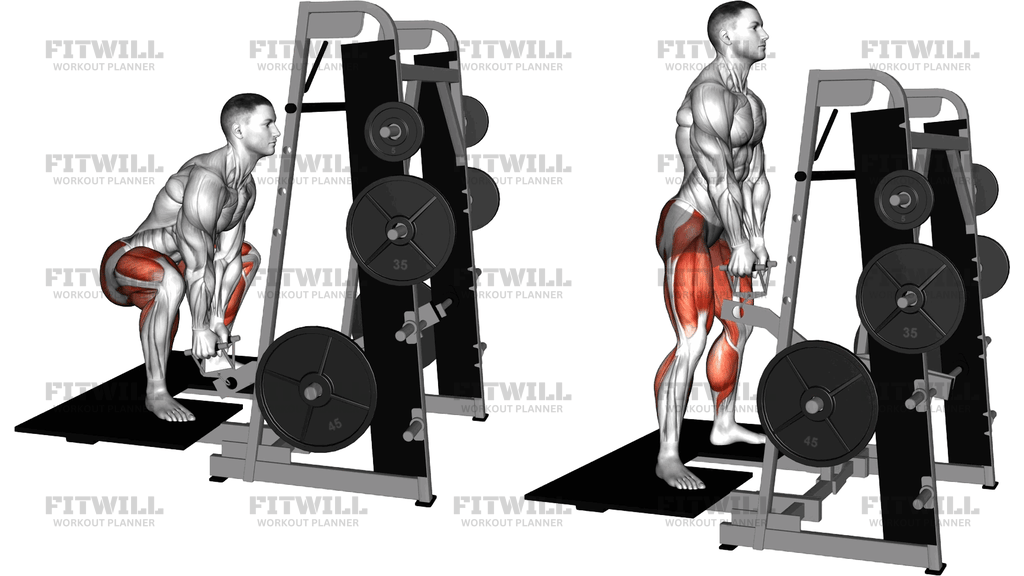
Lever Belt Romanian Deadlift (V Bar)
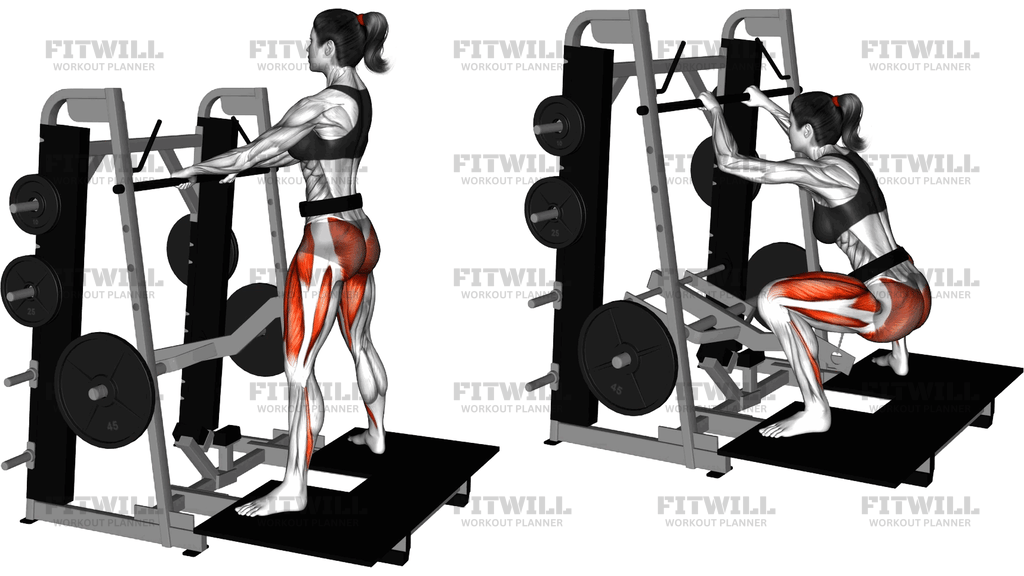
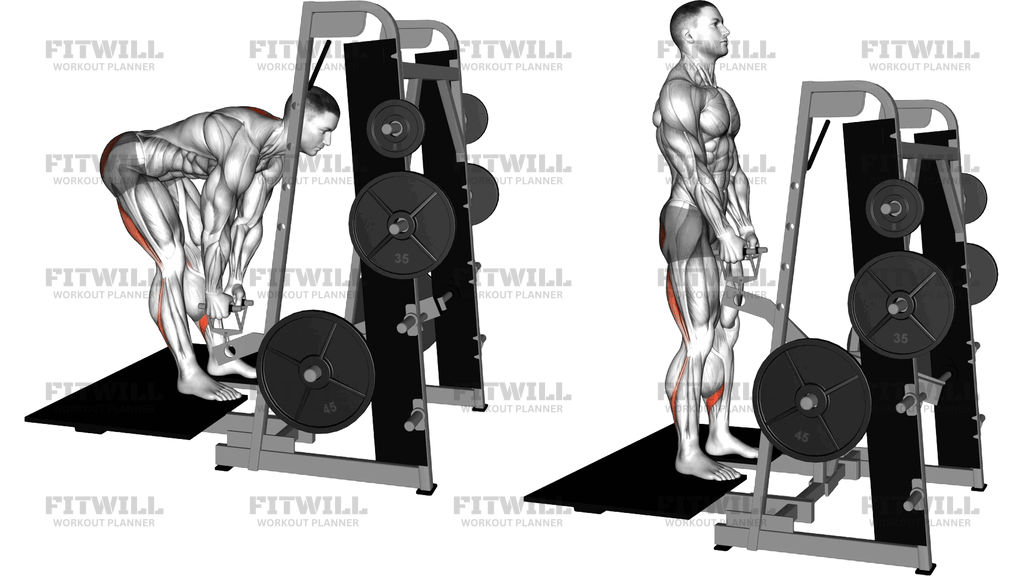
The Lever Belt Romanian Deadlift (V Bar) is a plate-loaded machine version of the classic Romanian deadlift. You stand on the machine's platform facing the weight stack, hinge forward at the hips to take hold of a low-mounted V-bar handle, then drive the hips forward to return to a tall standing position. Because the resistance travels on a fixed lever arm rather than a free barbell, the movement keeps the load close to your body and removes much of the balance demand that makes the barbell version technical.
This exercise is a strong choice for lifters who want the hamstring and glute stimulus of a deadlift hinge without needing a barbell, bumper plates, or a lifting platform. It also suits people rehabbing back into hinging patterns, beginners learning what a hip hinge should feel like, and intermediate lifters looking for a controlled accessory after their main barbell work. The fixed path lets you focus entirely on feeling the hamstrings stretch and contract instead of managing a bar that wants to drift away from your legs.
The primary muscles worked are the hamstrings, which lengthen under load as you hinge and shorten as you stand back up. The glutes contribute heavily at the top of the rep, especially when you finish with the hips fully extended. The lower back works isometrically to hold your spine neutral throughout the hinge, and your grip and forearms stay engaged holding the V-bar from start to finish.
Setup matters here for one main reason: the hinge. Stand close enough to the handle that you can reach it without rounding heavily, and set your feet roughly hip-width apart on the platform. If you stand too far back, you will have to over-reach and round your lower back at the bottom; too close, and the lever arm may not track cleanly along your legs. Take a moment before the first rep to check that your shins stay near vertical and your knees stay softly bent.
To execute well, push your hips straight back and let your torso fold forward while your knees stay only slightly flexed. Keep the V-bar hanging close to your body, your chest proud, and your neck in line with your spine. Descend until you feel a strong stretch across the back of your thighs, then squeeze the glutes and drive the floor away to stand tall without leaning back or hyperextending at the top.
Use this movement as a hypertrophy or technique tool: moderate weights for 8 to 15 reps work well since the machine's fixed path rewards control over momentum. Keep the descent slow, never bounce out of the bottom stretch, and treat any rounding of the lower back as a signal to reduce depth or load rather than push through.
[ Workout Log & Planner ]
Put your next workout in Fitwill
Keep your plan and training log ready when you are.


Instructions
- Load the weight plates onto the machine's pegs and adjust or confirm that the V-bar handle sits at the low point of the lever arm, roughly at shin height near the bottom of the range.
- Step onto the platform facing the machine and set your feet hip-width apart, positioned so the handle hangs directly in front of your shins when you stand tall.
- Hinge at the hips with a soft knee bend and take a neutral grip on the V-bar with both hands, letting your arms hang straight down as you reach.
- Pull your shoulders back and down, brace your core as if bracing for a light punch, and set your spine in a neutral position with your chest open.
- Start from the top: stand tall with the handle in front of your thighs, then push your hips straight back and let your torso travel forward while your knees stay only slightly bent.
- Descend under control until you feel a deep stretch in your hamstrings, keeping the V-bar tracking close to your legs and your lower back flat.
- At the bottom, pause briefly, then drive your hips forward and press your feet into the platform to return to a full standing position.
- Finish each rep with the glutes squeezed and hips fully extended, but without leaning backward or shrugging the handle up.
- Exhale as you stand up and inhale as you hinge back down, keeping your breathing steady and your brace consistent.
- Complete all reps on the platform, then release the handle only at the top with the weight settled, and step off the machine once the lever arm has come to rest.
Tips & Tricks
- The most common error is squatting the weight down instead of hinging. If your knees travel forward and your heels lift, reset and consciously push your hips back until you feel the hamstrings load.
- Do not chase depth at the cost of your spine. Stop the descent the moment your lower back starts to round; on this machine the handles often stop near mid-shin, and that is deep enough for most lifters.
- Keep the V-bar close to your legs throughout. If the handle drifts forward, the load shifts onto your lower back and away from the hamstrings you are trying to train.
- The V-bar places your hands in a semi-neutral position, which many people find easier on the shoulders than a straight bar. Let your arms act as hooks and resist the urge to pull with the biceps at the top.
- Move slower than you think you need to on the lowering phase. A two to three second descent turns a light load into a serious hamstring challenge and prevents you from bouncing out of the stretch.
- Avoid hyperextending at lockout. Standing tall with a glute squeeze finishes the rep; throwing your chest back and arching your lumbar spine does not add muscle and only stresses the lower back.
- Because the machine's lever arm has a fixed path, take two or three lighter warm-up reps to find the stance distance where the handle tracks smoothly along your legs before adding working weight.
- If your grip gives out before your hamstrings, use lifting straps rather than cutting the set short; this movement is meant to load the posterior chain, not test your forearms.
- Position your feet fully on the platform, not half off the edge. A stable base keeps your balance consistent between reps and lets you focus on the hinge.
Frequently Asked Questions
Which muscles does the Lever Belt Romanian Deadlift (V Bar) work hardest?
The hamstrings do most of the work as they stretch on the way down and contract on the way up, with the glutes contributing strongly at lockout. The lower back works statically to hold your spine neutral, and the forearms handle the grip on the V-bar.
Is the V-bar handle different from holding a barbell in this exercise?
Yes, the V-bar places both hands close together in a neutral position, which reduces shoulder strain and keeps the load centered in front of your body. Since the handle rides on the machine's lever arm, the resistance follows a fixed path instead of drifting like a free barbell.
Can beginners use the Lever Belt Romanian Deadlift (V Bar)?
It is one of the friendlier ways to learn the hip hinge because the machine stabilizes the resistance and removes balance demands. Start light, master the push-the-hips-back cue, and only add plates once your lower back stays flat through the whole rep.
How deep should I hinge on the Lever Belt Romanian Deadlift (V Bar)?
Go only as low as you can while keeping your spine neutral and feeling a strong hamstring stretch, which for most people means the handle reaches roughly mid-shin. Extra depth gained by rounding the lower back adds risk without adding muscle.
Why do my lower back and not my hamstrings feel this exercise?
This usually means you are rounding at the bottom, letting the handle drift away from your legs, or hyperextending at the top. Reset your brace, keep the V-bar tracking close to your shins, and finish each rep with a glute squeeze instead of a lower back arch.
Should my knees be locked or bent during the movement?
Keep a soft, fixed bend in the knees, around 10 to 20 degrees, and hold it constant. Bending the knees more as you descend turns the rep into a squat pattern and shifts work away from the hamstrings.
What can I substitute if this machine is busy?
A barbell or dumbbell Romanian deadlift trains the same pattern, as does a cable Romanian deadlift using a V-bar or rope at a low pulley. Each option requires more balance and grip control, so use slightly lighter loads than you would on the machine.
How many sets and reps work best for this exercise?
Because the fixed lever path favors control, 3 to 4 sets of 8 to 15 reps with a slow lowering phase works well for muscle growth. Heavier sets of 5 to 8 are possible once your hinge technique is consistent.
Do I need a lifting belt for the Lever Belt Romanian Deadlift (V Bar)?
Most lifters do not need a belt on a machine hinge with moderate loads. If you use one on heavy barbell deadlifts and prefer the feedback, it is fine to wear it, but prioritizing a strong brace matters more than any equipment.