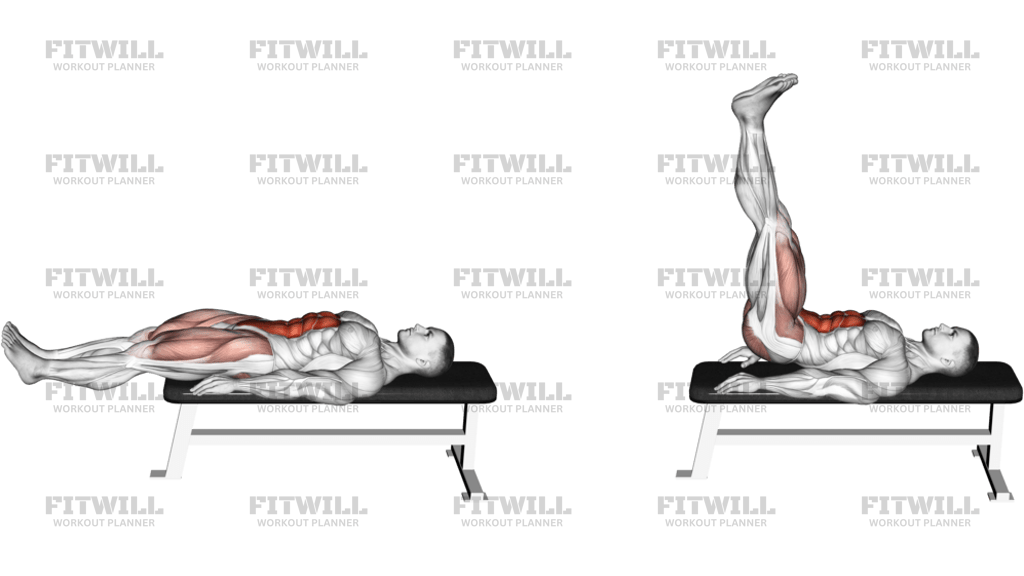
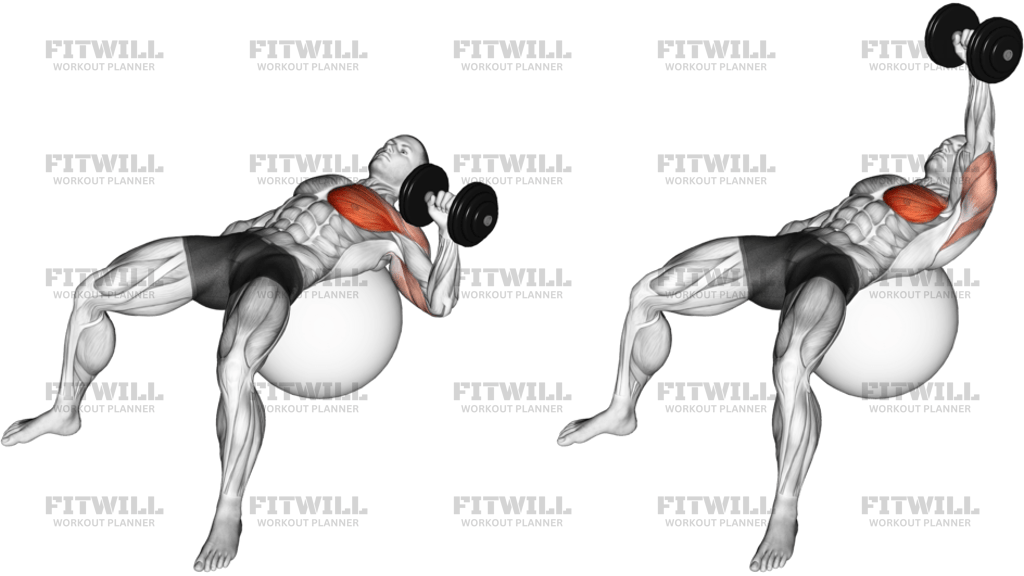
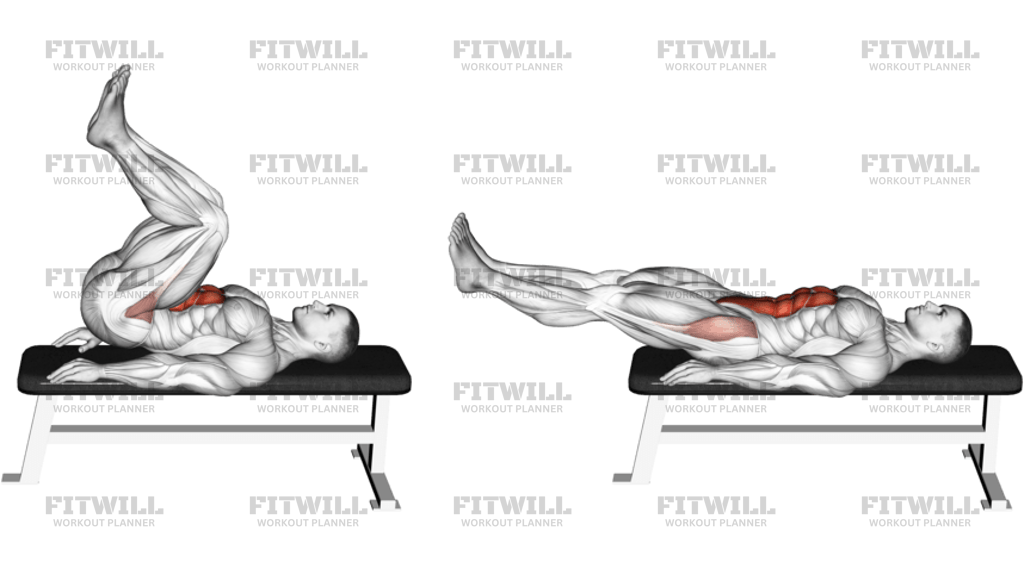
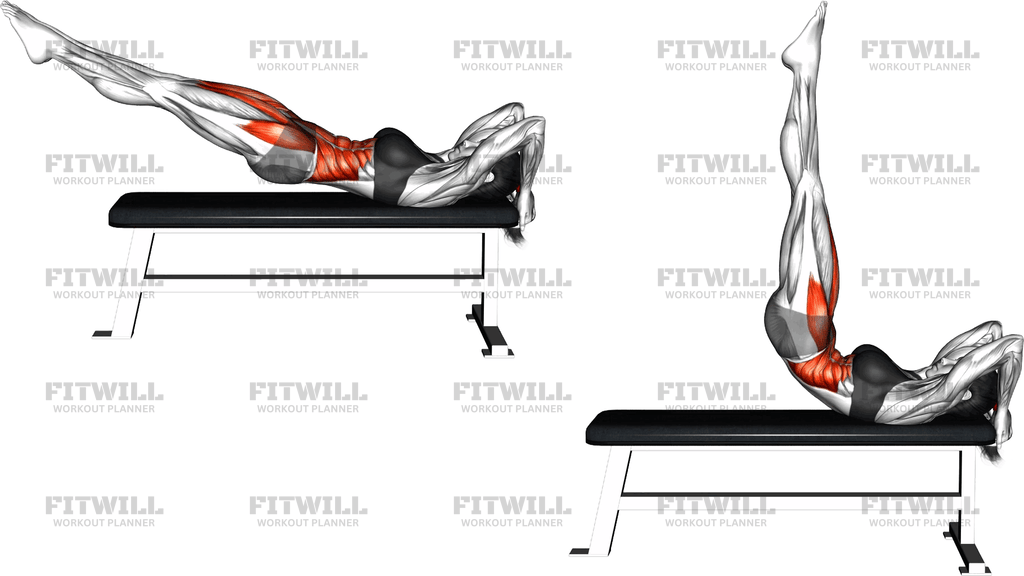
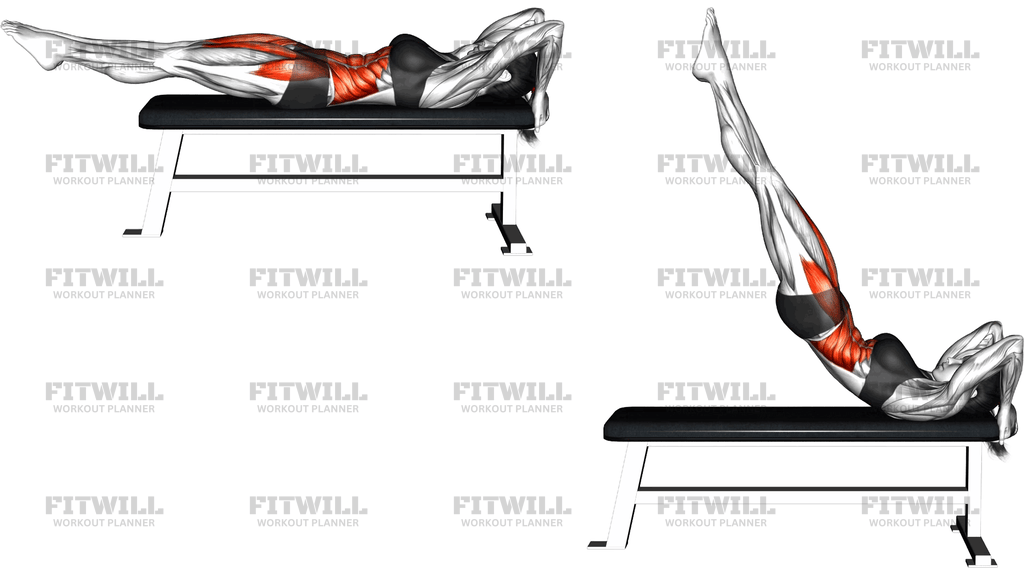
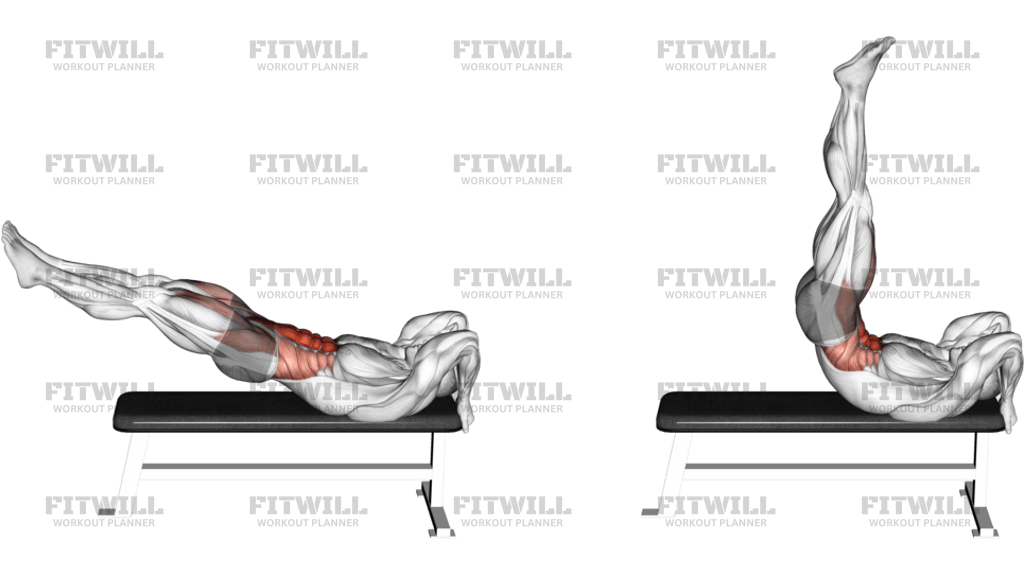
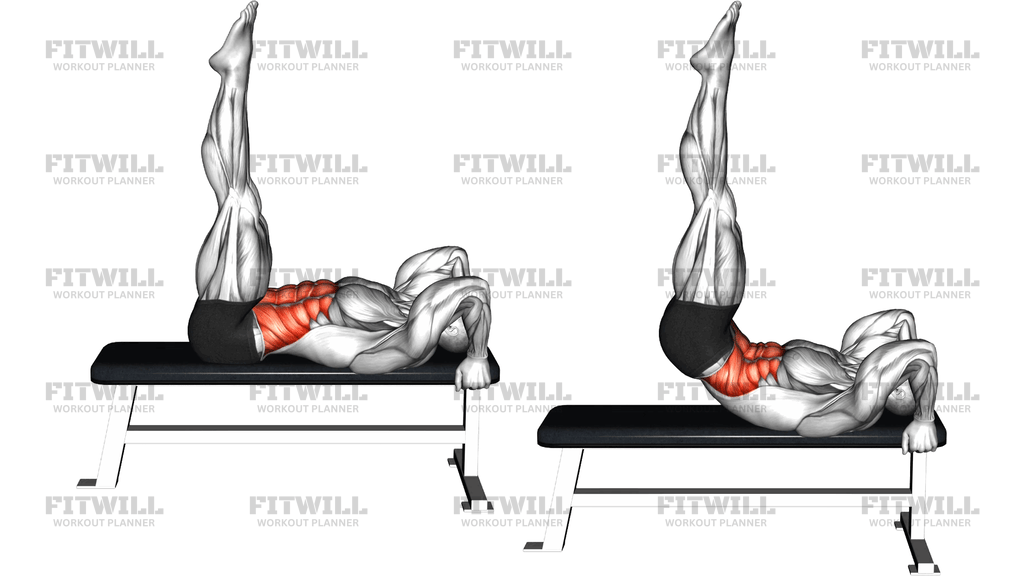
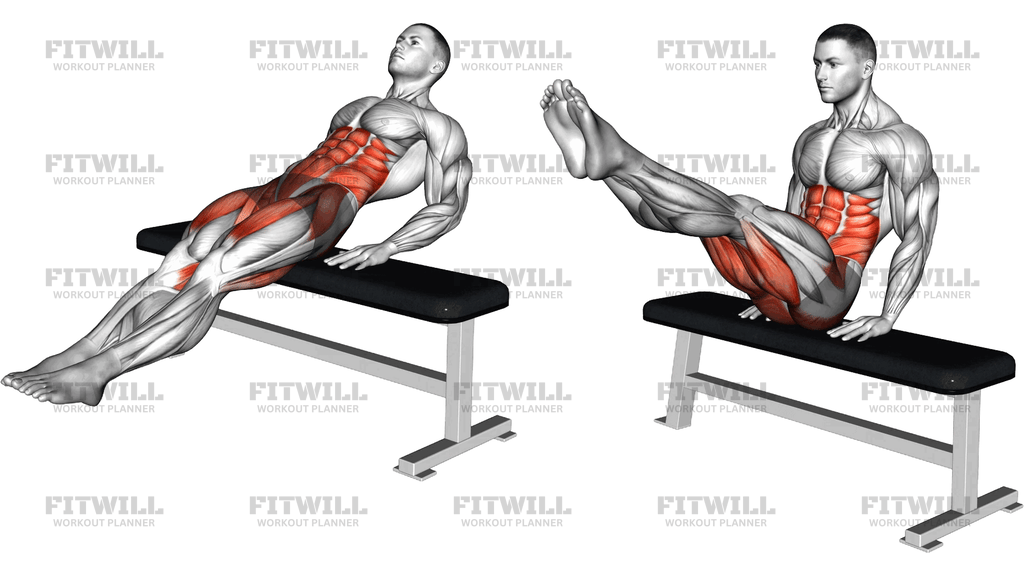
Lying Bench Crunch With Leg Adduction
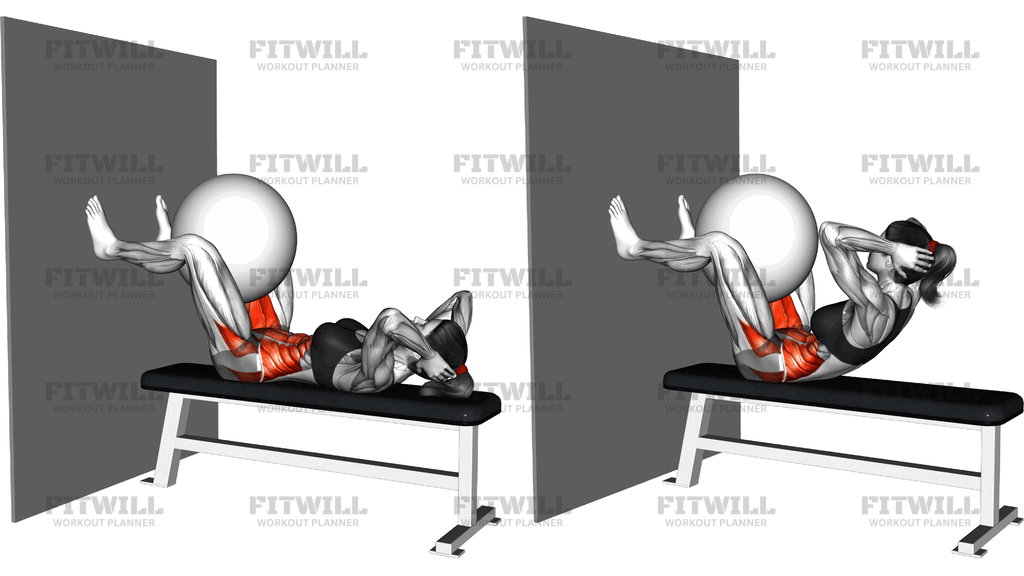
The Lying Bench Crunch With Leg Adduction is a hybrid core exercise that pairs an upper-body crunch with an isometric squeeze of a stability ball between the knees. You lie flat on your back along a bench, hold a ball between your thighs with your knees bent and feet lifted off the bench, and curl your shoulder blades up toward your hips while continuously pressing your inner thighs into the ball. That dual demand means your abs and your inner thigh muscles are working at the same time, which is exactly what makes this variation worth learning.
This movement suits intermediate trainees who already own a basic crunch and want more challenge without loading the spine with weight. The ball acts as a two-way tool: squeezing it recruits the adductors and deep pelvic stabilizers, while the weight of the ball between the legs slightly raises the leverage demand on the lower abs to keep the pelvis controlled. Because the feet stay off the floor for the entire set, the hip flexors also work overtime to hold knee and hip position, so expect this area to fatigue alongside your abs.
Setup is where most of the benefit lives. Lying on a bench rather than the floor lets your upper back and head be fully supported and gives the shoulders room to curl through a slightly longer range, since they can drop just below torso level at the start. Keeping the ball firmly held between the knees is not optional decoration; if the squeeze fades, the adductor involvement disappears and the legs tend to drift, which changes the whole exercise into a loose-kneed crunch with poor pelvic control.
To execute it well, curl rather than sit. Lift your shoulder blades off the bench by flexing the spine, think about bringing your ribs toward your pelvis, and pause briefly at the top while maintaining steady pressure on the ball. Lower yourself slowly back down until your shoulders touch or just pass the bench surface, and do not let the ball pressure relax even at the bottom. Hands rest lightly behind the head to support the skull, never to pull the neck into flexion.
Common use cases include core-focused finishers at the end of a strength session, home workouts where a bench and a stability ball are the only gear available, and programs aimed at improving trunk control alongside inner thigh strength for sports that involve cutting, squatting depth, or side-to-side movement. Two to four sets of 10 to 20 controlled reps is a reasonable working range.
From a safety standpoint, the main risks are neck strain from yanking the head forward and lower back discomfort from letting the pelvis anteriorly tilt as fatigue sets in. Stop the set when you can no longer keep the ball squeezed firmly and your lower back stays in contact with the bench, because holding a compromised position past that point trades quality for a couple of extra reps you did not really earn.
[ Workout Log & Planner ]
Put your next workout in Fitwill
Keep your plan and training log ready when you are.


Instructions
- Place a flat bench on a stable surface and sit lengthwise on it, then lie back so your head, shoulders, and hips are fully supported and your lower back rests flat against the pad.
- Position a stability ball between your knees with your legs bent at roughly 90 degrees, lift your feet off the bench, and cross your ankles slightly while squeezing the ball firmly with your inner thighs.
- Place your hands lightly behind your head with fingertips at the base of the skull and elbows flared out to the sides; your grip should support the head, not pull it.
- Before moving, brace your abdominal wall by gently drawing your belly button toward your spine and confirm the ball pressure has not dropped.
- Exhale as you curl your upper body up, peeling your shoulder blades off the bench and bringing your ribs toward your pelvis while keeping the ball squeezed tight.
- At the top, hold the crunch for one to two seconds; your lower back stays on the bench and the ball stays pinned between your knees the entire time.
- Inhale as you lower yourself with control, letting your shoulders and upper back touch the bench and allowing a slight stretch through the abs without releasing the ball.
- Reset your brace after each rep, checking that the ball has not slipped lower toward the calves and that your feet have not dropped toward the bench.
- Continue for your target reps, then release the ball between your legs, set your feet on the bench, and sit up carefully.
- If the ball starts sliding or the squeeze weakens mid-set, end the set rather than continuing with loose legs.
Tips & Tricks
- The most common failure point is the inner thigh squeeze fading as fatigue builds; once the ball starts drifting toward your calves or loosening, your adductors have checked out and the set loses its point, so stop there.
- Do not let your lower back arch off the bench as you lower down; if you feel your pelvis tilting, reduce your range at the bottom or bend your knees a little more toward your chest.
- Keep the crunch small and deliberate. Lifting until only your shoulder blades clear the bench targets the abs far better than sitting all the way up, which shifts work to the hip flexors.
- If your neck burns before your abs do, you are probably pulling with your hands. Rest your head in your fingertips and imagine holding an apple under your chin instead of crushing it.
- Choose a ball size that lets your knees bend comfortably at 90 degrees without the ball touching the bench; a ball that is too large forces your hips up and flattens the crunch.
- Exhale sharply on the way up to help the abs contract fully, and avoid holding your breath through the top pause.
- Slow the lowering phase down deliberately, aiming for two to three seconds down, since the eccentric portion is where most people rush and lose tension.
- If the ball slides on a smooth bench pad, place a towel between the ball and your legs for a more secure grip.
- To progress, pause longer at the top or slow the descent further before adding any external weight to the movement.
Frequently Asked Questions
What muscles does the Lying Bench Crunch With Leg Adduction work?
The primary muscles are the abs, especially the rectus abdominis, which curls the upper body toward the pelvis. Squeezing the ball between the knees adds strong adductor or inner thigh work, while the lower abs and hip flexors stabilize the pelvis and hold the legs up throughout the set.
Why is the stability ball squeezed between the knees instead of held with the hands?
Holding the ball between the thighs forces the adductors to work continuously and challenges pelvic control at the same time as the crunch. If you held it with your hands, you would lose the inner thigh involvement and the anti-rotation demand on the trunk.
Can beginners do the Lying Bench Crunch With Leg Adduction?
Beginners can attempt it, but it is easier to start with a floor crunch or a bench crunch without the ball first. Once you can perform 15 controlled reps with your lower back flat and no neck strain, the ball squeeze is a sensible next step.
Should my feet be crossed or flat on the bench during the movement?
Your feet stay lifted off the bench for the whole set, with ankles lightly crossed or held close together behind the ball. Setting the feet down removes the lower abs and hip flexor demand and turns this into a much easier exercise.
How far up should I curl on the Lying Bench Crunch With Leg Adduction?
Curl until your shoulder blades are clearly off the bench and your ribs have moved toward your pelvis, which is usually a lift of about 30 degrees. Going higher mostly recruits the hip flexors rather than adding meaningful abdominal work.
My lower back hurts during this exercise. What should I change?
Check that your lower back stays in contact with the bench and that the ball is not pulling your knees too far away from your chest. Bend your knees more toward your torso, shorten the range at the bottom, and stop the set as soon as you feel your pelvis tilting.
What can I use if I do not have a stability ball?
A firmly inflated medicine ball, a small Pilates ball, or a rolled towel squeezed between the knees can replace the stability ball. The key is that the object creates consistent inward pressure from your thighs.
How many reps and sets should I do?
Two to four sets of 10 to 20 slow reps works well, with the set ending when the ball squeeze or the flat lower back can no longer be maintained. Quality of the squeeze and the curl matters more than reaching a high rep number.
Is it safe to hold my breath at the top of the crunch?
Brief breath holds happen naturally under effort, but the cleaner pattern is to exhale as you curl up and inhale on the way down. Continuous breathing helps you keep the abdominal brace and reduces the urge to strain through the neck.
How is this different from a regular floor crunch?
The bench supports your entire upper body and lets your shoulders travel through a slightly longer range, while the ball squeeze adds simultaneous inner thigh and pelvic control work. It is a more demanding combination than a floor crunch with legs flat or on a bench.