Cable Low Shoulder 90 Degrees External Rotation
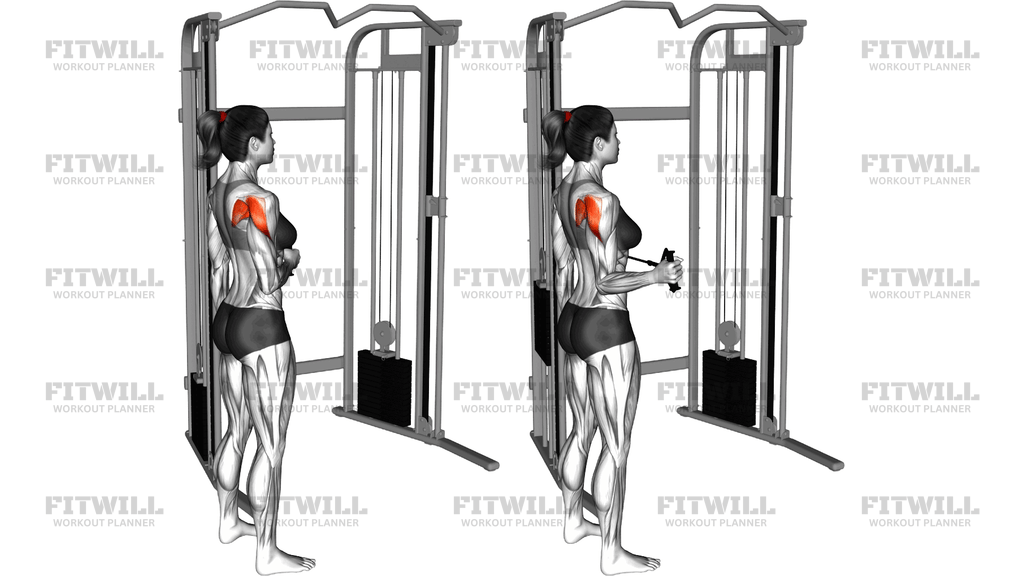
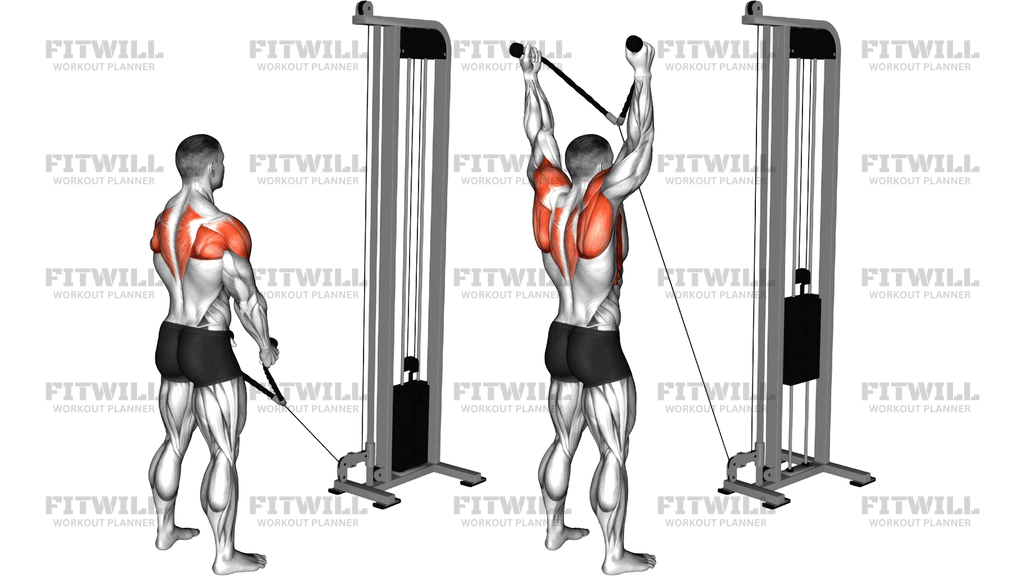
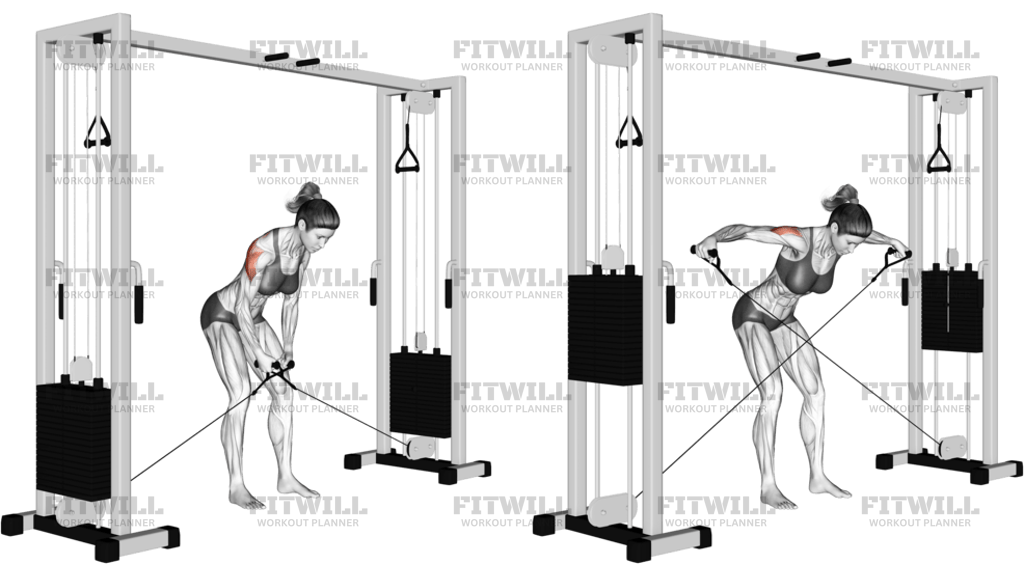
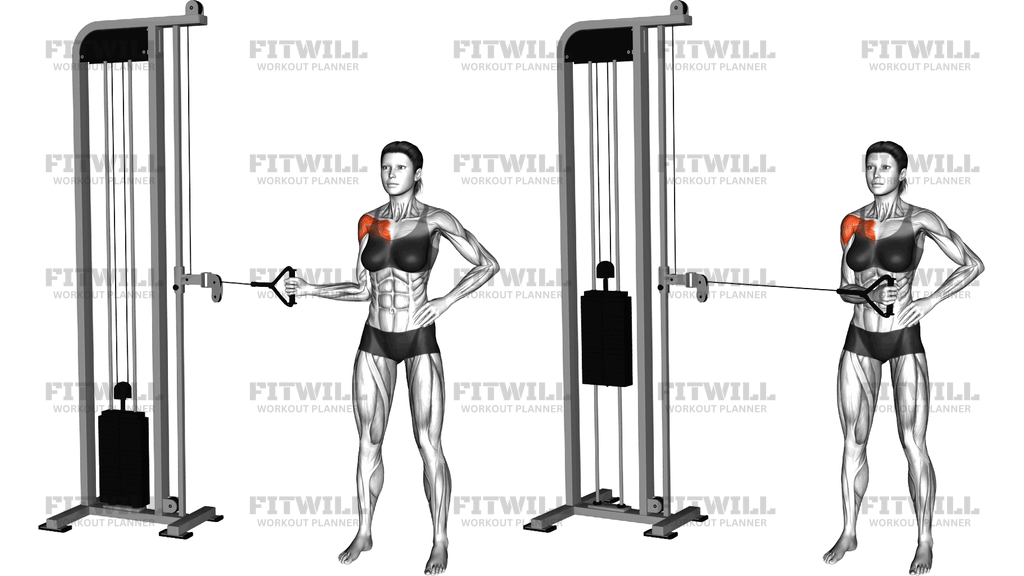
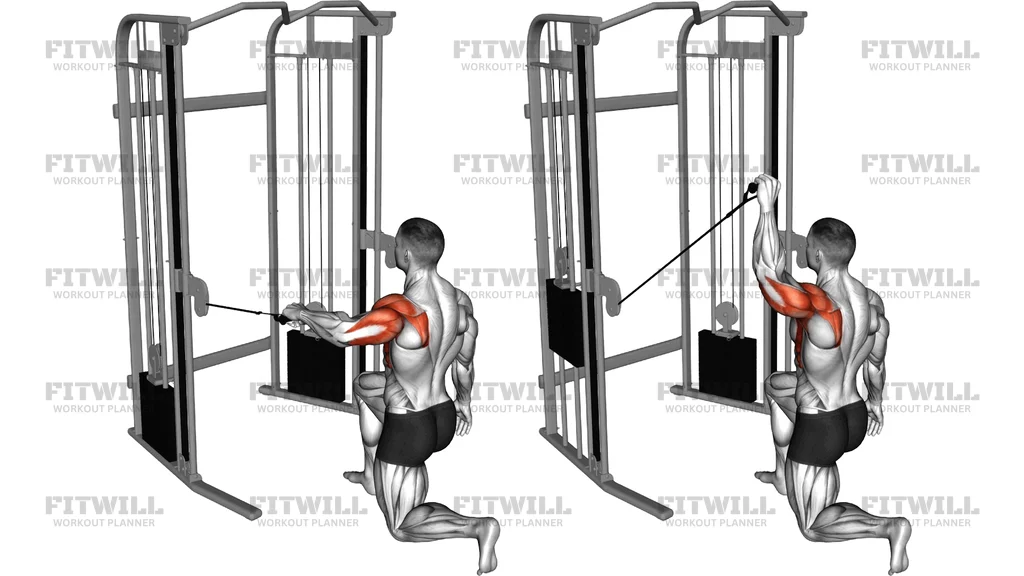
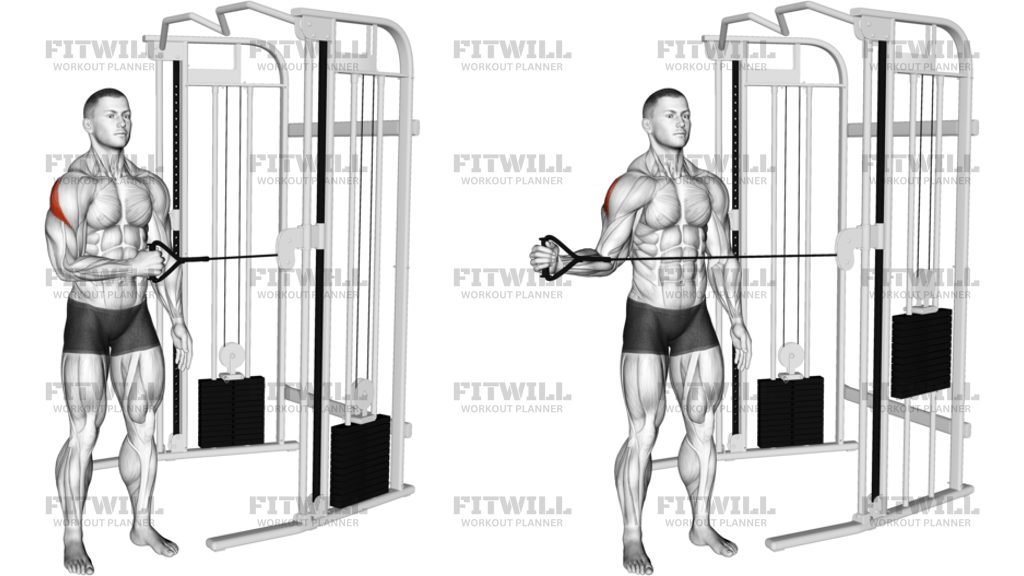
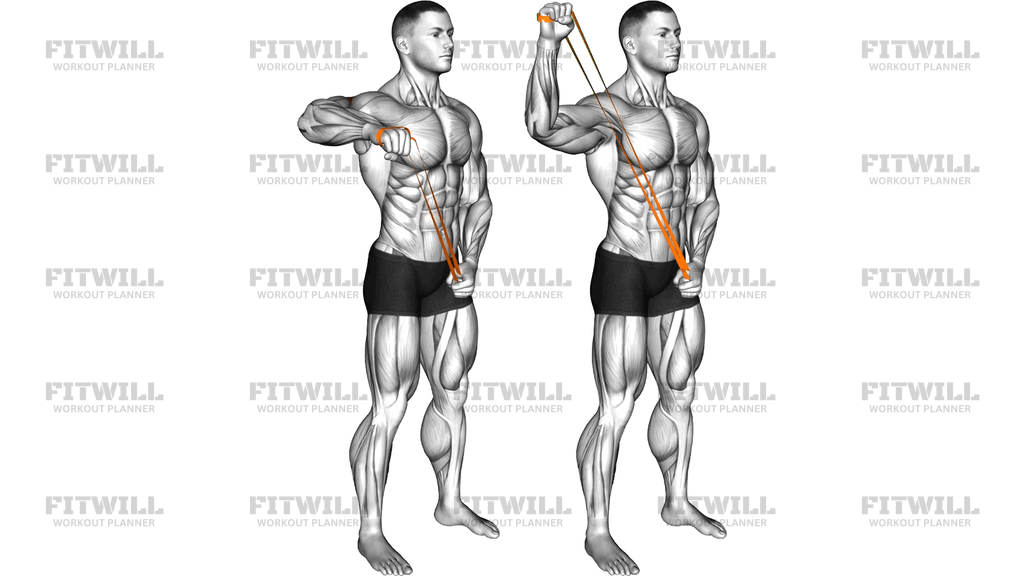
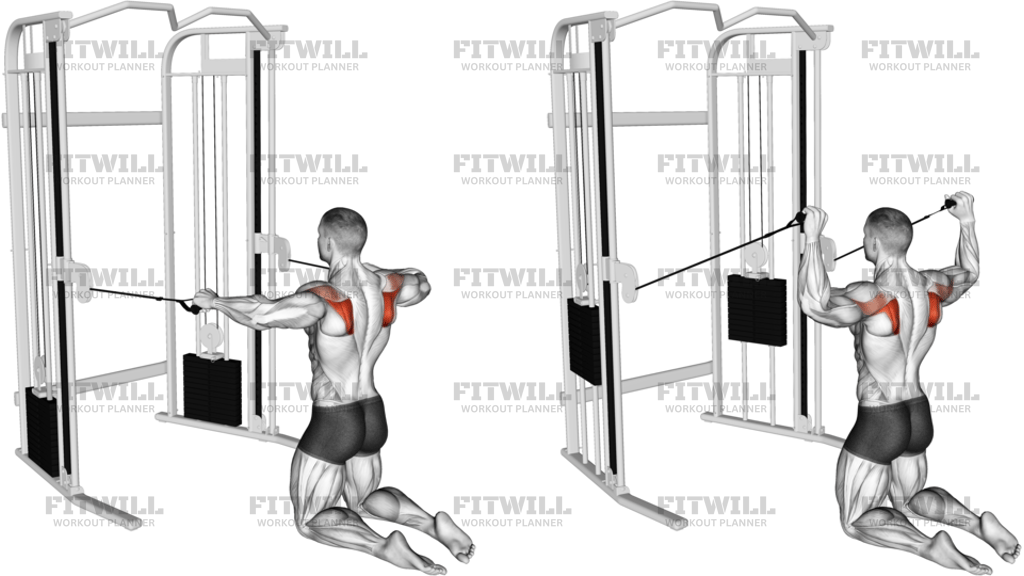
The Cable Low Shoulder 90 Degrees External Rotation is a targeted rotator cuff exercise performed at a low pulley with a single handle. You stand with your side or back toward the machine, raise one arm so the upper arm sits roughly parallel to the floor with the elbow bent to 90 degrees, and rotate the forearm up and back against the cable's pull. The constant tension of the cable through the entire arc is what separates this from the dumbbell version, which loses resistance at the top of the range.
This movement primarily trains the infraspinatus and teres minor, the two main external rotators of the shoulder, with support from the rear deltoid and the muscles that stabilize the shoulder blade. Because the arm is held at 90 degrees of elevation, the rotator cuff has to work while the shoulder is in a more demanding position than the classic elbow-at-side version. That makes it a step up in difficulty and a useful progression once the basic external rotation feels easy.
This exercise is especially valuable for people building shoulder resilience for pressing, throwing, or overhead sports. Strong external rotators help balance out all the internal rotation work that pressing and daily activities tend to pile on. Lifters with cranky shoulders often find that light, controlled external rotation work makes heavy benching and overhead pressing feel more stable, though anyone with active shoulder pain should get cleared by a professional first.
The setup matters more here than in most exercises. Because the cable pulls diagonally from a low pulley, the resistance is heaviest when your forearm approaches the vertical position and lighter at the start. Set the pulley fully low, stand far enough away that the cable does not drag on the machine, and keep your upper arm locked at shoulder height throughout. If your elbow drifts down or your torso twists, the rotator cuff stops doing the work and larger muscles take over.
Execution should be slow and deliberate. Pull the handle by rotating at the shoulder joint only, keeping the elbow bent at a fixed 90 degrees and the upper arm still. Pause briefly when the forearm reaches the raised position, then lower the weight back with the same control rather than letting the stack pull your arm down. Most people do well with light weight, higher reps, and strict form. This is a precision exercise, and the moment you have to heave the weight up, you have turned it into something else entirely.
You will typically see this movement in warm-up blocks, rehabilitation progressions, and accessory work at the end of upper body sessions. One to three sets of ten to fifteen controlled reps per side is a common dose. Treat it like brushing your teeth: unglamorous, low load, and consistently worth doing.
[ Workout Log & Planner ]
Put your next workout in Fitwill
Keep your plan and training log ready when you are.


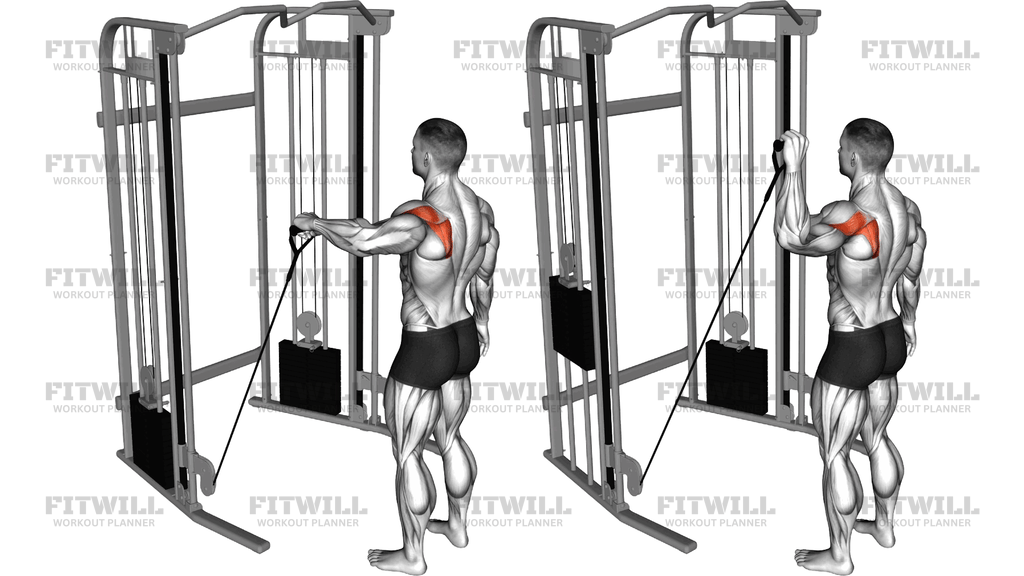
Instructions
- Set the pulley of a cable machine to its lowest position and attach a single handle.
- Stand with the working side angled away from the machine and grip the handle with one hand, palm facing down or inward.
- Raise your arm out to the side until your upper arm is roughly parallel to the floor, then bend your elbow to 90 degrees so your forearm points forward toward the machine.
- Brace your core, keep your chest tall, and take a small step away from the machine so the cable hangs free without slack or rubbing.
- Exhale and rotate your forearm upward and back by turning at the shoulder, keeping the elbow bent at 90 degrees and the upper arm fixed at shoulder height.
- Continue until your forearm points up or slightly back and you feel the external rotators working at the back of the shoulder.
- Pause for a beat at the top, then inhale and slowly rotate back to the starting position, resisting the cable's pull on the way down.
- Complete all reps on one side, re-grip, and repeat on the other arm.
- Reset your stance and shoulder position before each set, and stop the set if your elbow starts dropping or your torso begins twisting.
Tips & Tricks
- The most common mistake is letting the elbow drop toward your side as the set goes on. Once the upper arm sinks, you have changed the exercise into an easier version. Check your elbow height in a mirror every few reps.
- Do not twist your torso to help the handle up. If the weight only moves with a body swing, the stack is too heavy; drop a plate and let the shoulder do the rotating.
- Keep the wrist neutral and the grip relaxed. Squeezing the handle hard recruits the forearm and shifts attention away from the rotator cuff.
- The cable pulls diagonally from a low pulley, so the hardest part of the rep is near the top. Move even more slowly through that final third of the range.
- Stop the rotation at the point where you can keep your shoulder blade pinned back. Cranking the forearm as far back as possible with the shoulder rolling forward adds no benefit.
- If you cannot stabilize the arm at 90 degrees yet, start with the Cable External Rotation with the elbow tucked at your side and progress to this version over several weeks.
- A towel rolled and tucked between your elbow and ribs is hard to keep in place with the arm raised here, so instead fix your eyes on one spot ahead of you to prevent head and torso rotation.
- Warm the shoulder up with a few light, easy reps before your working sets; cold external rotators at this elevated arm position feel far stiffer than they should.
- Keep rest periods short and loads modest. This is one exercise where chasing weight almost always ruins the movement quality.
Frequently Asked Questions
Which muscles does the Cable Low Shoulder 90 Degrees External Rotation work?
It primarily targets the infraspinatus and teres minor of the rotator cuff, which produce external rotation. The rear deltoid and the muscles controlling the shoulder blade assist with stability throughout the movement.
Why is the arm held at 90 degrees instead of at the side?
Raising the upper arm to shoulder height places the rotator cuff in a more specific and demanding position, mimicking how the shoulder must stabilize during pressing and throwing. It is a harder progression than the elbow-at-side version.
Is the Cable Low Shoulder 90 Degrees External Rotation suitable for beginners?
It can be, but most beginners progress to it faster if they first master the external rotation with the elbow tucked at the side. Start with very light weight and prioritize smooth, controlled reps over load.
How heavy should I go on this exercise?
Use a load you can control for ten to fifteen slow reps without your elbow dropping or your torso twisting. The rotator cuff is small, and the cable's diagonal pull makes even light stacks challenging near the top.
Why does the cable pull diagonally from a low pulley matter?
With the pulley set low, resistance is lightest at the start of the rotation and heaviest as your forearm approaches vertical. This gives you strong tension exactly where the external rotators are strongest.
My elbow keeps drifting down during the set. How do I fix it?
That is a sign of fatigue or too much weight. Reduce the load, do the movement in front of a mirror to monitor elbow height, and stop the set the moment the upper arm starts to sink.
What can I use if my gym has no cable machine?
A resistance band anchored low to a rack or sturdy post reproduces the same diagonal pull and setup. A dumbbell external rotation also works, though the resistance profile is less favorable at the top of the range.
Should I feel this in the front of my shoulder?
No, the working sensation should sit deep at the back of the shoulder around the shoulder blade. Front-of-shoulder discomfort usually means the load is too heavy, the elbow has dropped, or you are shrugging; reset your position and lighten the weight.
Is the Cable Low Shoulder 90 Degrees External Rotation safe for shoulder pain?
It is often used in shoulder conditioning because it loads the external rotators gently, but pain during the movement is a signal to stop. If discomfort persists, have a qualified professional assess your shoulder before continuing.
Where should this exercise fit into my workout?
It works well as a warm-up before pressing, or as accessory work at the end of an upper body session. One to three sets of ten to fifteen controlled reps per side is a typical dose.