Stepback Diagonal Rainbow Arms
Stepback Diagonal Rainbow Arms is a standing, body-weight rhythm drill that pairs a diagonal step-back with the legs and a wide sweeping arc with the arms. From a tall stance, one foot steps back and across behind you while both arms travel up and over in a rainbow-shaped path from one side of the body to the other. Each rep finishes with the arms reaching overhead or out to the opposite side as the stepped-back foot returns, then the pattern repeats on the other side.
This movement earns its place in warm-ups, low-impact cardio circuits, and coordination work because it links three things at once: lower-body weight shifting, upper-body circumduction, and cross-body timing. The legs handle the constant deceleration and re-acceleration of stepping back and returning, which keeps the quads and glutes working. The shoulders and upper back drive the sweeping arm arc, and the core ties the two halves together as your torso rotates slightly with each diagonal step.
Because there is no equipment and no jumping, the setup matters more than intensity. You need enough floor space to step diagonally backward without hitting anything, and your weight should stay over the front leg so the back foot only kisses the floor for balance. If you rush the arm sweep, it turns into a flailing swing; if you keep the arms quiet, you lose half the training effect. The value of the drill comes from the arms and legs arriving at their end positions at the same moment.
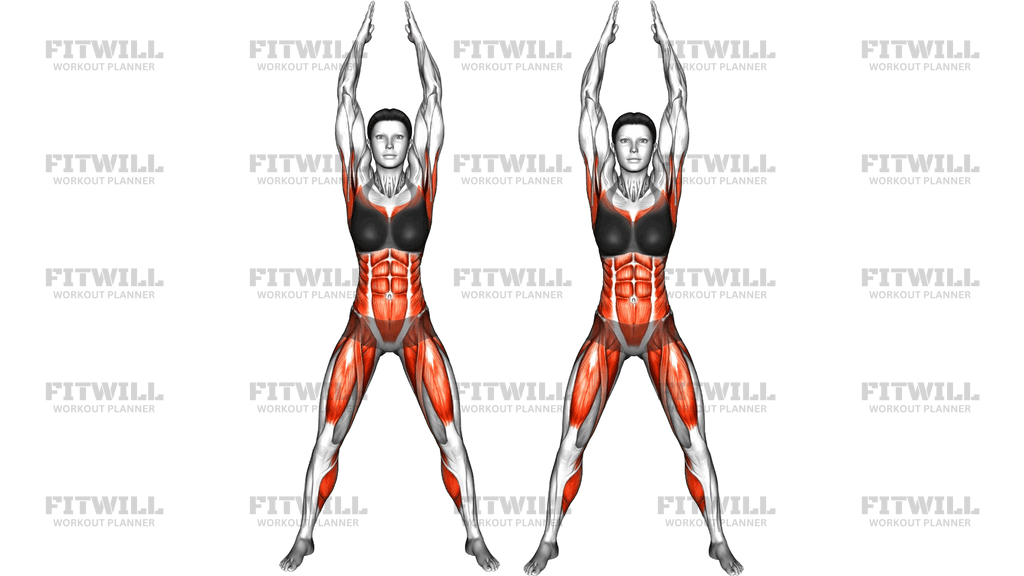
Executed well, each rep looks like this: the foot steps back and slightly out on a diagonal, the front knee softens to absorb the shift, and both arms sweep up from the opposite hip, over the head, and out toward the stepping side like an umbrella opening. Then everything reverses smoothly as you come back to standing tall. The arc should be wide and deliberate, with palms open and elbows soft rather than locked.
This drill suits beginners building coordination, anyone warming up shoulders and hips before upper-body or leg training, and older or returning exercisers who want a joint-friendly way to raise the heart rate. It also works well as an active recovery station in circuits, since it keeps blood moving without loading the joints heavily.
For safety, keep the stepping-back foot close enough to the front foot that you never feel stretched or off balance, and stop the arm arc at any height that bothers the shoulders. Move at a conversational pace first; speed is easy to add once the pattern feels automatic.
[ Workout Log & Planner ]
Put your next workout in Fitwill
Keep your plan and training log ready when you are.


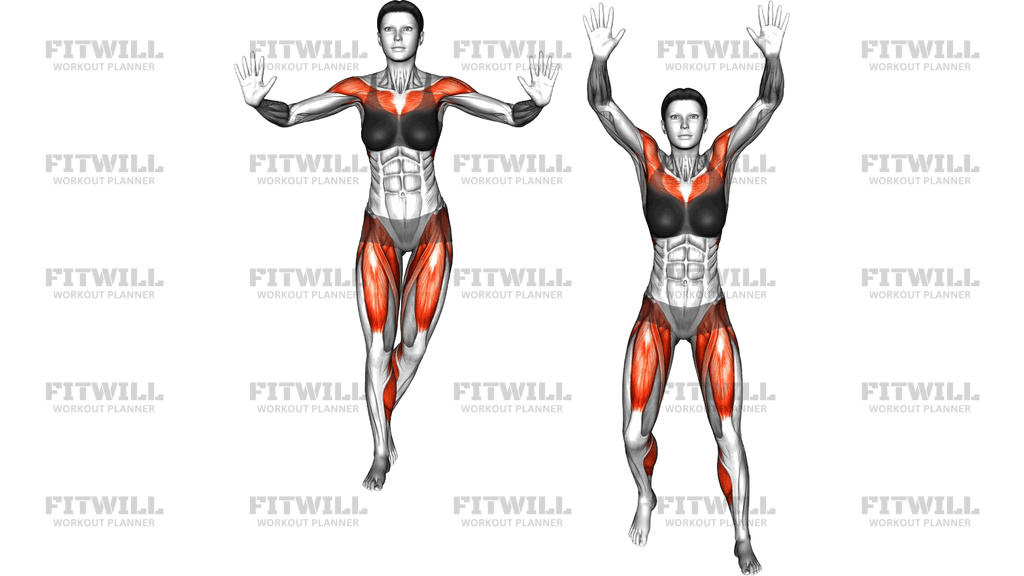
Instructions
- Stand tall with your feet hip-width apart, arms hanging relaxed at your sides, and clear space behind and slightly to each side of you.
- Open the palms and let both arms float out to the sides until they rest just below shoulder height, elbows soft.
- Brace your core lightly, keep your chest lifted, and shift your weight onto your left leg so the right foot is free to move.
- Step your right foot back and out on a diagonal, placing the ball of the foot behind and to the right of your left heel.
- As the foot lands, sweep both arms up and across your body in a rainbow arc, passing overhead and reaching out toward the right side as the right leg extends back.
- Allow the front knee to bend slightly so your hips stay level and your torso stays upright rather than leaning forward.
- Reverse the arc and press through the front heel to bring the right foot back to the starting stance, letting the arms lower with control to your sides.
- Exhale as you sweep the arms up and step back; inhale as you return to standing.
- Repeat the same diagonal step and rainbow sweep on the left side, then continue alternating sides for your desired time or rep count.
- Reset between reps if your balance drifts: stand still, re-brace, and restart the pattern from a quiet, tall stance.
Tips & Tricks
- Think of the arms as drawing one continuous rainbow, not two separate lifts; if your hands stop at the top, the sweep has broken into two pieces and lost its rhythm.
- Keep the stepped-back foot light. If you dump weight into the back leg, the front hip collapses and the quads stop doing the work of controlling the return.
- A common mistake is letting the ribcage flare and the lower back arch when the arms pass overhead. Ribs down and core braced keeps the arc in the shoulders instead of the spine.
- If your shoulders pinch at the top of the arc, narrow the sweep slightly or let the palms turn to face forward earlier; the path should feel like a smooth curtain, not a forced stretch.
- Start with a slower tempo than feels necessary. Most people can coordinate the diagonal step easily but fumble the arm timing once speed increases.
- Watch your front knee: it should track over the toes, not cave inward as the other foot crosses behind. Actively press the front knee slightly out as you step.
- Stay on the balls of the back foot only. Pushing off a flat, planted back foot turns the return into a lunge drive and changes the drill entirely.
- If balance is shaky, shorten the diagonal so the back foot lands closer to the front foot, and widen your gaze to a fixed point at eye level.
- Breathe with the arc rather than holding your breath; the exhale on the sweep naturally helps the core stay engaged.
Frequently Asked Questions
What muscles does Stepback Diagonal Rainbow Arms work?
The quads and glutes handle the step-back and return, the deltoids and upper back drive the rainbow arm sweep, and the core stabilizes the slight rotation. Calves assist as the back foot lifts and lowers.
Is Stepback Diagonal Rainbow Arms suitable for beginners?
Yes, it is low-impact and equipment-free, which makes it a good first coordination drill. Beginners should slow the tempo and shorten the diagonal step until the arm and leg timing feels natural.
How far back should my foot step during the diagonal?
Far enough that the ball of the back foot touches down behind and slightly outside your front heel, but close enough that you never feel stretched. Depth can grow as your balance improves.
Should my arms pass fully overhead, or can I shorten the arc?
The full rainbow passes overhead, but you can lower the apex if your shoulders complain. The key is keeping the path continuous and symmetrical on both sides rather than forcing height.
Why do my arms and legs keep getting out of sync?
The arm sweep and the step-back should start at the same instant and finish together. Practice the pattern at half speed, or rehearse just the footwork for a few reps before adding the arms.
Can I use Stepback Diagonal Rainbow Arms as a warm-up?
It works very well as a warm-up because it raises the heart rate while mobilizing the shoulders, hips, and ankles through large ranges. Two to three minutes of steady alternating reps is usually enough.
What can I substitute if stepping backward bothers my knees?
Keep the step shallow so the front knee barely bends, or step out to the side instead of diagonally back while keeping the same rainbow arm path. Both preserve the coordination demand with less knee flexion.
How do I avoid losing balance when the foot crosses behind?
Keep your weight firmly over the front leg the whole time and treat the back foot as a balance pointer, not a support. Fixing your eyes on one spot at eye level also helps a lot.
How many reps should I do?
Count alternating steps rather than single sides. Twenty to forty total steps covers a warm-up; for a cardio circuit, go for time, such as 30 to 45 seconds of continuous alternating reps.