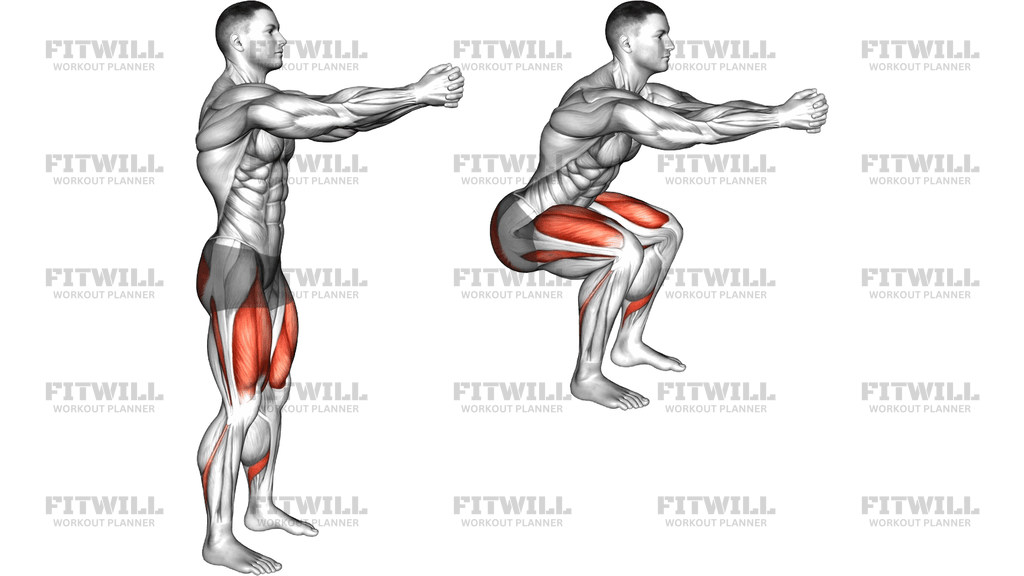
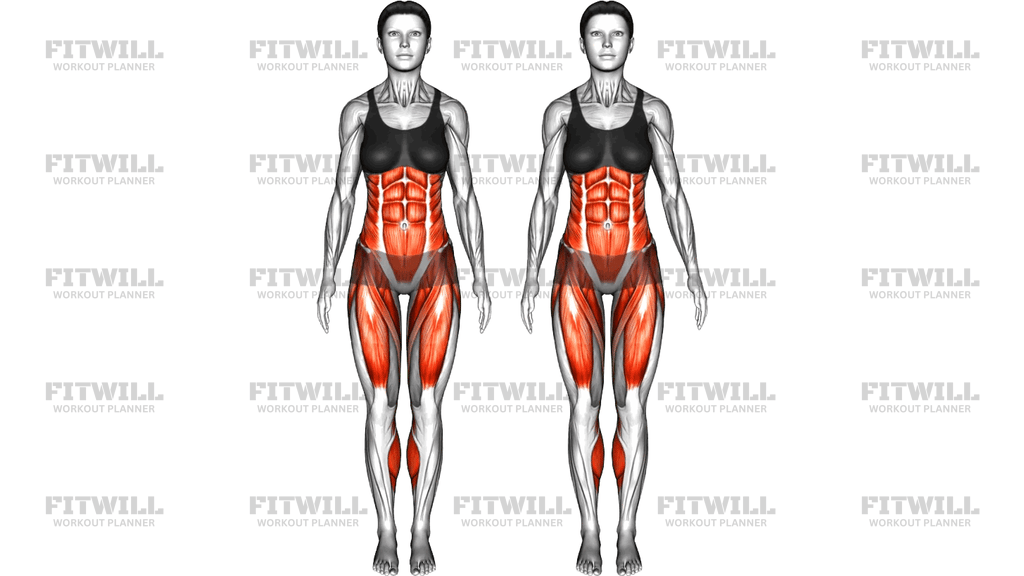
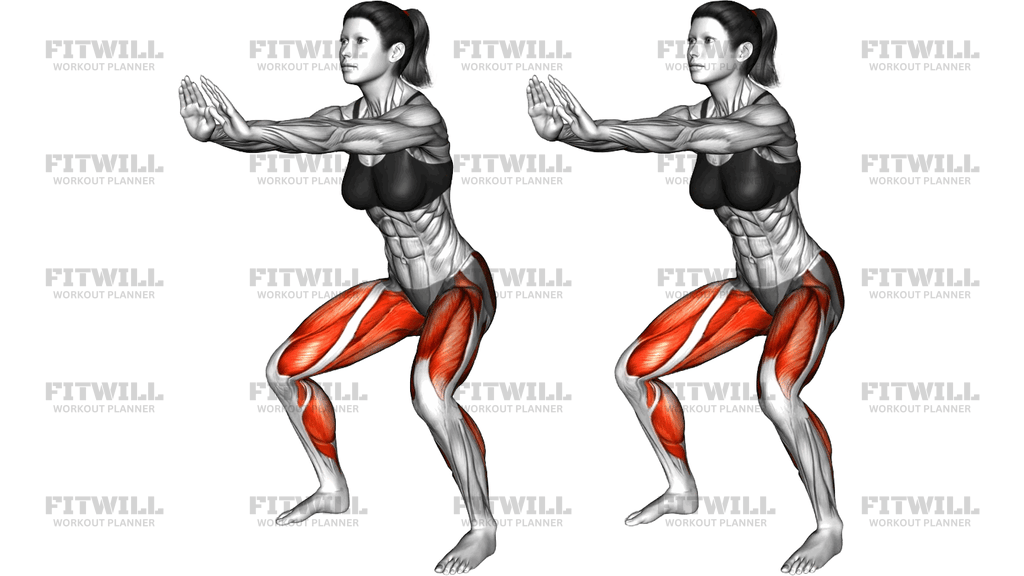
Step Out And Side Leg Lift
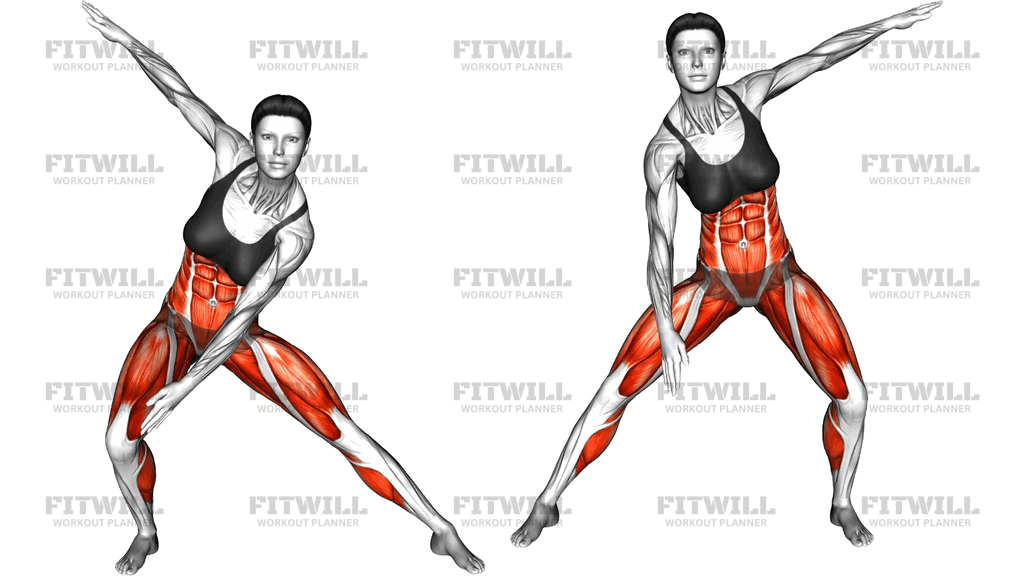
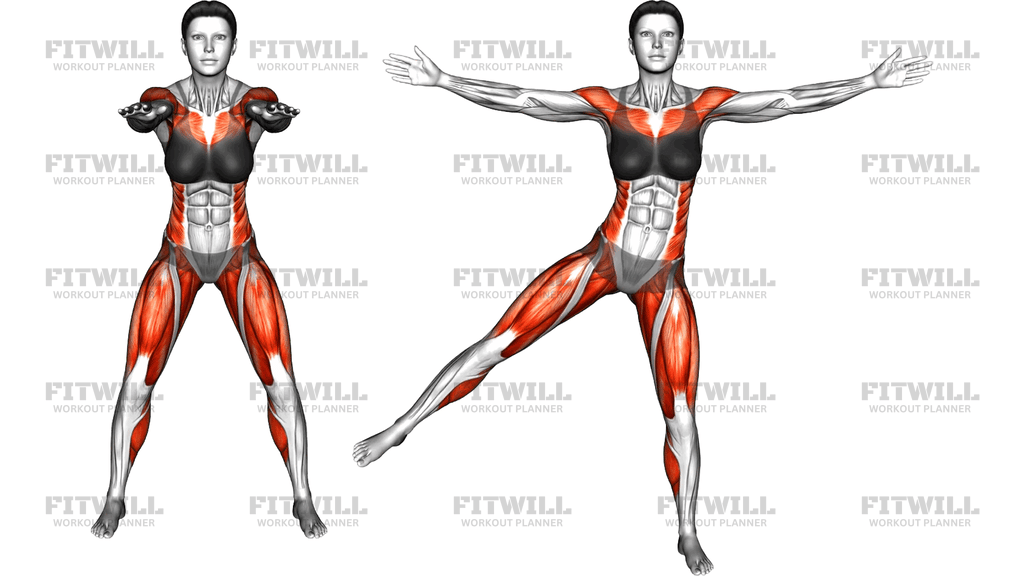
Step Out And Side Leg Lift is a standing body weight movement that combines two hip actions in one flowing repetition: you step one foot out wide into a small side squat, then shift your weight onto that leg and lift the opposite leg straight out to the side. The arms move with you, reaching forward as you step out and opening wide to a T position as you lift, which helps with balance and gives the movement its characteristic rhythm.
This exercise is popular in glute-focused circuits, warm-up routines, and low-impact lower body sessions because it trains the gluteus medius and outer hip muscles in a functional, weight-bearing way. The leg you stand on works hard to stabilize your pelvis while the lifting leg drives the hip abduction, so both sides of the body get meaningful work from a single repetition. The added step-out pattern also brings the quads and inner thighs into play during the squat portion.
The setup matters more than it looks. Because you end up balancing on one leg with the other leg raised, your torso position determines everything: if your chest stays tall and your ribs stack over your hips, the outer glute of the standing leg does the work. If you sway or collapse toward the lifted leg, you lose that stabilization demand and the movement turns into a momentum-driven swing.
To perform it well, think of the sequence as step, shift, lift, lower, return. Step out wide, settle into a shallow side stance with knees tracking over the toes, then press through the standing foot as the opposite leg rises to the side. Keep the lift height honest, around hip height or just below, and lower the leg with control before stepping back to center. The arm swing should mirror the legs: forward on the step, wide on the lift.
This movement suits beginners building single-leg control, anyone doing home workouts without equipment, and lifters who want a low-load way to warm up their hips before squats or lunges. It is also a practical choice for older adults or people returning from time off, since it challenges balance without impact. Alternating sides each rep keeps the work even and gives you a natural rest rhythm between lifts.
A few practical points will keep it safe and effective. Do the movement on a firm, non-slippery surface and stay near a wall or chair if balance is new for you. Keep the lifted leg's toes pointing forward rather than up, and avoid rolling the standing ankle outward as you lift. If hip height starts to shrink and your torso starts leaning to buy extra range, that is the signal to finish the set.
[ Workout Log & Planner ]
Put your next workout in Fitwill
Keep your plan and training log ready when you are.


Instructions
- Stand tall with your feet together, arms relaxed at your sides, on a firm non-slip surface.
- Step your right foot out to the side into a wide stance and sink into a small side squat, both knees bent and tracking over your toes.
- Reach both arms forward at chest height as you step out, keeping your chest tall and your weight centered between your feet.
- Brace your core lightly and shift your weight fully onto your right leg, pressing the foot evenly into the floor.
- Lift your left leg straight out to the side to about hip height, toes facing forward, while your arms open wide out to the sides into a T shape.
- Pause briefly at the top with your torso upright, feeling the outer glute of the standing leg holding you steady.
- Lower the left leg back down with control and bring it in, letting your arms return forward as you settle back into the wide stance.
- Push off the floor and step back to the starting position with feet together and arms returning to your sides.
- Exhale as you lift the leg and open the arms, inhale as you lower and return; alternate sides each repetition or complete all reps on one side before switching.
Tips & Tricks
- If your torso leans toward the lifted leg, you are compensating for a weak standing hip; shorten the lift height until you can stay stacked.
- Do not crank the lift above hip height by hiking the hip or swinging; the gluteus medius works hardest in the controlled mid-range, not at the extreme.
- Watch the standing knee during the step-out squat. If it collapses inward, cue yourself to spread the floor with your foot as you sink.
- Point the toes of the lifted leg forward. Rotating the foot upward turns the movement into a different hip action and reduces the abduction focus.
- Keep the arm movement deliberate rather than flinging them open, since a fast arm swing can pull you off balance at the top of the lift.
- If you wobble at the top, softly drag the toes or heel of the lifted leg along the floor for a few reps while your stabilizers adapt.
- The most common mistake is rushing the return and letting the wide stance collapse into a narrow, uncontrolled step; take a full second to come back.
- Alternate sides every rep if balance is a challenge, since the switch gives your standing hip a brief reset between lifts.
- A slight bend in the standing knee is fine, but avoid locking it out hard while lifting, which reduces the stabilizing work of the hip.
Frequently Asked Questions
Which muscles does Step Out And Side Leg Lift target the most?
The main work comes from the gluteus medius and outer hip muscles, both in the standing leg that stabilizes and the lifting leg that raises. The quads and inner thighs assist during the step-out squat, and the core helps keep your torso upright throughout.
How high should I lift my leg during the side lift portion?
Aim for roughly hip height or just below it. Going higher usually forces the torso to lean sideways or the hip to hike up, which takes the work away from the glute and puts strain on the lower back.
Is Step Out And Side Leg Lift good for beginners?
Yes, it is a low-impact body weight exercise, and the wide step-out base makes the balance demand manageable. Beginners can keep the lift lower and stay near a wall or chair for light support until single-leg control improves.
Why do my arms move during this exercise?
The arms reach forward on the step-out and open wide on the lift to help counterbalance your torso over the standing leg. This makes the single-leg hold more stable and keeps the movement flowing smoothly from one position to the next.
What is the most common mistake in this movement?
Leaning the torso away from the lifted leg or collapsing the standing knee inward to gain extra lift height. Both substitutions shift the effort away from the outer glute and can irritate the knee or lower back over time.
Can I use Step Out And Side Leg Lift as a warm-up?
Absolutely. It is an effective way to wake up the glutes and hip stabilizers before squats, lunges, or running, since it loads the hips without equipment or heavy strain.
What can I do if I lose my balance on the single-leg hold?
Reduce the lift height, slow the tempo, or lightly touch a wall with your fingertips while you build control. You can also keep the toes of the lifting leg dragging the floor for the first few sets.
How many repetitions should I do per side?
Ten to fifteen controlled reps per side works well for strength and endurance, or eight to ten as part of a warm-up. Stop the set when your lift height or torso position starts to break down rather than grinding out extra reps.
Is this exercise safe for my knees?
When performed with the knees tracking over the toes and a controlled range, it is generally knee-friendly because there is no impact and the load is light. If you have a current knee issue, keep the step-out squat shallow and check with a professional first.