Svend Press March
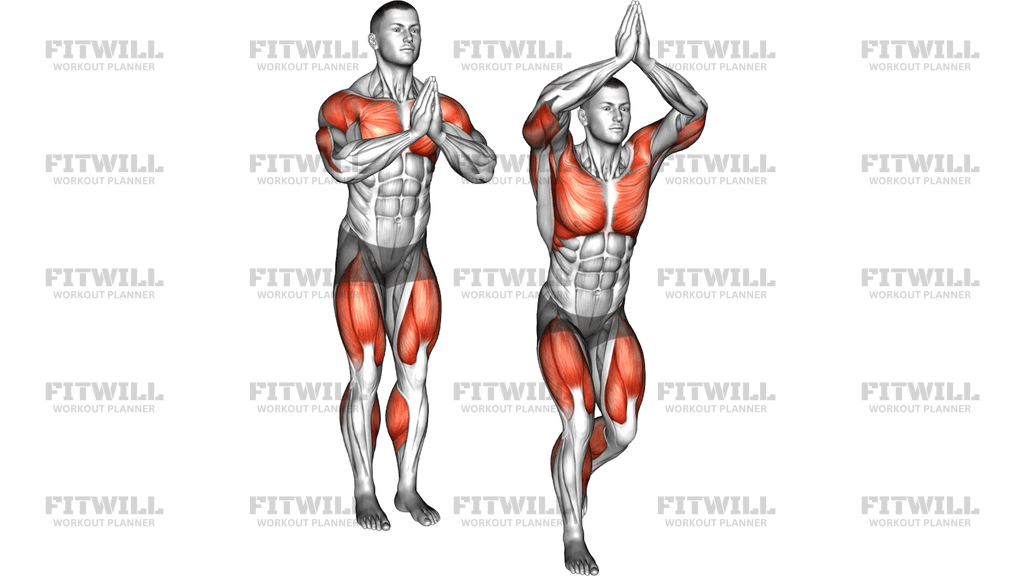
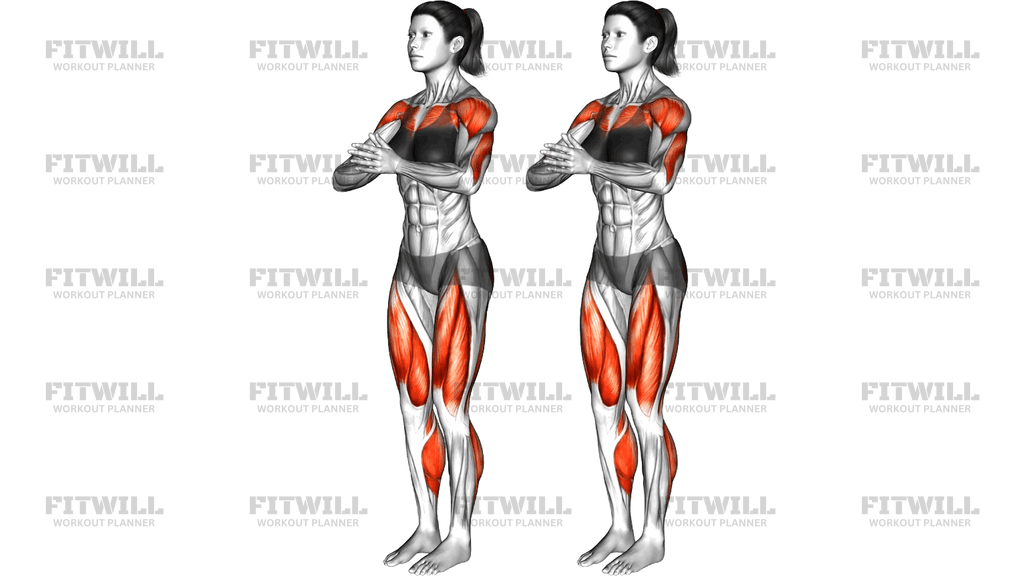
The Svend Press March combines two ideas that rarely get trained together: a constant inward squeeze on your chest and a marching knee lift that challenges your balance. You stand tall, sandwich two weight plates between your palms at chest height, and press them hard against each other the entire time. While you hold that squeeze, you drive one knee up to hip level, lower it, then switch legs. The result is a chest exercise that doubles as a standing core and stability drill.
Most people know the Svend press as a plate squeeze done from a standing or seated position. Adding the march turns it into something more demanding, because every knee lift shifts your weight onto one leg and tries to pull your torso out of position. Your chest, front shoulders, and triceps work to keep the plates pressed together, while your abs, obliques, and hip flexors handle the leg action. Nothing is chasing maximum load here; the point is sustained tension and control.
This movement suits lifters who want a low-fatigue way to finish a chest session, or anyone training in a small space with nothing but a pair of light plates. It is also a smart option for people who struggle to feel their chest on pressing work, since the squeeze gives immediate feedback: the moment your palms drift apart, the tension disappears. Beginners can start without any weight at all, simply pressing their palms together, and add a light plate once the pattern feels solid.
Setup matters more than it looks. Stand with feet roughly hip-width apart, soft knees, and a tall spine. Place the plates at the center of your chest, elbows flared wide, and squeeze inward before you think about lifting a leg. If you start marching before the squeeze is active, the exercise collapses into a sloppy knee raise with dead arms. Build the press first, then layer the march on top of it.
To execute well, keep the plates glued together at mid-chest height for the whole set. Lift each knee to about hip level with a deliberate pace, and avoid letting your shoulders round forward or your lower back arch as the leg comes up. Breathe steadily through the march rather than holding your breath, and step down softly to keep your balance. Expect your forearms, shoulders, and deep core to fatigue before your chest does on longer sets.
Common use cases include chest finishers, warm-up activation before bench pressing, and travel or home workouts where pressing options are limited. Because the load is light and the march adds coordination demands, keep reps moderate and stop the set as soon as the plates start separating or your stance begins to wander.
[ Workout Log & Planner ]
Put your next workout in Fitwill
Keep your plan and training log ready when you are.


Instructions
- Stand upright with your feet about hip-width apart, knees slightly bent, and hold two weight plates pressed together between your palms at the center of your chest.
- Flare your elbows out to the sides at roughly shoulder height so the plates sit directly in front of your upper chest.
- Squeeze the plates firmly against each other and brace your abs as if preparing for a light nudge from the front.
- Keep your gaze forward and your ribs stacked over your pelvis before starting any leg movement.
- Drive your right knee up until your thigh is close to hip level, maintaining the inward squeeze on the plates the entire time.
- Lower your right foot back to the floor under control, then lift your left knee to the same height.
- Continue alternating knees in a slow, steady marching rhythm, keeping the plates from drifting apart at any point.
- Exhale as each knee rises and inhale as it lowers; do not hold your breath through the set.
- Once both legs have completed the target number of lifts, stop marching, relax the squeeze, and lower the plates.
- Reset your stance and brace before starting the next set so every rep begins from the same tall, stable position.
Tips & Tricks
- If the plates keep slipping apart during the march, your squeeze is too weak for the plate thickness you chose; drop to lighter plates or press your bare palms together until the coordination improves.
- Watch for the knee lift pulling your torso sideways. If you wobble, widen your stance slightly and slow the tempo before adding more reps.
- Do not let your elbows drop toward your ribs as fatigue builds. Low elbows turn the chest squeeze into an arm squeeze and quietly remove the chest from the movement.
- Keep the knee drive driven by your hip, not by leaning your upper body back. If you feel your lower back arch each time a leg rises, tighten your abs and reduce the lift height.
- Count reps by full marching cycles (one lift per leg) rather than single knee raises so your sets stay balanced left to right.
- A soft landing matters more than height here. Slamming your foot down shifts your attention to your joints and steals tension from the squeeze.
- If your calves burn before anything else, you are rocking onto your toes. Keep your weight spread across the whole foot with heels in contact with the floor.
- Use this as an activation drill before bench or push-up work rather than a heavy primary lift; chasing big weight here wrecks the squeeze, which is the whole point.
- Breathe in a rhythm tied to the march rather than bracing hard. If you have to hold your breath to keep the plates together, the set is too long or the plates are too heavy.
Frequently Asked Questions
What muscles does the Svend Press March work?
The primary target is the chest, especially the upper portion, through the sustained inward squeeze. Your front shoulders and triceps assist the press, while your abs, obliques, and hip flexors work to stabilize you during each knee lift.
Can beginners do the Svend Press March without weight?
Yes. Pressing your bare palms together at chest height provides the same squeeze and lets you learn the marching pattern with zero risk. Once you can hold the squeeze for a full set of marches, add two light plates.
Why do the plates keep separating during the march?
This usually means the plates are too heavy or the marching is too fast for your current coordination. Slow the knee lifts down and reduce the weight so the squeeze stays constant from the first rep to the last.
Should my elbows be high or low during the Svend Press March?
Keep your elbows flared out at roughly shoulder height so the plates press straight into your upper chest. Letting the elbows sink turns it into an arm-dominant squeeze and reduces chest involvement.
How many reps should I do per set?
Count full marching cycles, meaning one lift per leg. Start with 10 to 15 cycles and stop the set the moment the plates drift apart or your balance gets sloppy.
Can I substitute dumbbells for the weight plates?
You can, but it is harder to keep two dumbbells pressed together because of their shape. Two flat plates or simply squeezing your palms together are the cleaner options for this movement.
Is the Svend Press March safe for people with knee issues?
The marching is low impact, but if knee discomfort shows up during the lifts, reduce the knee height to a range that feels comfortable. Because the load is light, this is generally easier on the joints than heavy pressing, but stop if pain persists.
Where should this exercise fit into my workout?
It works best as a chest finisher or as an activation drill before heavier pressing. Its light load and constant squeeze make it a poor choice as your main heavy chest movement.
Why do my abs feel this more than my chest?
Each knee lift forces your core to stabilize a single-leg stance, which is demanding on its own. Slow the marching tempo and refocus on the chest squeeze so the pressing muscles, not just your trunk, stay engaged throughout the set.
How do I breathe during the Svend Press March?
Exhale as each knee rises and inhale as it lowers. The squeeze should come from your chest and arms, not from clamping down and holding your breath.