Band One Arm Twisting Seated Delt Row
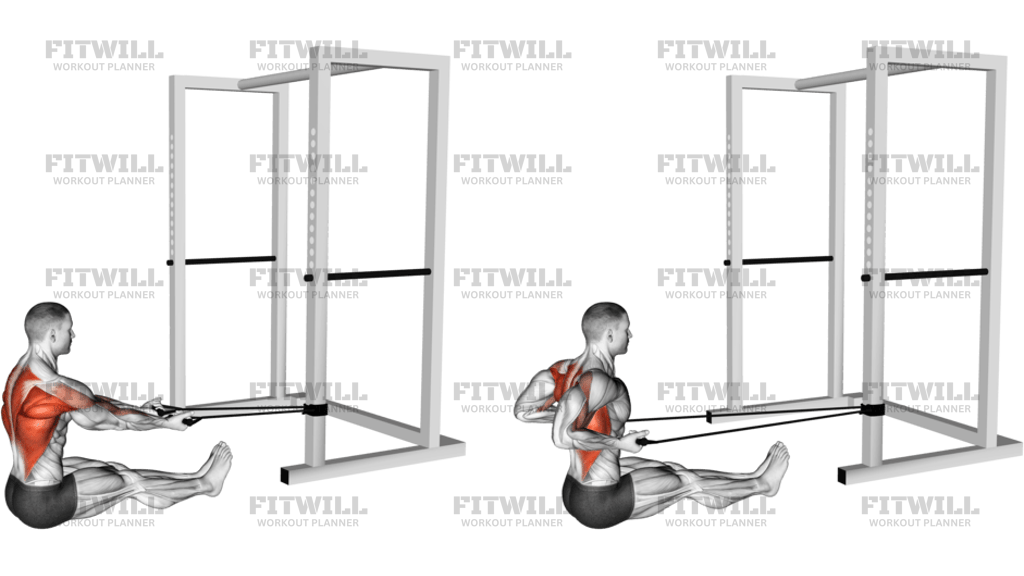
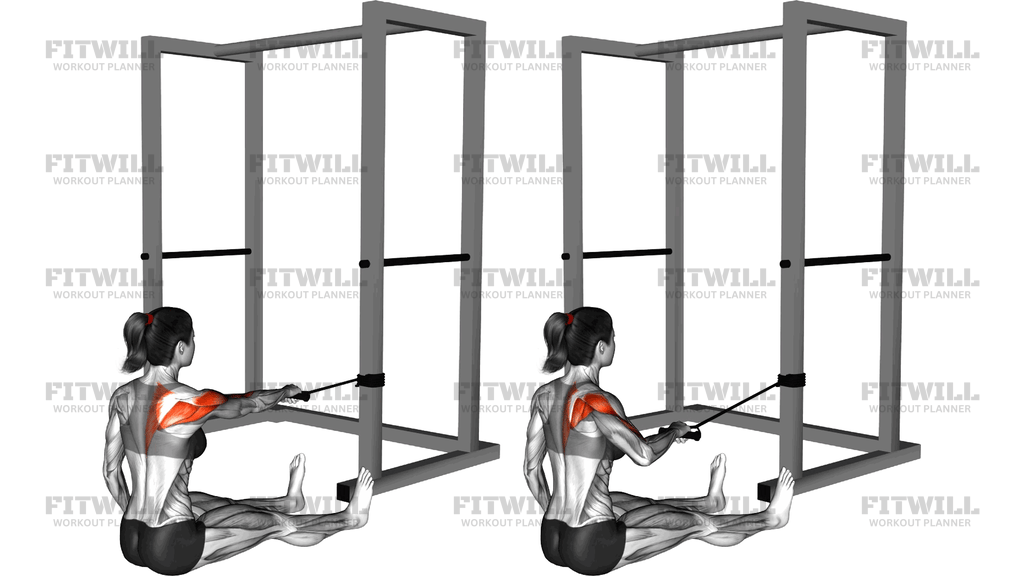
The Band One Arm Twisting Seated Delt Row is a single-arm row performed on the floor with a resistance band anchored in front of you at roughly shoulder height. You sit with your legs extended toward the anchor point, hold the band with one hand, and row it back toward your torso while rotating your upper body away from the anchor. That added twist is what separates this from a plain seated row: as you pull, your chest turns open and your working shoulder travels further back than it could in a fixed-torso row, which puts a strong emphasis on the rear deltoid and the muscles between your shoulder blades.
This movement suits anyone who wants to bulletproof the back of the shoulder without loading the spine or standing under a barbell. Because you work one side at a time, it also exposes and helps correct left-to-right differences in shoulder and upper back strength, which is common in people who throw, swing a racket, or carry bags on one side. The seated position with legs out front removes help from the legs and hips, so the shoulder and upper back have to do the work themselves.
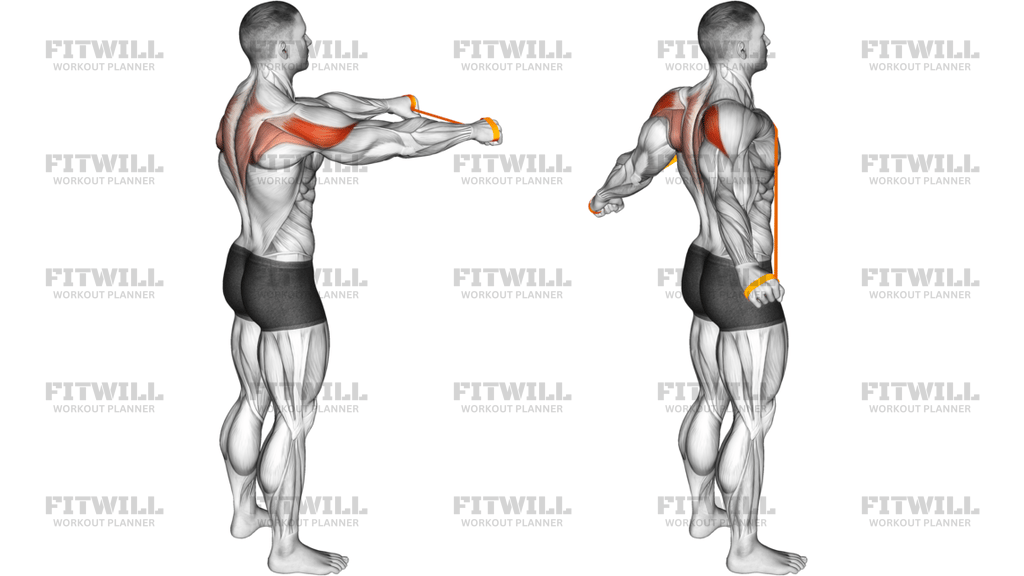
The main muscles working are the rear deltoid, rhomboids, and mid-trapezius, with the biceps and forearm muscles assisting on the pull and the obliques controlling the torso rotation. The band's resistance profile matters here: tension is lowest at full stretch of the arm forward and highest at the finish of the row near your ribs, which matches well with the strength curve of the rear delt and keeps the end position honest.
Setup makes or breaks this exercise. The anchor height determines the rowing path — at or slightly below shoulder height, the pull tracks naturally toward your lower chest and upper abdomen. Sit far enough from the anchor that the band has meaningful tension even with your arm fully extended, but not so far that you get dragged forward at the start. Your free hand can rest lightly on the floor beside your hip for balance.
To execute it well, think of the pull as two actions happening together: the elbow driving back past your ribs, and the chest rotating away from the anchor. The hand should end up near your side, roughly above your hip, with the shoulder blade pulled back and down — not shrugged up toward your ear. Pause briefly at the end, then let the band draw your arm forward slowly while your torso rotates back to face the anchor.
Because bands are light and portable, this is an easy movement to program at home or as a warm-up before heavier pressing or pulling. Keep the reps moderate and controlled, and stop the set as soon as your shoulder starts shrugging or your lower back starts twisting to cheat the band back.
[ Workout Log & Planner ]
Put your next workout in Fitwill
Keep your plan and training log ready when you are.


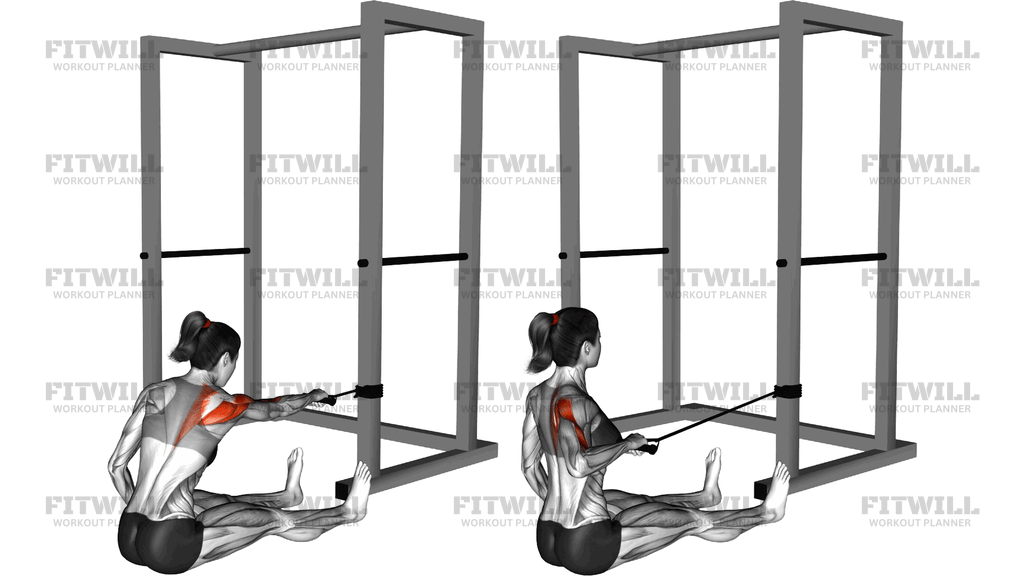
Instructions
- Anchor a resistance band to a rack or sturdy upright at about shoulder height, and sit on the floor facing the anchor with your legs extended in front of you.
- Grip the band's handle with one hand and scoot back until the band is taut with your arm stretched straight out toward the anchor.
- Sit tall with your chest up, and place your free hand lightly on the floor beside your opposite hip for balance.
- Brace your core and keep your spine long before starting the pull — no rounding or slumping in the lower back.
- Pull the band back toward your torso by driving your elbow past your ribs while simultaneously rotating your chest away from the anchor.
- Finish with your hand near your side above the hip, shoulder blade pulled back and down, and hold that position for a beat.
- Slowly extend your arm forward and let your torso rotate back toward the anchor, resisting the band rather than letting it snap you in.
- Exhale as you pull and rotate, inhale as you return to the stretched position.
- Complete all reps on one side, then switch hands and repeat on the other arm with the same distance from the anchor.
Tips & Tricks
- If your shoulder shrugs toward your ear at the end of the pull, lighten the band tension or shorten the range — the rear delt works best when the shoulder blade stays depressed, not hiked.
- The twist should come from your ribcage and mid-back, not from swinging your head or yanking with the arm; if your head is leading the rotation, slow the rep down.
- Sitting too close to the anchor removes tension at the start, so you lose the stretch on the rear delt — reposition until the band pulls your shoulder slightly forward in the starting position.
- Keep your extended legs relaxed but active; if your knees start bending and feet lifting to help you pull, the row is too heavy.
- The free hand on the floor is for balance only — if you're pushing off it to complete reps, switch to an easier band.
- At full stretch, let the band gently pull the shoulder blade forward to get a real stretch on the rear delt before each pull, instead of starting every rep from a half-tense position.
- Avoid twisting the lower back to gain range; if your hips are rotating off the floor, reduce the band tension and re-brace.
- Control the return for a two-to-three count — the eccentric is where the rear delt and scapular muscles get most of their training stimulus in band work.
- If your wrist bends backward under tension at the top of the pull, grip with your knuckles slightly forward and keep the wrist neutral throughout.
Frequently Asked Questions
What muscles does the Band One Arm Twisting Seated Delt Row work?
The rear deltoid is the prime mover, supported strongly by the rhomboids and mid-traps as the shoulder blade retracts. The biceps assist on the pull and the obliques control the torso rotation.
Why is the twisting version seated on the floor instead of on a bench?
Sitting on the floor with legs extended removes help from the legs and hips, so the shoulder and upper back do the work alone. It also gives you a stable base to rotate the torso safely against the band's pull.
How high should I anchor the band?
Anchor it at or slightly below shoulder height so the band tracks toward your lower chest as you pull. Too high and the pull turns into a face-pull angle; too low and it becomes more of a lat row.
Is this exercise good for beginners?
Yes, as long as you start with a light band and master the coordination of pulling and rotating together. The single-arm setup actually makes it easy to spot and fix side-to-side differences early on.
How far should I sit from the anchor point?
Far enough that the band is already under noticeable tension with your arm fully extended and your shoulder slightly pulled forward. If the band goes slack at the start, scoot back until you feel a mild stretch.
My torso swings back and forth on every rep — what am I doing wrong?
The rotation should happen once per rep as part of the pull, not as momentum before it. Brace your core, slow the tempo, and if the swinging continues, reduce the band tension until you can isolate the twist to the pull itself.
Can I do the Band One Arm Twisting Seated Delt Row if I have cranky shoulders?
The light, adjustable tension of a band makes this friendlier to sensitive shoulders than many rowing variations, but stop if you feel pinching at the front of the shoulder. Reduce the range and avoid pulling the elbow excessively far behind your torso.
What can I substitute if I don't have a band?
A cable machine with a single handle at shoulder height works with the same seated setup, though the resistance stays constant rather than increasing at the end of the row. A single dumbbell can work for the rowing portion, but you lose the twist component.
How many reps and sets should I do?
Two to four sets of 10-15 reps per side works well, since the rear delt and upper back respond best to controlled, higher-rep work. Match reps exactly on both sides to keep any imbalance honest.