Weighted Sandbag Forward Lunge
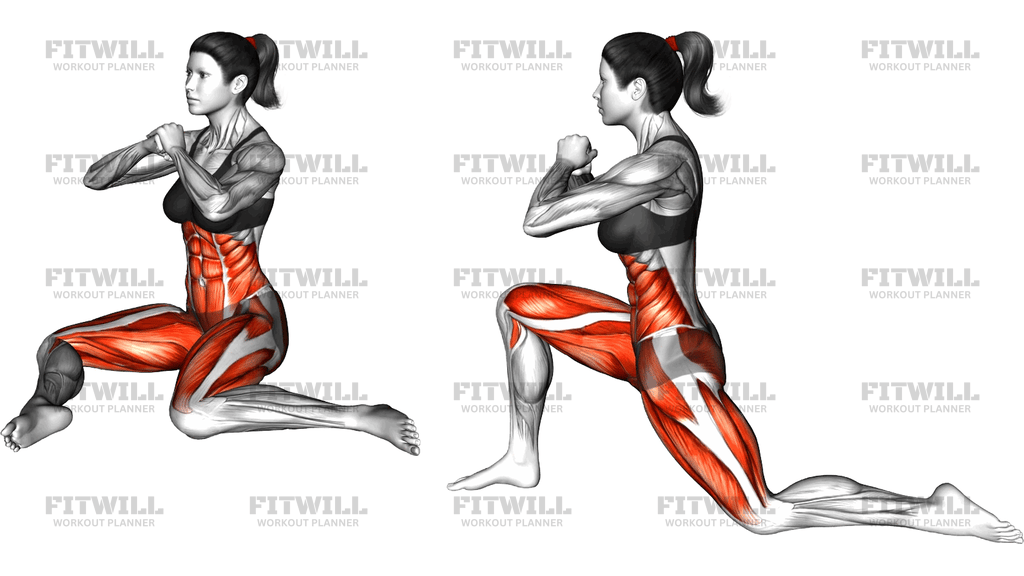
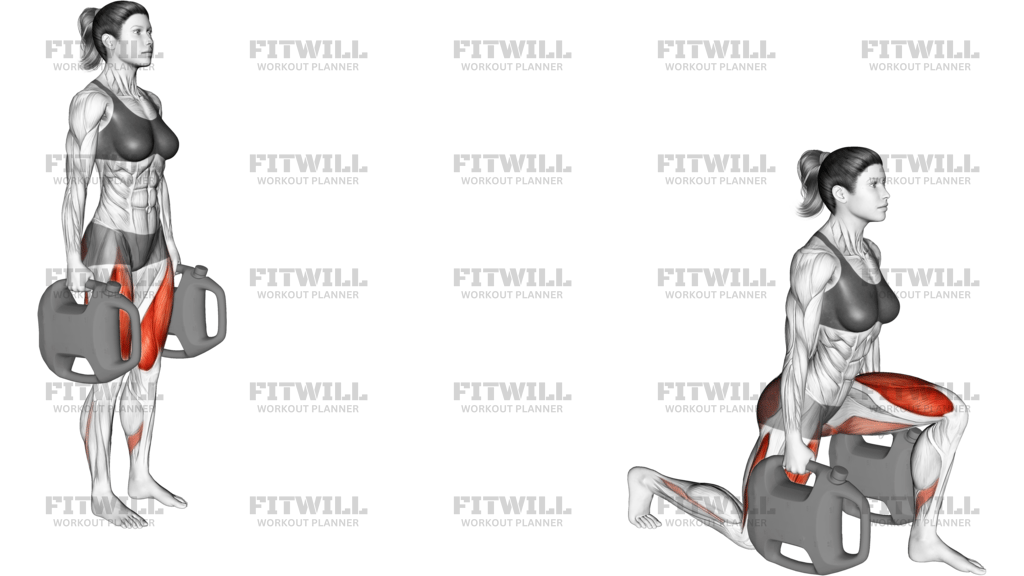
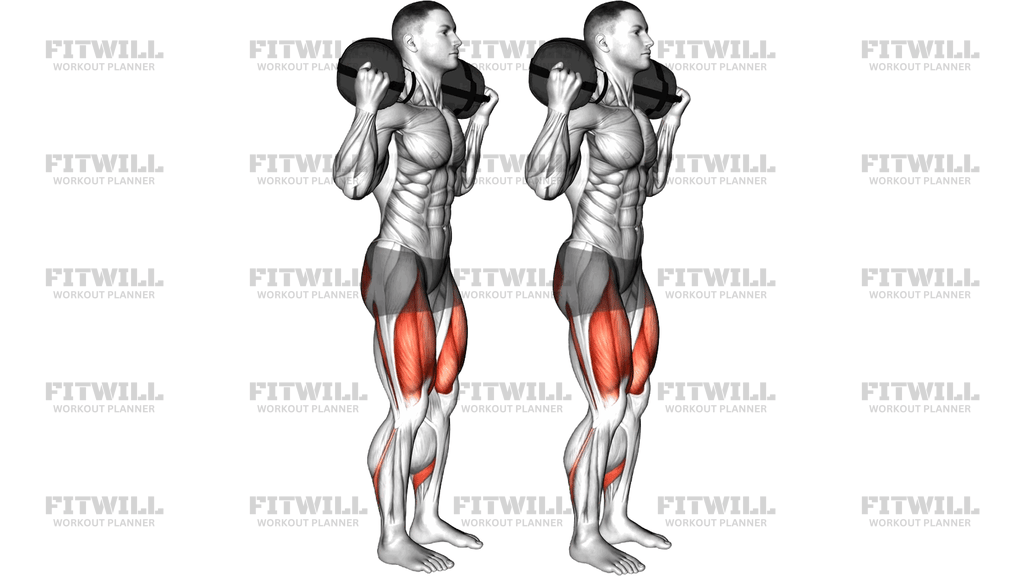
The Weighted Sandbag Forward Lunge is a single-leg strength exercise performed by stepping forward into a long stride while holding a sandbag racked across the front of your shoulders. Unlike a barbell, the sandbag is soft, slightly unstable, and gripped by its handles at chest-to-shoulder height, which forces your upper back, shoulders, and trunk to stay actively engaged for the entire set. The forward lunge pattern itself loads the front leg heavily, with the thigh muscles highlighted as the primary drivers of both the descent and the drive back up to standing.
This movement suits lifters who want unilateral leg development without putting a bar on the spine, as well as fighters, runners, and field-sport athletes who benefit from the anti-rotation and balance demands of carrying an awkward front load. Because each rep is performed one leg at a time, it also exposes and helps correct side-to-side strength differences that bilateral squats can hide.
The quadriceps do most of the visible work, absorbing and then overcoming the load as the front knee bends and straightens. The glutes and hamstrings assist on the way down and power the return to standing, while the calves and ankle stabilizers keep the back foot and lead foot grounded. Holding the sandbag at shoulder height turns the exercise into a trunk challenge too — your core and lower back must resist forward collapse and sideways twisting every time you step.
Setup matters more here than with a bodyweight lunge because an unbalanced sandbag will pull you off line quickly. Center the bag across both shoulders, grip the handles firmly, and keep your elbows tucked down rather than flared. A crooked rack position shows up as a twisting torso mid-lunge, so take a few seconds to even the bag before your first step.
To execute well, step straight ahead rather than across your midline, drop straight down until both knees reach roughly 90 degrees, and push the floor away through the front foot to stand back up. Keep your torso tall and your ribs stacked over your hips; leaning forward turns a leg exercise into a lower-back exercise.
Common use cases include strength blocks built around lunges, split squats, and step-ups, conditioning circuits where the sandbag adds both load and grip fatigue, and home training where a single sandbag replaces a rack of dumbbells. Start with a bag you could clean for several comfortable reps, master the knee path and torso angle, and only then add weight or volume.
[ Workout Log & Planner ]
Put your next workout in Fitwill
Keep your plan and training log ready when you are.


Instructions
- Clean or lift the sandbag up and center it across the front of your shoulders, gripping the handles with both hands and elbows pointing down.
- Stand tall with your feet roughly hip-width apart, weight spread evenly, and your gaze fixed on a point straight ahead.
- Draw your shoulder blades down, brace your abs as if bracing for a light punch, and take a breath into your belly before the first step.
- Step one foot straight forward into a long stride, keeping the sandbag square on your shoulders as you move.
- Lower your back knee toward the floor by bending both knees, letting the front knee travel over the middle of your lead foot.
- Descend until your front thigh is close to parallel with the floor and your back knee is just above or lightly touching the ground.
- Drive through the heel and midfoot of the front leg to push yourself back up and return the stepping foot to the start position.
- Exhale as you push up out of the lunge, then inhale and re-brace before stepping with the other leg.
- Alternate legs or complete all reps on one side first, resetting your stance and re-centering the sandbag between reps if it has shifted.
Tips & Tricks
- If the bag slides to one side mid-set, your grip or shoulder shrug is uneven — re-center it before continuing rather than compensating with a twisted torso.
- A common error is stepping too short, which pushes the front knee far past the toes and shifts stress to the knee joint; lengthen the stride so both knees can reach 90 degrees.
- Keep your elbows under the bag instead of flaring out wide; dropped elbows let the sandbag roll forward and drag your chest down with it.
- Push the floor away rather than pulling yourself up with the back leg — the front foot should do most of the work on every rep.
- Let your back heel lift naturally, but keep the back ball of foot pressed into the floor for balance; a floating back foot usually means the stride is unstable.
- If your torso pitches forward at the bottom, the bag is likely too heavy or your stride too narrow; lighten the load and slow the descent before adding weight back.
- Control the return step as much as the descent — letting the foot slam back beside the standing leg wastes the balance benefit of the exercise.
- On a soft floor or if your knee is sensitive, place a mat or pad under the path of the back knee so you can descend fully without hesitating.
- Film one set from the side occasionally; the sandbag hides your torso angle from your own view, and a side view reveals any forward lean or hip shift.
Frequently Asked Questions
Which muscles does the Weighted Sandbag Forward Lunge work the most?
The quadriceps of the front leg do the largest share of the work during the descent and drive up. The glutes and hamstrings assist strongly, and the core, upper back, and forearms work to hold the sandbag steady on your shoulders.
Is the Weighted Sandbag Forward Lunge suitable for beginners?
Yes, provided you start with a light bag or even an empty one. Beginners should first own the bodyweight forward lunge, then add the sandbag once they can keep their torso upright and knee tracking straight for 8-10 reps per leg.
How should the sandbag be held during the Weighted Sandbag Forward Lunge?
Rack it across the front of both shoulders with a handle grip in each hand and elbows pointed down, close to the body. This keeps the load centered and lets your trunk stay tall throughout the step.
Why does the sandbag feel harder to control than a barbell or dumbbells in lunges?
The sand shifts inside the bag as you move, creating small balance corrections on every rep. That instability is a feature, not a flaw — it trains trunk and grip endurance — but it means you should choose a lighter load than you would with a fixed barbell.
Should I alternate legs or do all reps on one side during the Weighted Sandbag Forward Lunge?
Both approaches work. Alternating leg to leg keeps the sandbag centered and mimics real-world stepping, while finishing one side first makes it easier to compare left-right strength, just re-center the bag before switching.
My front knee hurts when it travels past my toes — is that a problem?
Some forward knee travel is normal in a long-stride lunge, but excessive travel usually means the stride is too short or your weight is shifting onto the toes. Take a longer step and keep pressure through the heel and midfoot of the front leg; if discomfort persists, reduce the depth.
Can I substitute the Weighted Sandbag Forward Lunge with a reverse lunge?
Yes, the reverse lunge with the same sandbag rack is a fair swap and is often easier on the knees because the stepping leg stays loaded. The forward version places slightly more demand on the front-leg quadriceps and balance, so keep it in rotation if knee comfort allows.
How heavy should the sandbag be for this exercise?
Pick a weight you can rack cleanly and hold on your shoulders for a full set without the bag sliding or your chest collapsing. For most people that means starting lighter than their lunge strength suggests, because grip and trunk endurance give out before the legs do.
Is it safe to do the Weighted Sandbag Forward Lunge every day?
Daily practice is possible with light loads and low volume, but the legs and lower back recover better with at least one rest day between heavier sessions. Treat it like any weighted lower-body lift and scale frequency to how hard the sets actually are.
What is the difference between the Weighted Sandbag Forward Lunge and a walking lunge?
In a walking lunge you keep traveling forward with each rep, while here you step out, lower, and return to the same starting spot. Returning to a fixed stance makes it easier to control balance and judge depth, which suits strength-focused training.