Cable Standing Rear Delt Row
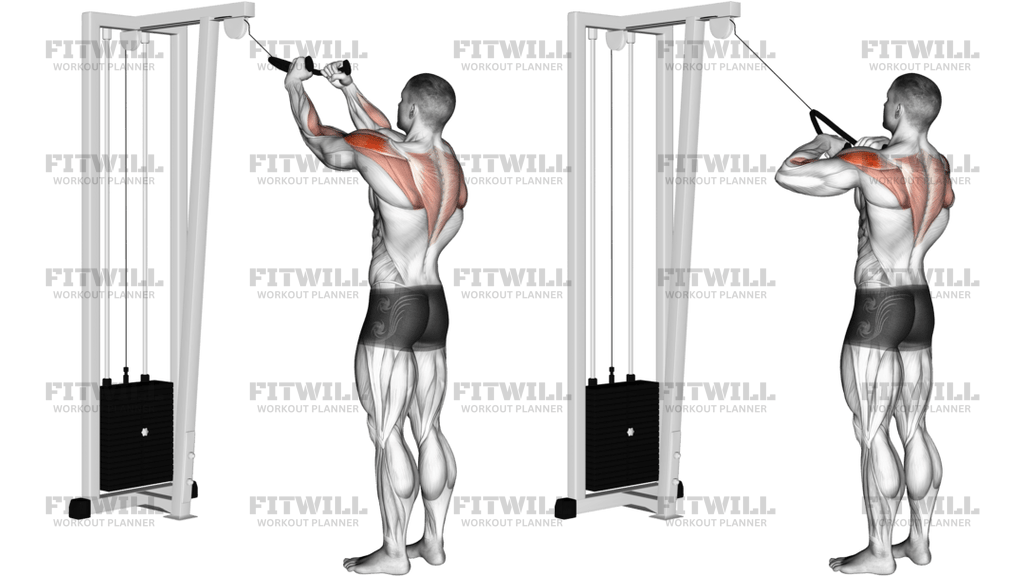
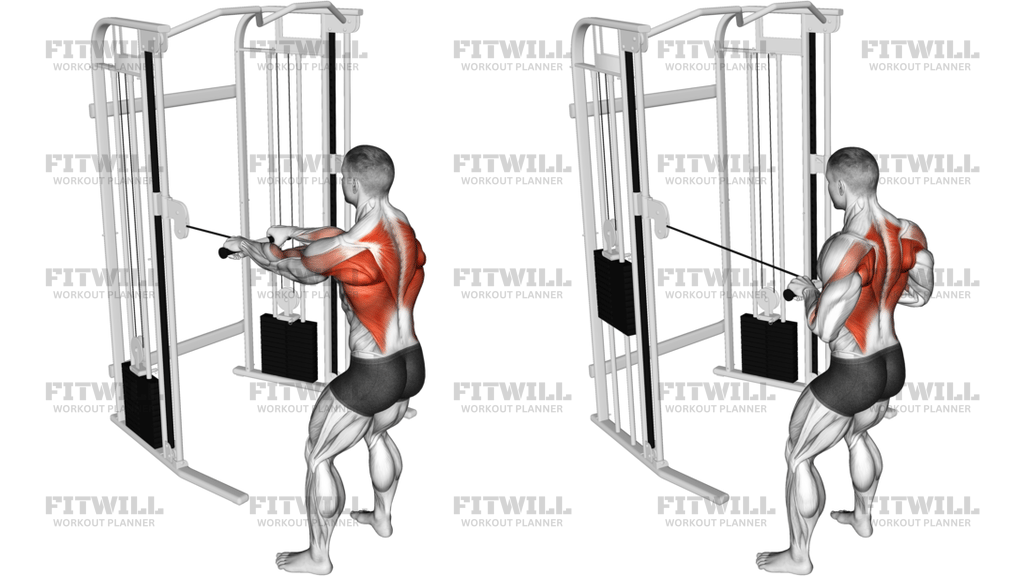
The Cable Standing Rear Delt Row is a standing cable exercise performed facing a pulley set roughly at upper-chest height. You take a single handle with an overhand grip, keep your torso upright, and row the handle back and slightly up so your elbow travels out wide rather than tucked against your ribs. That wide elbow path is what separates this from a standard row and directs the work into the rear deltoids instead of the lats.
This movement fills a real gap in most training programs. Pressing exercises and everyday posture leave the rear delts undertrained, which shows up as rounded shoulders and a front-to-back imbalance around the shoulder joint. Because you stand facing the cable and pull toward your face and chest, the rear delts, rhomboids, and mid-traps get loaded through a path that free weights struggle to replicate. The cable also keeps tension on the muscle at the start of the rep, where a dumbbell reverse fly has almost none.
Setup matters more here than it looks. The pulley height determines the pull angle: set too low and the movement drifts toward a lat row, set too high and your upper traps take over. Standing at the right distance from the stack gives you tension in the starting position and a stable base, with a slight backward lean so the cable line supports your posture instead of dragging you forward.
Execution is simple but easy to rush. Pull by driving the elbow back and out to the side, letting the hand follow toward your upper chest. Pause briefly with the shoulder blades squeezed, then let the arm extend forward under control until you feel a stretch across the back of the shoulder. The weight should stay modest enough that your torso doesn't rock with each rep.
This exercise suits lifters at nearly every level, from beginners learning to feel their rear delts to experienced trainees using it as a high-rep finisher after presses or pull-ups. It is also a common pick in shoulder health and posture-focused programs because it trains scapular retraction under load. Common use cases include back-and-shoulder days, prehab circuits, and balancing out heavy bench pressing volume.
Practically, keep the reps smooth and the elbows above forearm level throughout. If you feel it mostly in your biceps or the top of your traps, lighten the load and reset your focus on leading with the elbow. As with any cable row performed standing, avoid jerking the stack and keep your lower back neutral rather than arching to cheat the weight forward.
[ Workout Log & Planner ]
Put your next workout in Fitwill
Keep your plan and training log ready when you are.


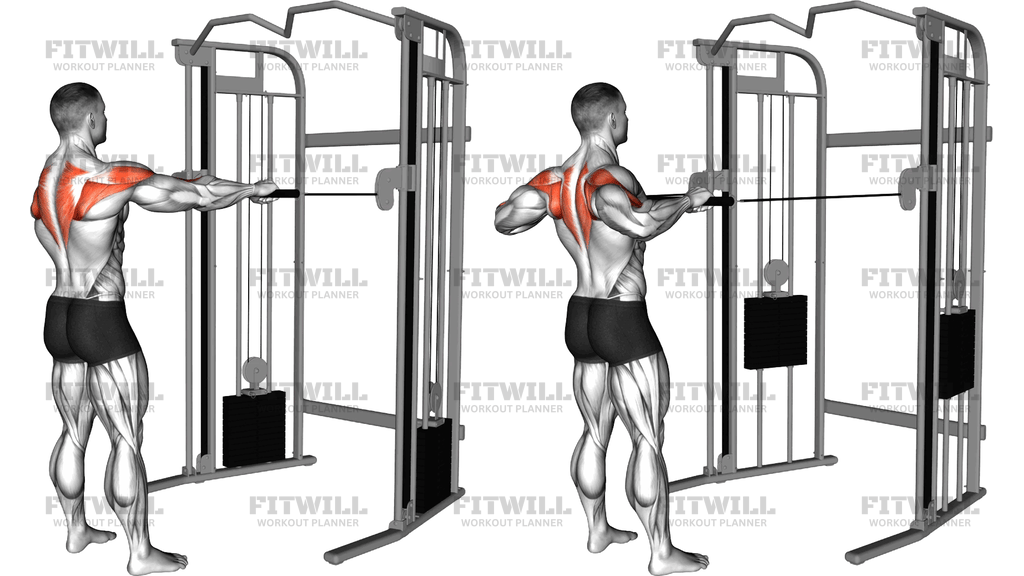
Instructions
- Set the cable pulley to roughly upper-chest height and attach a single handle.
- Stand facing the machine with feet about hip-width apart, then reach forward and grip the handle with an overhand grip.
- Step back a short distance from the stack so the weight is lifted slightly off the rest and the cable is taut at the start.
- Stand tall with a soft bend in the knees, brace your core, and pull your shoulders down away from your ears.
- Row the handle toward your upper chest by driving your elbow back and out wide, keeping the elbow above the level of your wrist.
- Squeeze your shoulder blade back at the end of the pull and hold for a brief pause.
- Extend your arm forward slowly until the shoulder stretches at the front of the movement, keeping some tension on the cable.
- Exhale as you pull the handle back and inhale as you return it forward.
- Complete all repetitions on one side if working single-arm, then switch the handle setup and repeat with the other arm.
- When finished, walk the handle back to the stack under control before letting the weight stack settle.
Tips & Tricks
- Lead with the elbow, not the hand — if your hand arrives at your chest before your elbow has traveled back, the pull turns into a biceps curl against the cable.
- Set the pulley at chest height, not waist height; a low pulley changes the angle enough that the lats take over the row.
- Use a staggered or slightly wider stance if the weight pulls you onto your toes — the standing position should stay anchored from the ground up.
- Avoid shrugging at the top of the pull; if your upper traps bunch up, the load is too heavy or your shoulders are riding up as you row.
- Keep the torso rotation out of the rep. Twisting away from the machine turns this into a torso row and unloads the rear delt at the point where it works hardest.
- A brief one-second pause at full contraction is worth more here than extra plates, because the rear delts respond well to a deliberate squeeze.
- Stop the extension when your arm is roughly straight but the cable still pulls slightly — letting the handle drag your shoulder forward removes tension and stresses the front of the joint.
- If you feel it only in your biceps, try a lighter weight with a looser grip; squeezing the handle too hard shifts effort into the forearms and arms.
- Work in the 10–15 rep range with strict form rather than heavy sets of five, which tend to break down into body english on this movement.
Frequently Asked Questions
What muscles does the Cable Standing Rear Delt Row work?
The rear deltoids are the prime movers, supported by the rhomboids and mid-traps as the shoulder blades retract. The biceps and forearms assist through the pull, and the core stabilizes you in the standing position.
Why is the pulley set at chest height for this exercise?
A mid-to-upper-chest pulley makes the cable pull backward and slightly upward, which matches the rear delts' pulling line. A low pulley shifts the angle down toward the lats, and a very high one recruits more upper trap.
Is the Cable Standing Rear Delt Row suitable for beginners?
Yes — the cable path is fixed and the standing stance is stable, so most beginners can learn it quickly with a light weight. Start with 10–15 easy reps to find the wide-elbow feel before adding load.
How is this different from a regular standing cable row?
In a regular row the elbows stay close to your sides and the pull targets the lats and mid-back. In the Cable Standing Rear Delt Row the elbows flare out wide and the hand travels toward the upper chest, shifting emphasis to the rear delts.
Should I do this one arm at a time or with both arms?
Both work. Single-arm lets you focus on each side and helps correct left-right differences, while a two-handle setup lets you finish the exercise faster and handle slightly heavier loads.
Why do I feel this more in my biceps than my rear delts?
That usually means the weight is too heavy, so your arms do the pulling while your shoulders stay passive. Lighten the load, loosen your grip, and concentrate on driving the elbow back and out to start each rep.
Can I substitute the Cable Standing Rear Delt Row with dumbbell reverse flies?
Yes, bent-over dumbbell reverse flies or a reverse pec deck hit similar muscles. The cable version keeps tension at the start of the rep and lets you stay upright, which some people find easier on the lower back.
How far should I stand from the cable machine?
Stand far enough that the weight stack lifts slightly and the cable stays taut with your arm extended. If the stack clanks down between reps or pulls you forward, adjust your distance or reduce the weight.
How many sets and reps should I use?
Two to four sets of 10–15 controlled reps works well, either as a secondary shoulder exercise or a finisher. Rear delts generally respond better to moderate loads and strict form than to heavy grinding sets.
Is it safe to perform this if my shoulders bother me during pressing?
Rear delt and mid-back work is often well tolerated because it balances pressing movements, but stop if the exercise itself causes pain. Keep the range comfortable, avoid yanking the stack, and check with a qualified professional if discomfort persists.