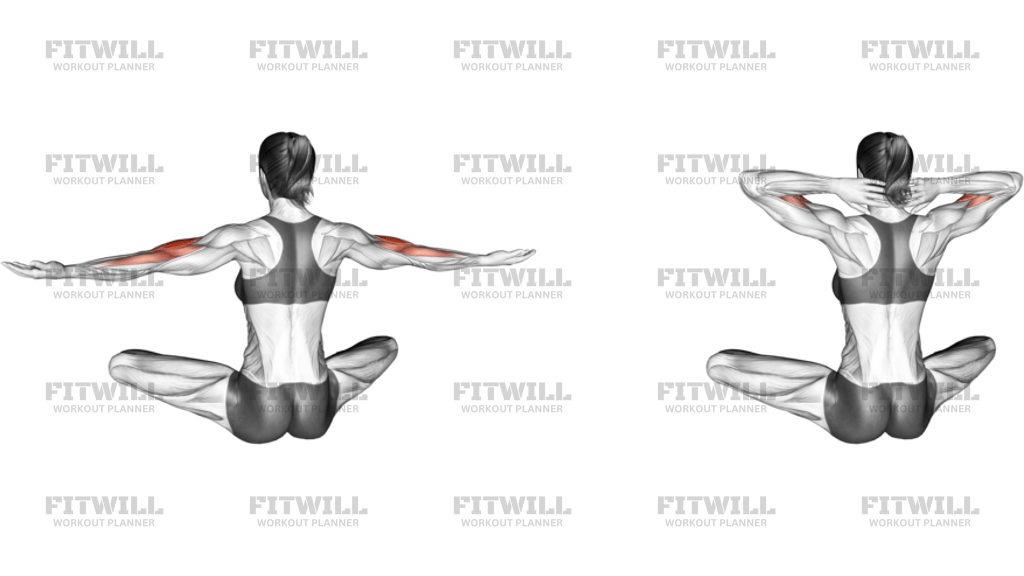
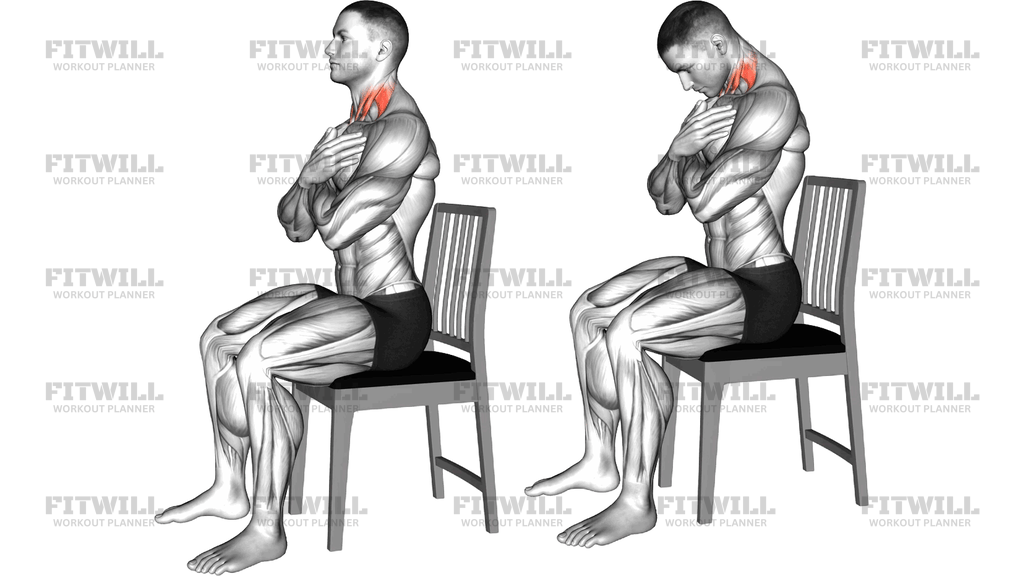
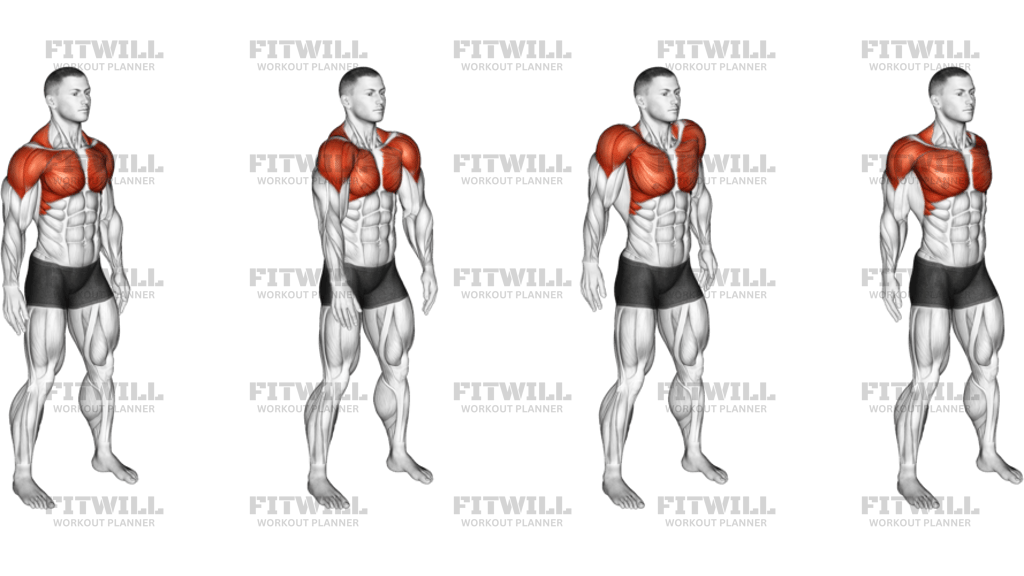
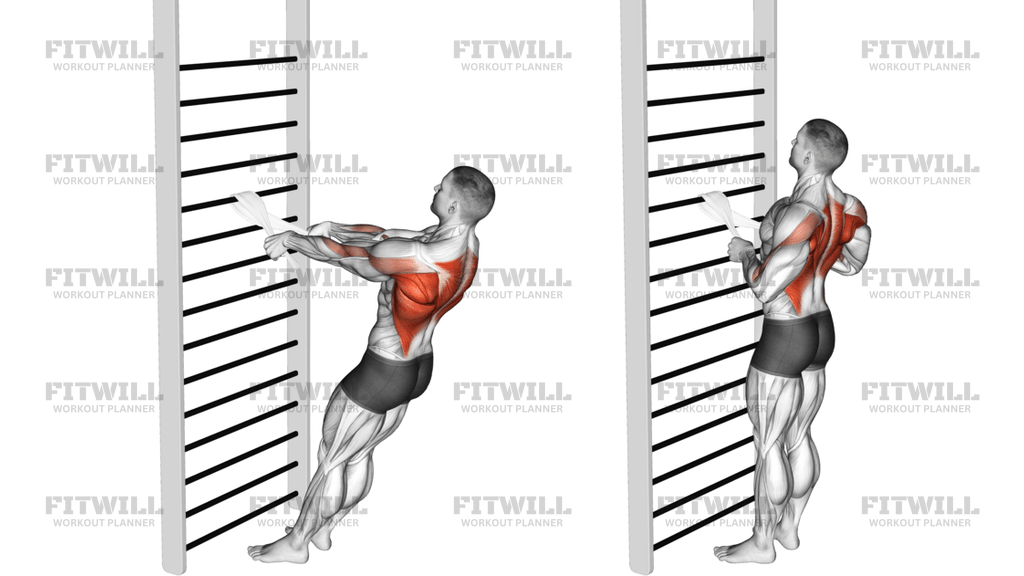
Standing Back Neck Stretch
The Standing Back Neck Stretch is a gentle self-assisted stretch for the muscles along the back of the neck and upper spine. You perform it standing with your back against a wall, hands cupped behind your head, gently guiding your chin down toward your chest so the neck extensors — the upper trapezius, levator scapulae, and the small muscles running from the base of the skull into the upper back — lengthen under a light, controlled pull from your own arms.
This stretch is most useful for anyone who carries tension at the back of the neck: people who sit at a desk all day, drivers, students, or lifters who do a lot of heavy pressing, shrugging, or overhead work. When the neck extensors get short and tight from forward-head posture, they can contribute to that stiff, heavy feeling at the base of the skull. A slow, sustained stretch like this one helps restore some mobility to the upper cervical spine and gives those muscles a chance to relax.
The wall is what makes the standing setup work. Leaning your back, shoulders, and head against it takes balance out of the equation and gives you a fixed reference for your spine, so when you nod your head forward you are only moving the neck rather than rounding your whole torso. Without that support, most people instinctively slump through the chest or hunch the shoulders, which steals the stretch from where it belongs.
To execute it well, stand with your feet a few inches out from the wall, knees soft, and let your hips and shoulders rest against it. Place both hands on the back of your head — fingers interlaced or simply cupped, palms covering the upper part of the skull, never the neck itself. From there, initiate the movement with a slow chin tuck, then let your hands add only a small amount of gentle assistance. You should feel a comfortable pull from the base of the skull down through the back of the neck and possibly into the area between the shoulder blades.
The most common error is pulling too hard. The neck is not a muscle group you want to yank on; a light, steady 20 to 40 second hold beats an aggressive tug every time. Keep the elbows relaxed and pointing forward, breathe normally, and let gravity and time do the work rather than force. If you feel any sharp pain, dizziness, or tingling into the arms, ease off immediately.
Use this stretch between sets of upper-body lifting, after long stretches of sitting, or as part of a morning or evening mobility routine. It takes less than a minute, needs no equipment beyond a clear patch of wall, and pairs well with gentle side and rotation neck stretches for a complete neck maintenance sequence.
Fitwill
Log Workouts, Track Progress & Build Strength.
Achieve more with Fitwill: explore over 9600 exercises with images and videos, access built-in and custom workouts, perfect for both gym and home sessions, and see real results.
Start your journey. Download today!




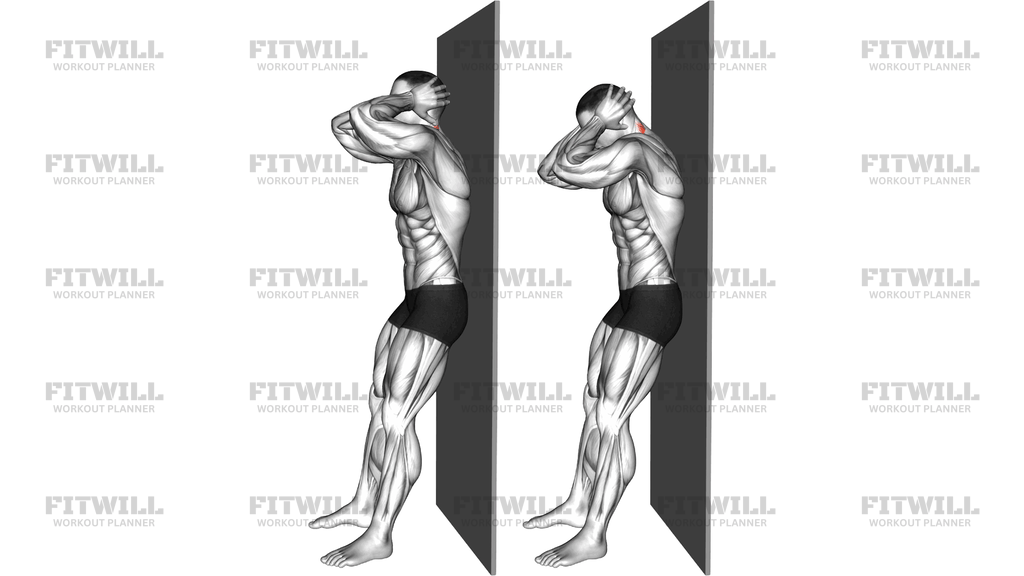
Instructions
- Stand with your back facing a clear, flat wall and step your feet about 10 to 15 centimeters away from it, roughly hip-width apart.
- Lean back so your hips, upper back, and the back of your head rest against the wall, and soften your knees slightly so you are not locked out.
- Raise both arms and cup your hands over the upper back portion of your head, with fingers interlaced or simply overlapped and elbows pointing forward and slightly out.
- Take a slow breath in, and as you exhale, gently nod your chin down toward your chest, letting the back of your head slide lightly along the wall.
- Once you feel a mild stretch at the base of your skull and down the back of your neck, let your hands apply only a small, steady amount of gentle assistance — no yanking.
- Keep your shoulders relaxed and dropped away from your ears, and resist the urge to round your upper back; the movement comes from the neck nodding, not the torso slumping.
- Hold the stretched position for 20 to 40 seconds while breathing slowly and evenly, letting the tension in the back of the neck gradually release.
- To come out, release the pull from your hands first, then slowly lift your head back up to neutral against the wall.
- Lower your arms, take a breath or two, and repeat for a second hold if the area still feels tight.
Tips & Tricks
- The most common mistake is cranking the head down with the hands. The hands should guide, not force — if you have to strain to hold the position, back the pressure off about half.
- Keep the pull on the back of the skull, not on the neck itself. Tugging on the cervical spine with your fingers is uncomfortable and defeats the purpose of the stretch.
- If your shoulders creep up toward your ears as you pull, consciously relax them first; elevated shoulders shorten the upper trapezius and blunt the stretch.
- Do not round your mid-back or let your hips drift off the wall. If your whole torso curls forward, the neck extensors are no longer the limiting factor — reset and use a smaller range.
- A very slight difference in head position changes the emphasis: nodding straight down centers the stretch in the mid-neck, while angling the chin slightly toward one shoulder biases the opposite side.
- Breathe the whole time. Holding your breath tends to increase tension through the neck and shoulders, which is exactly what you are trying to release.
- Never bounce at the end range. A steady static hold is both safer and more effective for the small muscles of the cervical spine.
- If the wall version feels awkward, the same stretch works sitting on a bench with a tall spine — the wall just adds balance support and keeps your posture honest.
- Stop if you feel tingling, numbness, or lightheadedness. Those are signals to ease out of the position, not to push deeper.
Frequently Asked Questions
What muscles does the Standing Back Neck Stretch target?
It primarily lengthens the neck extensors at the back of the cervical spine, including the upper trapezius and levator scapulae, with some stretch felt in the small muscles connecting the skull to the upper back.
Why is the Standing Back Neck Stretch done against a wall?
The wall supports your back and head so balance is not a factor, and it gives you a fixed reference that keeps your spine aligned while only the neck moves into flexion.
Is the Standing Back Neck Stretch safe for beginners?
Yes, as long as the pull from the hands stays light and there is no bouncing. Beginners often pull too hard at first, so start with just the chin tuck and add hand assistance gradually.
How hard should I pull with my hands?
Barely. Your hands should add a small, steady guidance pressure on the back of the head — the stretch should feel like a comfortable pull, never pain, and you should be able to breathe and talk normally.
How long should I hold the Standing Back Neck Stretch?
Twenty to forty seconds per hold works well, and one or two repetitions is usually enough. Longer holds are fine if they remain comfortable.
Can I do the Standing Back Neck Stretch every day?
Yes, a gentle daily neck stretch is reasonable for most people, especially those who sit for long hours. Keep the intensity low so the tissue is not repeatedly irritated.
What should I do if I feel the stretch more in my shoulders than my neck?
Relax and lower your shoulders away from your ears before pulling, and make sure the movement starts with a chin tuck rather than arm strength. Shrugged shoulders absorb the stretch that should reach the upper trapezius.
Can I do a seated version instead of standing?
Yes, sitting on a bench with a tall, upright spine works the same way. The standing wall version is simply easier for keeping the torso from slumping.
When is the best time to use the Standing Back Neck Stretch?
It fits well after upper-body training, shrugs, or overhead pressing, and also after long periods of desk work when the back of the neck feels stiff and heavy.
Who should avoid this stretch or check with a professional first?
Anyone with a recent neck injury, cervical spine condition, or symptoms like radiating pain, numbness, or dizziness should get clearance from a healthcare provider before doing assisted neck stretches.