Band V Up
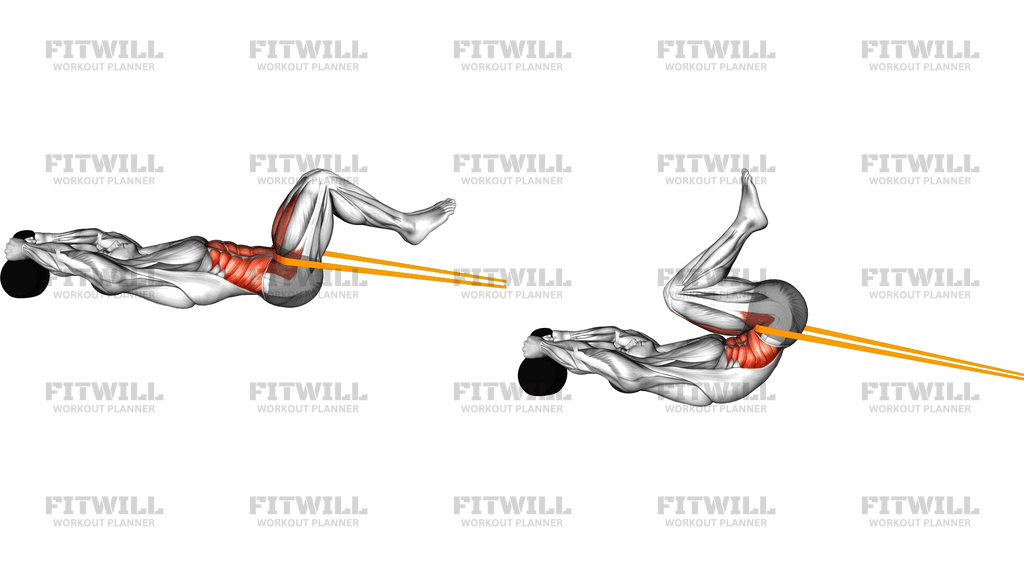
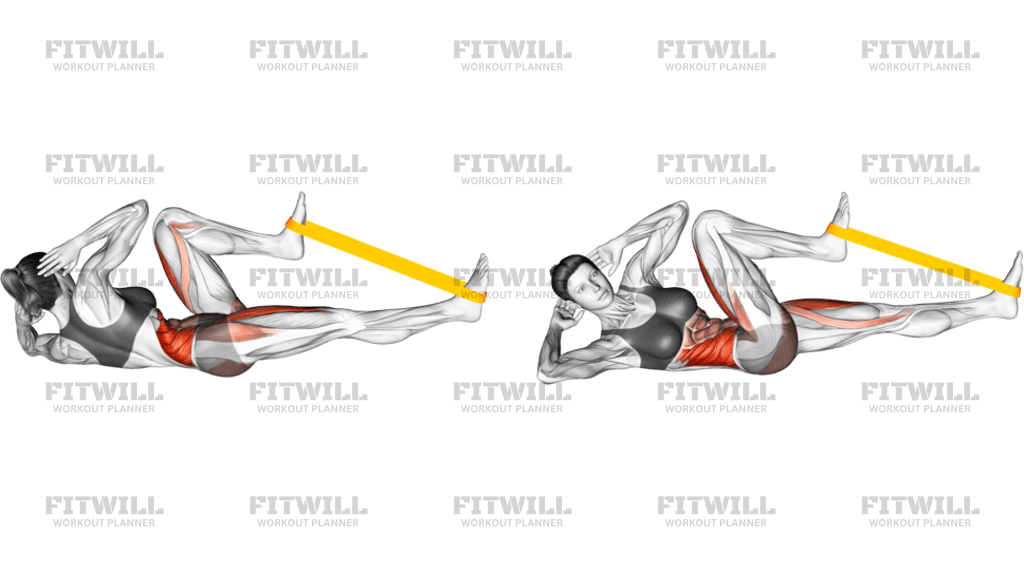
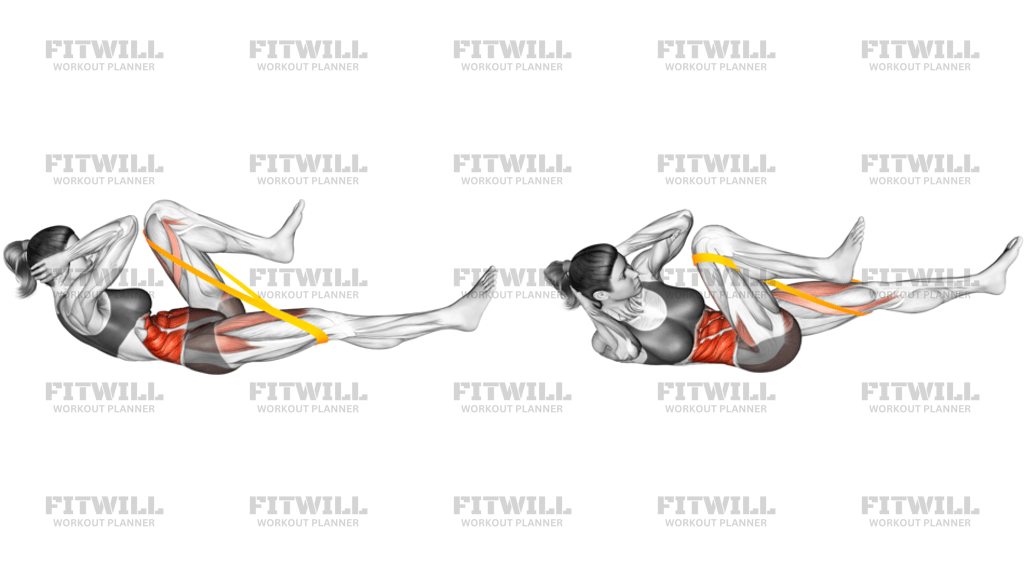
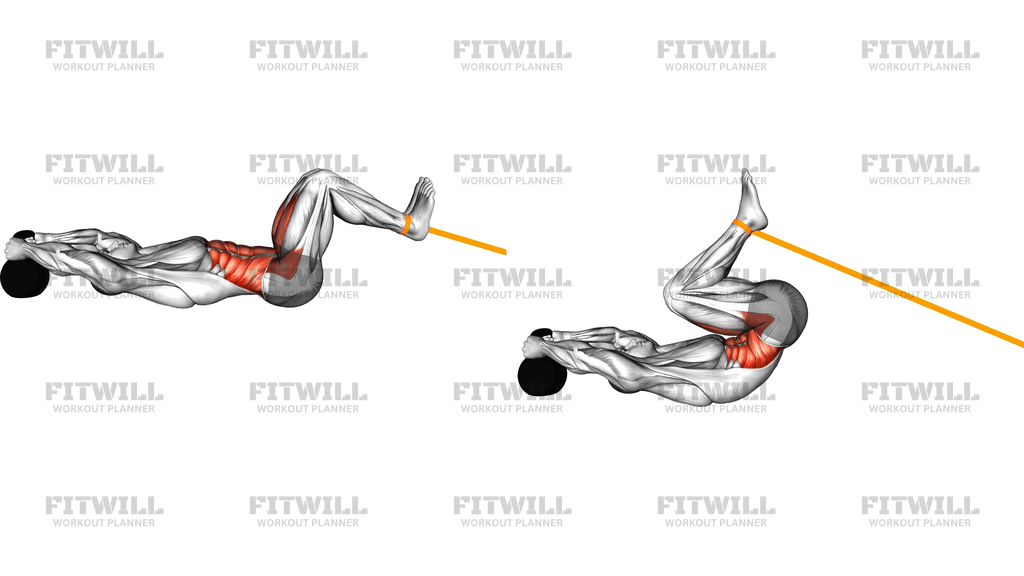
The Band V Up is a resisted version of the classic V-up, performed lying on the floor with a resistance band attached to an ankle strap on each ankle and anchored low behind you — typically looped around the base of a sturdy flat bench. You start flat on your back with legs straight and arms extended overhead, then simultaneously curl your torso up and raise your straight legs so your body folds into a wide V, hands reaching toward your feet before lowering back down with control.
What makes this setup valuable is the direction of the resistance. Because the band pulls your legs back toward the anchor as you lift, your hip flexors and lower abs have to work harder through the entire range — especially the top half, where a bodyweight V-up usually gets easier. That constant tension makes it a useful progression for anyone who finds regular V-ups too easy on the way up but still wants clean technique, or who struggles to feel the abs working in the stretched bottom position.
The exercise trains the rectus abdominis as the prime mover of the trunk curl, with heavy involvement from the hip flexors that raise the straight legs. The obliques and deep core work to keep your ribs down and torso square, and the quads help keep the knees locked out so the legs travel as one rigid lever. It demands both flexion strength and control under stretch, which is why it carries more carryover to movements like toes-to-bar, pike positions, and gymnastics-style core work than simple crunches do.
Setup matters more here than in most ab exercises. The anchor needs to be low and directly behind your hips so the band pulls along the line of your legs rather than yanking you sideways or up. Keep enough distance from the anchor that there is tension before you even start the rep — if the band goes slack at the bottom, you lose the whole point of the resisted version, but if it starts too tight, it will drag you backward before you can brace.
Execution should feel like one coordinated fold, not two separate movements. Exhale and think about pulling your chest and feet toward each other at the same time, keeping the arms in line with the shoulders as they sweep forward. A common fault is letting the knees bend or the legs drift to one side as the band tension rises; both usually mean the load is too heavy or the abs are being bypassed by momentum.
This exercise suits intermediate to advanced trainees working on core strength and control, and it fits well as a finishing movement in an ab session or as a main core lift in a bodyweight-focused program. Because it loads the spine through flexion under tension, start with a light band, master the unweighted V-up first, and progress the band tension only when you can fold and lower without your lower back slamming down at the end of each rep.
[ Workout Log & Planner ]
Put your next workout in Fitwill
Keep your plan and training log ready when you are.


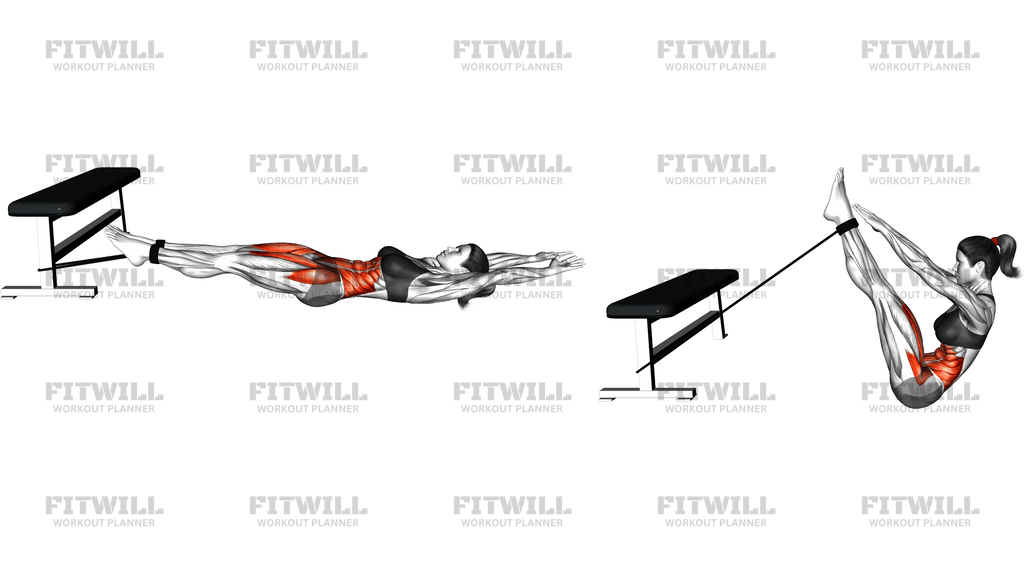
Instructions
- Anchor a resistance band low behind your exercise area by looping it securely around the base of a flat bench, and attach the other end to an ankle strap on each ankle.
- Lie face up on the floor with your head away from the bench, legs fully straight, and arms extended overhead beside your ears; scoot back until the band is taut with your legs flat.
- Brace your core by drawing your ribs down and lightly tightening your abs, and press your lower back toward the floor so it is not arched before the rep begins.
- Exhale and pull your legs and torso up together in a smooth arc, keeping the knees locked out and the arms sweeping forward in line with the shoulders.
- Reach your hands toward your feet at the top so your body forms a wide V, balancing on your glutes, and pause for a beat to feel the abs working against the band.
- Lower under control by reversing the same path — legs and torso sinking together — rather than letting the band snap you back to the floor.
- Inhale as you descend, and keep tension in the band at the bottom instead of letting it go slack before the next rep.
- Complete your reps, then release the band tension first before standing up or removing the ankle straps so you are never dragged while transitioning.
Tips & Tricks
- If the band drags your legs sideways during the fold, your body is not square to the anchor — realign so the band runs straight along your midline before starting.
- Bent knees are the most common breakdown point; they shorten the lever and hide weak hip flexor strength, so reduce band tension before allowing any knee bend.
- If your heels crash into the floor at the bottom, you have run out of controlled range — shorten the range slightly or use a lighter band rather than letting momentum take over.
- Keep your arms at shoulder width and in line with your ears at the start; flailing the arms forward early turns the rep into a momentum swing instead of an ab curl.
- The band slackens if you creep forward rep after rep — mark your start position or place your hands as a reference so every rep begins with the same tension.
- Your neck should follow your chest; yanking the head forward to reach the top strains the neck and does nothing extra for the abs.
- If you cannot get your legs past roughly 45 degrees, spend time on lying leg raises and bodyweight V-ups before adding band resistance.
- Use a smooth, even tension band rather than a very stiff one — an aggressive stretch at the top tends to pull you backward on the way down.
- Place a mat under your glutes and lower back; bony tailbone contact during the top-position balance is a quick way to cut a set short.
Frequently Asked Questions
What muscles does the Band V Up work?
The rectus abdominis does most of the trunk curling, while the hip flexors raise the straight legs against the band. Your obliques and deep core stabilize the torso, and the quads keep the knees locked out through the fold.
How is the Band V Up different from a regular V-up?
The band anchored behind you pulls your legs back toward the floor, so the lift is hardest at the top instead of the bottom. This keeps tension on the abs and hip flexors through the whole range and makes the lowering phase a real fight rather than a free fall.
Can beginners do the Band V Up?
Most beginners should start with a bodyweight V-up or bent-knee V-up first. Once you can fold and lower smoothly for 10 or more reps with straight legs, a light band is a sensible next step.
Why does the band need to be anchored low behind a bench?
A low anchor keeps the resistance pulling along the line of your legs, so it directly opposes the leg raise. An anchor that is too high or off to one side adds unpredictable side pull and makes the setup unstable.
Should my knees stay straight during the Band V Up?
Yes — straight knees keep the legs working as one long lever, which is what forces the hip flexors and abs to do the work. If you cannot keep them straight with the band on, the band is too strong.
How do I know if the band tension is right?
There should be noticeable tension with your legs flat on the floor, but not so much that the band drags you before you brace. If the band goes slack mid-rep, move back; if you cannot control the descent, use a lighter band.
What can I use if I don't have a bench to anchor the band?
Any low, heavy, stable anchor works — a heavy dumbbell rack, a squat rack upright near the floor, or a fixed post. Just make sure it cannot shift, because the band pulls directly toward it every rep.
Why does my lower back hurt during this exercise?
Lower back discomfort usually means the legs are lowering past what your core can control, letting the back arch under load. Stop the descent earlier, keep the ribs down, and reduce band tension — if discomfort persists, switch to bent-knee variations.
How many reps and sets of the Band V Up should I do?
Because it is a demanding compound core movement, 3 sets of 8 to 12 controlled reps works well for most people. Prioritize a clean fold and a slow lower over chasing high rep numbers.
What exercises pair well with the Band V Up?
It pairs nicely with anti-extension work like plank variations or ab wheel rollouts to balance the heavy flexion, and with band-resisted leg raises if you want extra hip flexor volume in the same session.