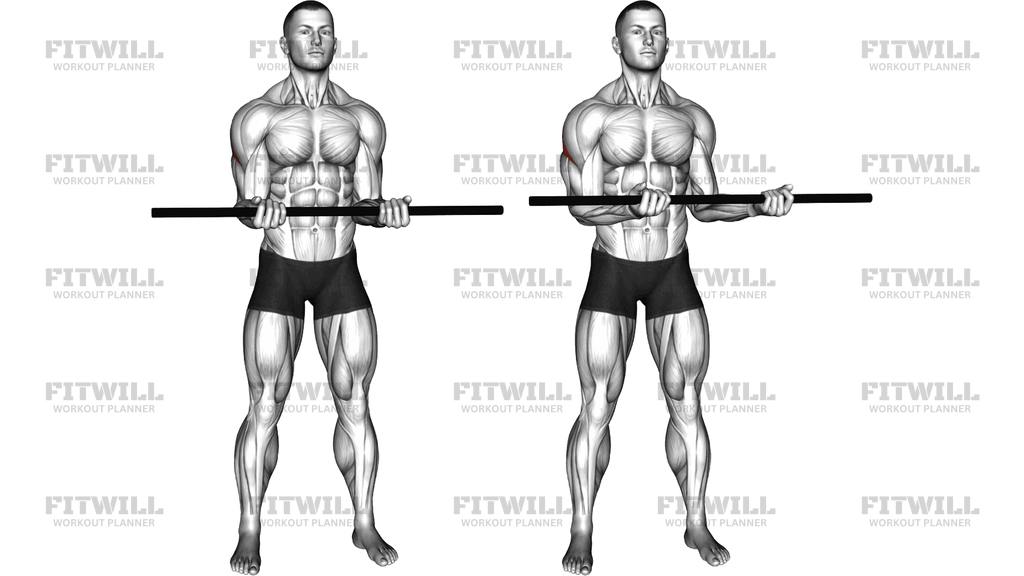
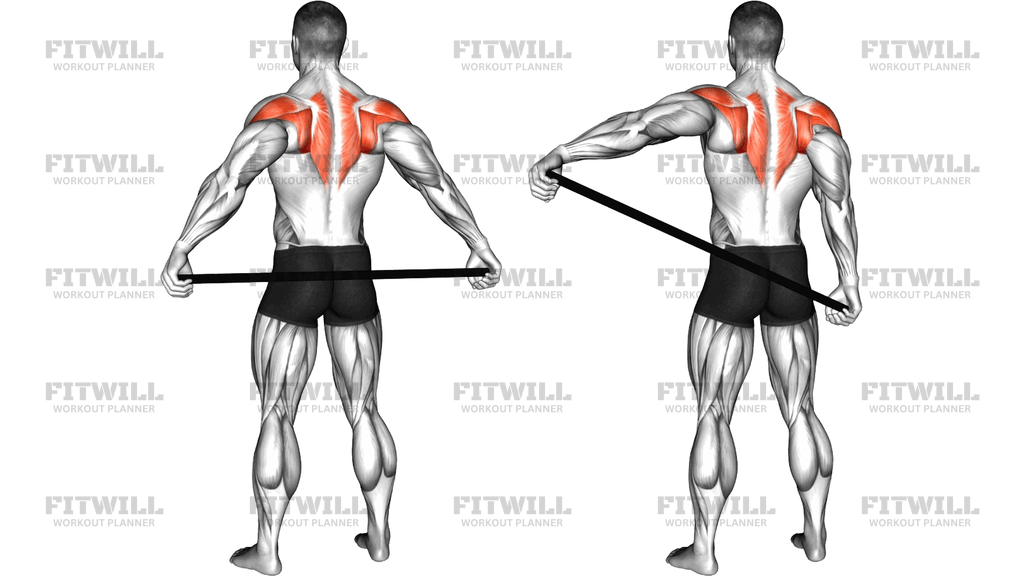
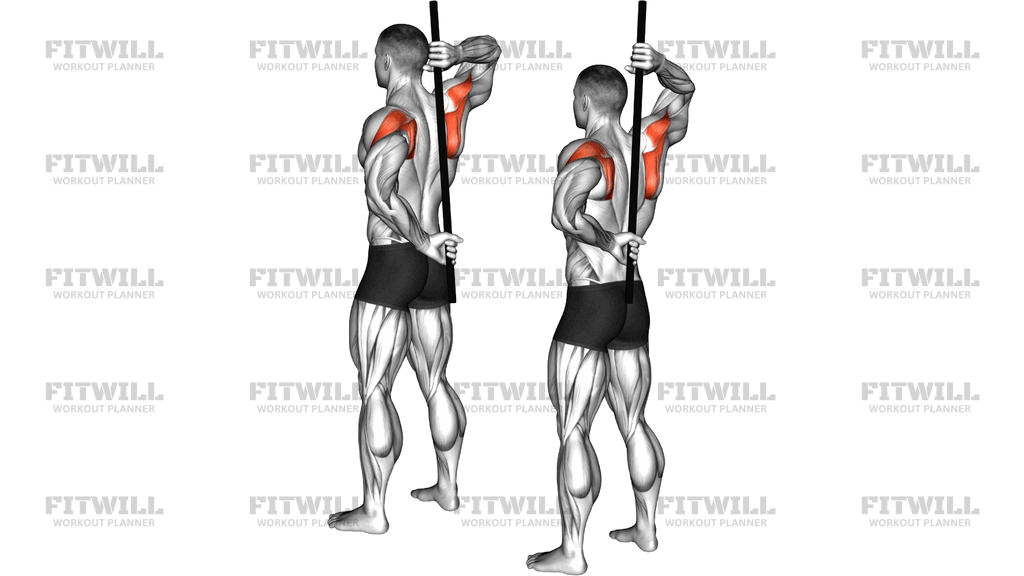
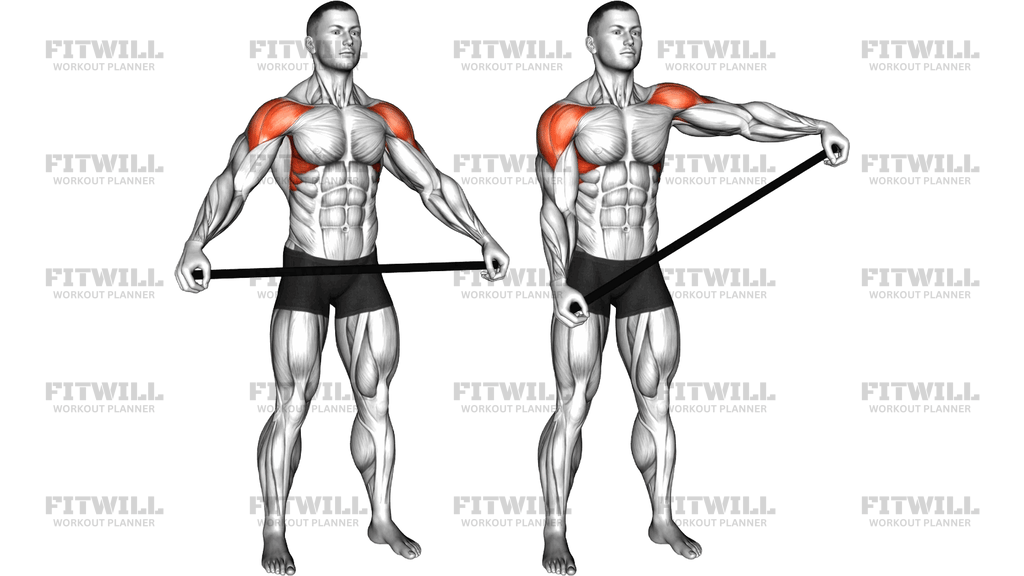
Stick Assisted Lying Shoulder External Rotation
The Stick Assisted Lying Shoulder External Rotation is a controlled rotator cuff exercise performed on your back with a light stick or dowel held in both hands. You lie supine with a rolled towel tucked under the upper arm of the working side, elbow bent to about ninety degrees, and use the stick to guide the forearm outward into external rotation. Because the towel keeps the elbow propped and the stick lets your non-working hand help steer the movement, you get a precise, low-load rotation with almost no temptation to cheat.
This setup matters more than it might seem. Lying on your back puts the shoulder blade flat against the floor, which stops it from rolling forward to fake extra range. The towel under the upper arm holds the elbow at a consistent angle so the rotation happens at the shoulder joint itself, not through shrugging or leaning. The stick acts as a guide rail: your other hand can gently push the working forearm through the range while still letting the target shoulder do the actual turning work.
The muscles doing the job are the external rotators of the rotator cuff, mainly the infraspinatus and teres minor, with support from the rear shoulder. These are small muscles with an outsized role in keeping the head of the humerus centered during pressing, pulling, and throwing motions. Training them in a lengthened, supported position like this is one of the most joint-friendly ways to load them.
This exercise suits anyone rebuilding shoulder rotation after a layoff, lifters whose presses stall because their rotator cuff work is neglected, overhead athletes and throwers managing workload, and desk workers whose shoulders have drifted into a permanently internally rotated posture. It is also a common choice in rehab-style programs precisely because the lying position and stick assistance make the resistance self-limiting.
To execute it well, keep the movement slow and quiet. The forearm should sweep outward like a door opening, the elbow staying planted on the towel the whole time, and the back of the hand lowering toward the floor without the shoulder blade lifting. Stop where you can keep the elbow still and the motion smooth, then rotate the forearm back up to vertical under control. A set of ten to fifteen slow repetitions per side is plenty; this is an exercise where quality beats load every time.
One practical safety note: you should feel work in the back of the shoulder, never a pinch at the front or a sharp pull. If the elbow drifts off the towel or the wrist bends to chase range, shorten the range rather than forcing the stick lower.
[ Workout Log & Planner ]
Put your next workout in Fitwill
Keep your plan and training log ready when you are.


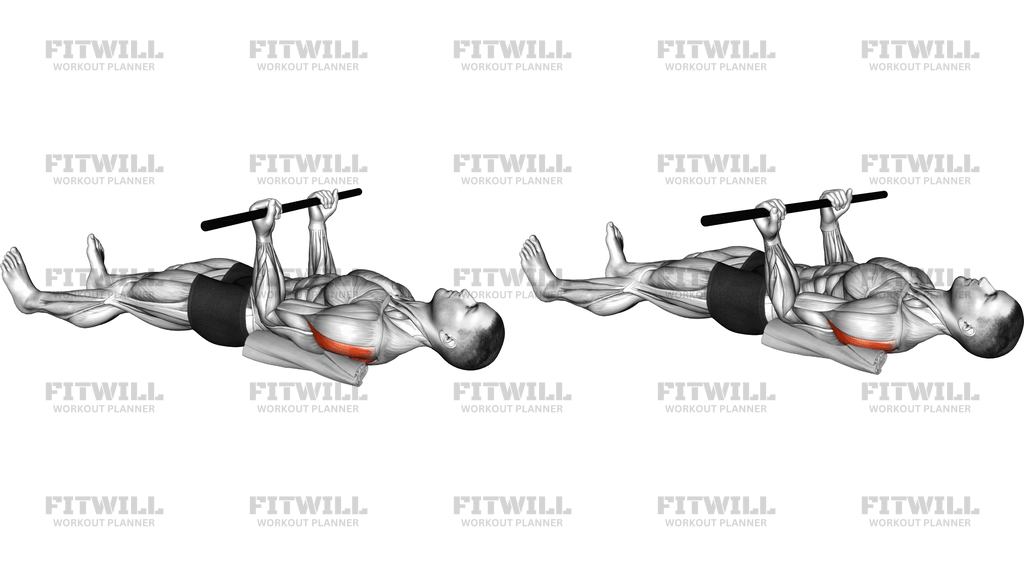
Instructions
- Lie on your back on the floor or a mat with your legs extended and relaxed, and place a rolled towel lengthwise under the upper arm of your working side so the elbow is propped a few centimeters off the floor.
- Bend the working elbow to ninety degrees with the forearm pointing straight up toward the ceiling, palm facing forward in a neutral-to-supinated position.
- Hold a light stick in both hands so the top of the stick rests against the palm or fingers of the working hand; your other hand grips the stick lower down to guide it.
- Settle your head, upper back, and hips flat on the floor, and brace your trunk lightly so your ribcage stays down and does not flare during the movement.
- Keeping the elbow pressed on the towel, slowly let the stick tilt as your working forearm rotates outward, lowering the back of your hand toward the floor.
- Continue until you reach a comfortable end range where the elbow has not moved and the shoulder blade stays flat against the floor, then pause briefly.
- Reverse the rotation under control, bringing the forearm back to vertical; use your non-working hand on the stick to steady the path if the arm wobbles.
- Exhale as you rotate outward and inhale as you return to the starting forearm-up position, keeping the breathing steady throughout the set.
- Complete all repetitions on one side, then reset the towel under the other upper arm and repeat on the opposite side.
Tips & Tricks
- The most common fault is the elbow lifting off the towel as the hand drops; if that happens, place a small object like a folded sock on the elbow and make keeping it there part of the rep.
- Do not let the wrist cock backward to chase extra range; the rotation should come from the shoulder, and a bent wrist usually means you have gone past your true end point.
- Keep the grip on the stick light with the working hand. Squeezing the stick recruits the forearm and turns the set into a grip exercise instead of a rotator cuff exercise.
- If your shoulder blade lifts and you feel the movement shift into your chest or upper back, reduce the range by a few degrees; the floor contact of the blade is your built-in quality check.
- A stick that is too heavy turns this into a strength test. A broom handle or PVC dowel is ideal because your guide hand should only be steering, not lifting.
- Slow the lowering phase down deliberately. Many people rotate out fast and flop back, but the return to the vertical forearm position is where the external rotators work hardest here.
- If the floor irritates the back of the shoulder through the towel, use a thicker roll or a folded mat, but keep the elbow elevated enough that the upper arm stays supported through the full arc.
- Match the range between sides before trying to extend it. A side-to-side difference of more than a few degrees is more useful information than how far your good arm can go.
- Do these before pressing or pulling sessions rather than after fatigue; fresh external rotators hold the shoulder position better during heavy sets.
Frequently Asked Questions
Which muscles does the Stick Assisted Lying Shoulder External Rotation work?
It primarily targets the external rotators of the rotator cuff, especially the infraspinatus and teres minor, with assistance from the rear deltoid. Because the arm is supported, the bigger shoulder muscles stay mostly out of the way.
Why is there a towel under my elbow in this exercise?
The rolled towel props the elbow so the upper arm stays at a fixed angle while the forearm rotates. Without it, the elbow tends to drift or drop, and the movement stops being a pure shoulder rotation.
Is the Stick Assisted Lying Shoulder External Rotation good for beginners?
Yes, it is one of the most beginner-friendly rotator cuff exercises because the floor supports the shoulder blade and the stick lets the other hand control the path. Start with a light dowel and a modest range.
How far should my hand lower toward the floor?
Only as far as you can go while the elbow stays on the towel and the shoulder blade stays flat. For many people that is somewhere between forty-five degrees of rotation and the forearm approaching parallel with the floor, and it can differ between sides.
What is the most common mistake with this movement?
Letting the elbow lift off the towel to gain range. This shifts the work from the rotator cuff into the chest and front shoulder and defeats the purpose of the supported setup.
Can I do this exercise standing instead of lying down?
You can perform stick-assisted rotations standing, but you lose the floor's feedback on the shoulder blade and it becomes much harder to keep the elbow fixed. The lying version is the better choice when precision matters.
What can I use if I do not have a stick?
Any light, straight object works: a broom handle, a PVC pipe, or even an umbrella. Avoid anything heavy, since the assisting hand should guide the movement rather than fight the weight.
Should I push hard with my non-working hand on the stick?
No. The guide hand should only steady the stick and assist gently at the end of the range. If you push hard, the working shoulder stops doing the rotating and you lose the training effect.
Is it safe to do the Stick Assisted Lying Shoulder External Rotation with a shoulder injury?
The position is gentle, but any rotation with a painful, pinching, or recently injured shoulder should be cleared by a qualified professional first. Stay in a pain-free range and stop if symptoms appear.