Stick Standing Behind Neck Press
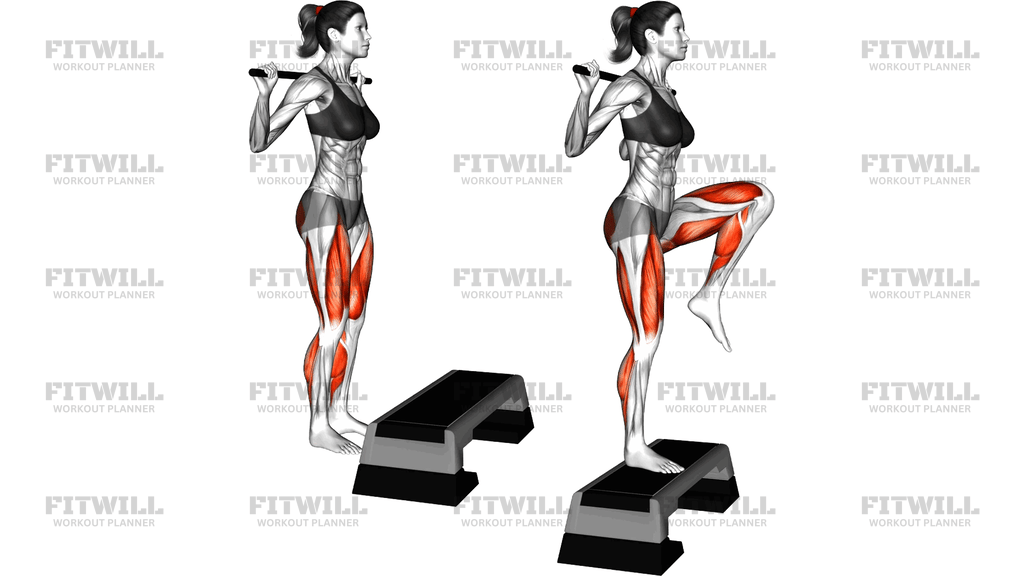
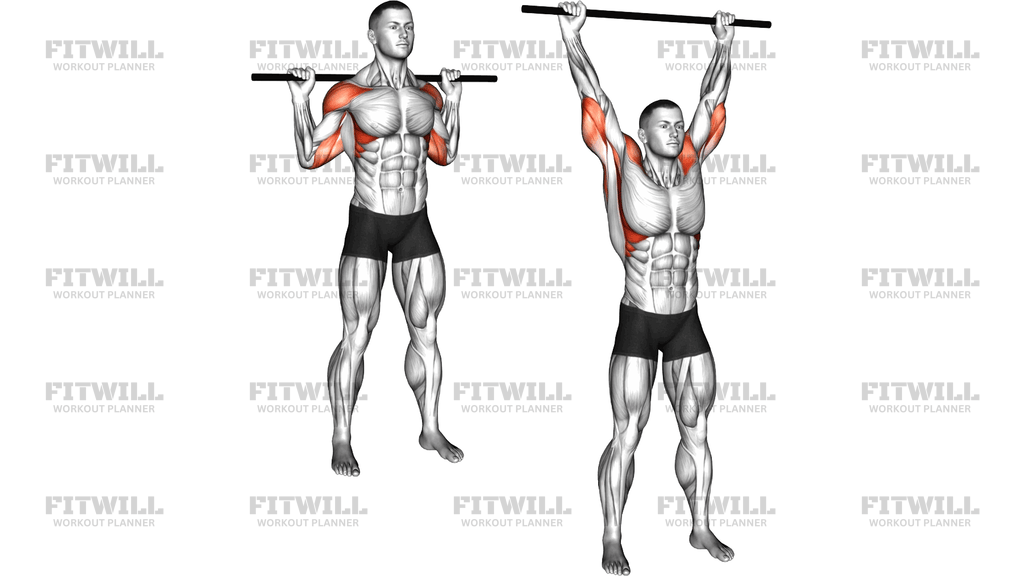
The Stick Standing Behind Neck Press is an overhead press performed with a light stick, such as a broomstick, dowel, or PVC bar, held behind the neck at shoulder height. From that position you press the stick straight up until your arms are fully extended overhead, then lower it back down under control to the starting position behind your head. Because the stick weighs almost nothing, the exercise is about movement quality, shoulder mobility, and pressing mechanics rather than load.
This movement is especially useful as a warm-up or mobility assessment before heavier overhead work. Lifting a barbell behind the neck demands significant shoulder external rotation and upper-back flexibility, and the stick version lets you practice that exact path safely. It is also a common drill for people rebuilding overhead range of motion after long periods of desk work, or for lifters who want to check whether their shoulders are ready for behind-the-neck pressing at all.
The primary muscles working are the deltoids, particularly the front and side portions of the shoulder, which drive the stick upward. The triceps extend the elbows to lockout, the upper traps and serratus assist as the shoulder blades rotate upward at the top, and the rotator cuff stabilizes the humeral head throughout. Because the stick travels behind the neck, the muscles between the shoulder blades also get more involvement than in a standard front press.
Setup matters more here than with a front press. Your grip should be wide enough that your elbows sit roughly under the stick at the start, your chest stays tall, and your head sits in a neutral position rather than jutting forward. A grip that is too narrow forces the shoulders into extreme rotation and is the most common reason people feel pinching in this drill. Start wider than you think you need and narrow gradually over time.
To execute well, brace your trunk, press the stick vertically toward the ceiling, and let your head move slightly forward out of the path as the stick passes behind it. At the top, aim for straight arms with the stick directly over the middle of your body, not drifting forward. Lower slowly along the same path until the stick touches the base of your neck, pause briefly, and repeat.
If you ever feel pinching, sharp pain, or forced forward head posture during the drill, widen your grip or switch to a front version of the press. The Stick Standing Behind Neck Press is a tool for building clean overhead mechanics, and it only works when the position stays comfortable and controlled.
[ Workout Log & Planner ]
Put your next workout in Fitwill
Keep your plan and training log ready when you are.


Instructions
- Stand with your feet about hip-width apart, knees soft but not bent, and your weight spread evenly across both feet.
- Grip the stick with an overhand grip wider than shoulder width, so that when the stick rests across the back of your shoulders, your elbows point down and sit roughly below the bar.
- Place the stick behind your neck so it rests on the top of your traps near the base of your neck, with your chest lifted and shoulder blades drawn gently back.
- Brace your abdominal muscles and keep your ribs stacked over your pelvis so your lower back does not arch as you press.
- Press the stick straight up toward the ceiling, letting your head ease slightly forward so the stick clears the back of your head without hitting it.
- Continue pressing until your arms are fully extended and the stick is balanced directly over the crown of your head, with elbows locked out and shoulder blades rotated upward.
- Pause for a moment at the top to feel the shoulders and upper back working in the locked-out position.
- Lower the stick slowly along the same vertical path, tucking your chin slightly as it descends, until it settles back on your traps behind the neck.
- Breathe in at the bottom or before the press, and exhale steadily as you press the stick overhead.
- Reset your posture after each rep, then repeat for your desired number of repetitions before carefully bringing the stick forward and setting it down.
Tips & Tricks
- Start with a very wide grip and narrow it only when the whole press feels smooth; a narrow grip behind the neck is the fastest route to shoulder discomfort.
- If the stick drifts forward at the top, your shoulders or upper back are tight — check that the stick finishes over the middle of your head, not out in front of your face.
- Avoid arching your lower back to get the stick up. If your ribs flare and your hips push forward, reduce the range and work on overhead mobility separately.
- Keep your neck neutral and move your head, not your neck, out of the stick's path; craning the chin up changes the angle on your cervical spine.
- Do this drill after general warm-up but before any barbell pressing, when the shoulders are warm but not fatigued.
- If one side lags or the stick tilts during the press, slow the tempo down and watch yourself in a mirror to even out the left-right difference.
- Treat mild stretching at the back of the shoulders as normal, but any pinching at the front of the shoulder means the grip is too narrow or the depth is too deep for today.
- For a mobility-focused session, pause for two to three seconds at the bottom of each rep instead of bouncing the stick off your traps.
- A heavier stick is not a better stick — if you need load, you are ready to progress to a front overhead press or a carefully loaded bar, not a weighted behind-the-neck press.
Frequently Asked Questions
What muscles does the Stick Standing Behind Neck Press work?
The deltoids of the shoulders do most of the pressing, supported strongly by the triceps during elbow extension. The upper traps, rotator cuff, and the muscles between the shoulder blades stabilize and control the bar path behind the neck.
Is behind-the-neck pressing safe for the shoulders?
With a weightless stick, a wide grip, and no pain, it is generally well tolerated and is often used to test overhead mobility. Sharp pinching or persistent aching means the position does not suit your current shoulder mobility, and a front press is the better choice.
Why use a stick instead of a barbell for the Behind the Neck Press?
A stick weighs almost nothing, so you can learn the behind-the-neck path, find the right grip width, and assess shoulder range without loading the joint. It is primarily a technique and mobility drill rather than a strength builder.
How wide should my grip be on the Stick Standing Behind Neck Press?
Start with a grip wide enough that your elbows sit roughly under the stick when it rests behind your neck, which is usually noticeably wider than shoulder width. Narrow the grip only over weeks, as your shoulder rotation improves.
Why does the stick hit the back of my head when I press?
You are likely keeping your head too far back or pressing the stick at an angle instead of straight up. Let your head glide slightly forward as the stick rises, and focus on pressing vertically toward the ceiling.
Can beginners do the Stick Standing Behind Neck Press?
Yes, and it is one of the safest ways to explore overhead positions, provided the grip is wide and there is no shoulder discomfort. Beginners should treat it as a warm-up drill and master the front overhead press before considering any loaded behind-the-neck variation.
How many reps should I do?
For warm-up and mobility purposes, one to three sets of eight to fifteen slow, controlled reps works well. Since the resistance is minimal, the quality of each rep matters far more than the rep count.
What can I substitute if the behind-the-neck position bothers my shoulders?
A standing front press with a stick trains the same shoulders and triceps without the extreme rotation. Landmine press variations are another option for people with limited overhead range.
Should my lower back arch during the press?
A small natural curve is fine, but exaggerated arching with flared ribs means your trunk is losing position, often to compensate for tight shoulders. Brace your abs and press only as high as you can while keeping your ribs stacked over your hips.