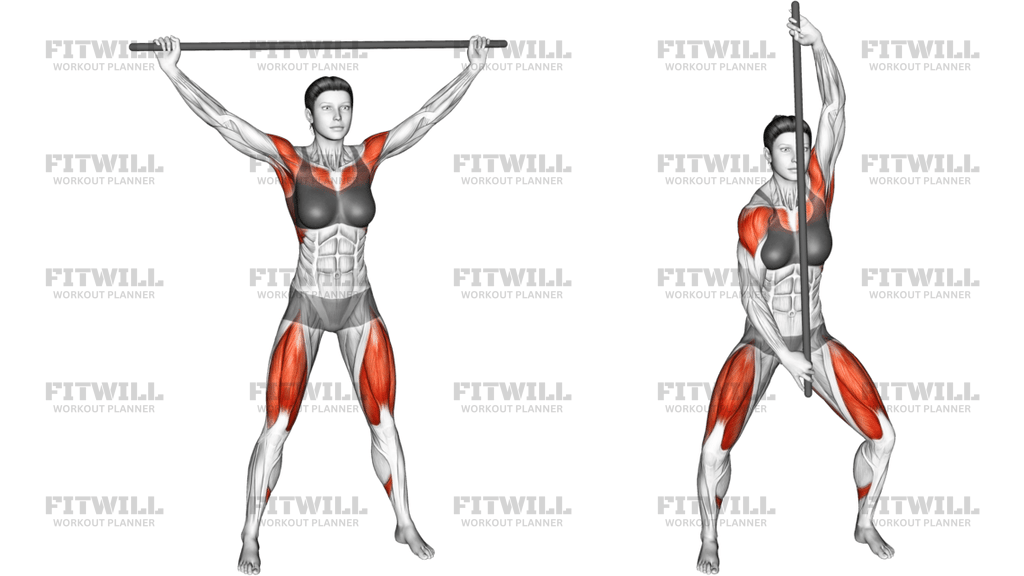
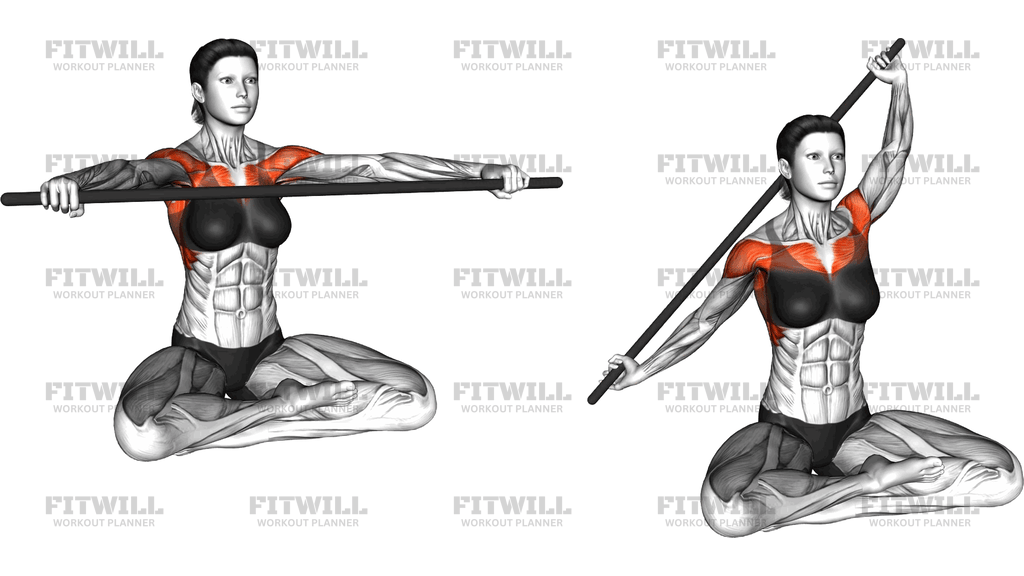
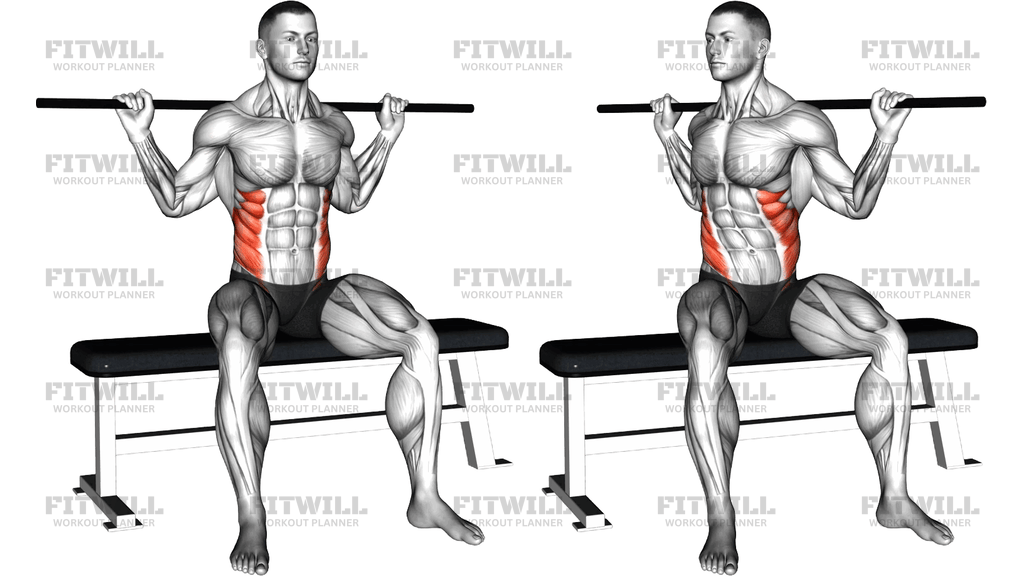
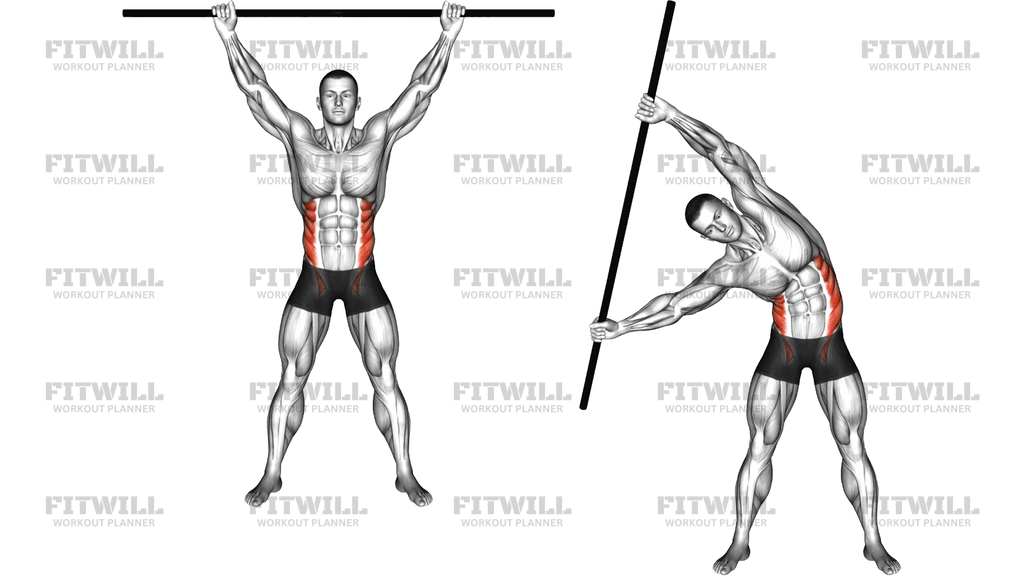
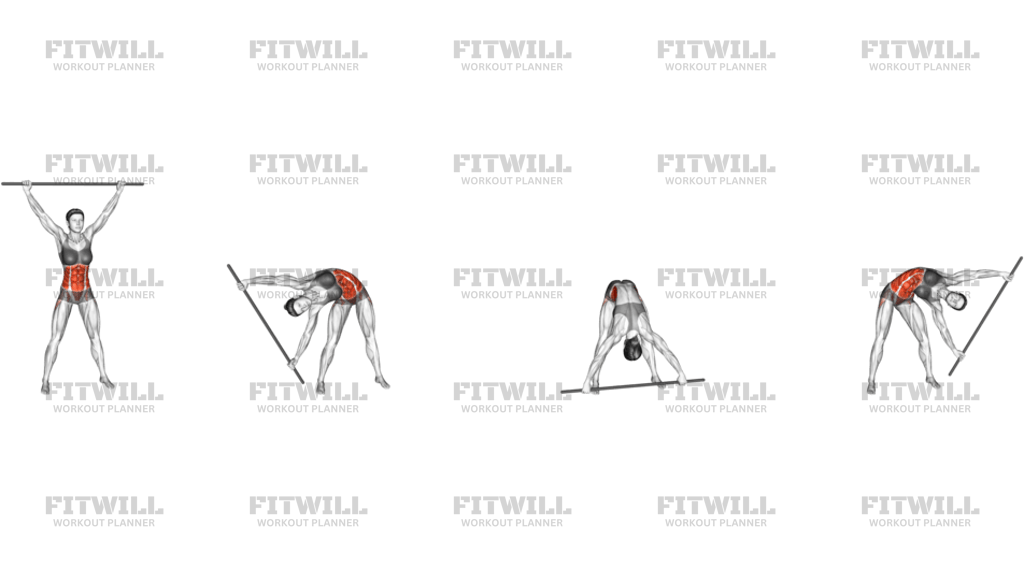
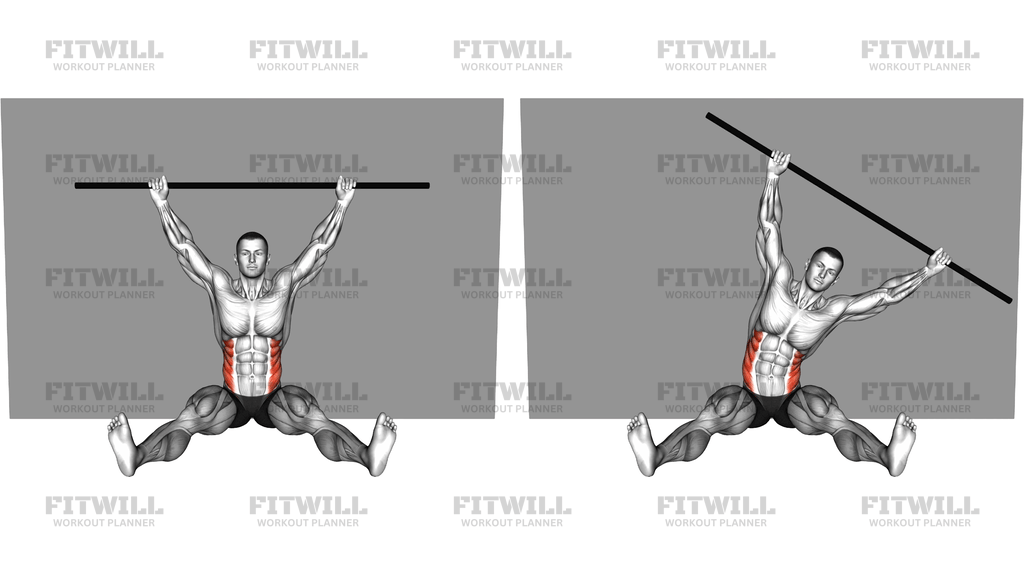
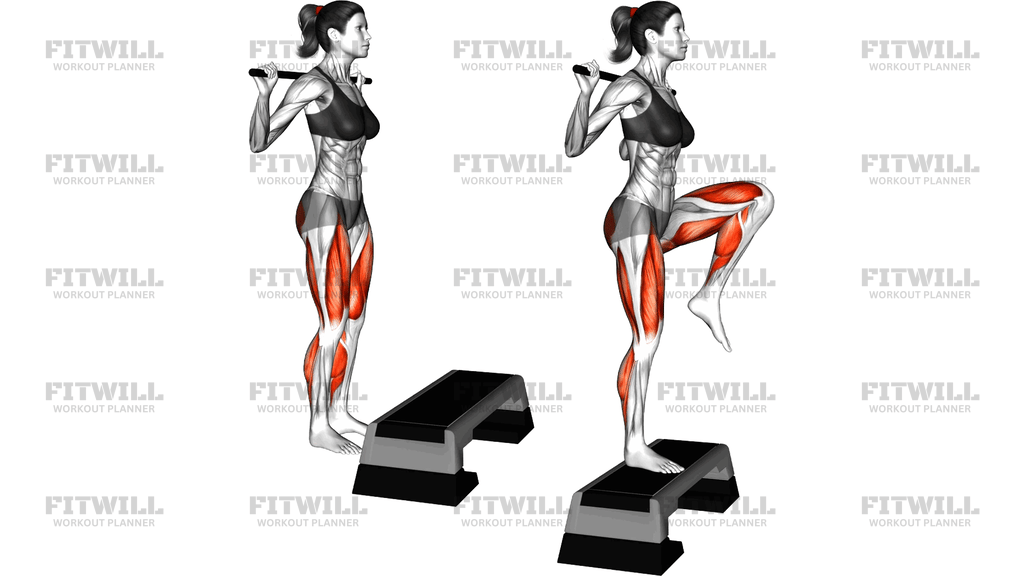
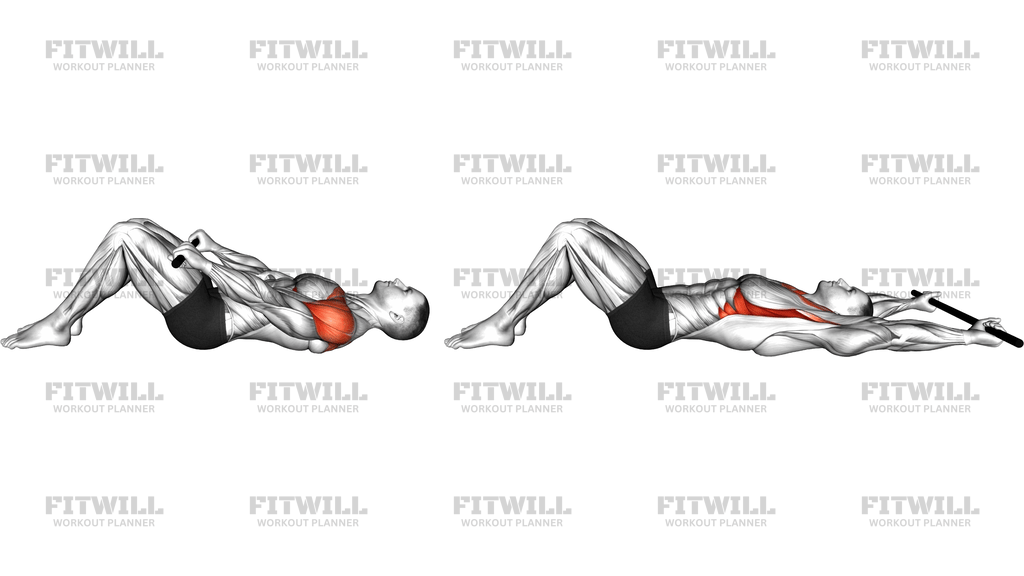
Stick Shoulder Mobilization In Abduction Behind B
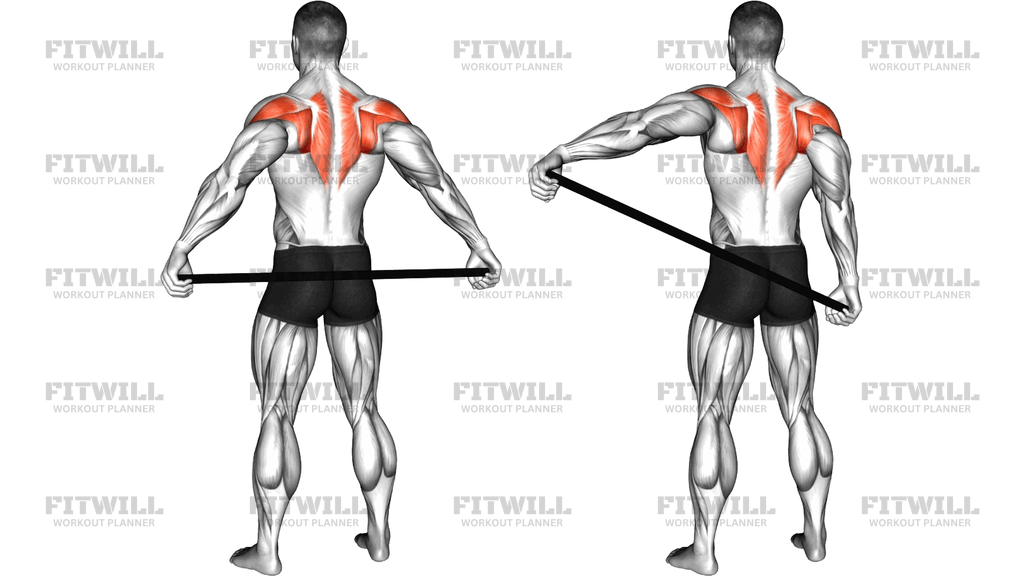
Stick Shoulder Mobilization In Abduction Behind Back is a mobility drill that uses a long stick or dowel held behind your body to guide one shoulder through a controlled abduction arc. You grip the stick with both hands behind your hips, then let one arm travel up and out to the side while the opposite hand anchors the stick low behind your back. The stick acts as a fixed track, so the moving shoulder is taken further into abduction and rotation than most people can comfortably reach under their own power.
This drill is especially useful for anyone whose shoulders feel restricted in behind-the-back positions: lifters with tight lats and rear shoulders, desk workers with rounded upper backs, throwers and racket athletes, and people working through general shoulder stiffness. Because one arm stays in extension and internal rotation at the low end of the stick while the other moves into abduction, both shoulders get challenged at opposite ends of their range at the same time, which is hard to replicate with standard arm circles or doorway stretches.
The value of the stick is feedback and control. Because both hands stay connected to one rigid bar, the moving arm cannot cheat by swinging or shrugging its way into position, and the anchored side gets a gentle, steady stretch rather than a yank. The highlighted working areas are the deltoids and rotator cuff on the lifting arm, along with the upper-back musculature that controls the shoulder blades as the arm rises.
Setup matters more than effort here. Stand tall with feet about hip width, keep your ribs stacked over your pelvis, and choose a hand position on the stick that lets both shoulders stay relaxed. If your grip is too narrow, the stick forces your shoulders into an awkward, cramped path; too wide, and the drill loses its stretching value. Start wider than you think you need and narrow gradually over weeks of practice.
Execute the movement slowly: the lifting hand slides or presses the stick upward and outward until the arm reaches a comfortable abduction angle, pause briefly at the top, then lower the stick back behind the hips with the same control. Repeat for the desired reps, then switch sides so both shoulders receive the same work. Keep the neck soft and the torso quiet throughout, since twisting or leaning sideways is the most common compensation.
As with any mobility drill, stay short of sharp pain. A deep stretch, pressure, or mild discomfort in the shoulder is normal; pinching at the front of the shoulder or tingling down the arm is a signal to reduce the range, widen the grip, or stop and regress to an easier shoulder mobility variation.
[ Workout Log & Planner ]
Put your next workout in Fitwill
Keep your plan and training log ready when you are.


Instructions
- Stand upright with your feet roughly hip width apart and hold a stick or dowel horizontally behind your hips with both hands, palms facing back, using an overhand grip slightly wider than shoulder width.
- Roll your shoulders back and down, brace your core lightly, and keep your head stacked over your ribcage so your lower back does not arch as the arms move.
- Keep one hand gripping the stick low behind your back as the anchor arm, holding it steady in extension with a relaxed elbow.
- Press the stick upward with the working hand, letting the working arm travel up and out to the side in a smooth abduction arc while the stick pivots around the anchored hand.
- Continue until the working arm reaches its comfortable end range in abduction, roughly level with or above the shoulder, and hold the top position for one to two seconds.
- Slowly lower the stick back down behind your hips along the same path, keeping the stick in contact with your body rather than letting it swing away.
- Breathe steadily throughout: inhale as the arm rises, exhale slowly as you reach the top and lower the stick back down.
- Complete the desired number of controlled repetitions, then switch hand positions so the opposite arm performs the abduction arc and the other side anchors.
- Reset your posture between sets by standing tall, taking a full breath, and rechecking your grip width before the next set.
Tips & Tricks
- Start with a grip width that feels almost easy. Narrow your hands a little every week or two; forcing a narrow grip from day one usually makes the lower back arch and the shoulders shrug instead of gaining range.
- If you feel a pinch at the front of the working shoulder near the top, do not push through it. Stop just below that point, and spend time in the pain-free range instead.
- Watch for torso rotation: as the arm rises, many people twist their chest toward the lifting side. Face forward the entire time so the shoulder blade, not the spine, does the compensating.
- Keep the anchored hand relaxed. Squeezing the stick hard with the low hand tenses the whole arm chain and reduces the stretch on that shoulder's internal rotation.
- Move slower than feels necessary, especially on the way down. Rushing the return lets the stick drop and removes the controlled end-range work that makes this drill effective.
- Tall kneeling or half-kneeling is a useful progression for people who keep arching their lower back while standing, because the kneeling position locks the pelvis in place.
- Slight shrugging of the working shoulder at the very top is common; cue yourself to keep the shoulder blade settling down as the arm climbs to keep the stretch in the shoulder itself.
- Do this drill after training or on off days rather than as a heavy warm-up, and pair it with a few slow arm circles to consolidate the new range.
- If one side is noticeably tighter, do one extra set on the restricted side, but always train both directions to keep the shoulders balanced.
Frequently Asked Questions
What does Stick Shoulder Mobilization In Abduction Behind Back primarily improve?
It improves shoulder abduction range and the mobility of the muscles that limit it, such as the lats, rear shoulders, and chest, while the anchored arm works the opposite end range in extension and internal rotation. The upper back and shoulder blade control also get trained as the arm rises.
Which muscles are working during Stick Shoulder Mobilization In Abduction Behind Back?
The deltoids and rotator cuff of the moving arm lift and control the stick, while the middle and lower traps and rhomboids stabilize the shoulder blade. The anchored side mainly receives a passive stretch rather than active work.
How wide should my grip be on the stick for Stick Shoulder Mobilization In Abduction Behind Back?
Start with a grip noticeably wider than shoulder width, wide enough that both shoulders stay relaxed behind your hips. Narrow the grip gradually over time as your mobility improves, never to the point of straining to hold the stick.
Is Stick Shoulder Mobilization In Abduction Behind Back suitable for beginners?
Yes, as long as a wide grip is used and the range stays pain-free. Beginners often benefit from kneeling versions first, since kneeling removes the tendency to arch the lower back when the arms go behind the body.
What is the most common mistake in Stick Shoulder Mobilization In Abduction Behind Back?
The most common mistakes are leaning or twisting the torso to fake extra range, shrugging the working shoulder toward the ear, and arching the lower back. All three shift the movement away from the shoulder joint, so keep the torso quiet and let the arm do the traveling.
Can I use a resistance band or towel instead of a stick?
A towel or band works if no stick is available, but the rigid stick gives a fixed track and a firmer end-range feel. Flexible tools let the arms cheat by spreading apart, so shorten them until the challenge feels similar.
How is Stick Shoulder Mobilization In Abduction Behind Back different from a shoulder dislocate?
A dislocate takes both arms through a full overhead arc together, while this drill keeps one arm anchored low behind the back and moves only one arm in abduction. That makes it gentler and better for targeting one shoulder at a time, especially behind-the-back range.
How many reps and sets should I do of Stick Shoulder Mobilization In Abduction Behind Back?
Start with two to three sets of five to eight slow reps per side, holding the top position briefly on each rep. Adjust based on how your shoulders respond, adding a set on the stiffer side if needed.
Should I feel pain at the front of my shoulder during Stick Shoulder Mobilization In Abduction Behind Back?
No. A deep stretch is expected, but pinching or sharp pain at the front of the shoulder means you have gone past a comfortable range. Widen your grip, stop below the pinch point, or regress to an easier shoulder mobility drill until the range improves.
When is the best time to do Stick Shoulder Mobilization In Abduction Behind Back?
It fits well as part of a cool-down, a dedicated mobility session, or a daily desk-break routine. Because the range is trained under slow control, doing it when the muscles are warm, such as after training or a short walk, usually feels best.