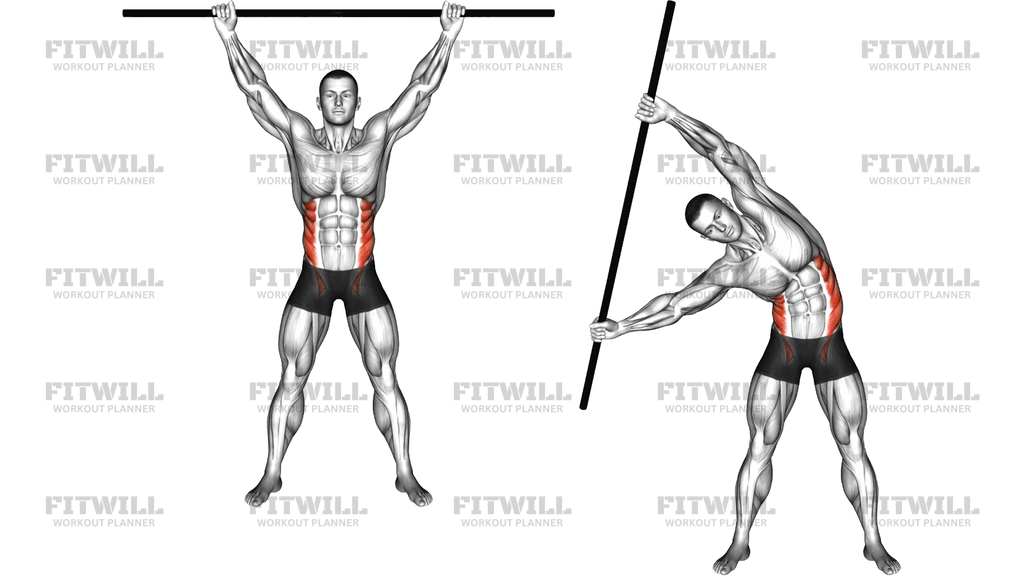
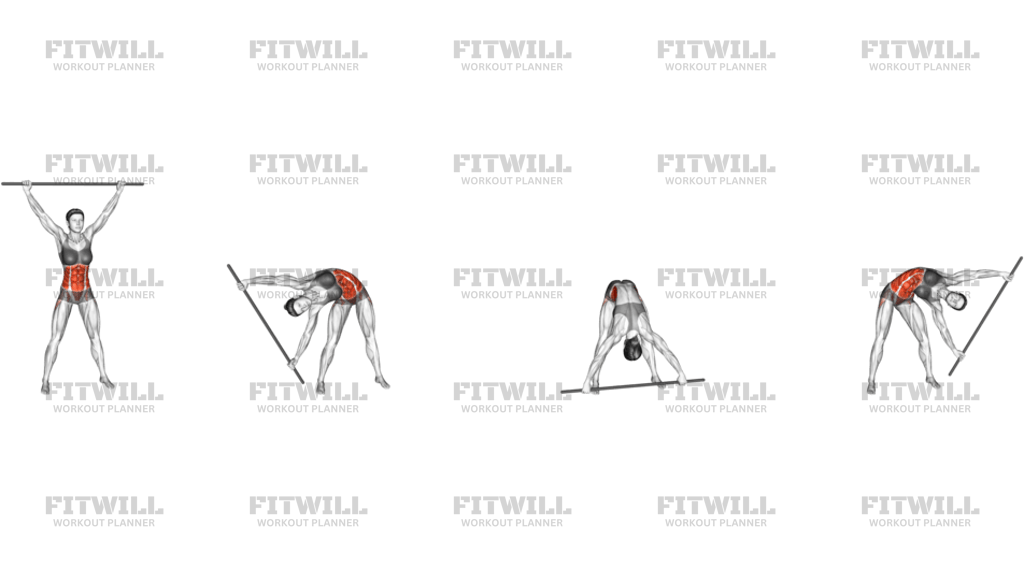
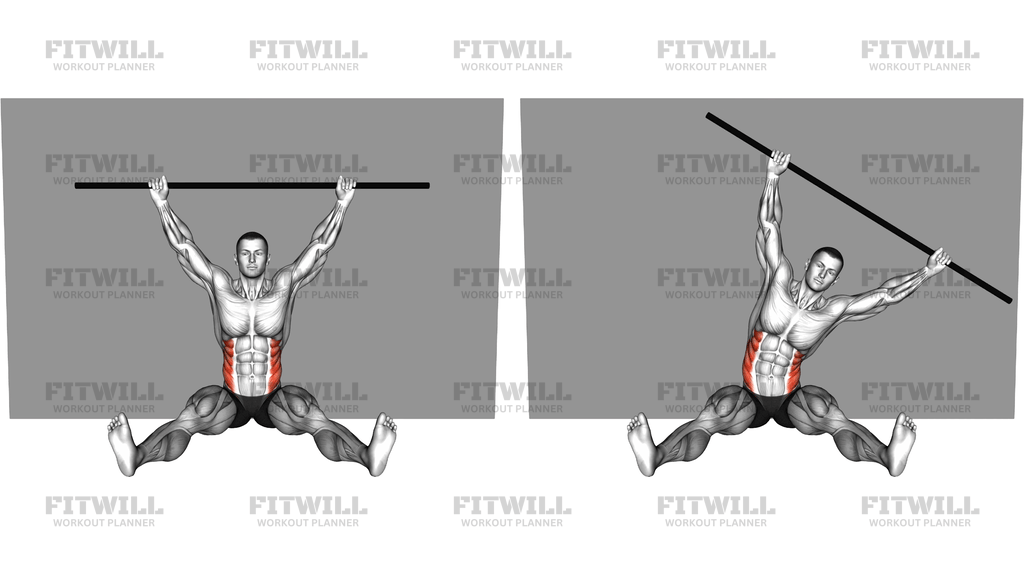
Stick Shoulder Mobilization In Abduction
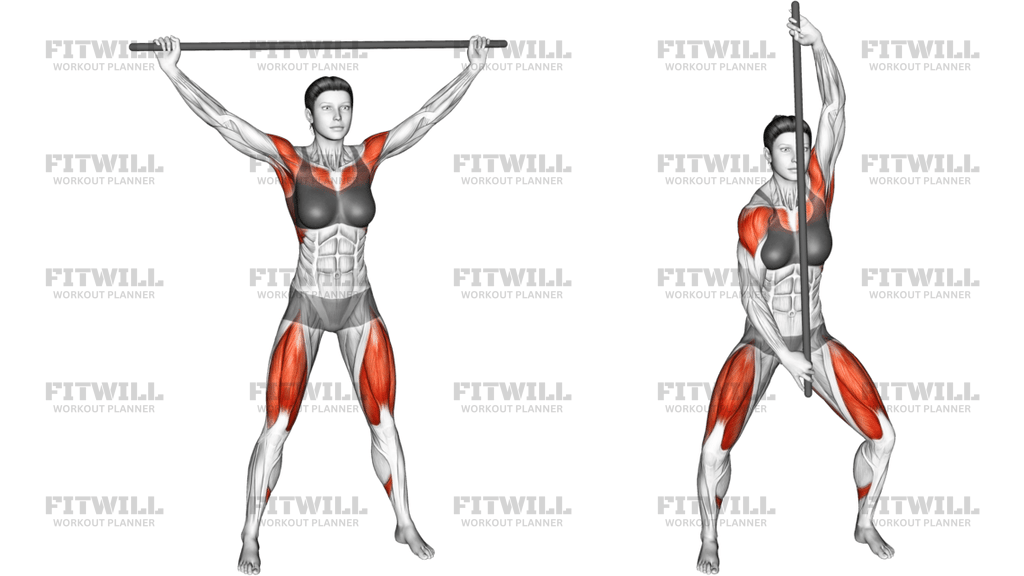
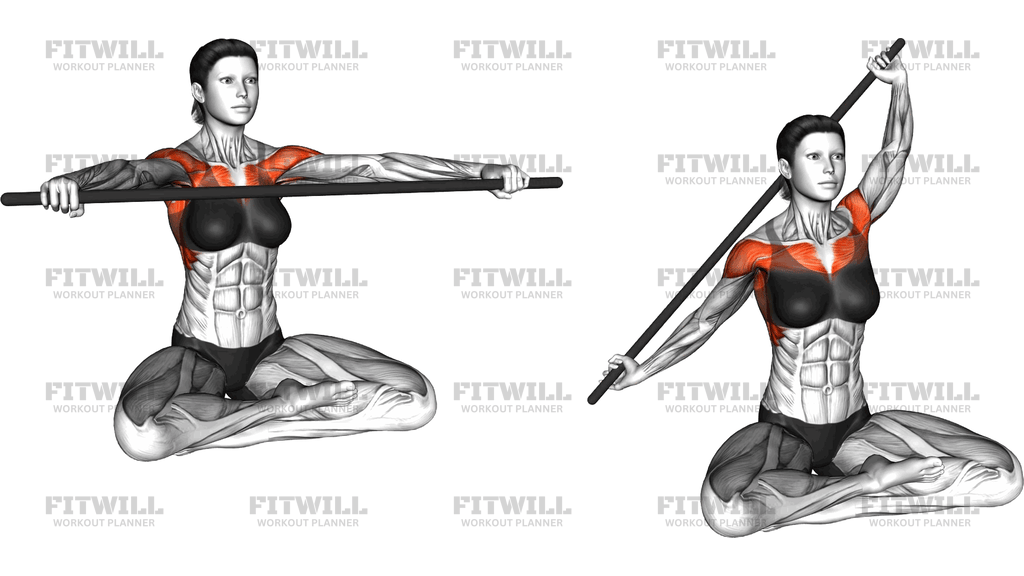
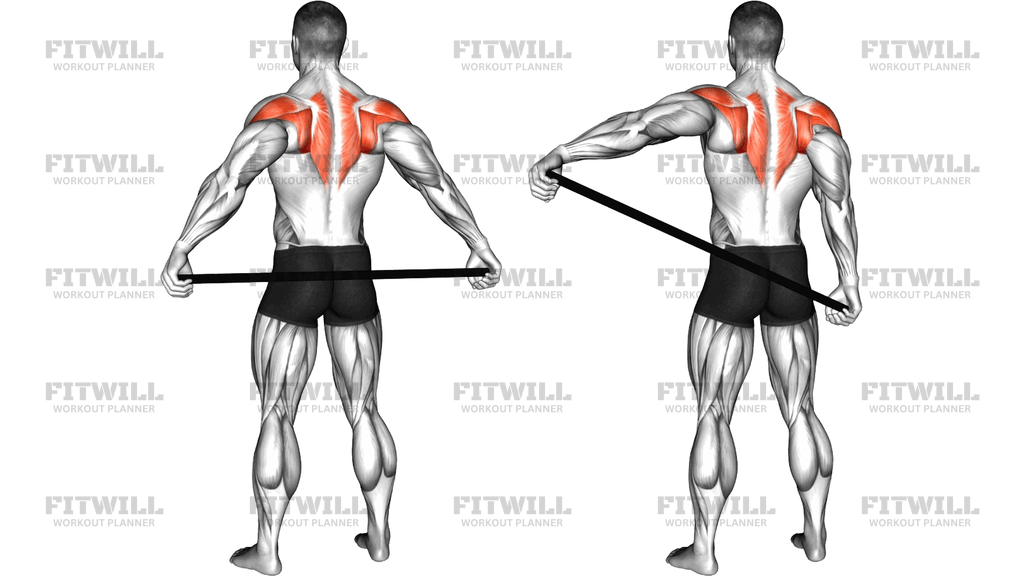
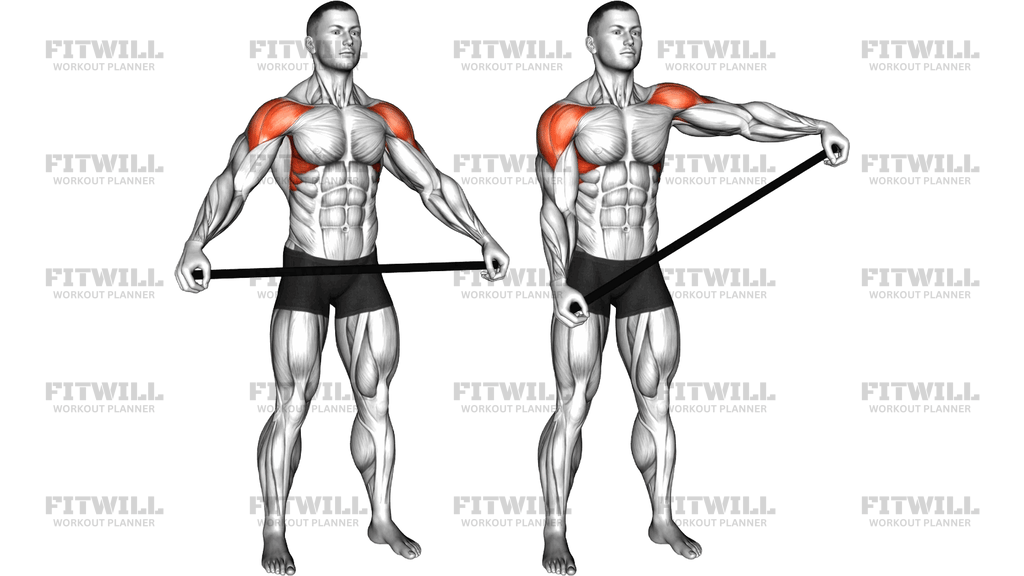
Stick Shoulder Mobilization In Abduction is a simple drill where you hold a stick or dowel with a wide grip in front of your thighs, keep both arms straight, and sweep one arm out to the side and overhead while the opposite hand anchors the far end of the stick near your other thigh. The stick acts as a guide rail: it fixes the distance between your hands, keeps the moving arm locked in a straight line, and gives you instant feedback if your range changes from side to side.
This is a mobility exercise, not a strength builder in the traditional sense. The goal is to move the shoulder joint through abduction — the arm lifting away from the body — under light, self-controlled load. The side delt and supraspinatus do most of the lifting, while the rotator cuff and upper traps stabilize the humerus in the socket as the arm travels up. Because the resistance is nothing more than the weight of the stick, you can work right at the edge of your range without overloading the joint.
It is especially useful for people whose shoulders feel stiff or guarded in overhead positions: desk workers, lifters who press heavy but rarely move through full ranges, swimmers and racket-sport players, and anyone rehabilitating general shoulder stiffness who has been cleared to train. It also works well as a warm-up before pressing, lateral raises, or any overhead work, and as a daily maintenance drill on rest days.
Setup details matter more than they appear to. A grip that is too narrow turns the drill into a struggle and forces compensation through the ribcage and lower back; a grip that is excessively wide removes the challenge entirely. Start with your hands roughly one and a half shoulder-widths apart and adjust from there. Keep your torso upright, ribs stacked over your pelvis, and let the shoulder — not the trunk — produce the arc.
Execute the movement slowly. Lift one straight arm out to the side, leading with the elbow slightly and keeping the palm facing forward or neutral, until you reach a comfortable end range. Pause for a breath at the top, then lower with the same control. The stick stays in contact with both hands the entire time, which means the working shoulder must earn every degree of range rather than being yanked into it.
Treat the exercise as an exploration of range, not a test of it. Mild stretch or working sensation around the shoulder is fine; pinching, sharp pain, or grinding is a signal to narrow the arc, widen your grip slightly, or shorten the range. Stop at the first point of discomfort and build from there over days and weeks rather than forcing range in a single session.
[ Workout Log & Planner ]
Put your next workout in Fitwill
Keep your plan and training log ready when you are.


Instructions
- Stand tall with your feet hip-width apart, knees soft but not bent, and your weight spread evenly across both feet.
- Hold a stick or dowel with an overhand grip, hands about one and a half shoulder-widths apart, arms straight and hanging in front of your thighs.
- Roll your shoulders back and down, brace your core lightly, and keep your ribs stacked over your pelvis so your torso cannot lean during the movement.
- Keeping both elbows locked straight, lift your right arm out to the side in a wide arc, pushing the stick upward and across toward your left side as it pivots around your left hand.
- Continue raising the arm until it is overhead or until you feel a firm but comfortable stretch at the shoulder, keeping the palm facing forward or neutral.
- Pause at the top for one full breath, letting the shoulder settle into the end range without shrugging the upper trap toward your ear.
- Lower the arm back down the same arc under control until the stick rests against your thighs again.
- Repeat on the left side, or complete all repetitions on one side before switching, depending on whether you are addressing a specific stiff shoulder.
- Exhale as the arm rises, inhale at the top, and breathe steadily throughout rather than holding your breath.
- Reset your posture between repetitions — shoulders down, torso tall — before starting the next arc.
Tips & Tricks
- If the arm bends at the elbow as it rises, the range has exceeded what the shoulder can control — widen your grip on the stick slightly so the arc stays honest.
- A common cheat is leaning the torso away from the lifting arm to buy extra height. Watch yourself sideways in a mirror or film a set; your trunk should look identical at the top and bottom of each rep.
- Shrugging the working shoulder toward the ear is a sign the upper traps are hijacking the movement. Think of pressing the shoulder blade down gently while the arm travels up.
- If you feel a pinch at the top of the movement, do not push through it. Reduce the range by a few degrees, turn the palm slightly toward neutral, and rebuild from that pain-free arc.
- Grip the stick firmly enough to control it but not so hard that your forearms and hands fatigue before your shoulders do — a white-knuckle grip tenses everything upstream.
- Compare left and right range in your first session. Spend an extra two or three repetitions on the stiffer side, but always stay within that side's comfortable range rather than matching the mobile side by force.
- Keep the stick in contact with both hands for the entire arc. Letting the anchor-side hand slide turns the drill into a loose one-arm swing and loses the feedback the stick provides.
- Use this before overhead pressing or lateral raises rather than after heavy pressing, when the shoulder is fatigued and less responsive to mobility work.
Frequently Asked Questions
What muscles and joints does Stick Shoulder Mobilization In Abduction work on?
The primary target is the shoulder joint moving through abduction, driven mainly by the side delt and assisted by the supraspinatus. The rotator cuff and upper traps work to keep the arm stable in the socket throughout the arc.
How wide should my grip be on the stick?
Start around one and a half shoulder-widths apart. Narrower grips demand more shoulder range and make cheating more likely, while very wide grips make the drill too easy — adjust until the last few degrees of the arc feel challenging but smooth.
Is Stick Shoulder Mobilization In Abduction suitable for beginners?
Yes, it is one of the most beginner-friendly shoulder drills because the only load is the stick itself. Beginners should focus on a tall torso, straight elbows, and stopping at a comfortable end range rather than chasing overhead height.
Should I do this exercise before or after my workout?
It works best as a warm-up before pressing, lateral raises, pulling, or any overhead activity. Using it after heavy pressing is less effective because a fatigued shoulder moves with less control and range.
Why do I feel the movement in my neck or upper traps instead of my shoulder?
That usually means the shoulder is shrugging to compensate for limited glenohumeral range. Keep the shoulder blade gently pulled down as the arm rises, and shorten the arc until the shrug disappears.
Can I use a resistance band or a broomstick instead of a training stick?
A broomstick, PVC pipe, or any light rigid dowel works identically. Avoid a band, because the drill depends on the fixed hand distance a rigid stick provides to guide the arc and reveal side-to-side differences.
How many repetitions and sets should I perform?
Two to three sets of eight to ten slow arcs per side works well as a warm-up or daily maintenance drill. If one shoulder is stiffer, add a few extra controlled repetitions on that side only.
Is it normal to have one side that moves better than the other?
Yes, side-to-side differences are common, especially in people who favor one arm in sport or daily life. Work each side within its own comfortable range and let the stiffer side improve over weeks rather than forcing it to match.
What should I do if I feel pinching at the top of the arc?
Stop just below the pinch point, slightly turn the palm toward neutral, and consider widening your grip to reduce the demand. Persistent pinching on every session is a reason to have the shoulder assessed by a qualified professional before continuing.