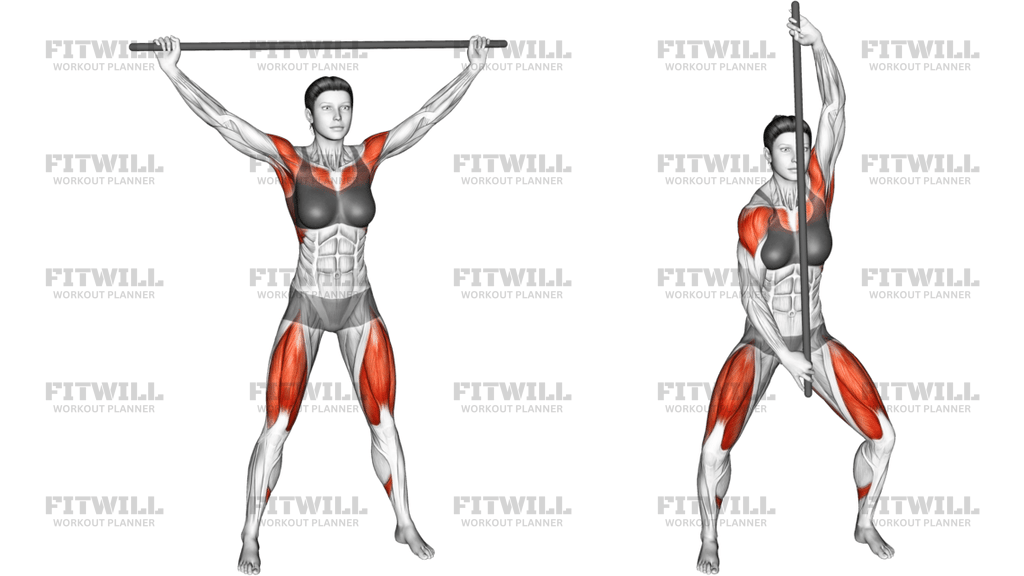
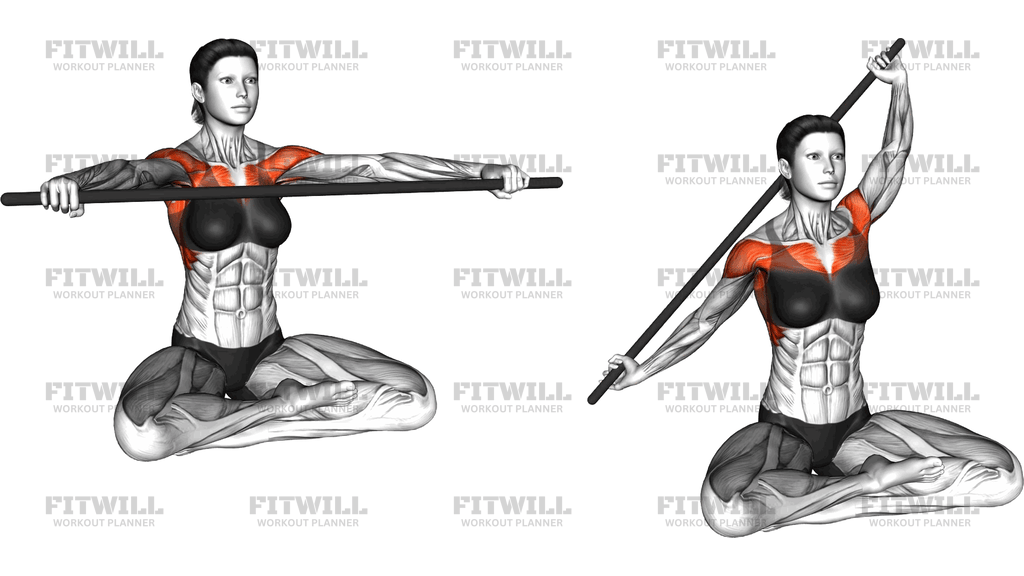
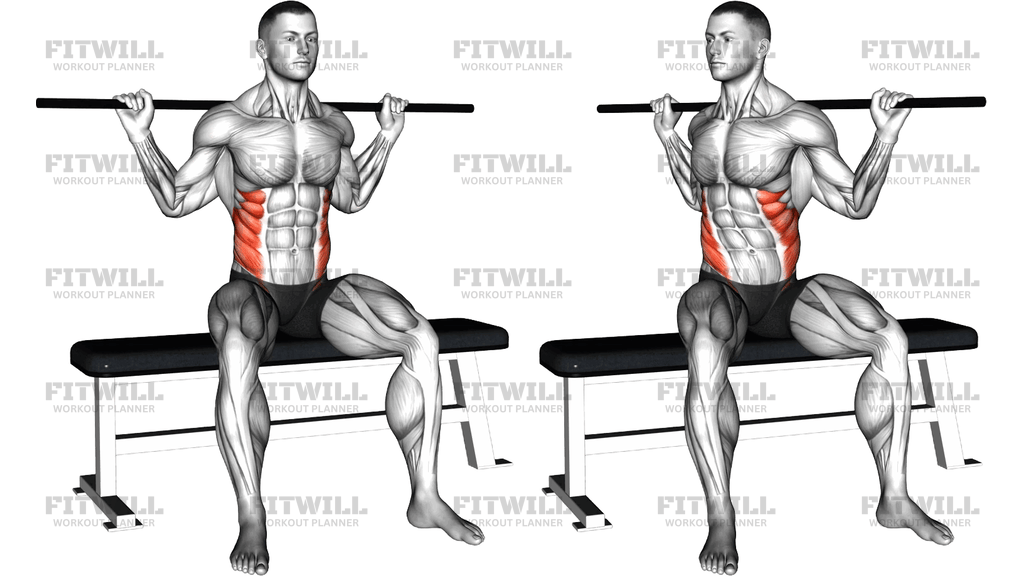
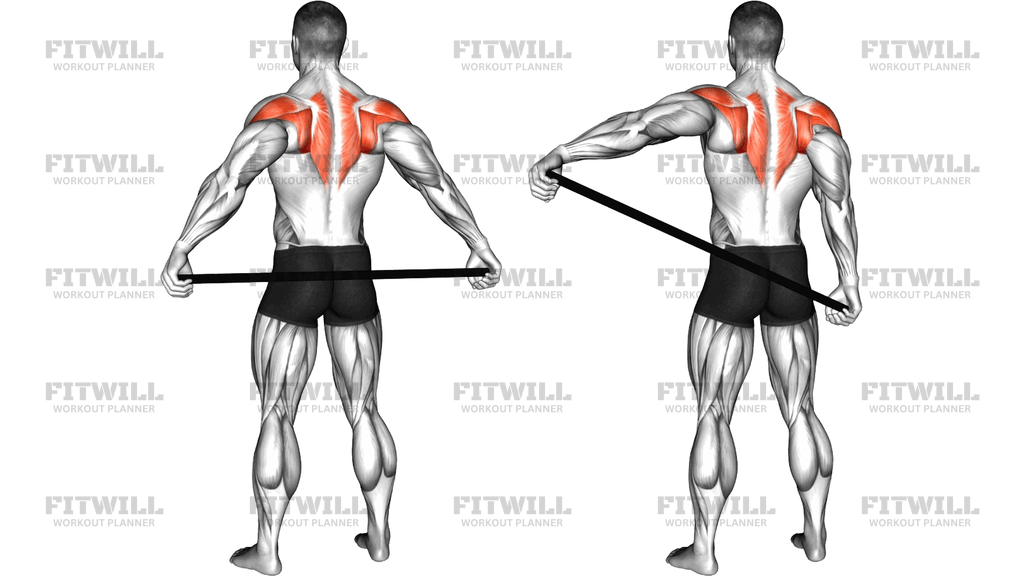
Stick Shoulder Rotation Over Head
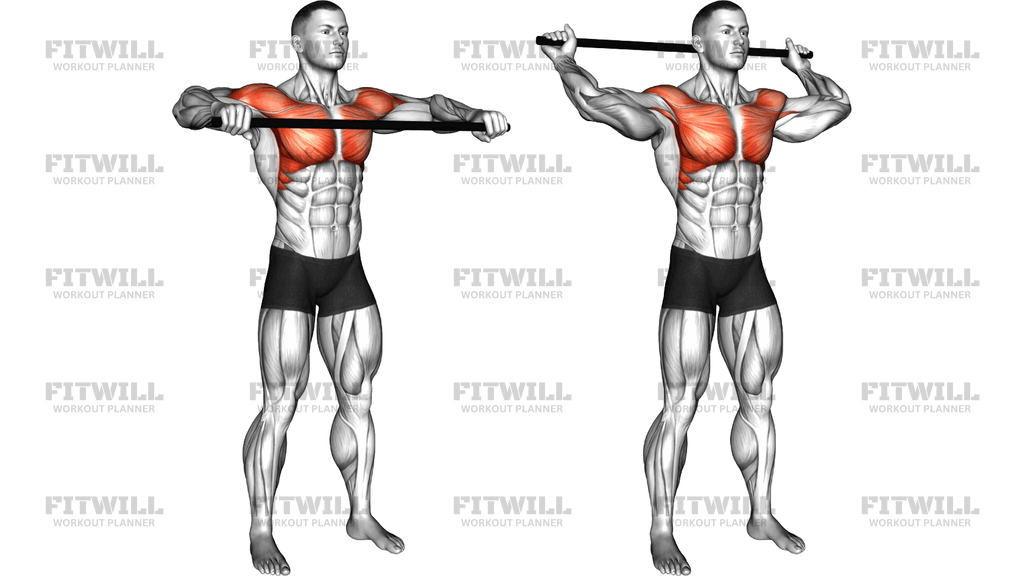
Stick Shoulder Rotation Over Head is a mobility drill that takes the shoulders through a large, controlled arc from front to back using a light stick or dowel as a spacer. You hold the stick with a wide grip across the front of your shoulders, elbows flared out, then rotate it up and over your head until it settles behind your neck before reversing the path. It is essentially a guided shoulder dislocate, with the stick forcing both arms to move together so one side cannot quietly do less work than the other.
This movement is most useful for anyone whose shoulders feel tight in overhead positions: lifters who struggle to get a barbell into a proper front rack or overhead position, swimmers and throwing athletes who need consistent shoulder range, and desk workers whose posture has gradually pulled the shoulders forward into internal rotation. Because the load is minimal, it trains range of motion and control rather than raw strength, which is exactly what stiff shoulder joints usually need.
The main work happens in the deltoids and the rotator cuff as the arms rotate externally while the stick travels overhead, with the chest and upper back assisting and lengthening through the arc. The wide grip is the key variable: it sets how demanding the rotation is. A wider grip shortens the arc and keeps the movement comfortable, while a narrower grip gradually lengthens the tissues and deepens the stretch over weeks of practice.
Setup matters more here than in most drills. Stand tall with feet about hip width, ribs stacked over the pelvis, and keep the stick level so both shoulders move symmetrically. If your torso starts leaning back or arching to sneak the stick behind your head, the drill stops measuring honest shoulder mobility and starts compensating through the spine. Move slowly enough that you can feel exactly where the restriction begins.
A practical starting point is a grip roughly one and a half shoulder widths apart, five to eight slow repetitions per set, done as part of a warm-up before pressing, pulling, or overhead work. If the stick cannot pass over the head smoothly, widen the hands rather than forcing it. Progress by narrowing the grip a thumb width at a time across sessions, never within one set. Mild stretch is the goal; any pinching at the front of the shoulder means stop, widen the grip, or reduce the range for that day.
[ Workout Log & Planner ]
Put your next workout in Fitwill
Keep your plan and training log ready when you are.


Instructions
- Stand upright with feet about hip width apart, soft knees, and ribs stacked over your hips.
- Take an overhand grip on the stick roughly one and a half times shoulder width, hands evenly spaced so the stick sits level.
- Raise the stick to collarbone height in front of you and let the elbows bend and flare out to the sides so the backs of your arms face forward.
- Brace your midsection lightly and draw your shoulder blades down to stop yourself from shrugging as the stick moves.
- Inhale, then rotate the stick up and over your head in a smooth arc, keeping both hands at the same height throughout.
- Continue rotating until the stick rests across the back of your neck and shoulders, elbows out, and pause there for a breath without arching your lower back.
- Reverse the exact same arc to bring the stick back over the top of your head to the front rack position at collarbone height.
- Exhale as the stick travels behind the head and breathe steadily on the return.
- Complete 5-8 controlled passes, then reset your grip width for the next set or finish the drill.
Tips & Tricks
- If one hand lags behind the other, the stick will tilt visibly; slow down and fix the tilt before adding repetitions, because uneven rotation usually means one shoulder is stiffer than the other.
- The most common mistake is arching the lower back and pushing the ribs up to finish the arc; squeeze your glutes lightly and keep your torso vertical so the demand stays on the shoulders.
- Do not chase a narrow grip too quickly. If your elbows drop and the stick jams at ear level, your grip is too narrow for your current range.
- Keep the elbows high and out to the sides at both ends of the movement; letting them sink toward your body turns the drill into a low-value arm swing.
- Pinching or clicking at the front of the shoulder during the overhead arc is a signal to widen the hands, not to push through it.
- Warm the shoulders first with a few arm circles; running this drill cold makes the restriction feel worse than it is.
- Treat grip width as your progress metric: mark it with tape and only narrow it when the current width feels smooth for all reps.
- If you cannot pass the stick behind your head even with a very wide grip, substitute a resistance band or towel, which flexes when your range runs out.
- Avoid holding your breath at the tightest point; exhaling as the stick crosses overhead helps the shoulders relax into the rotation.
Frequently Asked Questions
What muscles does Stick Shoulder Rotation Over Head work?
It primarily targets the deltoids and rotator cuff through a large controlled rotation, with the chest and upper back assisting and lengthening. Because the stick is light, the benefit is mobility and control rather than muscle growth.
How wide should my grip be on the stick?
Start about one and a half shoulder widths apart, which lets most people pass the stick over the head smoothly. Narrow the grip gradually over weeks only when the current width feels comfortable for every repetition.
Is Stick Shoulder Rotation Over Head safe for stiff shoulders?
It is often used specifically to improve shoulder flexibility, but the stick must pass without pain. Any sharp pinching at the front of the shoulder means you should widen your grip or switch to a more forgiving tool like a band.
Why does my lower back arch when the stick goes behind my head?
Your shoulders have run out of external rotation range and your spine is compensating to finish the arc. Lighten the demand by widening your hands, brace your core, and keep the ribs stacked over the pelvis.
Should beginners do this drill before pressing exercises?
Yes, it works well as a warm-up before overhead pressing, front squats, or any bench work, since it opens the exact positions those lifts need. Keep it to 5-8 slow passes so it primes rather than fatigues the shoulders.
Can I use a resistance band or towel instead of a stick?
Yes. A band or towel is a good substitute if your range is limited, because it flexes when the shoulders stop moving. Once the band version feels easy, progress to the rigid stick, which gives honest feedback on symmetry.
One side of the stick tilts during the rotation. What does that mean?
A tilting stick means one shoulder is less mobile or you are rushing the movement. Slow each pass down, keep your eyes on the stick, and if the tilt persists, spend a few sets working at a wider grip to let the tighter side catch up.
How often should I do Stick Shoulder Rotation Over Head?
Daily or before every upper body session is reasonable, since it is a low-load mobility drill. Consistency with a patient grip width matters far more than volume or intensity.
How is this different from a normal arm circle warm-up?
The stick links both arms together and sets a fixed width, so neither shoulder can compensate for the other and the rotation path is consistent every rep. That feedback is what makes it a genuine mobility measurement, not just a circle.
Should my elbows stay straight during the movement?
No. In this version the elbows stay bent and flared out to the sides, which lets the stick travel from the front of the shoulders to behind the neck. Straightening the arms changes the drill and usually makes the overhead pass harder than it needs to be.