Sitting Lateral Costal Breathing
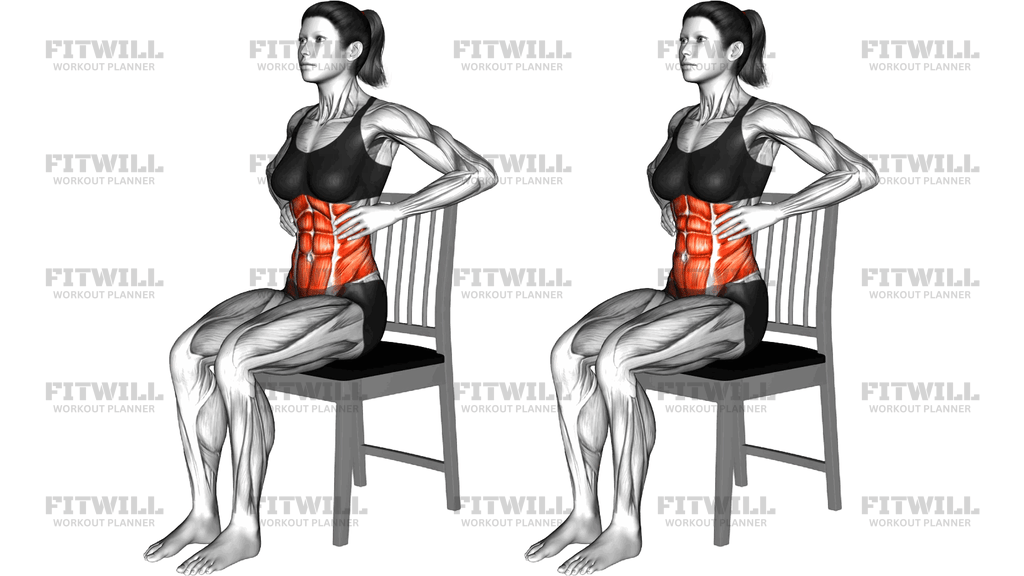
Sitting Lateral Costal Breathing is a seated breathing drill that trains you to expand the lower ribcage outward to the sides instead of lifting the chest and shoulders with each breath. You sit upright on a sturdy chair with your feet flat on the floor and place your hands flat against the sides of your lower ribs, so your palms can feel whether the ribs actually widen as air comes in. It looks simple, but it is one of the most useful drills for people whose breathing has become shallow, chest-dominant, or rushed.
This drill is especially valuable if you spend long hours sitting, feel like you cannot take a full breath, brace poorly during lifting, or notice your shoulders creeping toward your ears whenever you inhale. It is also a common starting point in postural and core training, because the deep trunk muscles that stabilize your spine respond to how you breathe. Learning to breathe wide into the lower ribs gives those muscles a better working position before you add load or movement.
The muscles doing the real work here are the diaphragm and the muscles between the ribs, with the deep abdominal wall — including the transverse abdominis and the obliques — controlling the exhale and drawing the lower ribs back together. The hands on the ribs are not decoration; they give you immediate feedback. If your chest rises and your hands stay still, the air went to the wrong place. If your palms drift apart and your shoulders stay relaxed, you are doing it correctly.
Setup matters more than it appears. Slumping rounds the ribcage down and makes lateral expansion nearly impossible, while arching the back turns the drill into a chest lift. Sit tall on your sit bones with a long but neutral spine, and keep your chin level. Every breath should stay quiet and unhurried — forceful sniffing defeats the purpose.
A practical session looks like this: five to ten slow breaths, pausing to notice how the ribs move, then a short rest and two or three more rounds if needed. Many people use it as a warm-up before strength training, as a reset between heavy sets, or as a wind-down at the end of the day. There is no equipment beyond a chair, no strain, and no sweating — just deliberate practice at directing air into a part of the torso most people ignore.
Stay within comfort. You should never feel dizzy, lightheaded, or strained; if you do, return to normal breathing and try again later with smaller breaths. If you have a respiratory condition or recent abdominal or thoracic surgery, check with a qualified health professional before adding structured breath work.
[ Workout Log & Planner ]
Put your next workout in Fitwill
Keep your plan and training log ready when you are.


Instructions
- Sit on a sturdy chair with your feet flat on the floor about hip-width apart and your weight on your sit bones.
- Lengthen your spine so you are tall but not arched, and let your shoulders drop away from your ears.
- Place both hands flat against the sides of your lower ribcage, thumbs pointing backward and fingers wrapping forward around your ribs.
- Keep your chin level and relax your neck, jaw, and shoulders before you begin.
- Inhale slowly through your nose and direct the air into the sides and back of your lower ribs, letting your hands feel the ribs widen outward.
- Keep your chest and shoulders still — the expansion should push sideways into your palms, not upward.
- Exhale slowly through your mouth or nose and feel your ribs draw back together as your hands come gently inward.
- Continue for five to ten slow, quiet breaths, keeping the inhale and exhale roughly even in length.
- When finished, remove your hands, take one normal breath, and notice whether your ribcage moves more freely before you stand up.
Tips & Tricks
- If your shoulders rise on the inhale, exhale fully first — a lot of chest breathing is just leftover air sitting at the top of the lungs.
- Wrap your hands slightly forward so your fingers rest on the side ribs rather than your waist; soft tissue at the waist moves even when the ribs do not.
- Do not force big gulps of air. Lateral expansion comes from slow, low-pressure breaths, and straining usually shifts the work right back into the chest.
- If you feel yourself slumping after a few breaths, reset by thinking of your head being gently lifted, rather than arching your lower back to sit tall.
- A snug waistband or sports bra can make rib expansion harder to feel; if the drill feels blocked, try it in looser clothing.
- If the sideways movement is hard to detect, place a light resistance band looped around your lower ribs so the stretch on the inhale gives you extra feedback.
- Keep your feet grounded through the whole set — shifting or crossing your legs tilts the pelvis and changes how the ribcage sits over it.
- Practice in short sets of five to ten breaths rather than one long effort; attention fades quickly and sloppy breathing patterns creep back in.
- Slight dizziness means you are breathing too big or too fast. Stop, breathe normally, and restart with about half the air volume.
Frequently Asked Questions
What muscles does Sitting Lateral Costal Breathing work?
The main action comes from the diaphragm and the intercostal muscles between the ribs, while the deep abdominal wall — the transverse abdominis and obliques — controls the exhale. It is a motor-control drill for these muscles more than a strength exercise.
Why do I place my hands on the sides of my ribs during Sitting Lateral Costal Breathing?
Your hands are the feedback tool. They tell you immediately whether the ribs are widening sideways on the inhale, which is the whole point of the drill, or whether the air is only going into your chest.
Is Sitting Lateral Costal Breathing good for beginners?
Yes, it is one of the most beginner-friendly breathing drills because it is seated, low-effort, and needs no equipment. Beginners often benefit most, since shallow chest breathing is a common habit before any breath training.
How is lateral costal breathing different from belly breathing?
Belly breathing emphasizes the abdomen expanding forward, while lateral costal breathing directs air into the sides and back of the lower ribcage. Both are useful, and many coaches teach them together because the ribcage and diaphragm work as one system.
Why do my shoulders lift when I inhale during this drill?
Shoulder lifting means you are breathing into the upper chest instead of the lower ribs. Exhale fully, soften your shoulders, and take a smaller breath while focusing on pushing your hands apart with your ribs.
How many breaths and sets should I do of Sitting Lateral Costal Breathing?
Start with five to ten slow breaths, rest, and repeat two to three rounds. Quality matters far more than volume here, so stop the set as soon as your focus or breathing rhythm breaks down.
Should I use Sitting Lateral Costal Breathing before or after a workout?
It works well as a pre-workout reset to establish a good rib and breathing position before lifting, and also as a wind-down afterward. Many people do a round between heavy sets to avoid losing their breathing pattern under load.
Can I do Sitting Lateral Costal Breathing without a chair?
Yes, the same pattern works sitting on a bench, a stability-friendly seat, or the edge of a bed, as long as your feet are flat and your spine stays tall. A firm chair is simply the easiest way to keep an upright position.
Is it normal to feel lightheaded during this breathing exercise?
No, lightheadedness usually means the breaths are too large or too fast. Return to normal breathing, and when you resume, cut your air volume roughly in half and keep the pace slow.