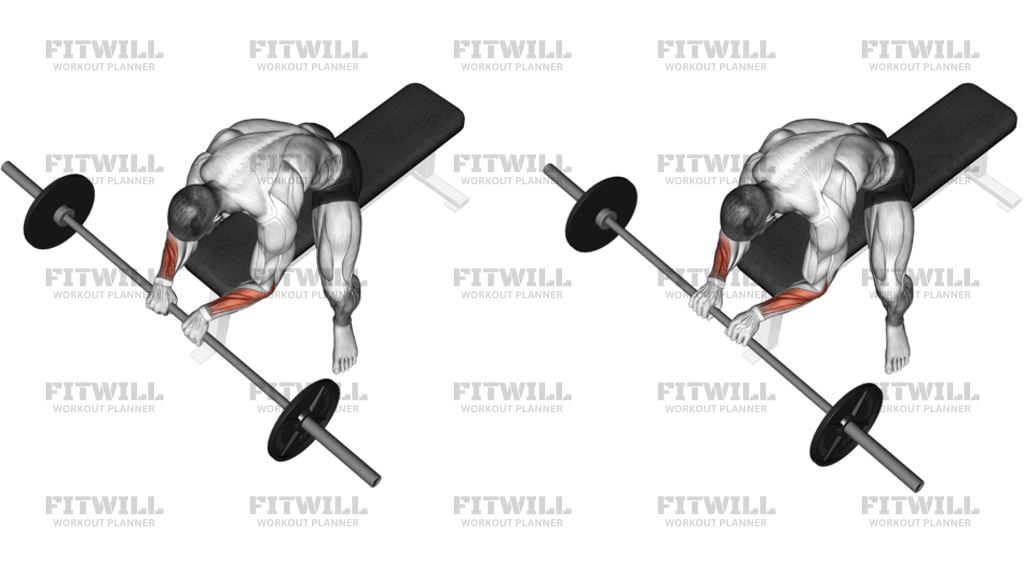
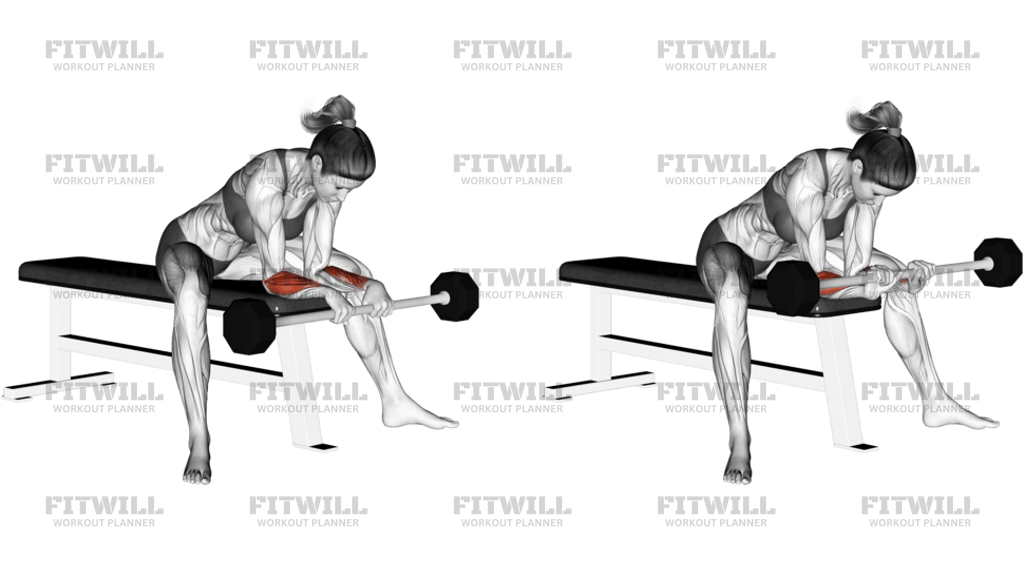
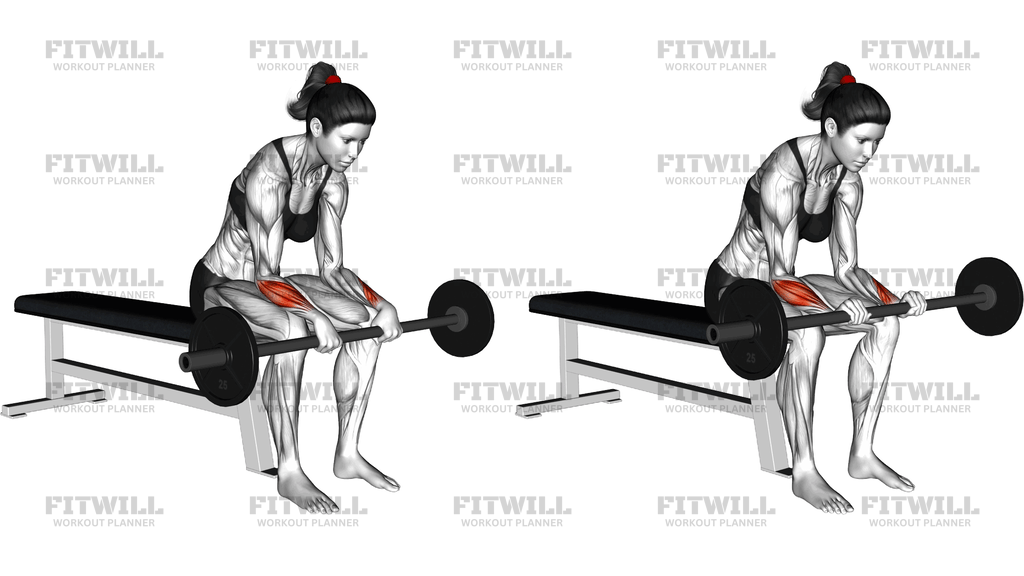
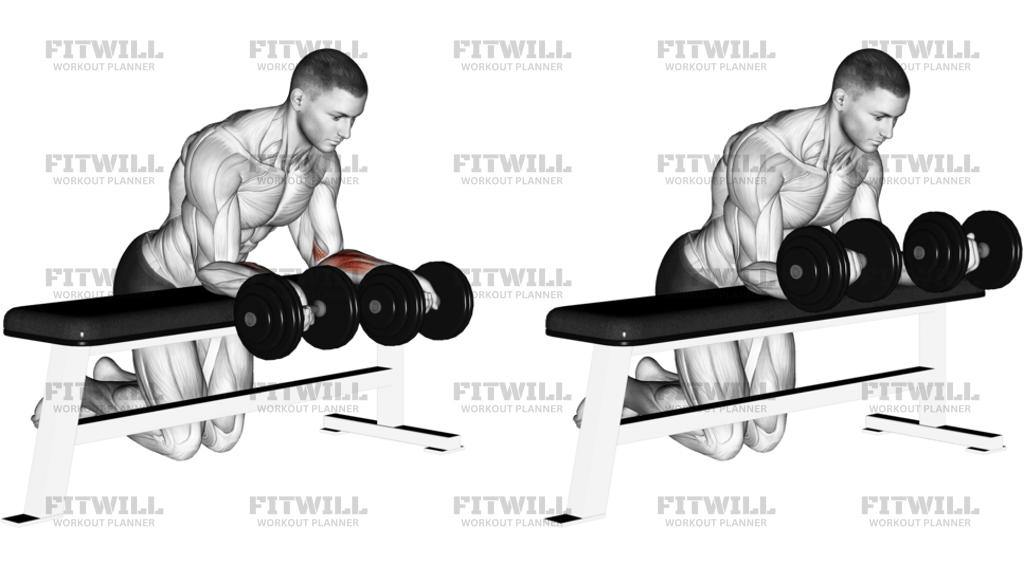
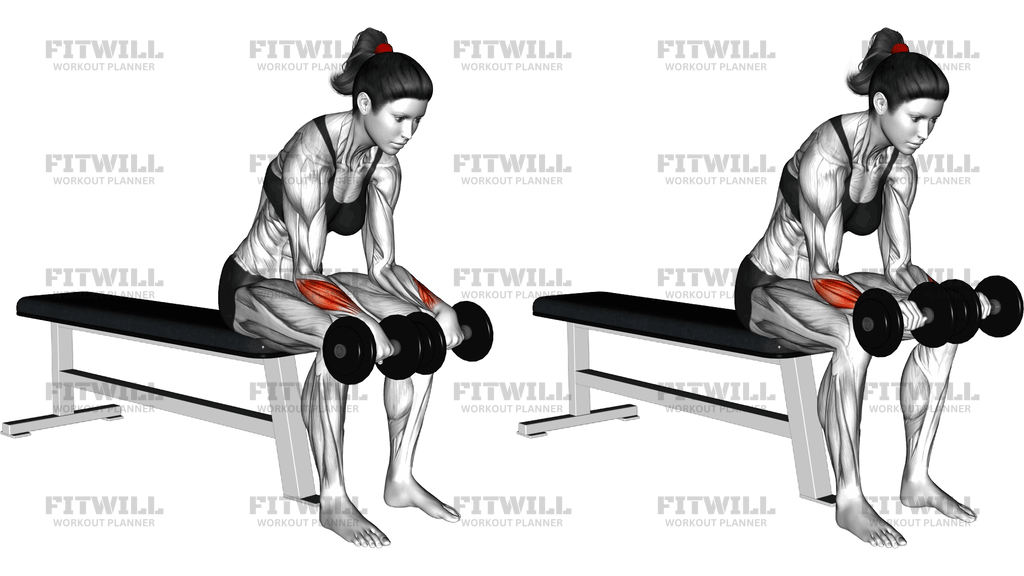
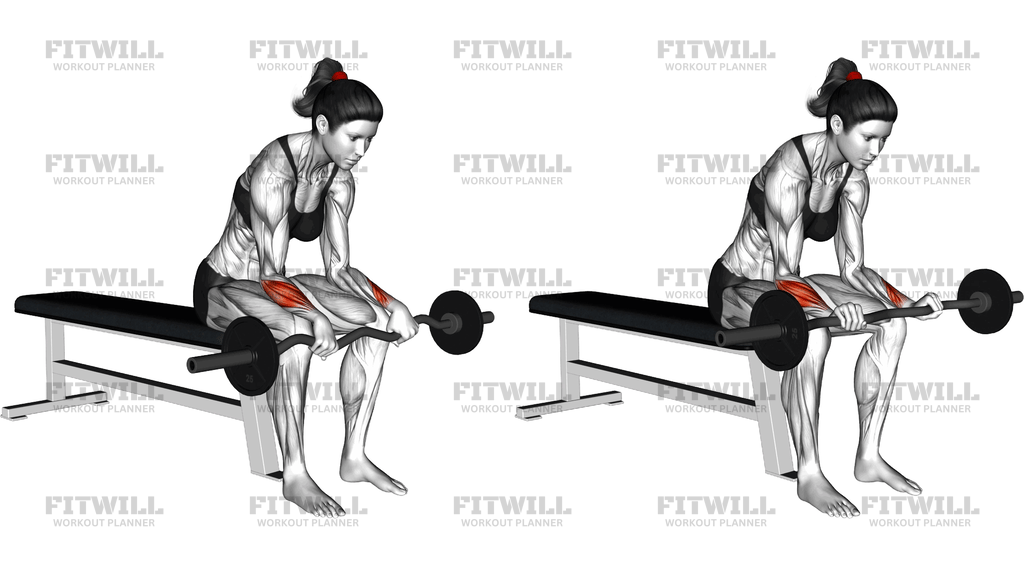
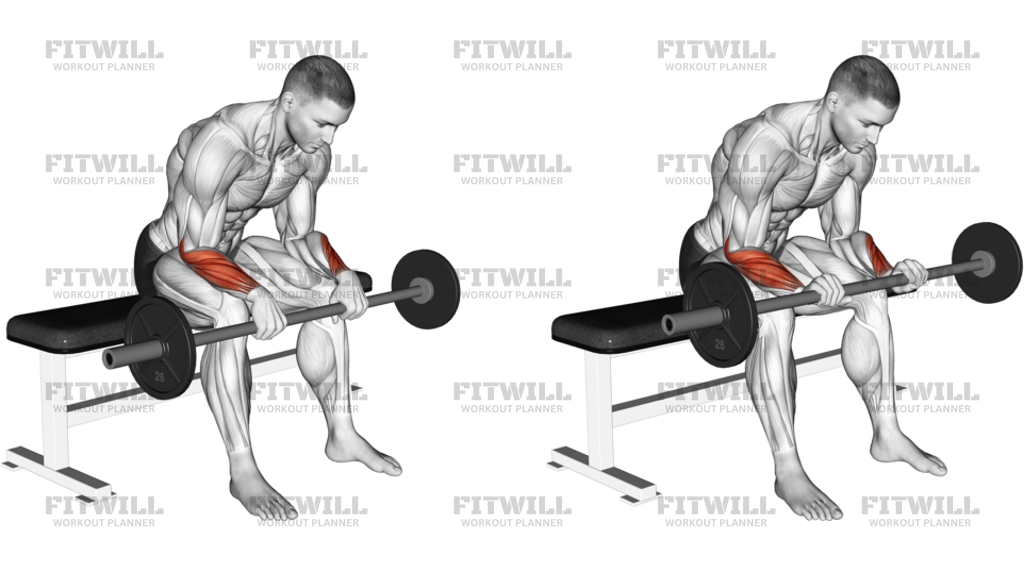
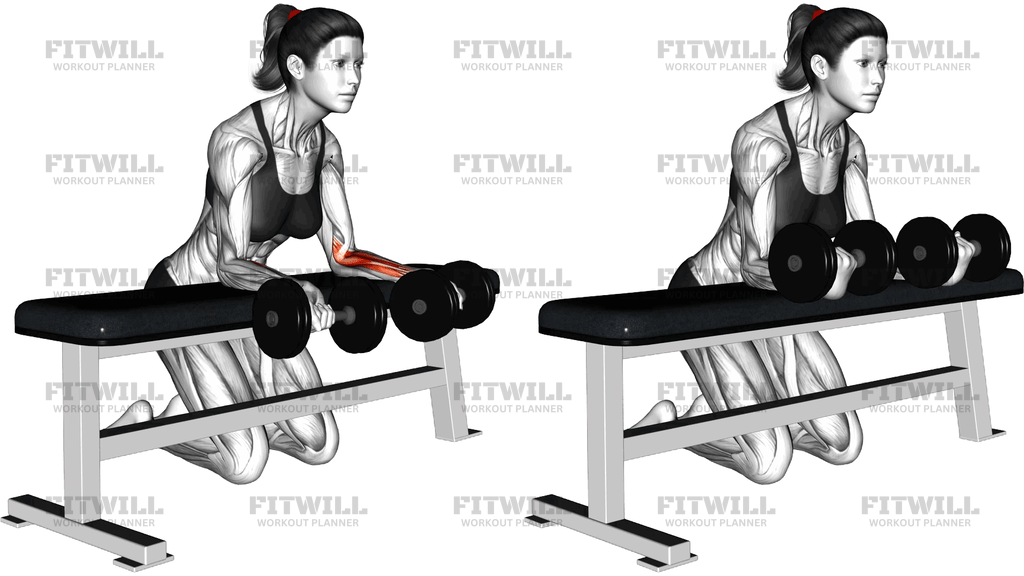
Isometric Wrist Extension
The Isometric Wrist Extension is a self-resisted wrist exercise performed with one forearm supported on a flat bench. You rest your working forearm on the bench with the palm facing down, place the opposite hand on the back of your working hand, and then try to extend the wrist upward against your own resistance without letting the joint actually move. Because nothing moves, the wrist extensor muscles on the top of the forearm work hard at a fixed angle, which makes this a low-stress way to build strength and endurance in an often-neglected area.
This movement is especially useful for people whose wrists take repeated stress: lifters dealing with nagging discomfort on the outside of the elbow, climbers and racquet players, office workers who type all day, and anyone rehabilitating gradually after a wrist strain once a professional has cleared them for loading. Because the resistance is applied by your own hand, you control the exact effort level moment by moment, which is far safer than adding external weight when the wrist is sensitive.
The muscles doing the work are the wrist extensors — the extensor carpi radialis, extensor carpi ulnaris, and the finger extensors that run along the top of the forearm from just below the outer elbow to the wrist. The brachioradialis and the small stabilizing muscles around the wrist joint also contribute to holding the position. Because the contraction is held statically, the emphasis is on sustained tension rather than movement through a range.
Setup matters more than it looks. Your forearm should rest fully on the bench with the wrist just past the edge or flat on the pad, the elbow bent to roughly 90 degrees, and your torso leaned over the arm so your shoulder stays relaxed. If the forearm is angled or the shoulder is shrugged, tension leaks into the elbow and neck instead of staying in the forearm. A stable, neutral wrist starting position ensures the effort goes exactly where you want it.
To execute it well, exhale, then drive the back of your working hand upward into the resisting palm with a moderate effort — around 50 to 70 percent of your max — and hold for the prescribed time without letting the wrist lift, drop, or rotate. The resisting hand should match the pushing hand so the angle never changes. Breathe steadily through the hold rather than holding your breath, then release the tension completely before the next rep.
Use the Isometric Wrist Extension as a warm-up before pressing or gripping work, as a stand-alone forearm strengthening block, or as a pain-tolerant introduction to wrist loading. Common practice is holds of 10 to 30 seconds for 3 to 5 reps per side, adjusting effort rather than weight. If you feel sharp pain at the elbow or wrist, reduce the force; if it persists, stop and get the area assessed before continuing.
[ Workout Log & Planner ]
Put your next workout in Fitwill
Keep your plan and training log ready when you are.


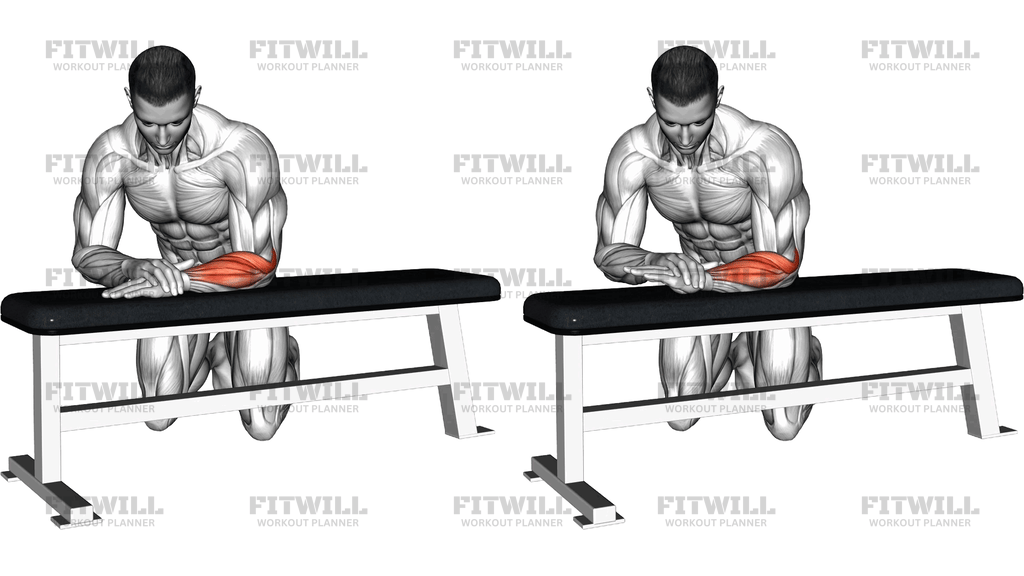
Instructions
- Kneel on the floor beside a flat bench and lean forward so one forearm rests along the bench pad, elbow bent and upper arm supported.
- Place the working hand palm-down with the wrist in a neutral line with the forearm, and lay the opposite hand flat on the back of that hand.
- Brace your torso over the supporting arm and let the working shoulder drop away from your ear so the forearm, not the neck, is doing the work.
- Exhale and push the back of the working hand upward toward the ceiling, pressing against the resistance of the top hand.
- Match the resistance with the top hand so the wrist holds its starting angle and does not extend, flex, or rotate.
- Hold the maximum effort you can sustain cleanly — typically 50 to 70 percent of your strength — for 10 to 30 seconds while breathing steadily.
- Release the push gradually rather than letting the hands spring apart, letting the wrist extensors relax fully.
- Rest briefly, reset the hand position if it has drifted, and repeat for the desired number of holds.
- Switch sides, placing the opposite forearm on the bench, and complete the same number of holds.
Tips & Tricks
- The most common mistake is letting the wrist actually extend despite the blocking hand — the whole point is that nothing moves, so match the pushing and resisting forces exactly.
- Pressing too hard too soon usually shows up as outer-elbow discomfort; start around half effort and build the intensity over sessions.
- Keep the knuckles and fingers of the working hand relaxed. Tensing the whole hand turns this into a grip effort and dilutes the work on the wrist extensors.
- If your breathing stops during the hold, the effort is likely too high or the hold too long — shorten the duration and exhale steadily instead of bearing down.
- Shift the forearm slightly forward or back on the bench to find the angle where the top of the forearm feels loaded without any pinching at the wrist crease.
- Do not let the elbow slide off the pad mid-hold; a drifting elbow changes the joint angle and turns a clean isometric into an uncontrolled press.
- For a rounded program, hold one wrist angle for a couple of weeks, then repeat the exercise with the wrist slightly flexed or slightly extended to train a new point in the range.
- Warm the forearms up first with a minute of easy wrist circles or light flexor and extensor stretches before applying resistance.
Frequently Asked Questions
What muscles does the Isometric Wrist Extension work?
It primarily targets the wrist extensors on the top of the forearm, including the extensor carpi radialis and extensor carpi ulnaris, with support from the finger extensors and the small stabilizing muscles around the wrist joint.
How long should I hold each isometric in the Isometric Wrist Extension?
Start with 10 to 15 second holds at a moderate effort for 3 to 5 reps per side. As your forearms adapt, progress to 20 to 30 second holds or increase the pushing force.
Is the Isometric Wrist Extension suitable for beginners?
Yes. Because you apply the resistance with your own hand, you can start with very light effort, which makes it one of the safest ways to begin training the wrist extensors.
Why is my forearm supported on a bench during this exercise?
Resting the forearm on the flat bench removes the need to stabilize the elbow and shoulder, so the effort stays isolated in the wrist extensors and the wrist angle stays consistent throughout the hold.
Can I do the Isometric Wrist Extension without a bench?
Yes, any padded surface at roughly knee-to-thigh height works — a chair with a cushion or the edge of a sofa. The key requirement is that the forearm rests fully and stays still during the hold.
How hard should I push with the top hand?
Use a moderate force, around 50 to 70 percent of your maximum, that you can hold for the full duration without the wrist angle changing. If the wrist starts to lift or drop, you are pushing beyond what the blocking hand can match.
Why does my outer elbow hurt during the Isometric Wrist Extension?
The wrist extensors originate just above the outer elbow, so effort there is expected as mild muscular work, but sharp or lingering pain is a signal to reduce the force or stop and have the area assessed.
Should I hold my breath during the hold?
No. Breathe steadily and exhale as you initiate the push. Breath-holding raises tension through the neck and shoulders and makes longer holds uncomfortable.
How is the Isometric Wrist Extension different from a dumbbell wrist extension?
A dumbbell wrist extension moves the joint through a range under constant load, while the isometric version holds a fixed angle with self-applied resistance. The isometric is easier to grade and gentler on a sensitive wrist, while the dumbbell version builds strength through the full range.
How often can I train the Isometric Wrist Extension?
Because the load is self-regulated and there is no eccentric component, most people can perform it 3 to 5 times per week, as long as the forearms are not sore between sessions.