Resistance Band Isometric Thumb Extension
Resistance Band Isometric Thumb Extension is a small, targeted forearm exercise that trains the muscles responsible for extending the thumb — moving it away from the palm and index finger — against band tension. Instead of moving through a full range, you loop a light resistance band around both thumbs, create tension by separating your hands, and then hold the thumb extended against that pull for a set amount of time. The result is a simple but surprisingly demanding hold that you feel directly along the back of the hand, base of the thumb, and top of the forearm.
This movement earns its place in a routine for a few reasons. The thumb does a huge amount of work in daily life and training — gripping dumbbells, holding a barbell, typing, texting, opening jars — yet the thumb extensors are rarely trained directly. Climbers, golfers, tennis players, pitchers, and anyone recovering from a sore or overworked thumb-side forearm often benefit from dedicated isometric work here, because isometrics let you load the tissue in a fixed, comfortable position without repeated joint movement.
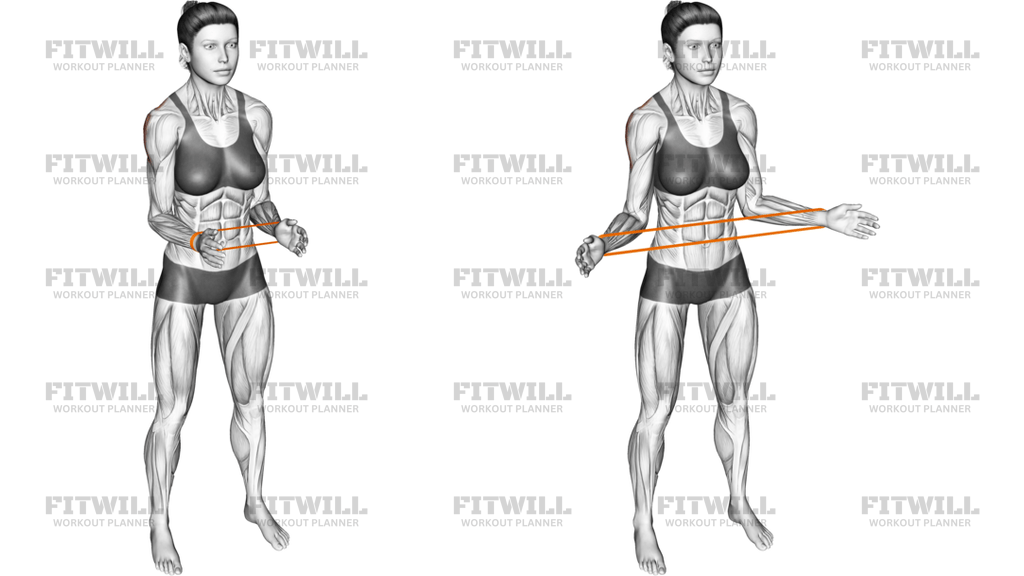
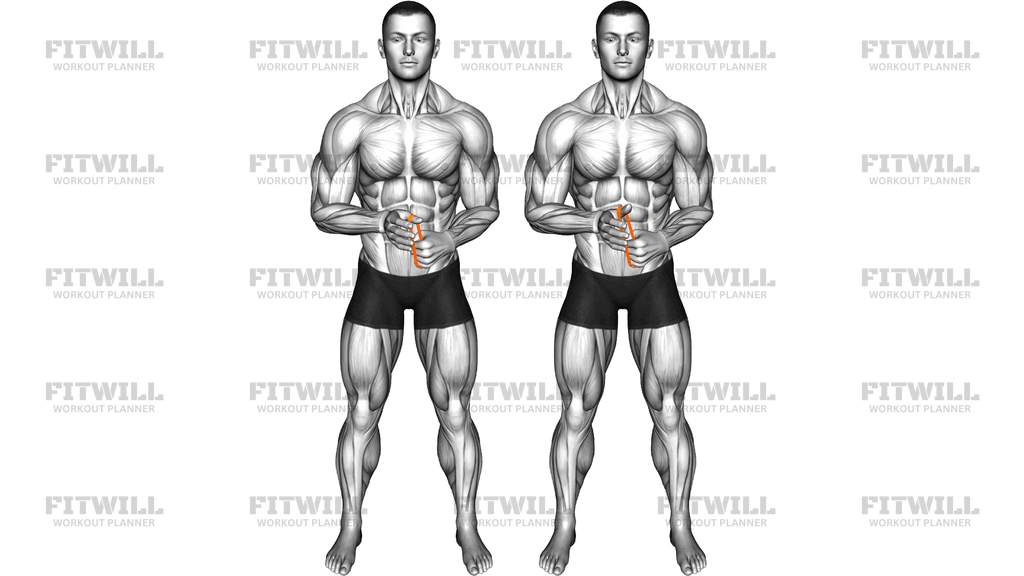
Setup matters more than it looks. The band needs to be anchored securely around both thumbs with your hands held together in front of your torso, around waist to lower-chest height. Keep your elbows bent and tucked near your sides, and let one hand simply hold the slack while the working thumb pushes out against the band. If the band is looped loosely or your hands drift apart, tension leaks away and the hold becomes meaningless. If the band is too strong, you'll cheat by bending the wrist or rolling the whole hand instead of extending the thumb.
To execute it well, stand tall with a relaxed but upright posture, bring both hands together at your midsection, and hook the band around both thumbs. Spread your hands a few inches to set the tension, then extend the working thumb outward and upward away from your hand and hold that position without letting the wrist collapse or the fingers curl in. Breathe steadily through the hold, keep your shoulders down, and release the tension slowly rather than letting the band snap your thumb back.
You'll most often see this exercise used as a warm-up before gripping-heavy sessions, as a finishing hold after wrist and forearm work, or as part of a rehab-style progression for thumb and wrist discomfort — always within a pain-free range and ideally alongside guidance from a qualified professional if you're managing an injury. Because the load is light and the position is small, it's easy to program: short holds of 10 to 30 seconds, repeated for a few sets on each hand.
The main safety point is simple: this is a small joint doing a small job, so respect that. Use a light band, keep the tension moderate, and stop if you feel sharp pain at the base of the thumb or on the thumb side of the wrist. The goal is a steady muscular hold, not a maximal struggle.
[ Workout Log & Planner ]
Put your next workout in Fitwill
Keep your plan and training log ready when you are.


Instructions
- Stand upright with your feet roughly hip-width apart and your shoulders relaxed, holding a small loop resistance band in both hands in front of your waist.
- Slip the band around both thumbs so it sits snugly at the base of the working thumb, then bring your hands together so the band hangs with light tension between them.
- Bend both elbows and keep them tucked close to your sides, holding your hands at waist to lower-chest height with your wrists in a neutral, straight line.
- Spread your hands a few inches apart to take up the slack and establish a moderate, steady tension in the band before the hold begins.
- Extend the working thumb outward and slightly upward, pushing it away from your palm and index finger against the band's pull, and keep the rest of that hand relaxed.
- Hold the extended position for your target time — typically 10 to 30 seconds — keeping the wrist straight and avoiding any rolling or bending of the hand to cheat the hold.
- Breathe normally throughout the hold; inhale and exhale steadily rather than holding your breath or bracing hard through the neck and shoulders.
- Release the thumb extension slowly and let the band tension ease off in a controlled way instead of snapping back.
- Reset the band position on the thumb, re-establish tension, and repeat for the desired number of holds before switching to the other hand.
Tips & Tricks
- Choose a very light band — the thumb extensors are small muscles, and a band that's too strong will make you bend the wrist or drag the whole hand back instead of extending the thumb.
- Check that the band sits at the base of the thumb, not across the knuckle or the fingertips; a loop that slips changes the angle of pull and reduces the work at the thumb itself.
- If your wrist starts bowing or your hand rotates inward during the hold, reduce the tension and reset — the hold should feel like it lives in the thumb and top of the forearm, not the wrist joint.
- Keep the non-working hand passive; its only job is to anchor the other end of the band, and actively squeezing it steals attention from the side you're training.
- Avoid shrugging or hunching over your hands — the shoulders and neck should stay relaxed, since tension there is a sign you're straining instead of holding.
- Time your holds rather than guessing; with isometrics, going 5 seconds too long on a fatigued thumb is often what turns a useful hold into an achy one.
- A mild burning along the back of the forearm near the thumb is normal; sharp pain at the base of the thumb or thumb side of the wrist is a signal to lighten the band or stop.
- Start with the hand you use less so both sides get the same quality of work, and match hold times exactly between hands.
Frequently Asked Questions
What muscles does Resistance Band Isometric Thumb Extension work?
It primarily targets the thumb extensors on the back of the forearm, with supporting work from the wrist stabilizers and grip muscles that hold the hand steady during the isometric hold.
Why is the thumb extension held isometrically instead of moved through repetitions?
Isometric holds let you load the small thumb extensors at a fixed joint angle with minimal joint movement, which is useful for building holding strength and tolerance in a tendon-rich area without repetitive motion.
How long should I hold each repetition of Resistance Band Isometric Thumb Extension?
Start with 10 to 15 second holds for 2 to 3 sets per hand, and build toward 20 to 30 seconds as the hold feels easy. Quality of the extended position matters more than the total time.
What band strength should a beginner use for Resistance Band Isometric Thumb Extension?
Begin with the lightest loop band available. The thumb extensors are small muscles, and most beginners get plenty of challenge from a thin band at moderate tension.
Why do I feel Resistance Band Isometric Thumb Extension in my wrist instead of my thumb?
That usually means the band tension is too high, causing you to bend or roll the wrist to generate force. Reduce the tension, re-center the loop at the base of the thumb, and keep the wrist in a straight, neutral line.
Can I do Resistance Band Isometric Thumb Extension with both thumbs at the same time?
Yes — the band is looped around both thumbs, so you can extend and hold with both simultaneously, or anchor one side passively and work one thumb at a time for better focus.
Where should my hands be positioned during the exercise?
Keep both hands together in front of your waist to lower chest, elbows bent and near your sides. Spreading the hands a few inches sets the tension, and they should stay in that compact position for the whole hold.
Is Resistance Band Isometric Thumb Extension safe if I have thumb or wrist pain?
Isometrics are often well tolerated, but if you have an existing injury or ongoing pain, check with a healthcare or rehabilitation professional first, and only work within a completely pain-free range.
What can I substitute for Resistance Band Isometric Thumb Extension if I don't have a band?
You can press your extended thumb against the edge of a sturdy table, your opposite palm, or another immovable object and hold the same isometric extension, though a band makes it easier to fine-tune the tension.