Alternate Punching
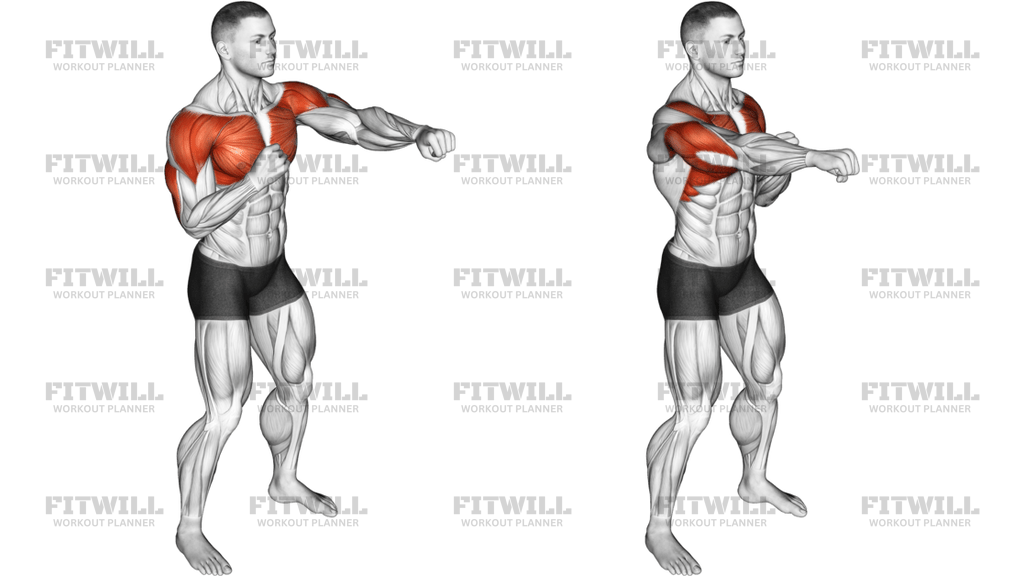
Alternate Punching is a standing boxing-style drill built around alternating straight punches from a guarded stance. It trains the chest, front shoulders, triceps, and the trunk muscles that keep the torso from twisting or drifting as each arm reaches forward. The movement is simple, but the setup matters: the feet, hip position, and hand position determine whether the punch feels crisp and controlled or loose and rushed.
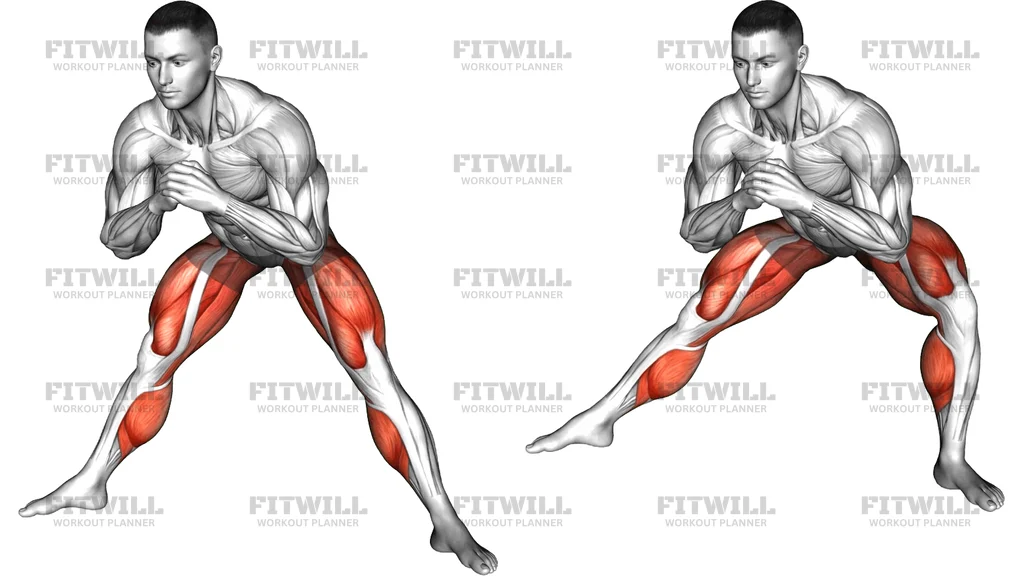
In the image, the lifter stands in a split stance with one hand held near the face and the other punching straight out in front. That guard position is the main clue for the exercise. You are not throwing wild hooks or swinging the shoulders; each rep is a direct, forward strike that starts from the guard, reaches full extension, and then returns before the opposite arm takes over. The chest and shoulders contribute most of the visible work, while the core and hips keep the body stacked.
Because this is a bodyweight skill drill, the goal is quality of line rather than load. The punch should travel on a straight path from the shoulder toward an imaginary target in front of the sternum or chin line, with the wrist staying aligned and the elbow finishing softly extended rather than snapped hard into lockout. Keep the ribs down and the head tall so the punch comes from the upper body and trunk together, not from leaning the whole body forward.
Alternate Punching is useful as a warmup, conditioning drill, coordination exercise, or light accessory movement when you want upper-body endurance without heavy equipment. It also works well when teaching punch mechanics, bracing under arm movement, or keeping the shoulders active between more demanding presses. The exercise should feel rhythmic and repeatable, with one arm working while the other returns to guard.
If the shoulders start rising, the torso starts swinging, or the punches become shorter and sloppier, the set is too fast or too fatiguing. Slow the cadence, shorten the set, and keep every rep identical. Done well, Alternate Punching reinforces sharp shoulder extension, stable posture, and controlled breathing while giving the chest and arms a clear but manageable training stimulus.
[ Workout Log & Planner ]
Put your next workout in Fitwill
Keep your plan and training log ready when you are.


Instructions
- Stand in a split stance with one foot slightly in front of the other and keep your knees soft.
- Raise both hands into a boxing guard, with one fist near your cheek and the other hand ready to punch.
- Stack your ribs over your hips and keep your chin tucked slightly so your head stays centered.
- Punch one arm straight forward on a level line from the shoulder, turning the fist so the knuckles face forward at the end.
- Let the shoulder reach naturally without shrugging, and keep the punching elbow from flaring out to the side.
- Snap the punching hand back to guard under control before starting the opposite arm.
- Alternate arms at a steady pace while keeping the torso quiet and the weight balanced between both feet.
- Breathe out on each punch and inhale as the hand returns to guard.
- Finish the set with both hands back in guard and reset your stance before lowering your arms.
Tips & Tricks
- Keep the front shoulder packed down; if it creeps toward the ear, the punch is turning into a shrug.
- Punch straight from the guard instead of crossing the arm across your center line.
- Use a light boxing rhythm rather than racing the hands, especially if the goal is shoulder endurance.
- Keep the rear heel light but planted enough that you do not spin or over-rotate the hips.
- Return each hand to the same guard height so the second punch starts from an identical position.
- Tighten the fist at the end of each punch, but avoid locking the elbow hard against the joint.
- If your low back arches, shorten the reach and keep the ribs stacked over the pelvis.
- Stop the set when the punches start drifting upward, because that usually means the shoulders are fatiguing.
Frequently Asked Questions
What does Alternate Punching work most?
It primarily hits the chest, front shoulders, and triceps, with the core working to keep the torso stable.
Do I need equipment for Alternate Punching?
No. The exercise in the image is a bodyweight boxing-style drill performed from a standing guard.
Should the punch travel straight ahead or across the body?
It should travel straight ahead from the shoulder. Crossing the midline usually turns the drill into a twisting swing instead of a clean punch.
How far should I extend my arm at the end of each punch?
Reach to a strong, comfortable extension with the wrist aligned, then bring the hand right back to guard without snapping the elbow.
Can I rotate my hips while punching?
A small amount of rotation is fine, but the torso should stay controlled. If the hips spin hard, the drill becomes too momentum-driven.
Is Alternate Punching good for beginners?
Yes. It is a simple drill for learning guard position, straight-arm control, and breathing as long as the pace stays controlled.
What is the biggest form mistake with this exercise?
Shrugging the shoulders and letting the body sway from side to side are the most common breakdowns.
How can I make Alternate Punching harder?
Increase the duration of the set, tighten the rhythm, or add light hand resistance while keeping the punches straight and the guard stable.