Cable Decline Fly
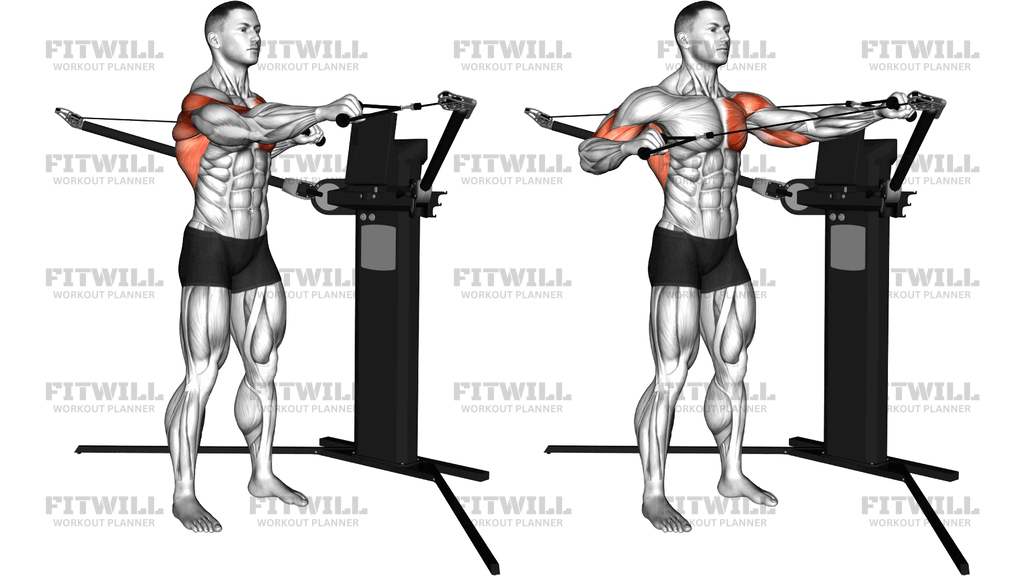
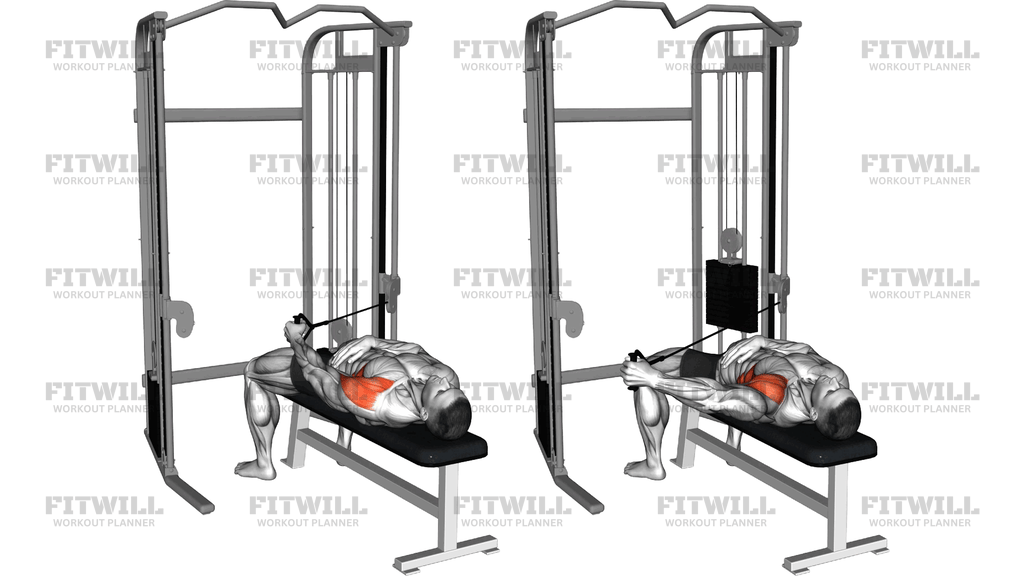
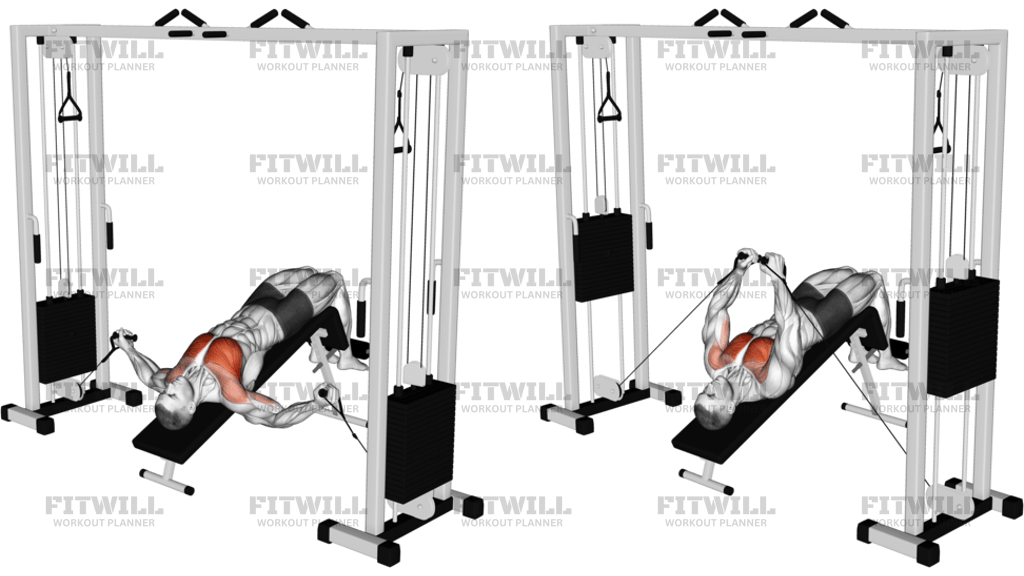
The Cable Decline Fly is a chest fly performed on a decline bench with cable resistance. The decline angle changes the arm path and can bias the lower portion of the chest while the front shoulders and biceps help control the handles.
Because flyes place the chest under stretch, the best reps are smooth and moderate, not heavy and jerky. The elbows stay softly bent, the handles travel in a wide arc, and the shoulders should remain set rather than rolling far back.
Set the decline bench between the pulleys, lie back, and start with the arms open in a controlled stretch. Bring the handles together above the lower chest, squeeze the chest, then open back up under control. Keep the cable line smooth and stop before the shoulders feel strained.
Use Cable Decline Fly for lower-chest biased accessory work, chest finishing sets, or controlled cable fly training. If the bottom stretch feels too deep or the shoulders complain, reduce the range or adjust the bench and pulley height.
[ Workout Log & Planner ]
Put your next workout in Fitwill
Keep your plan and training log ready when you are.


Instructions
- Set a decline bench between the cable pulleys and attach handles to both sides.
- Lie back on the bench and plant your feet securely.
- Brace your torso and set your shoulder blades against the bench.
- Start with your arms open and elbows softly bent.
- Open only as far as you can keep the shoulders controlled.
- Bring the handles together in a smooth arc above the lower chest line.
- Squeeze the chest briefly at the closed position.
- Open the arms under control and repeat.
Tips & Tricks
- Keep the elbow bend constant so the movement stays a fly.
- Use a lighter load than pressing because the chest is working from a stretched position.
- Do not let the shoulders drift too far back at the bottom.
- Squeeze the chest as the handles come together, not the shoulders.
- Move slowly through the stretch to keep the cable path smooth.
- Adjust the bench position if the decline angle feels too aggressive.
- Keep the wrists neutral so the handles do not fold the hands backward.
- Stop the set if the front shoulder takes over from the chest.
Frequently Asked Questions
What muscles does the Cable Decline Fly work?
It mainly works the chest, with help from the front shoulders and biceps for control.
Is Cable Decline Fly for the lower chest?
The decline angle can bias the lower chest, though the whole pectoralis major still works.
Should I use heavy weight?
No. Fly movements are best done with controlled, moderate resistance.
What does the decline angle change?
It changes the arm path and can bias the lower portion of the chest.
How deep should the stretch be?
Only as deep as you can keep the shoulders comfortable and controlled.
Should the handles touch?
They can, but the squeeze matters more than forcing contact.
Can beginners do Cable Decline Fly?
Yes, but they should start light and keep the range modest.
What is the biggest mistake?
Using too much load and turning the fly into a shoulder-dominant stretch.