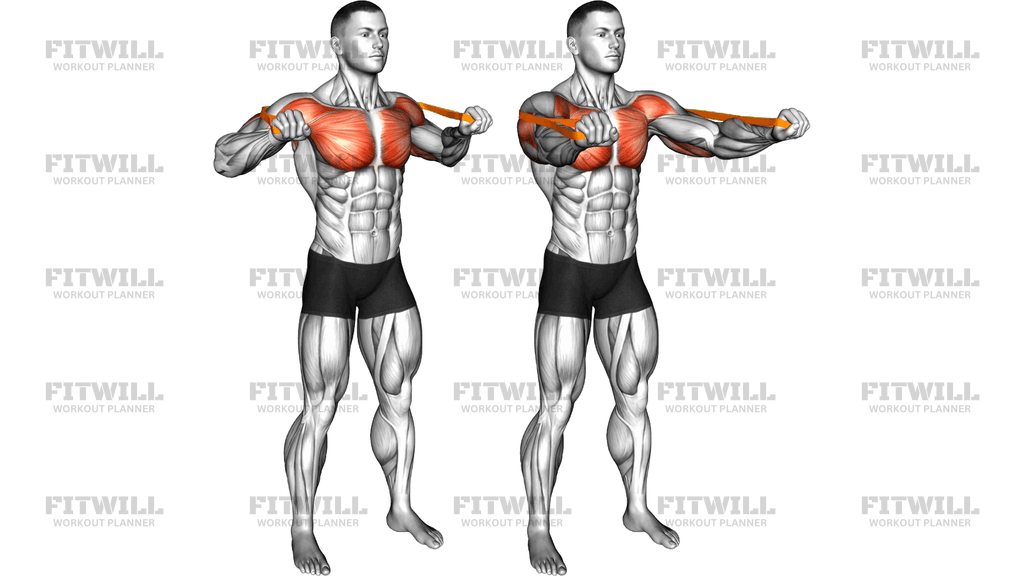
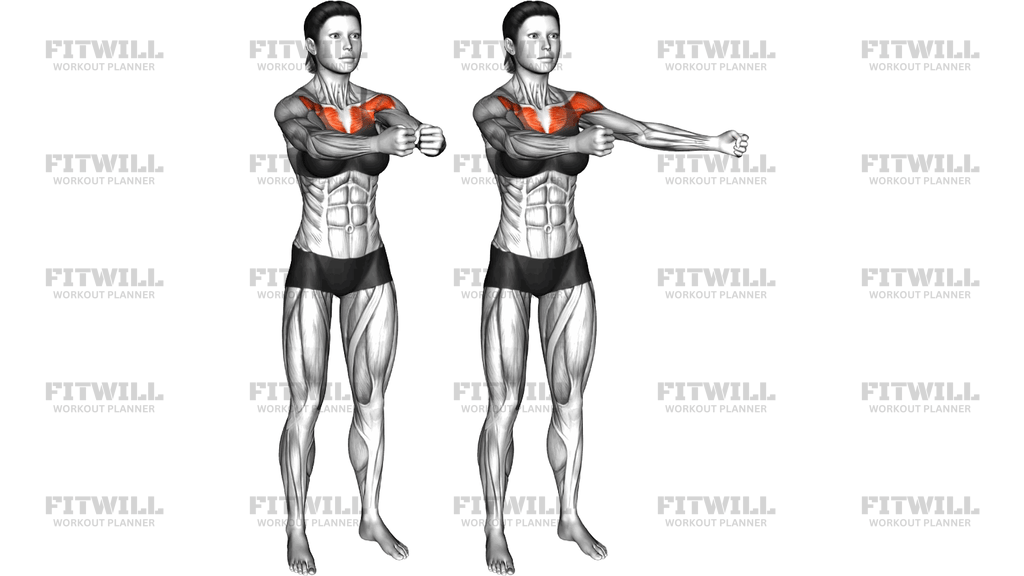
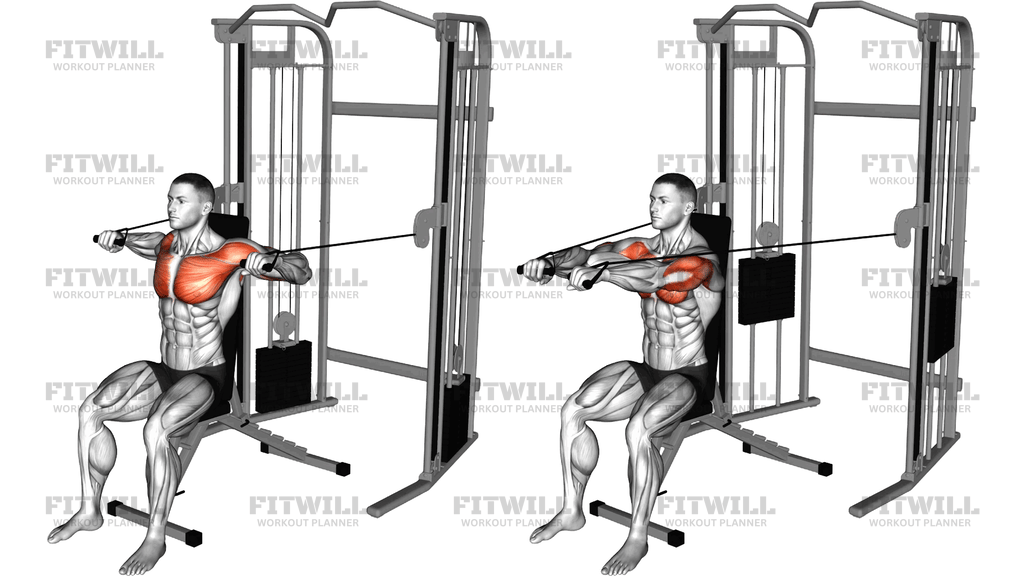
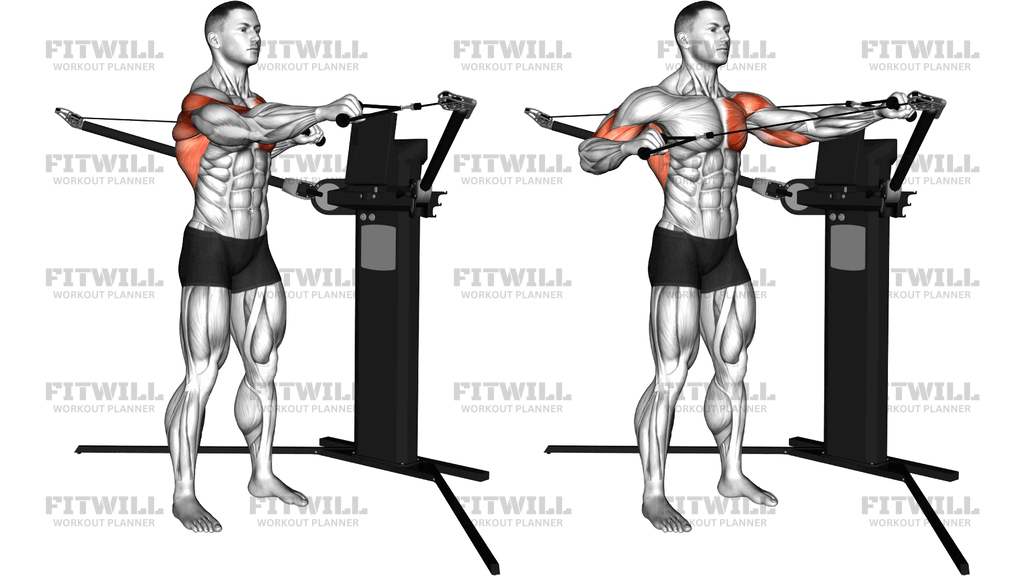
Cable One-Arm Fly On Exercise Ball
Cable One-Arm Fly On Exercise Ball is a single-arm chest isolation exercise performed while lying back on a stability ball and working a cable handle through a wide arcing path. The ball adds an unstable base, so the movement asks your chest to produce force while your torso, hips, and legs keep you centered. That combination makes the exercise useful when you want pec work with a stronger balance and positioning challenge than a standard bench fly.
The main driver is the Pectoralis major, with the Anterior deltoid, triceps brachii, and Rectus abdominis helping steady the shoulder and trunk. The cable keeps tension on the chest through the whole repetition, and the one-arm setup makes side-to-side control more obvious. If one side tends to dominate, this variation can expose that quickly because the body cannot hide behind a two-hand press pattern.
The exercise depends on the quality of the setup. Your upper back and head should be supported by the ball, your working shoulder should have room to open without dumping forward, and your feet should be planted wide enough to keep the ball from rolling. The cable should line up so the handle can travel in a smooth arc across the chest rather than pulling you off the ball. A good setup lets you feel a chest stretch in the open position without shrugging, twisting, or overextending the lower back.
During each rep, let the arm travel in a controlled arc with a soft bend in the elbow, then finish by bringing the hand in toward the midline of the chest without turning it into a press. Keep the rib cage from flaring as the handle moves, and keep the shoulder blade controlled instead of jamming it forward at the end range. The return should be just as deliberate as the squeeze, because the lengthened phase is where the chest often gets the most useful tension.
Cable One-Arm Fly On Exercise Ball fits well in accessory work, chest-focused sessions, or upper-body training blocks where you want isolated pec tension plus anti-rotation demand. It is also useful for lifters who want to train around heavier pressing volume or build more control before moving to a less stable fly variation. Use light to moderate resistance, because the goal is a clean arc, stable torso, and repeatable chest contraction rather than maximum load.
If the ball starts shifting, the cable stack is probably too heavy or your feet are too narrow. If your shoulder feels pinched, reduce the range and stop lowering once the upper arm lines up with the torso. When the movement is done well, the chest does the work, the shoulder stays organized, and the ball feels like a controlled support instead of a moving distraction.
[ Workout Log & Planner ]
Put your next workout in Fitwill
Keep your plan and training log ready when you are.


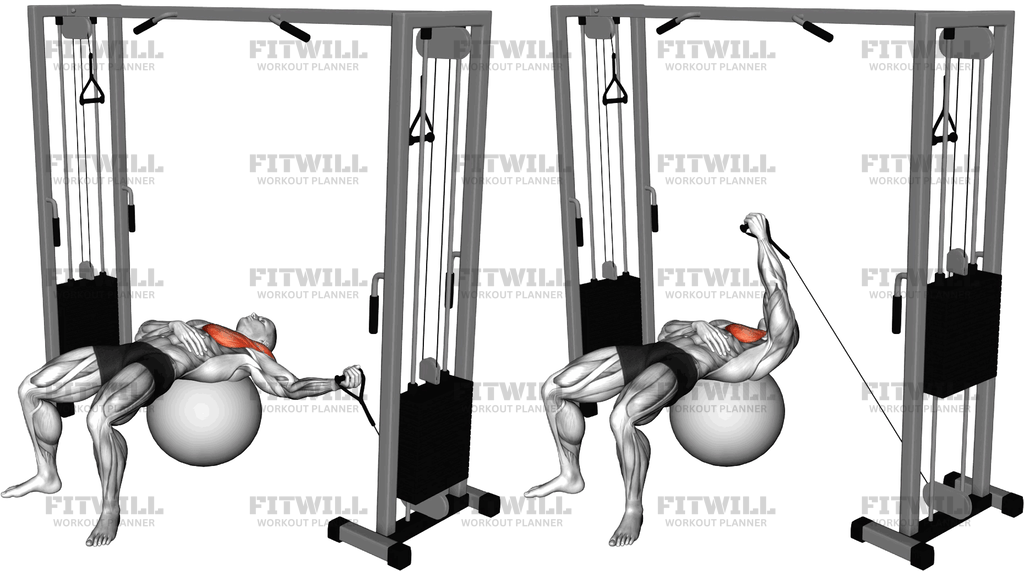
Instructions
- Sit on the floor beside the cable stack, hold the handle in the working hand, and lie back so your upper back and head are supported on the exercise ball.
- Place both feet flat and a little wider than hip-width, then shift until the ball feels centered under your shoulder blades.
- Start with the working arm opened out to the side with a soft bend in the elbow and the cable under light tension.
- Set your ribs down, brace lightly, and keep the non-working side relaxed so the ball stays still.
- Sweep the handle in a wide arc up and across your chest until the hand finishes over the midline of your torso.
- Stop the squeeze without shrugging the shoulder or letting the elbow lock out.
- Lower the handle back along the same arc until you feel a controlled chest stretch, keeping the torso from twisting off the ball.
- Exhale as you bring the hand across and inhale as you return to the open position.
- Reset the ball and your feet between sides before starting the next set.
Tips & Tricks
- Use a lighter stack than you would for a bench fly; the exercise ball makes the one-arm cable path much less forgiving.
- Keep your feet wide enough that the ball does not roll when the handle reaches the stretched position.
- A small elbow bend should stay nearly fixed; turning the movement into a press changes the stress away from the pecs.
- If your ribs flare as the hand crosses your chest, shorten the range and keep the sternum stacked over the ball.
- Let the shoulder blade move naturally, but do not jam the shoulder forward at the top to chase extra range.
- The best tension usually comes from a slow return, not from forcing the handle higher on the squeeze.
- Match both sides carefully; the weaker side should set the load for the session, not the stronger side.
- If the cable pulls you sideways, move the ball slightly farther from the stack until the line of pull feels cleaner.
- Keep your neck long and your chin quiet so the upper chest can work without turning the rep into a shrug.
- Stop the set when the ball starts drifting or your torso starts rotating toward the cable.
Frequently Asked Questions
What does Cable One-Arm Fly On Exercise Ball train most?
It mainly trains the chest, especially the Pectoralis major, while the shoulders, triceps, and core help stabilize the body on the ball.
Why do it on an exercise ball instead of a bench?
The ball adds instability and a longer torso bridge, so you have to control rotation and rib flare while the chest works through the fly.
Where should the cable handle start?
Start with the arm opened out to the side under light tension so the chest is stretched, but the shoulder still feels organized and not yanked back.
How far should I bring the handle across my chest?
Bring it only to the point where you can keep your ribs down and your shoulder from rolling forward. For most people that is over the midline of the torso, not far past it.
Can beginners use Cable One-Arm Fly On Exercise Ball?
Yes, but they should start with a very light load and a stable foot position. If the ball keeps shifting, the setup is too hard for the current load.
What are the most common mistakes?
Using too much weight, twisting off the ball, and turning the fly into a press are the main problems. The rep should stay wide and controlled from start to finish.
Should I feel this in my shoulder?
You may feel the front of the shoulder helping, but the chest should do most of the work. If the shoulder takes over, reduce the range and lower the load.
How many reps work best for this exercise?
Moderate to higher reps usually work best because the ball and the single-arm cable path reward control more than heavy loading.