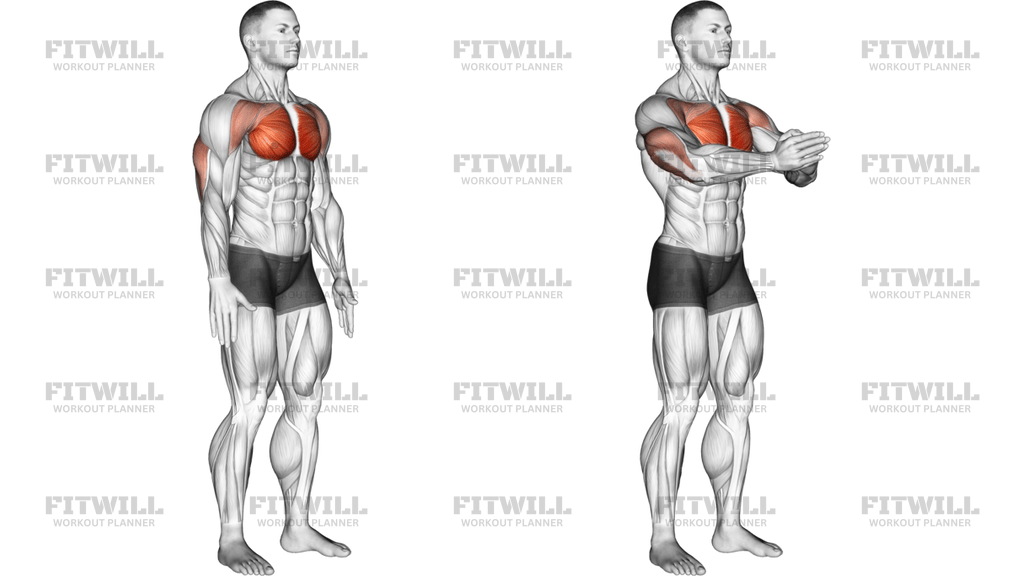
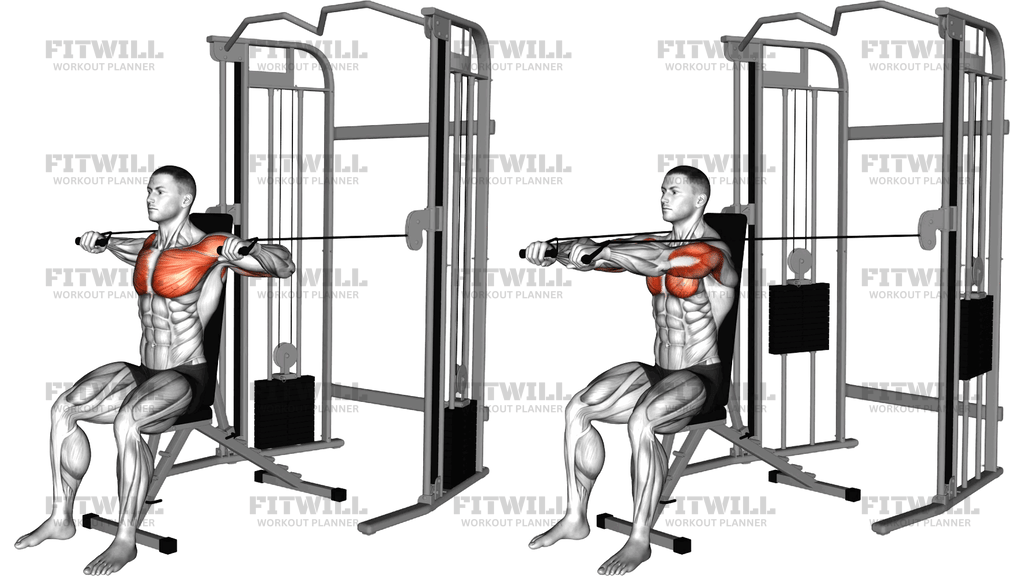
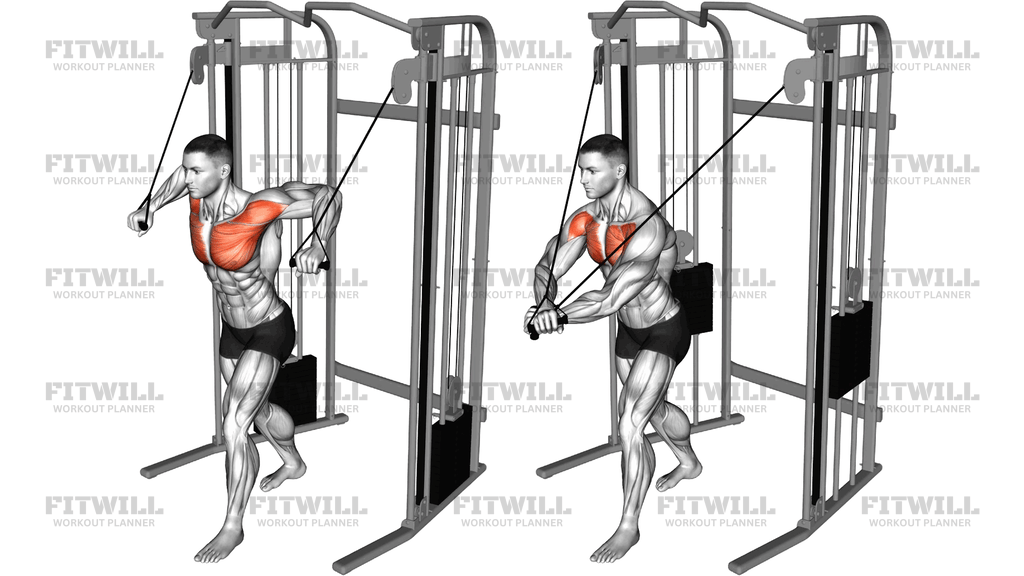
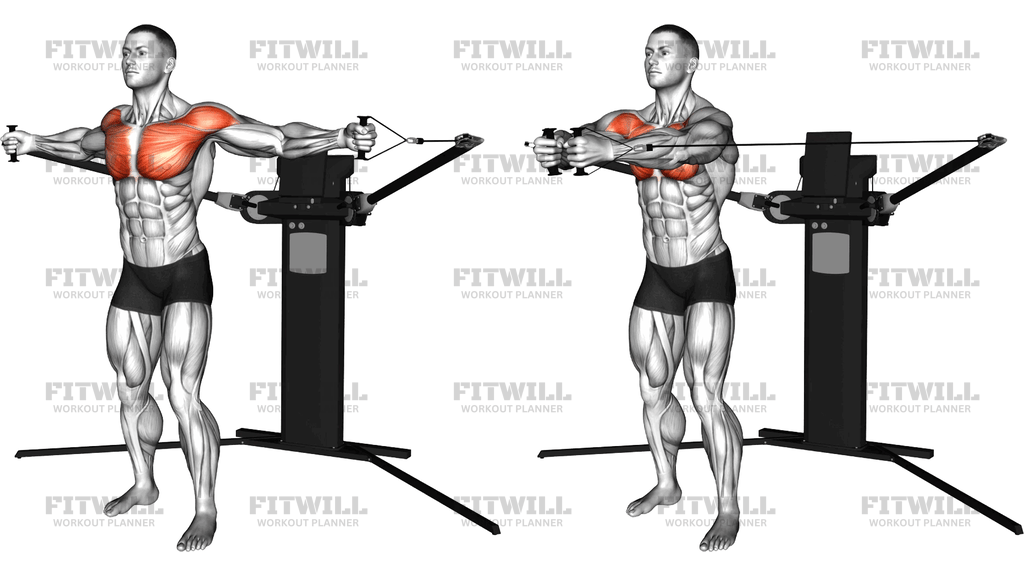
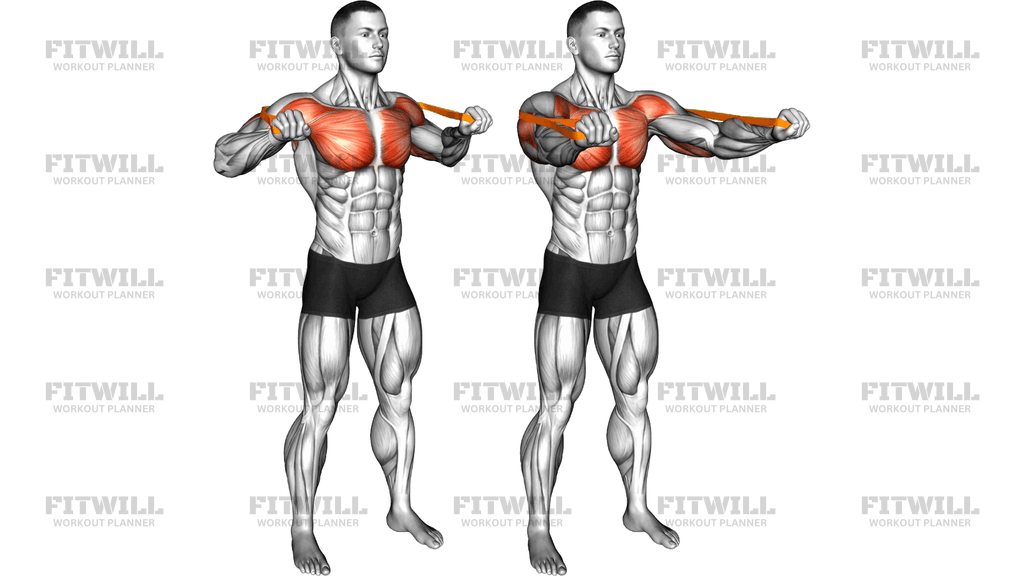
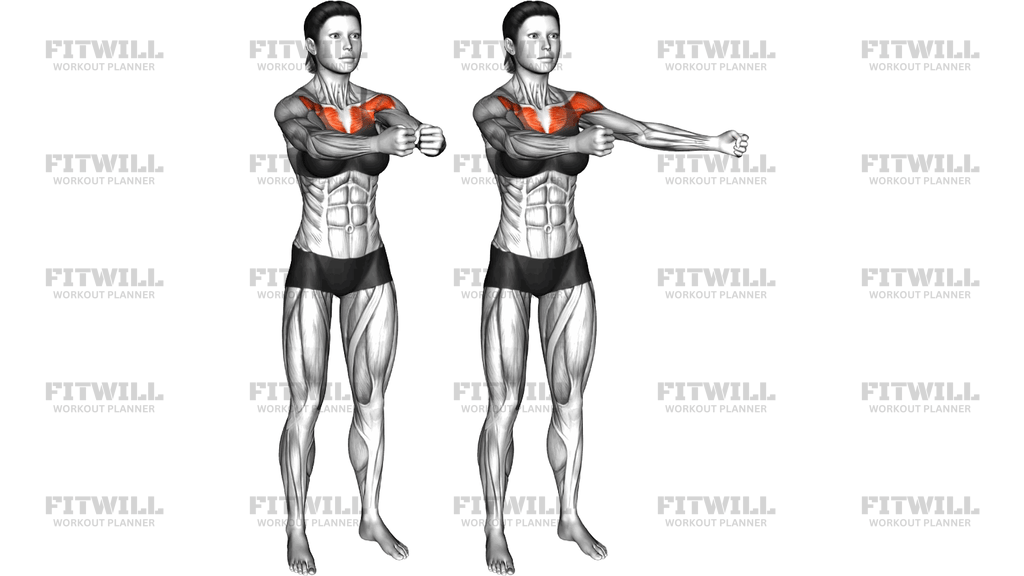
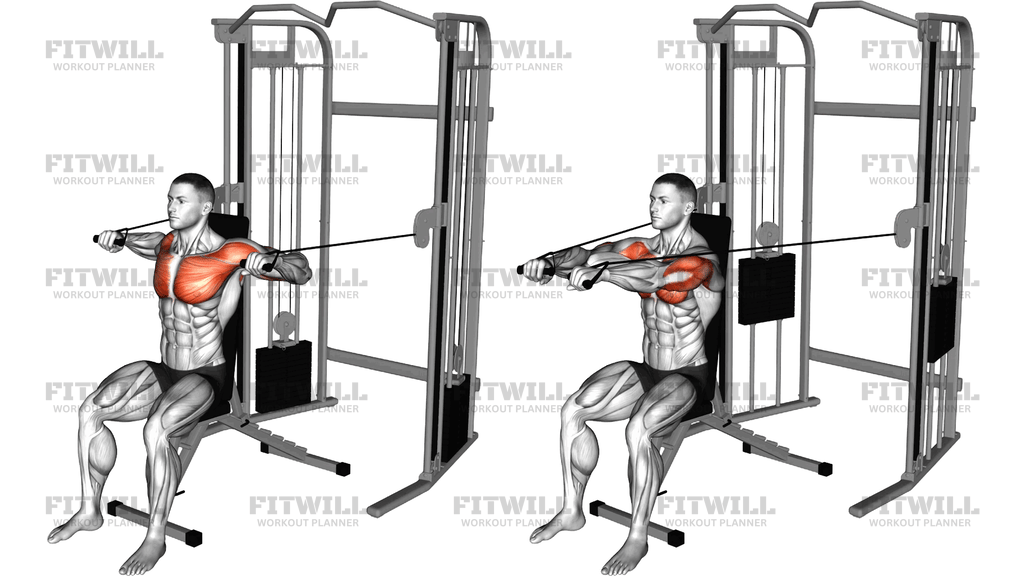
Cable Standing Chest Press
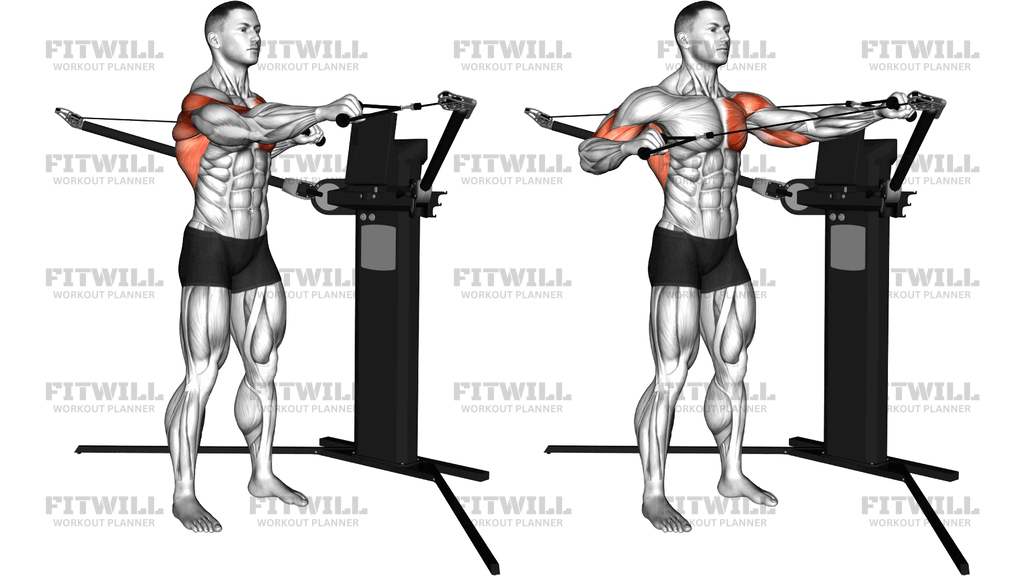
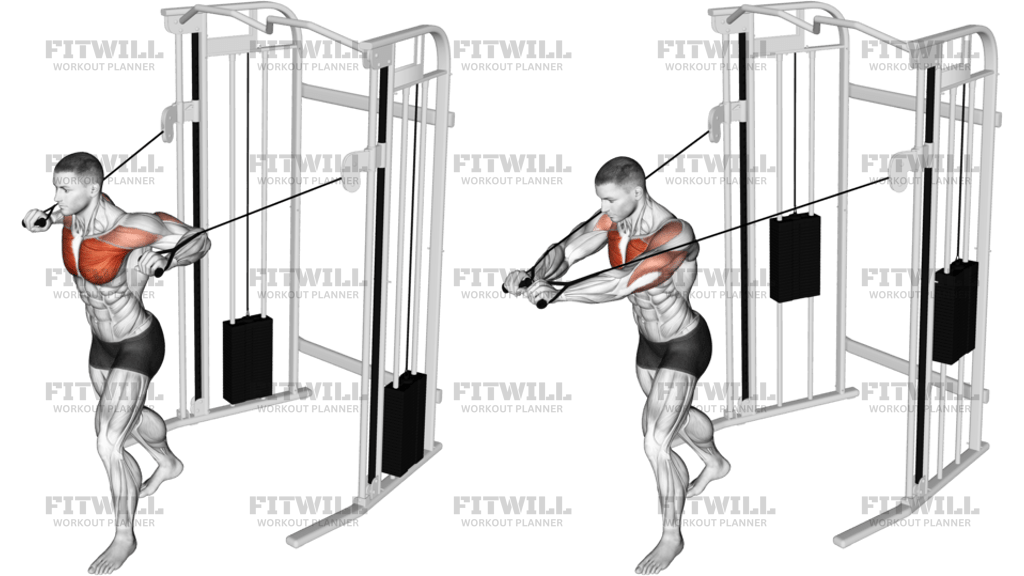
Cable Standing Chest Press is a standing pressing variation that keeps constant tension on the chest through the whole rep. With the cables set behind you and the handles starting near shoulder height, the exercise trains the pecs, front shoulders, and triceps while also asking the torso to stay organized against the cable pull. It is a useful option when you want a chest press that feels more athletic and less fixed than a bench press.
The standing position changes the demands in a useful way. Because you are not lying on a bench, your feet, glutes, abs, and upper back all help you stay stacked while you press the handles forward. A split stance, as shown here, gives you a wider base and makes it easier to resist rotation when the cables try to pull you backward. That setup matters because the best reps come from a stable torso, not from leaning, twisting, or stepping through the load.
Start with the cable handles level with the middle of your chest and your elbows slightly behind your torso, not flared straight out to the sides. From there, press the handles forward in a smooth line until your arms are nearly straight and your hands finish in front of your sternum. Keep the ribs down and avoid shrugging the shoulders toward your ears; the chest should drive the press while the shoulder blades stay controlled, not pinned hard together or dumped forward.
Cable Standing Chest Press fits well in chest-focused sessions, upper-body strength circuits, or accessory work after your main press. It is especially useful if you want a joint-friendly pressing pattern with easy load adjustments and a constant squeeze at the front of the rep. Beginners can use it safely with light resistance, but the cable tension still rewards clean mechanics and a deliberate tempo more than heavy stacking of the weight.
For the return, let the handles travel back until the elbows are once again just behind the torso and the chest stays open. Do not bounce out of the back position or let the cable drag your shoulders forward; each rep should feel smooth from the first inch to the last. If the setup starts to feel unstable, shorten the range slightly, lower the load, and keep the body still enough that the press comes from the pecs rather than from momentum.
[ Workout Log & Planner ]
Put your next workout in Fitwill
Keep your plan and training log ready when you are.


Instructions
- Set the cable pulleys around chest height and attach the handles, then stand between them with one foot slightly in front of the other.
- Grab a handle in each hand and bring them to the sides of your chest with your elbows bent and slightly behind your torso.
- Plant both feet, stack your ribs over your pelvis, and keep a small forward lean without rounding your lower back.
- Brace your midsection and set your shoulders down before each press so the handles start from a stable position.
- Press both handles forward in a smooth line until your arms are almost straight and your hands finish in front of your chest.
- Keep your wrists neutral and let the handles travel slightly inward without letting them crash together.
- Pause briefly at the front when your chest is fully shortened and your elbows are soft, not locked.
- Return the handles under control until your elbows are just behind your torso and your chest is open again.
- Exhale as you press, inhale as the handles come back, and reset your stance before the next rep if the cables pull you off balance.
Tips & Tricks
- Keep the cables aligned with mid-chest; if they are too high, the front shoulders take over, and if they are too low, the press path feels awkward.
- A split stance helps you resist the backward pull of the stack and keeps the rep from turning into a staggered lunge.
- Stop the return when your elbows are slightly behind your torso; letting the handles drift too far back often pulls the shoulders forward.
- Think about pressing the handles forward and slightly together, not just straight ahead, so the chest stays involved through the finish.
- Do not shrug at the top of the rep; keep the neck long and the shoulders away from your ears.
- Use a load that lets you keep the torso still. If your hips rock or your rear foot starts pushing you forward, the stack is too heavy.
- Soft elbows are enough here; locking out hard at the front shifts tension away from the pecs and can irritate the joints.
- A short pause at the front makes this variation more effective than bouncing through reps with momentum.
- If the handles feel uneven, slow down and check that both cables are set to the same height before continuing.
Frequently Asked Questions
What muscles does Cable Standing Chest Press work most?
It mainly trains the chest, especially the pecs, with help from the front shoulders, triceps, and core.
How should the handles start in Cable Standing Chest Press?
Start with the handles beside the chest, elbows bent, and the cables pulling from slightly behind your body.
Why use a split stance for Cable Standing Chest Press?
A split stance gives you a bigger base and makes it easier to resist the cable pulling you backward or twisting you open.
How far should I press the handles forward?
Press until your arms are almost straight and the handles finish in front of your sternum, then control the return before the shoulders roll forward.
Should the cables be set high or low for Cable Standing Chest Press?
Chest height is the best starting point. That keeps the press path natural and lines the force up with the middle of the chest.
Can beginners use Cable Standing Chest Press?
Yes. It is beginner-friendly if the load is light enough to keep the torso steady and the handles moving in a controlled path.
What is the most common mistake with Cable Standing Chest Press?
People often lean too far forward or let the shoulders shrug up. Keep the ribs stacked and let the chest drive the press instead.
Is Cable Standing Chest Press a good substitute for a bench press?
It is a good accessory substitute when you want standing tension and easier load changes, but it does not replace heavy barbell pressing for maximal strength.
How do I keep Cable Standing Chest Press on the chest instead of the shoulders?
Keep the handles at chest height, avoid flaring the elbows too wide, and finish the rep with soft elbows and controlled shoulder blades.