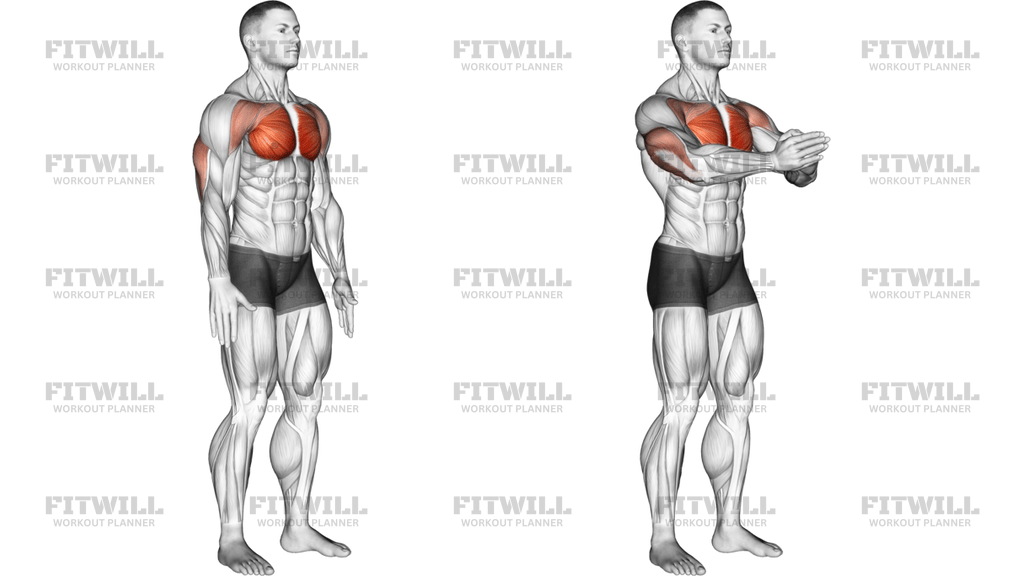
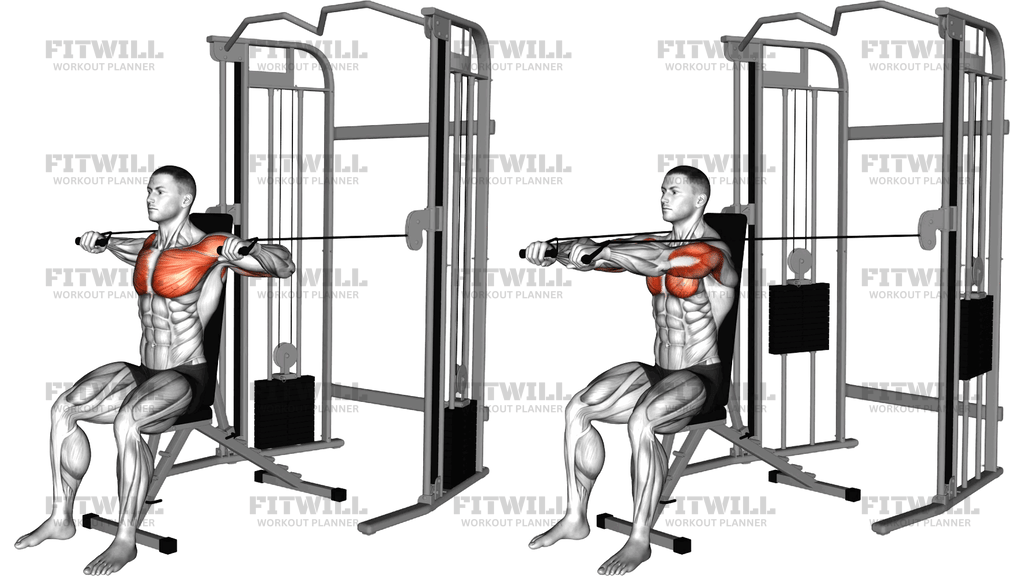
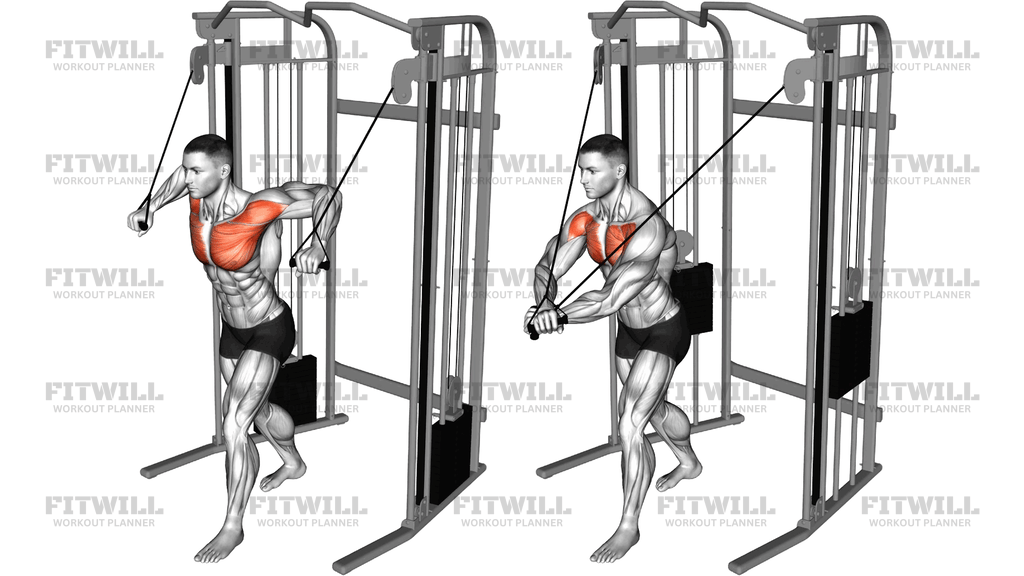
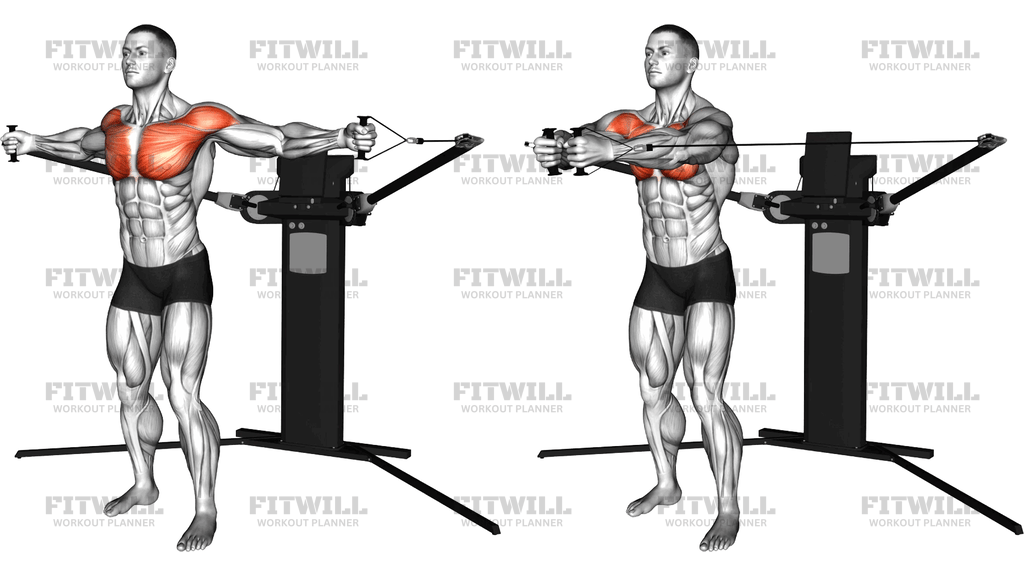
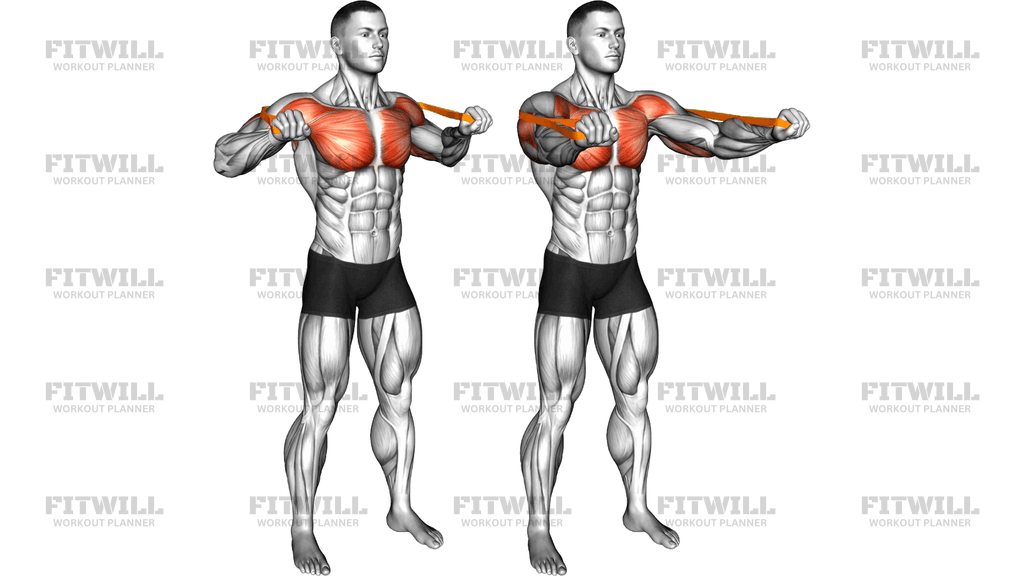
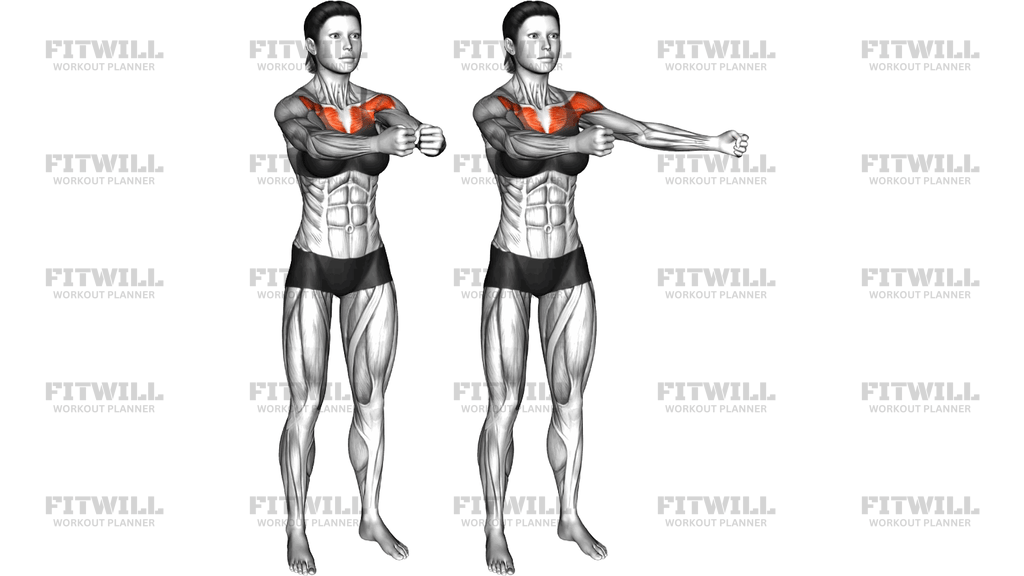
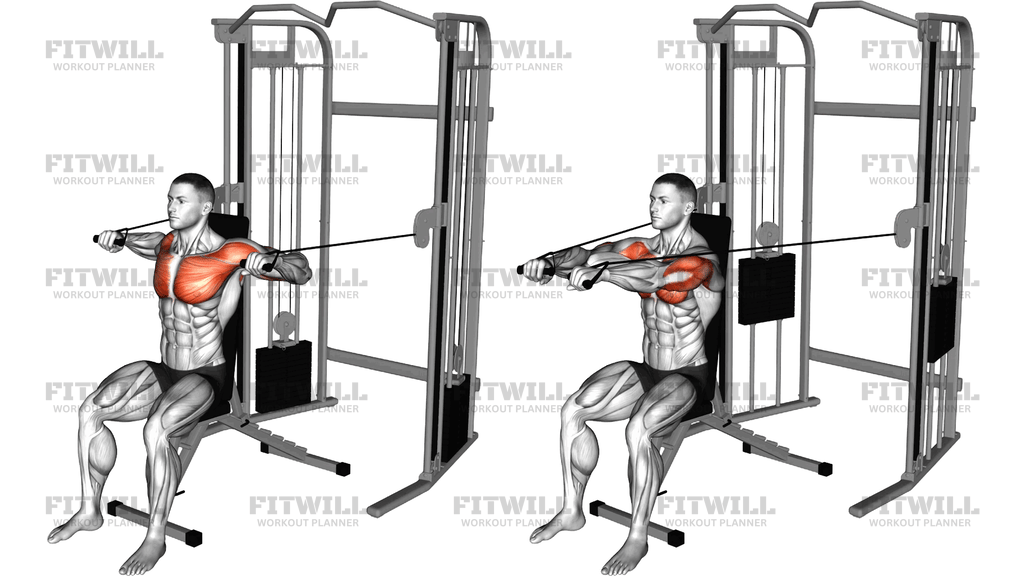
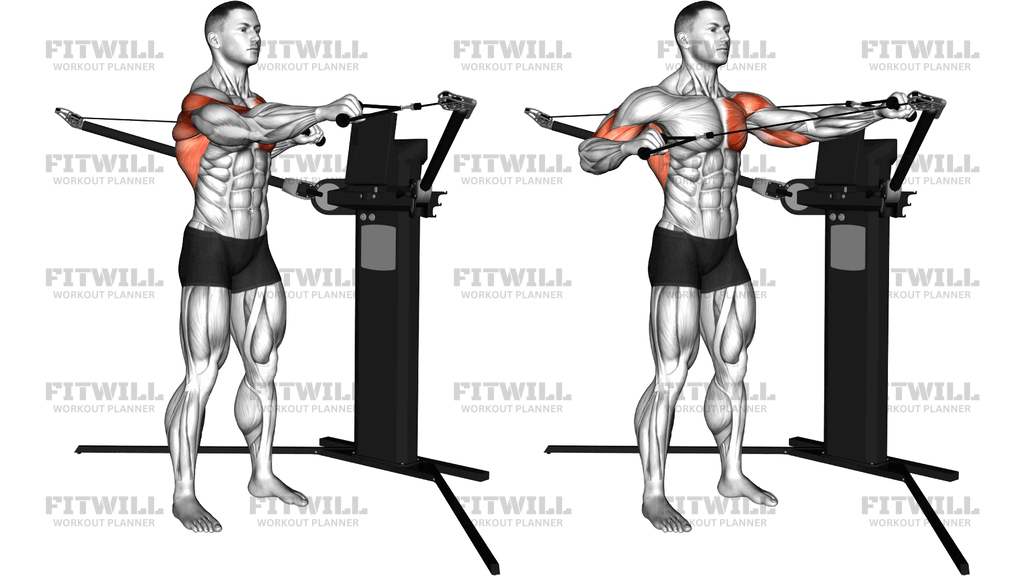
Cable Upper Chest Crossovers
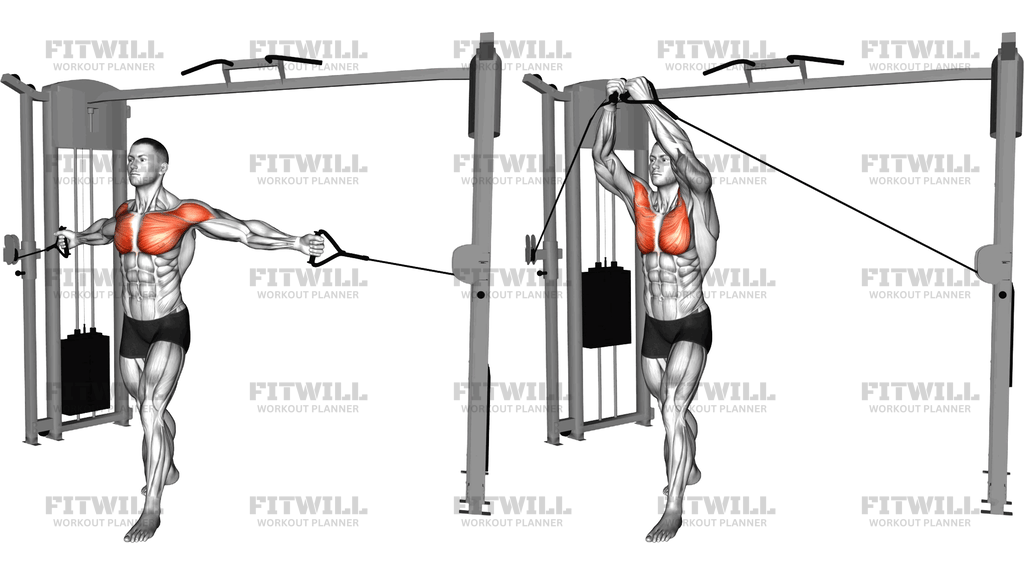
Cable Upper Chest Crossovers are a standing cable fly variation that uses low pulleys and handle attachments to bias the upper fibers of the chest through a low-to-high adduction path. The exercise is built around a long, controlled arc rather than heavy loading, which makes it useful when you want constant tension on the upper pecs without the hard lockout and joint stress that can come from pressing patterns.
This movement trains the pectoralis major as the main driver, with the front delts, triceps, and core helping stabilize the torso and keep the handles on the same upward line. Because the cables pull from behind and below you, the setup matters: if the pulleys are too high or your stance is too loose, the line of pull turns into a generic chest fly instead of an upper-chest emphasis. A steady base and a slight forward lean help you keep tension where you want it.
Use a split stance, soft knees, and a small bend in the elbows so the shoulders can move freely without turning the rep into a press. Start with the hands low and wide, then sweep the handles upward and inward until they meet above the upper chest or upper face line. The goal is not to smash the handles together, but to keep the chest active through the lift and to stop just before the shoulders roll forward.
Cable Upper Chest Crossovers fit well as accessory work after pressing, during a chest-focused session, or anywhere you want a higher-rep isolation movement that still challenges control and posture. The exercise is especially useful for lifters who want extra upper-chest volume without relying only on incline presses. It also works well when you need a cable movement that keeps continuous resistance through both the concentric and eccentric phases.
Keep the ribs down, the neck long, and the return slow enough that the handles never yank the shoulders back. If the front of the shoulder takes over, reduce the load, shorten the range slightly, or lower the cable angle until the chest can stay in charge. Done well, Cable Upper Chest Crossovers should feel smooth, deliberate, and centered in the upper chest rather than sloppy or jerky.
Fitwill
Log Workouts, Track Progress & Build Strength.
Achieve more with Fitwill: explore over 9600 exercises with images and videos, access built-in and custom workouts, perfect for both gym and home sessions, and see real results.
Start your journey. Download today!




Instructions
- Set the cable pulleys low and attach a handle to each side before standing between them.
- Take a split stance with one foot slightly forward, soften your knees, and lean the torso very slightly into the cables.
- Hold a handle in each hand with your palms facing in and a soft bend in both elbows.
- Start with your hands low and wide, just in front of the hips or upper thighs, so the cables stay under tension.
- Brace your core and keep your ribs stacked over your pelvis before you begin the pull.
- Sweep both handles upward and inward in a smooth arc until they meet above the upper chest.
- Squeeze the upper chest for a brief pause without letting the shoulders shrug forward.
- Lower the handles back along the same high-to-low path until the chest is stretched but the shoulders still feel controlled.
- Exhale as you pull the handles up, inhale as you return, and reset your stance before the next rep.
Tips & Tricks
- Keep the pulley height low enough that the cables pull from below shoulder level; otherwise the line of pull stops feeling like an upper-chest crossover.
- Use a split stance so the stack does not drag you backward when the handles get light at the top.
- Think of bringing the biceps toward each other on an upward diagonal instead of pressing the weight forward.
- Stop the rep when the handles meet over the upper chest or slightly in front of the face; forcing them farther often turns the shoulders inward.
- Keep the elbows softly bent and fixed so the chest does the work instead of turning the movement into a triceps press.
- If your shoulders feel pinched, reduce the range and finish the rep a little lower on the diagonal.
- Do not let the rib cage flare hard at the top; that usually means the lower back is taking over for the chest.
- Use a slow return and let the chest lengthen under control rather than letting the stacks snap the arms open.
- Choose a load that still lets you hold the handles steady at the top without shrugging or twisting.
- Keep the wrists straight so the handles stay aligned with the forearms through the entire arc.
Frequently Asked Questions
What does Cable Upper Chest Crossovers train most?
It primarily targets the upper chest, with the front delts, triceps, and core helping you control the handle path.
Where should the cables be set for Cable Upper Chest Crossovers?
Set both pulleys low so the handles travel on a clear low-to-high line toward the upper chest.
Should I keep my arms straight during the crossover?
No. Keep a soft bend in the elbows and hold that angle steady so the shoulders stay in control.
How high should my hands finish on Cable Upper Chest Crossovers?
Finish with the handles meeting above the upper chest or near the upper face line, not down at mid-chest.
Can beginners do this exercise safely?
Yes, if they use light resistance, keep the split stance stable, and avoid forcing a big stretch at the bottom.
Why do my shoulders take over instead of my chest?
The load is probably too heavy, the pulleys may be too high, or the range may be too long for your current control.
Is this better before or after pressing exercises?
It usually works best after presses as a chest isolation finisher, though lighter sets can also work as a warm-up.
What is the most common mistake with Cable Upper Chest Crossovers?
People often shrug, lean back, or swing the handles instead of keeping the torso steady and the path smooth.