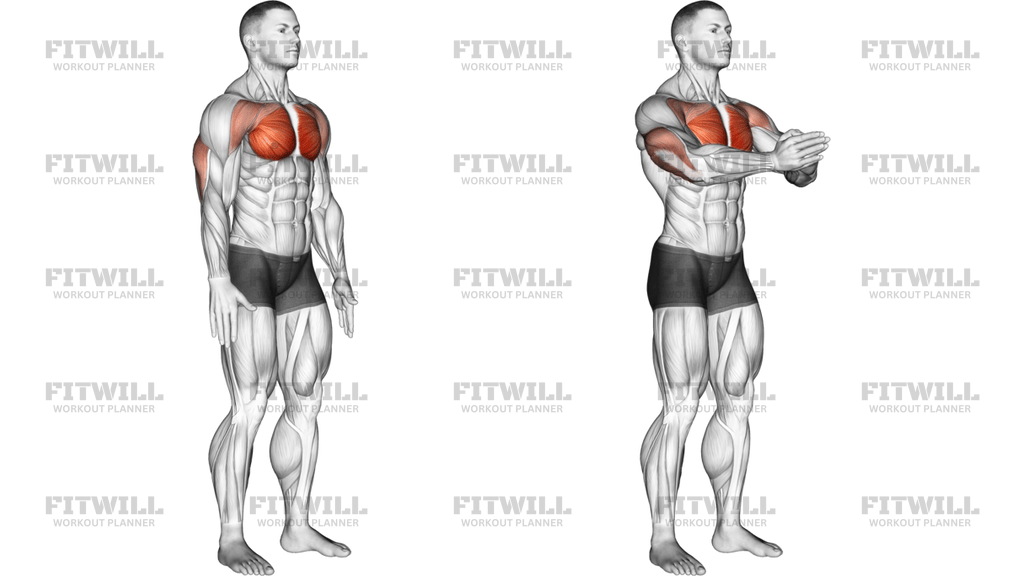
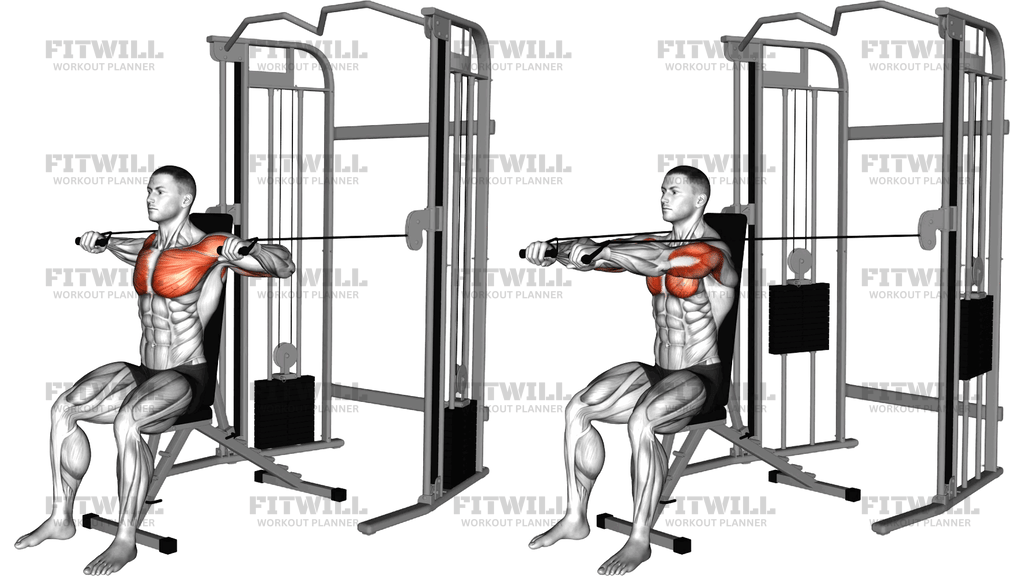
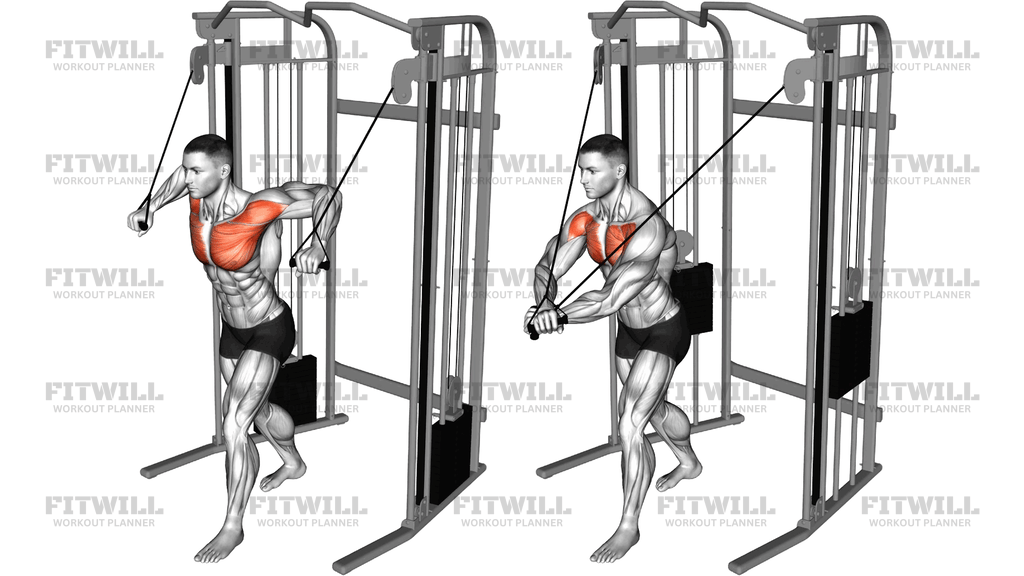
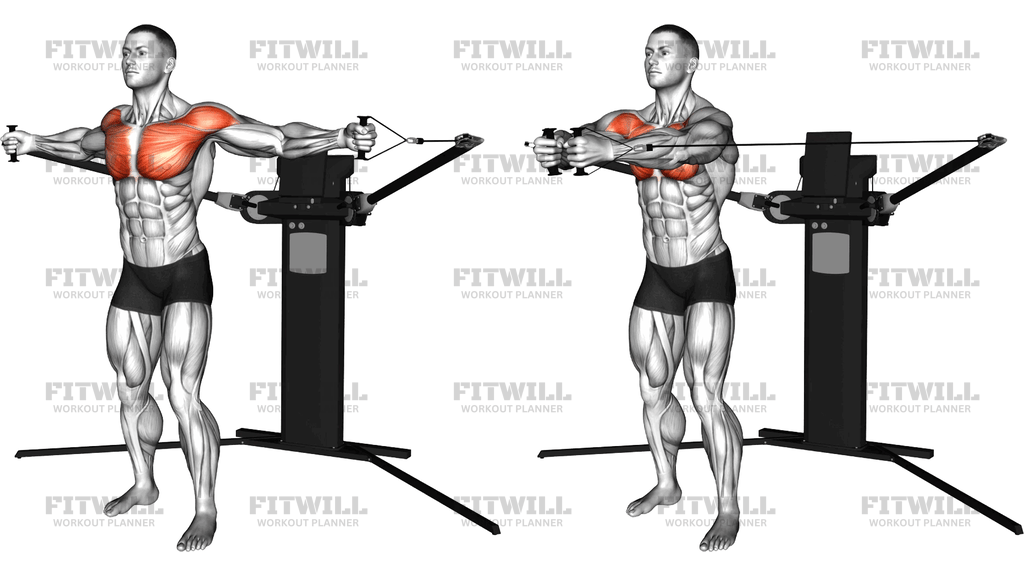
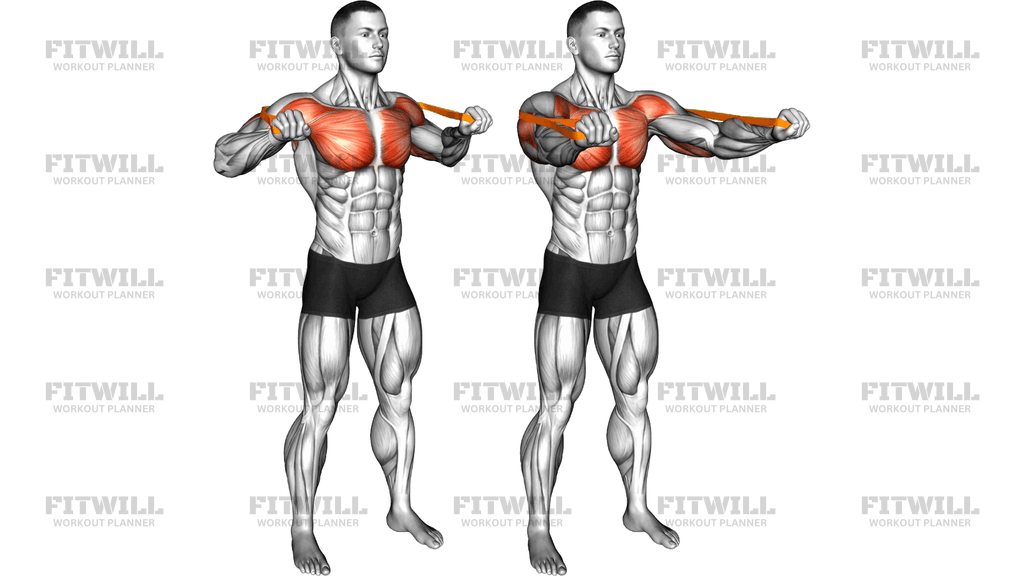
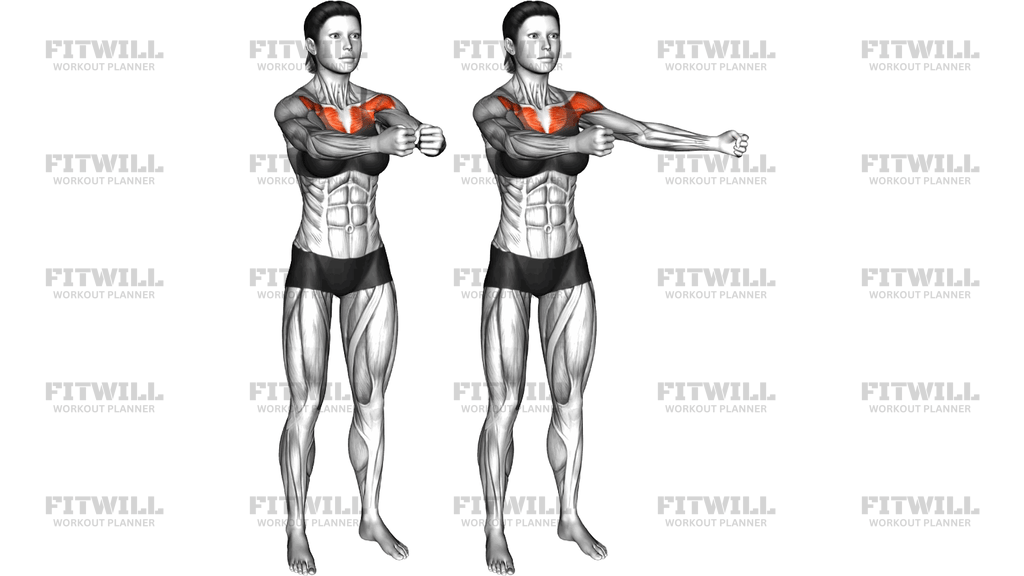
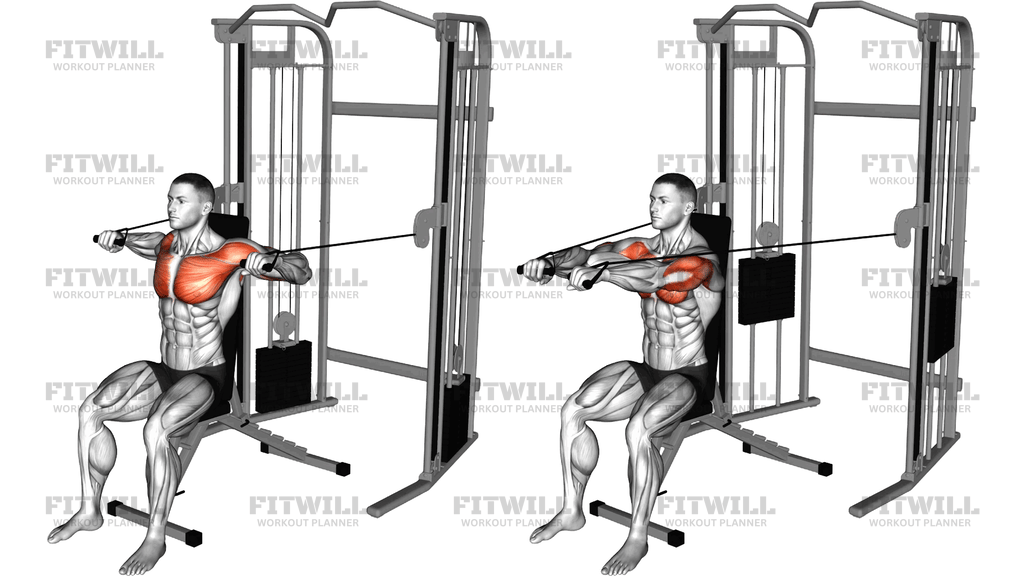
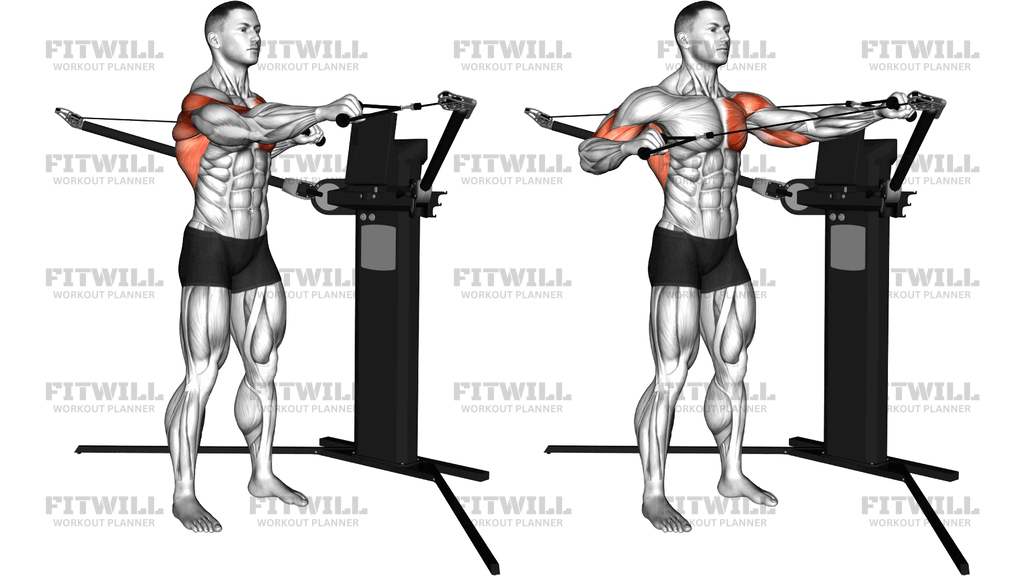
Cable Standing Chest Press
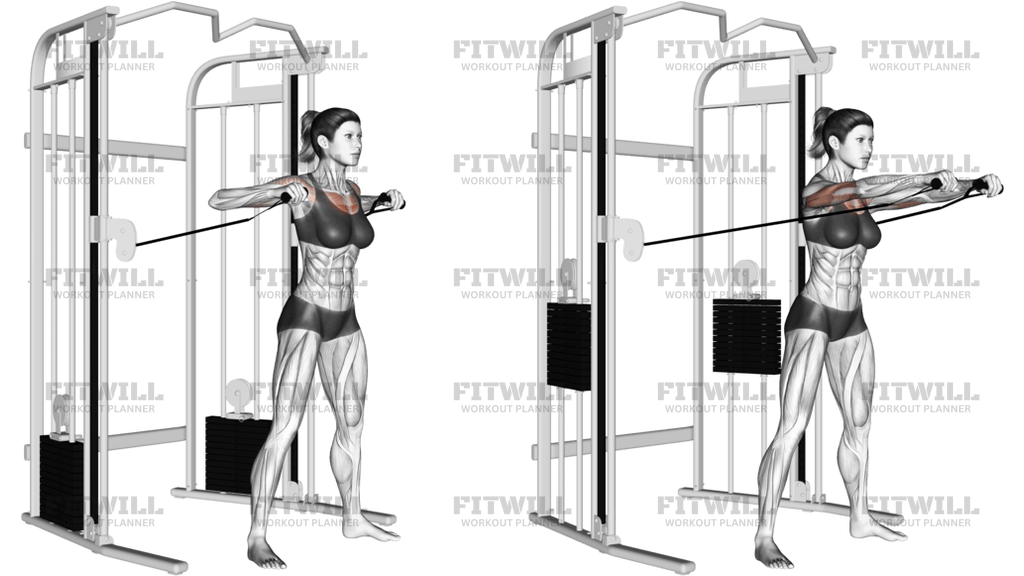
Cable Standing Chest Press is a standing pressing drill that keeps constant tension on the chest while the cable stack tries to pull your torso backward. With the handles set at chest height, the movement trains the pectoralis major hard while the front delts, triceps, and core help you keep the rep smooth and square. It is useful when you want a chest exercise that still asks for balance, posture, and control instead of relying on a bench for support.
The setup matters because the cables define the line of force. Stand centered between the stacks, take a split stance, and keep your ribcage stacked over your pelvis so the press comes from the chest and not from a lean or twist. A stable base lets you drive the handles straight forward without shrugging, rotating, or letting the lower back take over. The exercise should feel like a standing press with a slight inward path, not a whole-body heave.
When the rep starts, keep the elbows slightly below shoulder height and the wrists neutral, then press the handles forward until the arms are almost straight. The finish should feel like the chest is squeezing the handles together, not like the shoulders are reaching forward and collapsing. Return under control until the pecs are loaded but the front of the shoulder still feels comfortable. Controlled breathing helps here: exhale as you press, inhale as you come back.
This movement fits well in chest hypertrophy work, accessory pressing, upper-body circuits, or any program that benefits from a cable line of resistance and a standing position. It is also a practical option for lifters who want a press that is easier to scale than a heavy barbell bench. Keep the load honest, avoid letting the plates slam together, and stop the set if the torso starts to twist or the shoulders take over the motion.
Fitwill
Log Workouts, Track Progress & Build Strength.
Achieve more with Fitwill: explore over 9600 exercises with images and videos, access built-in and custom workouts, perfect for both gym and home sessions, and see real results.
Start your journey. Download today!




Instructions
- Set both cable pulleys at chest height and attach the handles, then stand between the stacks with one foot slightly in front of the other.
- Hold a handle in each hand, bring your elbows just below shoulder level, and keep your wrists straight with your palms facing forward or slightly inward.
- Set your chest tall, soften your knees, and stack your ribs over your pelvis so you are not leaning into the cables.
- Brace your midsection and keep your shoulder blades gently back and down without pinching them hard together.
- Press both handles straight forward with a slight inward path until your arms are almost straight in front of your chest.
- Keep your shoulders low and your torso still as the handles travel so the cable load does not twist you off balance.
- Pause briefly at the front, squeeze the chest, and keep the wrists aligned with the forearms.
- Return the handles slowly until your elbows are back near the starting line and the chest is loaded again.
- Reset your breath, recheck your stance, and repeat for the planned number of reps.
Tips & Tricks
- Keep the pulleys at chest height so the line of pull matches a true chest press instead of drifting up toward the shoulders.
- Use a split stance and press through both feet; a narrow or square stance makes it easier for the cable stack to pull you forward.
- If your front delts take over, lower the elbows slightly and stop letting the hands rise above the line of the chest.
- Do not lock the elbows hard at the finish; a near-straight arm position keeps tension on the pecs without jamming the joints.
- Let the handles come back only until the chest feels loaded, not until the shoulders roll forward or the upper arm drops behind the torso aggressively.
- Keep the wrists stacked over the forearms so the grip stays stable and the force goes through the handles cleanly.
- Exhale through the press and inhale on the return to keep the ribcage from flaring while the cables are moving.
- If the weight stacks crash together or you have to lean into the press, the load is too heavy for this pattern.
- Use a controlled tempo on the way back so the chest does not relax completely between reps.
Frequently Asked Questions
What muscle does Cable Standing Chest Press target most?
The main target is the chest, especially the pectoralis major, with the front delts and triceps assisting the press.
Can beginners perform this exercise?
Yes. It is beginner-friendly if the load is light enough to keep the torso still and the handles moving in a straight press path.
Should I use a split stance or stand square to the machine?
A split stance is usually more stable because it helps you resist the cable pull without rocking or twisting.
How far should I press the handles forward?
Press until your arms are almost straight and the chest is fully contracted, but do not force a hard elbow lockout.
Why do I feel this in my shoulders more than my chest?
The handles are probably drifting too high, your elbows are flaring too much, or you are finishing by reaching forward instead of squeezing the chest.
Can I do this one arm at a time?
Yes. A single-arm version increases the anti-rotation demand and can help you clean up asymmetries or shoulder control.
Is the cable chest press easier on the shoulders than a barbell press?
Often it is, because the cable path is smoother and easier to match to your shoulder comfort, but you still need to keep the elbows and range under control.
What should I do if the cable stack pulls me off balance?
Widen or stagger your stance more, reduce the load, and keep your chest stacked over your hips so the press stays controlled.