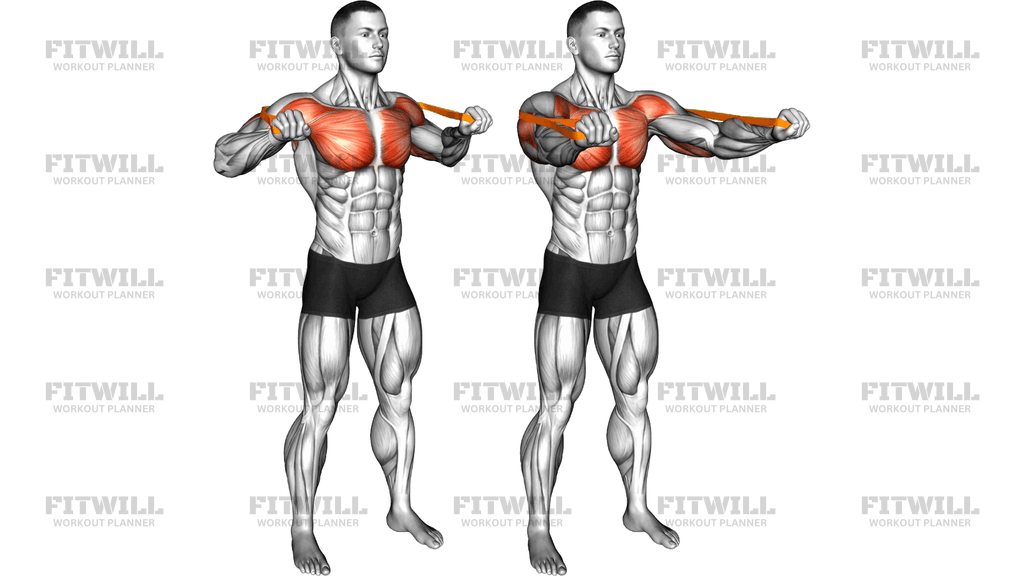
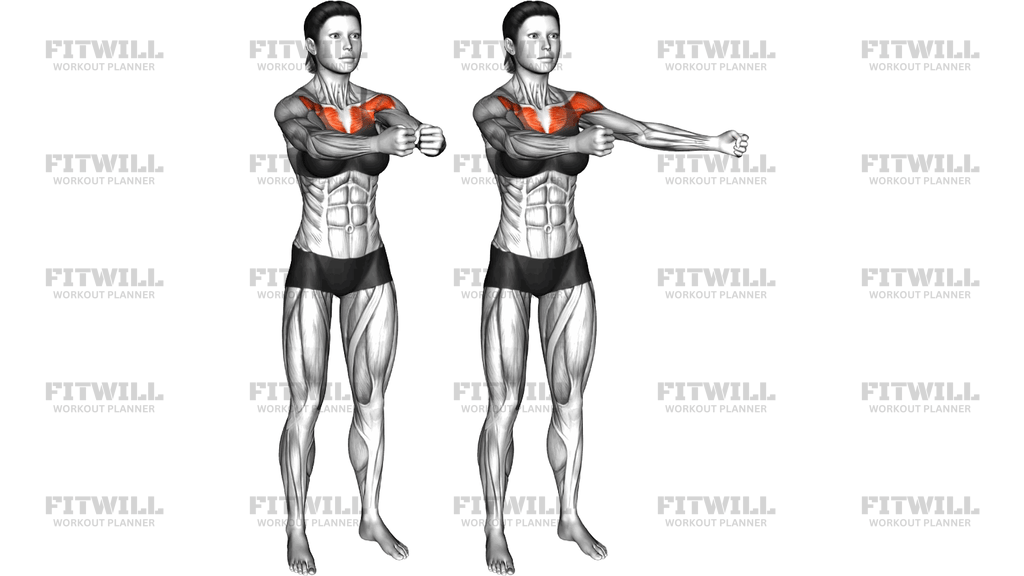
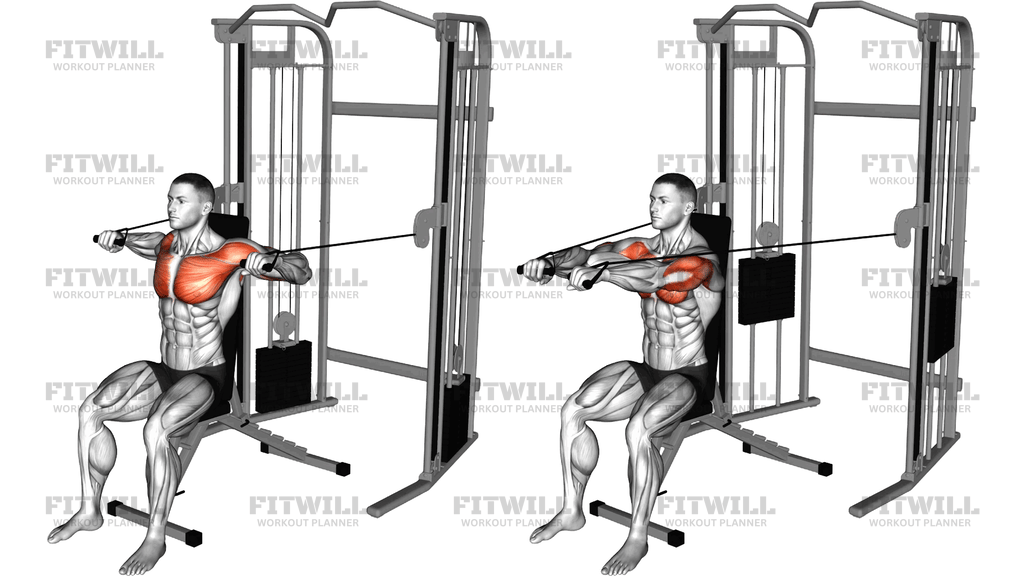
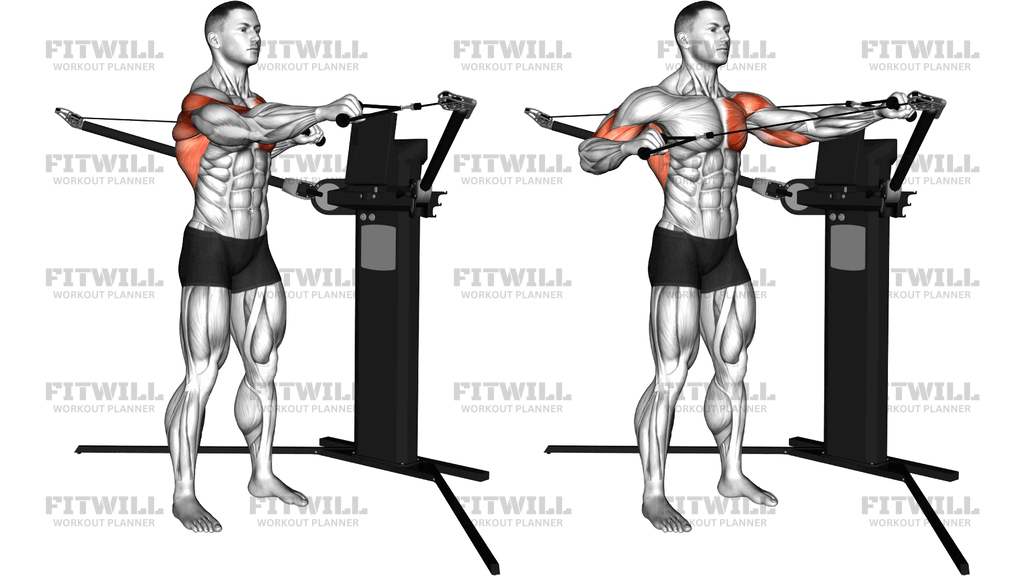
Cable Low Fly
Cable Low Fly is a chest isolation exercise that uses low pulleys so the hands travel upward and inward in a smooth hugging arc. The low cable angle changes the line of pull and gives the chest a different feel than a flat fly or press, with the resistance staying present as the arms come together from below the body line.
The movement is most effective when the chest stays open, the elbows keep a fixed soft bend, and the torso does not turn the rep into a press. That lets the pectoralis major do the main job while the front shoulders and arms simply support the path. Cable Low Fly is useful when you want steady chest tension, a clear squeeze at the top, and a controlled stretch that does not rely on heavy loading.
Set both pulleys low, grab the handles, and step forward into a balanced stance with enough room for the hands to travel upward and inward. Start with the arms slightly out to the sides and the elbows softly bent, then sweep the handles together until they meet or nearly meet in front of the upper chest. Return slowly to the open position, keeping the shoulders down and the chest from collapsing into the stack.
Cable Low Fly works well as a chest accessory after pressing, as a lighter hypertrophy movement, or as a way to bias the lower-to-mid chest line through the angle of the cable. It can also be a useful teaching exercise because the cable makes it easy to feel whether the arms are moving in a true fly pattern or drifting into a press. The best reps are smooth, symmetrical, and quiet, with no shrug at the top and no shoulder dump at the bottom.
If the shoulders feel pinchy or the handles drift too far back, shorten the range and reduce the load. The goal is a controlled upward-inward chest squeeze, not a deep stretch that pulls the shoulder forward.
[ Workout Log & Planner ]
Put your next workout in Fitwill
Keep your plan and training log ready when you are.


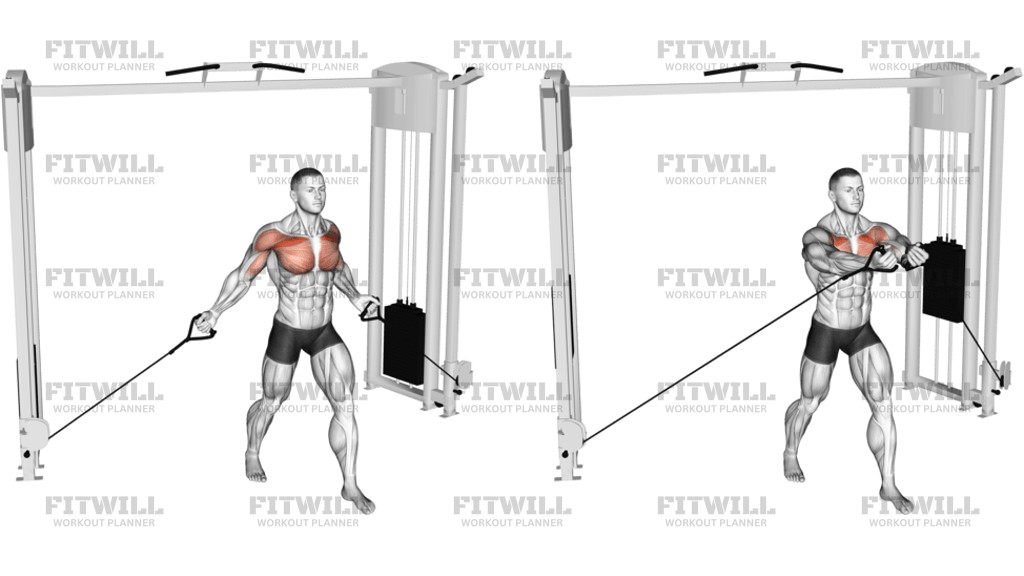
Instructions
- Set both pulleys low and attach the handles before stepping into your stance.
- Stand centered, step forward, and plant your feet so you have space to bring the hands upward and inward.
- Keep a slight bend in the elbows and start with the arms open just enough to create tension without straining the shoulders.
- Stack your ribs over your pelvis and brace your core before the first rep.
- Sweep the handles upward and inward in a wide hugging arc until they meet or nearly meet in front of the upper chest.
- Pause briefly at the top with the chest squeezed and the shoulders still down.
- Lower the handles slowly back to the open position while keeping the elbow bend unchanged.
- Repeat with the same path and tempo, then walk the handles back to the stack once the set is complete.
Tips & Tricks
- Keep the elbows at the same soft bend on every rep so the movement stays a fly instead of becoming a press.
- If the shoulders start to shrug, lighten the load and think about bringing the chest together, not lifting the hands higher.
- A smaller stretch is often better than a huge one that pulls the shoulders forward and takes tension away from the chest.
- Use the low cable angle to create the upward-inward arc; if the hands travel straight up, you are losing the fly path.
- Keep the handles moving evenly so one side does not finish ahead of the other.
- Do not chase a giant squeeze by over-crossing the hands; a controlled near-touch is usually enough.
- Exhale as the hands come together and let the return stay slow so the chest remains loaded.
- A moderate load with a smooth arc is more useful here than a heavy stack that forces shoulder or torso compensation.
Frequently Asked Questions
What muscles does Cable Low Fly work?
It mainly works the chest, often with a slightly stronger lower-chest feel because of the low-to-high cable path.
Is Cable Low Fly better than a high fly?
It is not better, just different; the low pulley changes the angle and the part of the chest that tends to feel it most.
Should the handles cross over in Cable Low Fly?
They can come close or cross slightly if you keep control, but there is no need to force a big crossover.
Can beginners do Cable Low Fly?
Yes, as long as they start light and keep the shoulders from rolling forward at the bottom.
What is the most common mistake in Cable Low Fly?
Turning the fly into a press by straightening the elbows or using too much torso movement.
How far should I stretch in Cable Low Fly?
Only as far as you can control without the front of the shoulders feeling pinchy or the chest losing tension.
Is Cable Low Fly enough for chest growth?
It helps, but it usually works best alongside pressing exercises rather than replacing them entirely.