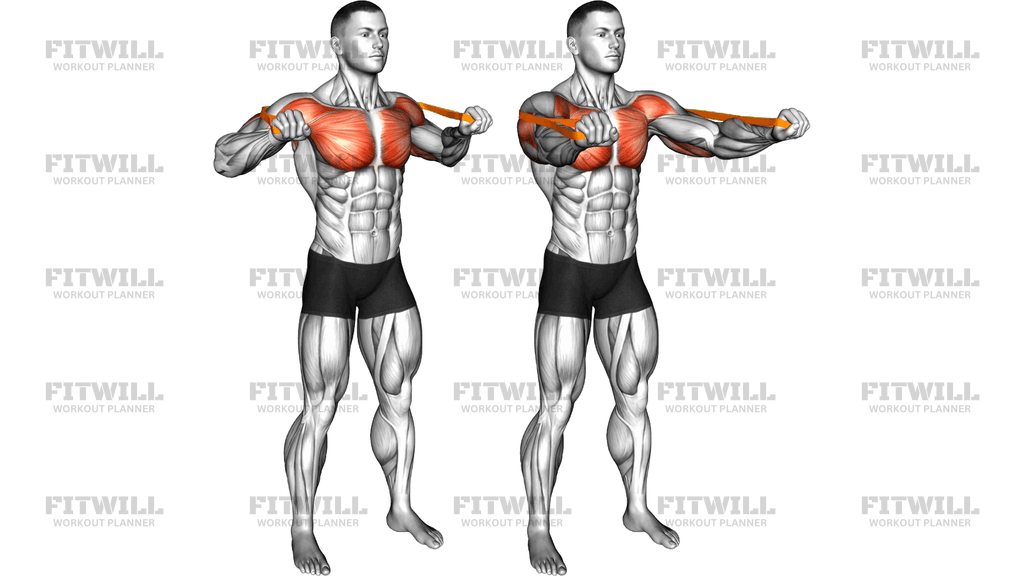
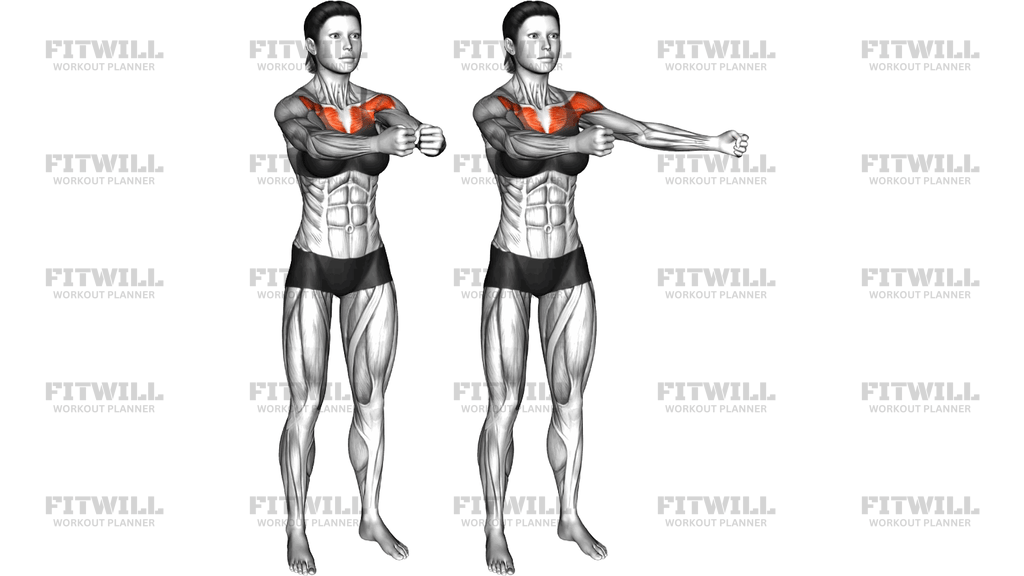
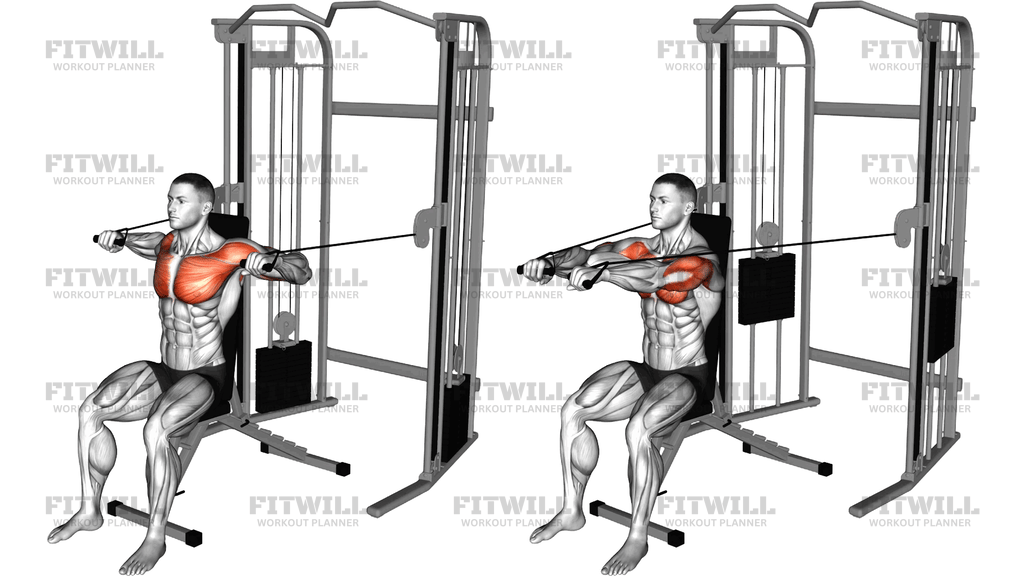
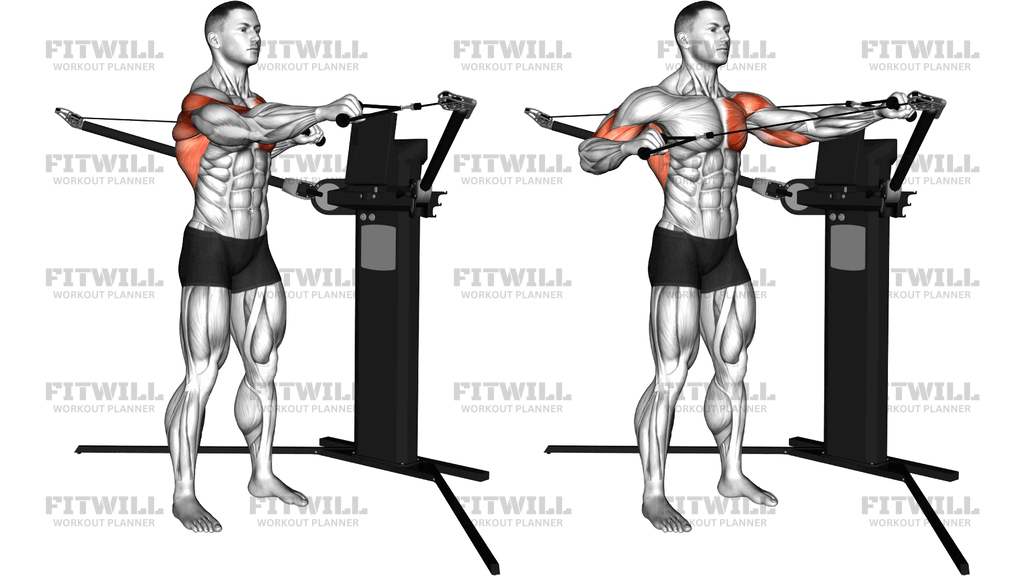
Cable Lying Fly
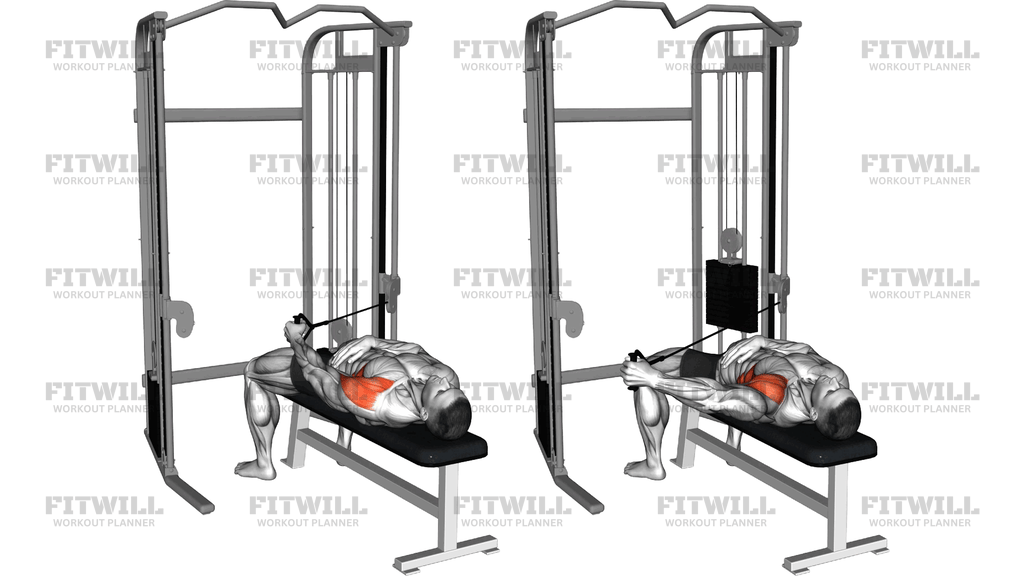
Cable Lying Fly is a flat-bench chest isolation exercise that uses cables to keep tension on the pecs through the whole rep. The lying setup makes it easier to control the shoulder position and the cable path, so the movement feels like a true chest fly instead of a disguised press.
The exercise primarily targets the pectoralis major, with the front shoulders and biceps assisting in a supporting role. It works best when the elbows hold a soft, fixed bend and the shoulders stay set back on the bench. That keeps the chest in charge of the wide opening and closing arc, while the cables make the end ranges more obvious than a dumbbell fly usually does.
Lie on a flat bench between the cable stations and bring the handles into position before you settle down. Set the shoulder blades back, plant the feet, and start with the arms open just enough to create tension without dumping the shoulders forward. Sweep the handles together over the chest in a smooth hugging motion, then return slowly to the open position while keeping the same elbow bend and avoiding any press-like elbow extension.
Cable Lying Fly is useful as a chest accessory after pressing, as a lighter hypertrophy movement, or as a way to practice a very steady fly pattern with less body motion than a standing version. The flat bench keeps the torso stable, and the cables make the chest work continuously through the rep. Clean sets are quiet, symmetrical, and controlled, with the handles moving in a wide arc instead of a straight push.
If the shoulders feel pinchy or the stretch gets too deep, shorten the range and lower the load. The best version feels like the chest is opening and closing while the rest of the body stays anchored to the bench.
Fitwill
Log Workouts, Track Progress & Build Strength.
Achieve more with Fitwill: explore over 9600 exercises with images and videos, access built-in and custom workouts, perfect for both gym and home sessions, and see real results.
Start your journey. Download today!




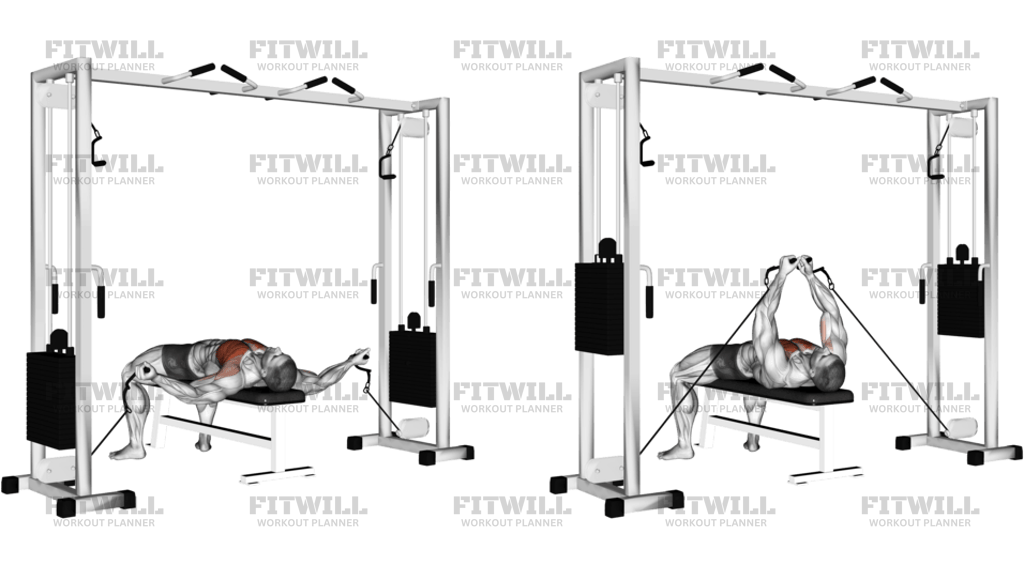
Instructions
- Lie on a flat bench between the cable stations and bring the handles into position before you settle your shoulders.
- Set your shoulder blades back on the bench and plant your feet firmly for stability.
- Hold the handles with a soft, fixed elbow bend and start with the arms open just enough to create cable tension.
- Keep your chest lifted without turning the setup into a hard arch or a press.
- Sweep the handles together in a wide hugging arc over the chest.
- Pause briefly at the top while squeezing the chest, then keep the shoulders down and relaxed.
- Lower the handles slowly back to the open position with the same elbow bend and a controlled stretch.
- Repeat for the set, then place the handles back by the stack before sitting up.
Tips & Tricks
- Keep the elbows at the same bend through the whole rep so the movement stays a fly instead of turning into a press.
- Use less load than you would on a pressing movement; the fly should feel challenging from tension, not heavy from momentum.
- Do not let the shoulders roll forward at the bottom; shorten the stretch if the front of the shoulder feels crowded.
- The handles should move in a wide arc, not a straight line, or the chest stimulus becomes much less obvious.
- Keep the wrists neutral and the hands relaxed so the grip does not take over the set.
- If one side reaches the top sooner, slow down and match the cleaner side instead of forcing the range.
- A brief squeeze at the top helps keep the rep honest and prevents the cables from bouncing you apart.
- The flat bench should make the torso quiet; if you are shifting around a lot, the load is too heavy.
Frequently Asked Questions
What muscles does Cable Lying Fly work?
It mainly works the chest, with the front shoulders and biceps helping support the movement.
Is Cable Lying Fly better than a dumbbell fly?
It is different, not automatically better; cables keep more constant tension through the rep.
Should the handles cross in Cable Lying Fly?
They can come close or cross slightly if you keep control, but there is no need to force it.
Can beginners do Cable Lying Fly?
Yes, as long as they start light and keep the shoulder stretch conservative.
What is the most common mistake in Cable Lying Fly?
Using too much weight and turning the fly into a press by straightening the elbows.
How deep should I go in the stretch?
Only as far as you can control without the shoulders rolling forward or the front of the shoulder feeling pinchy.
When should I place Cable Lying Fly in a workout?
It usually fits well after your main presses as a chest isolation movement.