Dumbbell Row Left Side
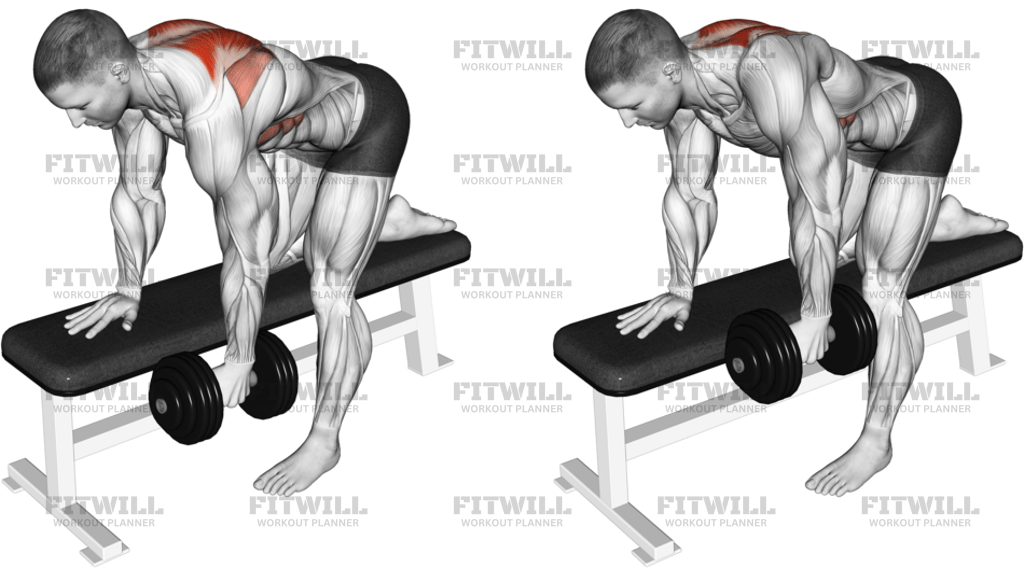
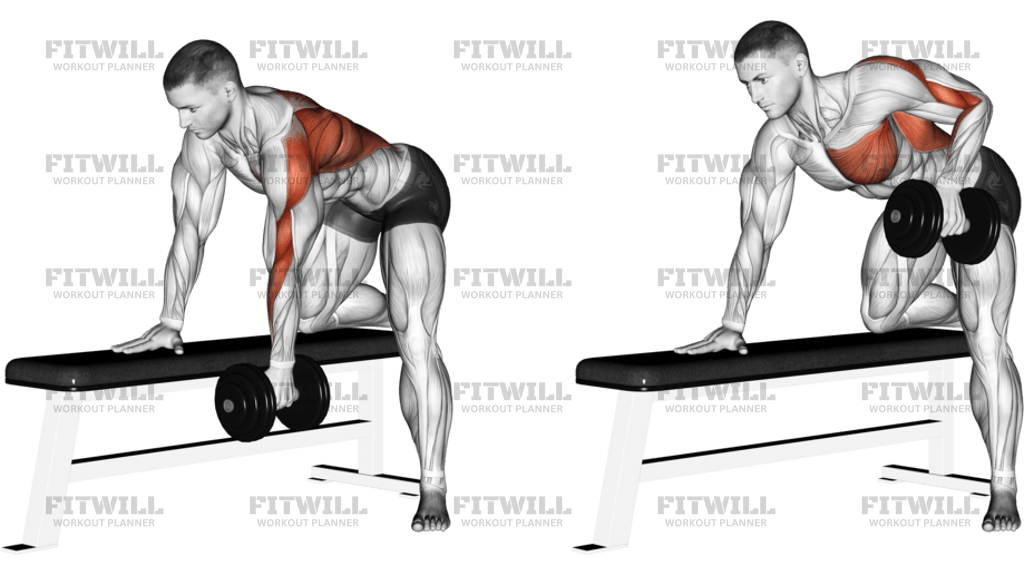
Dumbbell Row Left Side is a one-arm, bench-supported rowing exercise that builds the lats, rhomboids, mid traps, rear delts, biceps, and grip while also teaching the torso to stay quiet under load. In the image, the working side is braced on the bench with the opposite foot on the floor, which gives the row a strong base and keeps the pull focused on the back instead of the lower body.
This version is useful when you want to train one side at a time, clean up side-to-side strength differences, or get a strong back stimulus without needing heavy bilateral loading. The bench support reduces cheating, but it also makes setup matter more: if the ribcage collapses, the shoulder rolls forward, or the hips twist open, the dumbbell stops loading the back the way it should.
Set the support hand and same-side knee securely on the bench, keep the other foot planted, and let the dumbbell hang straight under the shoulder before the first rep. From there, the row should travel up and back toward the hip or lower ribs while the elbow stays close to the torso. The top position should feel like the shoulder blade is sliding back and down, not like the hand is simply yanking the weight higher.
Use a controlled tempo and a full but honest range. A clean rep starts from a dead hang under control, rises without shrugging, pauses briefly near the body, and returns slowly until the arm is straight again. Breathing should stay organized enough that you can brace before each pull without losing position.
This exercise fits well in back or upper-body sessions as a primary accessory row, especially when you want one side to work hard without compensating through the spine. Progress by improving the pause, reducing torso movement, and only then increasing the load. If the bench position or shoulder path breaks down, shorten the range slightly and keep the row strict.
[ Workout Log & Planner ]
Put your next workout in Fitwill
Keep your plan and training log ready when you are.


Instructions
- Place the left hand and left knee on a flat bench, and plant the right foot on the floor a step out to the side.
- Hold a dumbbell in the left hand and let it hang straight under the left shoulder with the arm fully extended.
- Square the hips and keep the torso long, with the chest angled down and the lower back neutral.
- Brace before you start the pull so the ribcage does not rotate open.
- Drive the left elbow back toward the left hip or lower ribs, keeping it close to the body.
- Finish the row by squeezing the back without shrugging the shoulder toward the ear.
- Lower the dumbbell in a slow, controlled path until the arm is straight again.
- Reset your brace at the bottom and repeat for the planned reps before switching sides.
Tips & Tricks
- Keep the support hand and knee heavy on the bench so the row comes from the back instead of a shifting base.
- Think about driving the elbow toward the hip; if the hand is leading the motion, the upper trap usually takes over.
- Stop the rep before the shoulder rolls forward at the bottom, especially if the dumbbell is pulling you into a loose hang.
- Keep the neck long and eyes slightly down so you do not crank the head up during the pull.
- Use a load that lets you pause briefly at the top without jerking the torso.
- If the ribs flare or the torso rotates, reduce the weight and shorten the pull until the side stays square.
- A slight exhale during the pull can help you keep the brace without holding tension in the neck.
- Match the speed on both sides so the left row does not become a different exercise than the right row.
Frequently Asked Questions
What muscles does Dumbbell Row Left Side train?
It mainly trains the left lat, rhomboids, mid traps, rear delt, biceps, and grip while the trunk stabilizers keep the torso from twisting.
Why is the bench support important in this row?
The hand-and-knee support gives the torso a stable base, which helps you row the dumbbell without turning it into a hip or lower-back swing.
How should my left elbow travel during the rep?
Pull the left elbow back and slightly in toward the left hip or lower ribs. If it flares hard away from the body, the shoulder usually loses position.
Should I rotate my chest as I row?
No. A small amount of body shift is normal, but the chest should stay mostly square to the floor so the left side does the work instead of momentum.
What does a good top position feel like?
The dumbbell should come close to the ribs with the shoulder blade pulled back and down, not shrugged up toward the neck.
Can beginners use Dumbbell Row Left Side?
Yes, as long as they start light and keep the bench position stable. It is a good way to learn rowing mechanics without balancing a full bent-over position.
How low should the dumbbell go on the way down?
Lower until the arm is straight and the shoulder stays controlled. Do not drop so far that the front of the shoulder collapses forward.
What is the most common mistake with this exercise?
The most common mistake is jerking the dumbbell up and twisting the torso open, which shifts the load away from the back.