Dumbbell High Pull
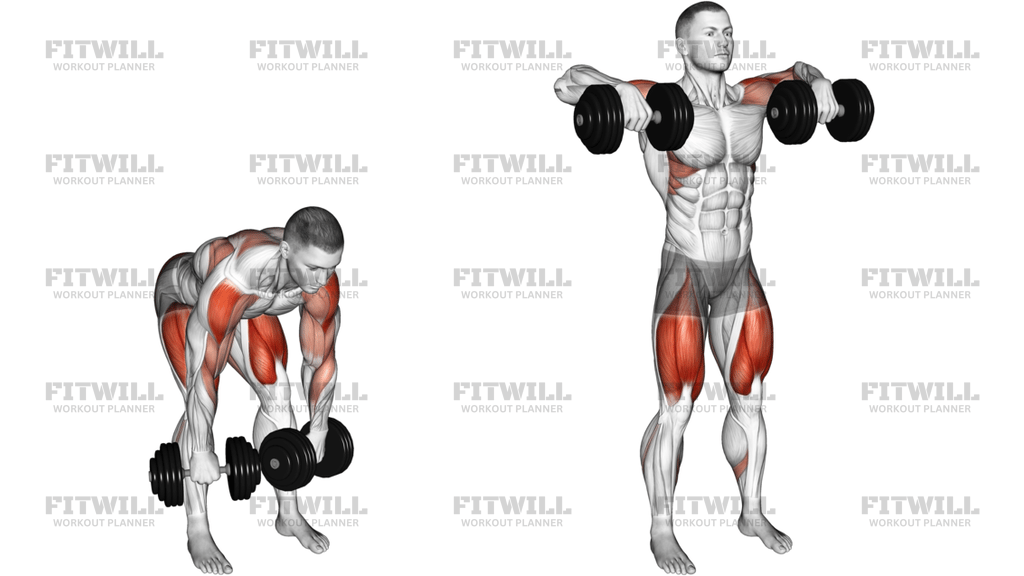
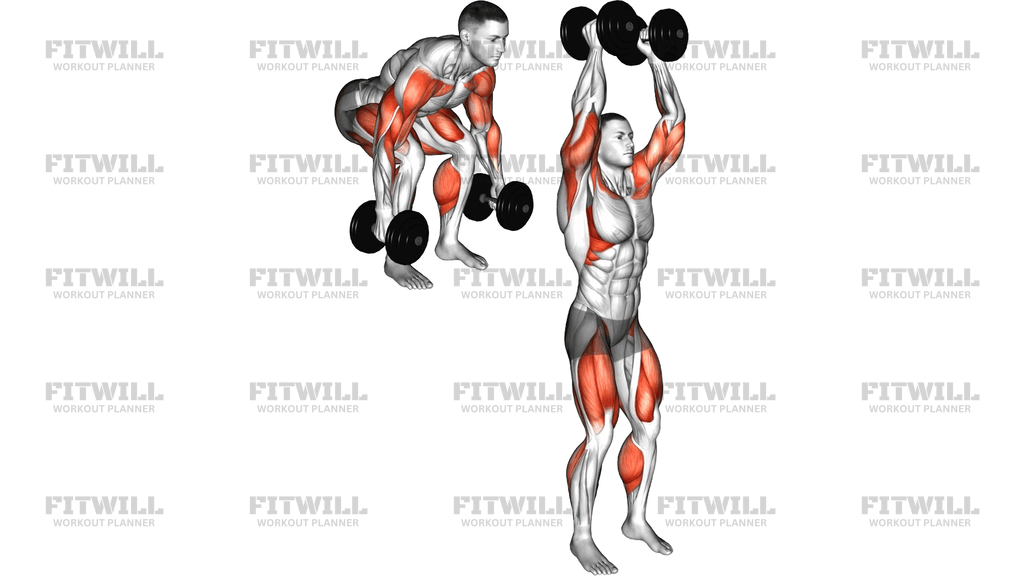
Dumbbell High Pull is an explosive pull from a standing hip hinge that trains the transition from the lower body into the upper body. Each rep starts with the dumbbells hanging close to the legs, then the hips and knees extend to drive the weights upward before the elbows rise high and outside. The movement is useful when you want to build power, coordination, and shoulder girdle strength in one exercise.
The exercise asks a lot from the traps, rear delts, upper back, and grip, while the glutes, hamstrings, and core help create the drive that launches the pull. That makes Dumbbell High Pull feel more athletic than a slow isolation lift. If the hinge, brace, and timing are off, the dumbbells drift away from the body and the rep turns into a loose arm yank instead of a crisp power pull.
The setup matters because the start position determines whether the pull stays clean. Stand with a hip-width stance, soft knees, and a slight forward hinge so the dumbbells hang in front of the thighs or just below the knees. Keep the chest tall, the ribs down, and the dumbbells close to the body so the line of force stays vertical and the elbows can lead the finish without a big swing.
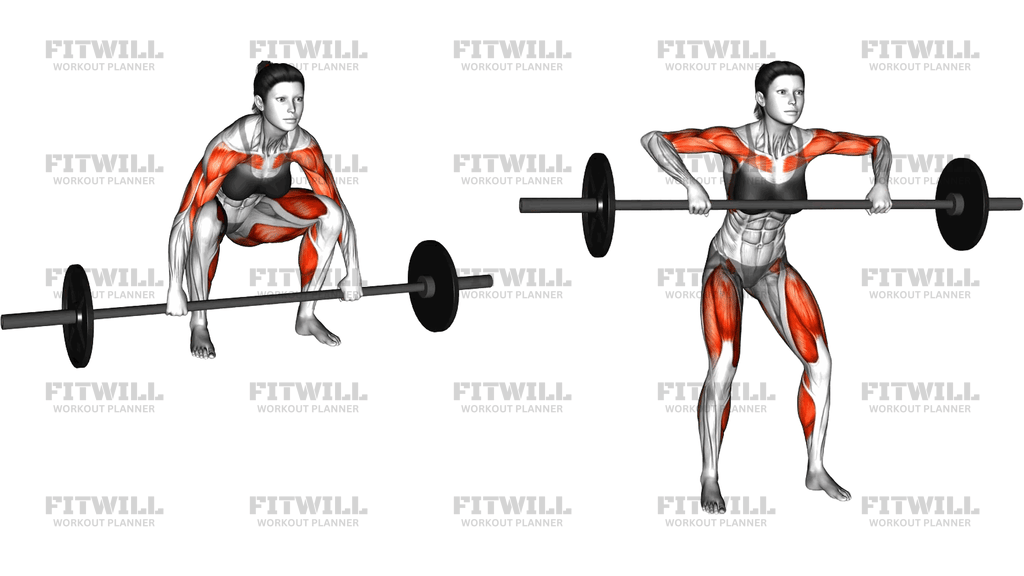
At the top of the rep, the elbows should rise above the wrists and finish around lower-chest height or slightly higher, with the shoulders doing a brief shrug rather than a prolonged arm curl. The return should be controlled back into the hinge so the next rep starts from the same balanced position. For most lifters, this is best used with moderate-to-light load, clean repetitions, and enough rest to keep every pull sharp.
Dumbbell High Pull works well in power work, athletic circuits, and accessory sessions where you want fast force production without a barbell. It can also be a useful teaching drill for learning how to transfer force through the hips into an upper-body pull. Keep the motion honest: if the torso swings, the weights climb too far forward, or the shoulders feel pinched, reduce the load and shorten the range until the rep stays smooth and repeatable.
[ Workout Log & Planner ]
Put your next workout in Fitwill
Keep your plan and training log ready when you are.


Instructions
- Stand with your feet about hip-width apart and hold a dumbbell in each hand in front of your thighs with an overhand grip.
- Hinge at the hips with a slight bend in the knees so your torso leans forward and the dumbbells hang close to your shins.
- Keep your chest lifted, ribs down, neck long, and shoulders set just in front of the weights.
- Brace your midsection before every rep so the torso stays organized when you drive upward.
- Explosively extend the hips and knees to start the pull, letting the dumbbells travel close to your body.
- As the weights rise, lead with your elbows and pull them high and out instead of curling the dumbbells upward.
- Finish with the dumbbells around lower-chest height and the shoulders briefly shrugged at the top.
- Lower the dumbbells back down under control, return to the hinge, and reset before the next rep.
- Exhale on the drive and pull, then inhale as the weights come back down.
Tips & Tricks
- Choose a load that lets the dumbbells stay close to your torso; if they swing away from your thighs, the weight is too heavy.
- Think about driving from the hips first and finishing with the arms, not lifting with the arms from the start.
- Keep your elbows traveling higher than your wrists so the pull finishes as a high pull, not a front raise.
- A small knee bend is enough; if you drop into a squat, the rep is losing its power emphasis.
- Keep the dumbbells close enough that they skim the line of the body, especially on the way up past the hips.
- If your shoulders feel crowded at the top, stop the pull around lower-chest height instead of forcing the weights higher.
- Reset each rep from a stable hinge when training for power; continuous swinging usually makes the movement sloppy.
- Avoid shrugging early. Let the hips create the speed, then let the traps finish the pull.
- If your lower back takes over, reduce the range and keep your ribs stacked over your pelvis.
Frequently Asked Questions
What muscles does Dumbbell High Pull work?
It mainly trains the traps, rear delts, and upper back, with the glutes, hamstrings, and core helping to drive and stabilize each rep.
Is Dumbbell High Pull more of a shoulder exercise or a lower-body exercise?
It is both, but the power starts in the hips and legs. The upper body finishes the pull once the dumbbells are already moving.
How high should the dumbbells come up in Dumbbell High Pull?
For most lifters, the dumbbells finish around lower-chest height, with the elbows high and outside. You do not need to pull them to the chin if that crowds the shoulders.
Should I use a big squat or just a slight hinge?
Use a slight hip hinge with a small knee bend. The movement is driven by an explosive extension, not by dropping into a full squat.
Is Dumbbell High Pull the same as an upright row?
They look similar at the top, but Dumbbell High Pull starts with a hip drive and a more athletic pull. An upright row is usually a slower, more isolated shoulder and trap movement.
Can beginners do Dumbbell High Pull?
Yes, as long as the weight is light enough to keep the pull close and controlled. Beginners should practice the hinge and elbow path before loading it heavily.
What should I do if my wrists bend back at the top?
Lower the load and keep the dumbbells moving in a straighter path. The finish should come from the elbows rising, not from cranking the wrists.
When is Dumbbell High Pull useful in a workout?
It fits well in power sessions, athletic circuits, or accessory work when you want fast, explosive pulling without a barbell.