Dumbbell Bent-Over Row
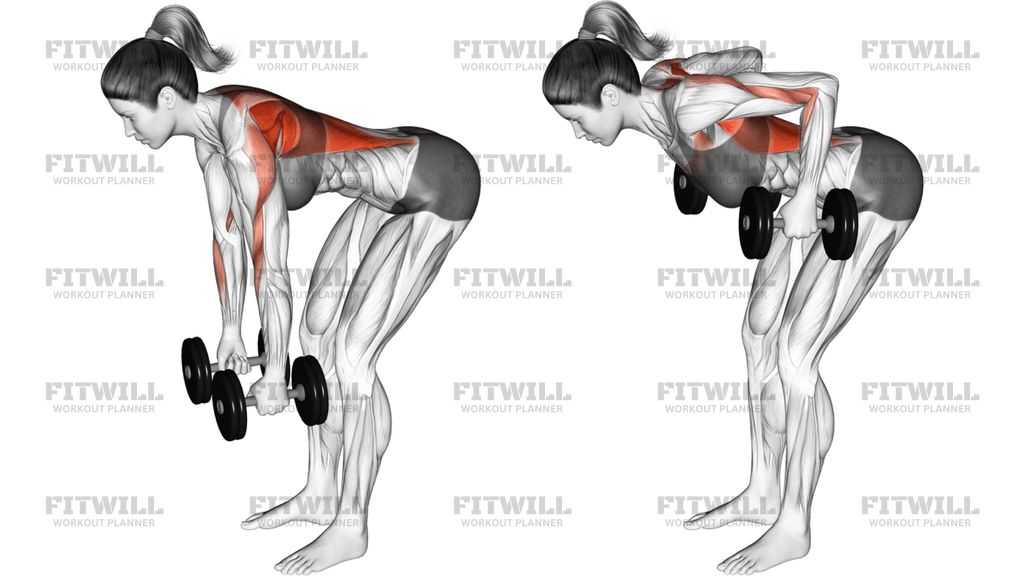
Dumbbell Bent-Over Row is a free-weight rowing exercise performed from a hip hinge with a dumbbell in each hand. The image shows the torso pitched forward, knees softly bent, spine long, and the arms pulling the bells close to the body. That setup matters because the row is meant to come from the upper back and lats, not from swinging the trunk or jerking the weights upward.
This movement trains the muscles that help you pull, hold posture, and control the shoulder blades under load. The main work comes from the back, with the rear shoulders, biceps, forearms, and trunk helping to keep the hinge locked in. When the hinge is solid, each rep becomes a clean pull from a braced body position rather than a whole-body heave.
A good repetition starts before the dumbbells leave the floor. Fix your feet, hinge until the chest is angled down, and let the arms hang straight beneath the shoulders. From there, row the handles toward the lower ribs or hips while keeping the elbows close to the sides. The shoulder blades should draw back and down as the weights rise, then reach forward again as the dumbbells lower with control.
The exercise is useful for building upper-back thickness, improving posture strength, and reinforcing the hinge position used in many other lifts. It can fit into hypertrophy work, general strength training, or accessory pulling volume. Because the torso stays bent over, the lower back and core have to stay organized the entire set, which makes load choice and body position more important than chasing momentum or a bigger-looking range.
Keep the reps smooth and repeatable. If the torso starts to rise, the neck cranes forward, or the dumbbells stop tracking close to the legs, the set is usually too heavy. Beginners can use light dumbbells and a shorter range at first, then build up as the hinge, brace, and rowing path become consistent. The goal is a controlled pull that finishes near the ribs, then a deliberate return to the hang without losing the hinge.
[ Workout Log & Planner ]
Put your next workout in Fitwill
Keep your plan and training log ready when you are.


Instructions
- Stand with a dumbbell in each hand and hinge at the hips until your torso is almost parallel to the floor, knees slightly bent and feet planted about hip-width apart.
- Let the dumbbells hang under your shoulders with your palms facing in and your neck long, keeping your back flat and your chest open.
- Brace your midsection and lock in the hinge before the first rep so your torso does not shift when the weights move.
- Pull both dumbbells toward your lower ribs or hips by driving your elbows back close to your sides.
- Squeeze your shoulder blades back and down briefly at the top without shrugging your shoulders toward your ears.
- Lower the dumbbells slowly until your arms are straight again and your shoulder blades can reach forward under control.
- Keep your torso angle steady through the whole rep and avoid standing up to finish the pull.
- Breathe out as you row up, breathe in as you lower, and reset your hinge if your posture starts to slip.
Tips & Tricks
- Think about pulling the elbows behind you, not yanking the dumbbells with your hands.
- Keep the bells close to your thighs and ribs so the row stays strict instead of turning into a swing.
- Choose a torso angle you can hold for every rep; a higher hinge is fine if your lower back cannot stay set low.
- Use a load that lets you pause briefly at the top without losing balance or twisting the torso.
- Let the shoulder blades move naturally on the way down instead of pinning them hard the entire set.
- If your neck tightens, keep your gaze a few feet in front of you on the floor instead of looking up.
- A slow lowering phase helps you keep tension on the back muscles and reduces momentum from the hips.
- Stop the set when you can no longer keep both dumbbells moving at the same speed and the same path.
Frequently Asked Questions
What muscles do Dumbbell Bent-Over Rows work most?
They emphasize the lats, mid-back, rear shoulders, and the arm muscles that help bend the elbows.
How far forward should I hinge for this row?
Hinge until your torso is close to parallel to the floor, or as low as you can while keeping a flat back and steady brace.
Where should the dumbbells travel?
Pull them close to your legs and finish near the lower ribs or hips instead of flaring the elbows out high.
Should I row both dumbbells at the same time or one at a time?
The pictured version uses both arms together, which keeps the torso set and makes it easier to match both sides.
What is the most common mistake in this movement?
The usual error is standing up or jerking the weights with the hips instead of holding the hinge and rowing with the back.
Can beginners do the dumbbell bent-over row?
Yes, if they start light and learn the hinge first. A stable back position matters more than lifting heavy.
Should I feel this in my lower back?
Your lower back works to hold the hinge, but the main pulling effort should stay in the upper back and lats.
How can I make the row harder without cheating?
Add a short pause at the top, slow the lowering phase, or use slightly heavier dumbbells while keeping the same torso angle.