Dumbbell Incline Row
Dumbbell Incline Row is a chest-supported rowing exercise done on an inclined bench with a dumbbell in each hand. The bench takes most of the bodyweight out of the lift, which lets you train the traps, rhomboids, lats, rear delts, and biceps without having to hold your torso against gravity the whole time. That support is the reason the movement is so useful: it keeps the back work strict and makes it easier to feel whether the pull is coming from the upper back or from body swing.
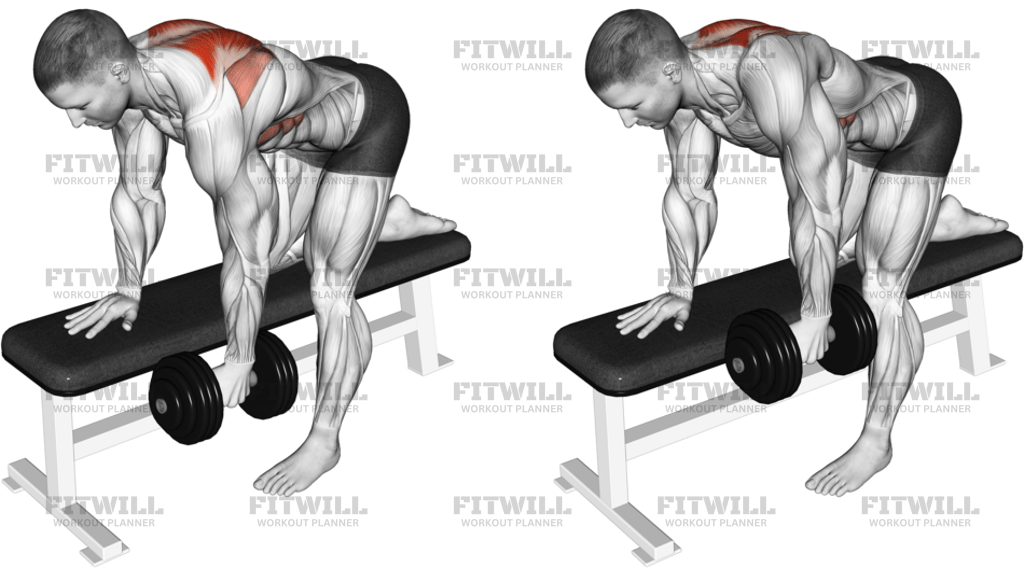
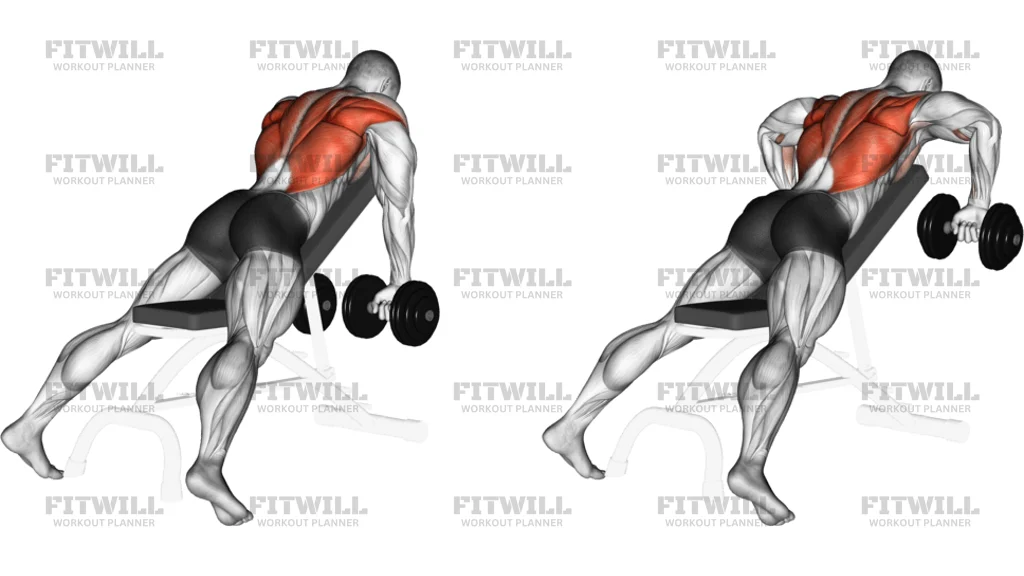
The setup matters as much as the pull. With your chest and sternum anchored to the pad, your feet planted, and your neck in line with your spine, the dumbbells should hang directly under the shoulders at the start. From there, the row should travel in a clean arc toward the sides of the ribcage. If the bench is too low, the chest can slide; if it is too steep, the movement starts to feel more like a shrug than a row. The image shows the classic supported position: torso pressed into the bench, hips off the pad, legs braced behind for balance.
Each rep should begin from a dead-hang-like bottom with the arms long and the shoulders allowed to reach forward slightly. Pull the elbows back and slightly out, keeping the upper arms moving behind the torso while the chest stays on the bench. At the top, squeeze the shoulder blades without lifting the head or arching the low back. Lower the dumbbells slowly until the arms are long again and the shoulders can open up under control. The goal is a smooth pull, not a heave from the bottom.
This exercise is a strong choice for back hypertrophy, posture-focused pulling, and accessory work when you want more upper-back volume without extra lower-back fatigue. It fits well after compound pulls, on upper-back days, or whenever you want to bias the traps and mid-back with a strict line of force. Because the torso is supported, it is also useful for lifters who lose position during bent-over rows or who want to isolate the upper back more clearly.
The main mistakes are using too much weight, shrugging the shoulders toward the ears, turning the rep into a half-range tug, or letting the chest come off the bench to cheat the top. Keep the movement honest, keep the wrists stacked, and choose a load that lets every rep follow the same path. When the setup stays fixed and the dumbbells move cleanly, Dumbbell Incline Row becomes a very efficient way to build thicker, stronger upper-back work.
[ Workout Log & Planner ]
Put your next workout in Fitwill
Keep your plan and training log ready when you are.


Instructions
- Set an incline bench to roughly 30-45 degrees and lie chest-down so your sternum and upper chest stay supported by the pad.
- Plant your feet wide behind you and use them to keep your body from sliding as you row.
- Hold a dumbbell in each hand with a neutral grip and let both arms hang straight under your shoulders.
- Keep your neck long, chin slightly tucked, and let your shoulder blades reach forward at the bottom without losing contact with the bench.
- Brace your midsection, then pull both elbows back and slightly out toward the sides of your ribcage.
- Squeeze your shoulder blades together at the top without shrugging or lifting your chest off the pad.
- Pause briefly when the dumbbells reach the line of your torso.
- Lower the dumbbells slowly until the arms are long again and the shoulders can open up under control.
- Reset the shoulders at the bottom, breathe in on the way down, and repeat with the same path on every rep.
Tips & Tricks
- Choose an incline that keeps your chest planted; if the bench is too steep, the pull starts to turn into a shrug.
- Let the dumbbells travel toward the side of your lower ribs or upper waist, not straight up toward your shoulders.
- Keep the wrists stacked over the handles so the pull stays in the back instead of drifting into the forearms.
- Do not yank from the bottom; the first inch of the rep should still look smooth and controlled.
- If your chest comes off the pad, the load is too heavy or your feet are too narrow to brace properly.
- Think about driving the elbows back, then finishing with the shoulder blades, rather than curling the dumbbells up.
- A short pause at the top makes it easier to feel the traps and mid-back doing the work.
- Use a slower lowering phase than pulling phase if you want more upper-back tension from each rep.
Frequently Asked Questions
What muscles does Dumbbell Incline Row emphasize?
It emphasizes the traps and upper back, with the rhomboids, lats, rear delts, biceps, and forearms all helping during the pull.
Why use an incline bench for this row?
The incline bench supports your chest, which reduces lower-back fatigue and keeps the rep stricter than a bent-over row.
Where should the dumbbells travel on the bench-supported row?
Pull them back toward the sides of your lower ribs or torso, not high toward your neck and not out in a wide shrug.
Should my palms face in or face down?
A neutral grip works best for this version, with the palms facing each other so the elbows can row back cleanly.
Is Dumbbell Incline Row beginner-friendly?
Yes, because the bench support makes the movement easier to control. Start light and keep the chest anchored to the pad.
What is the most common mistake with the chest-supported dumbbell row?
The most common mistake is shrugging the shoulders and turning the rep into an upper-trap lift instead of a back row.
How steep should the incline bench be?
A moderate incline, usually around 30-45 degrees, keeps the torso supported without making the row too vertical.
Can I use this exercise if bent-over rows bother my lower back?
Usually yes, because the bench removes most of the torso-holding demand. If the chest support still feels uncomfortable, lower the load or switch to a more supported row.