Dumbbell Close-Grip Press
Dumbbell Close Grip Press is a flat-bench pressing exercise that places extra demand on the triceps by keeping the dumbbells close together and the elbows tucked. The neutral hand position and narrow pressing line reduce the need to flare the arms, so the movement feels more focused through the back of the upper arms than a wide-grip dumbbell press. It is a useful option for building pressing strength when you want a cleaner triceps emphasis without loading a barbell.
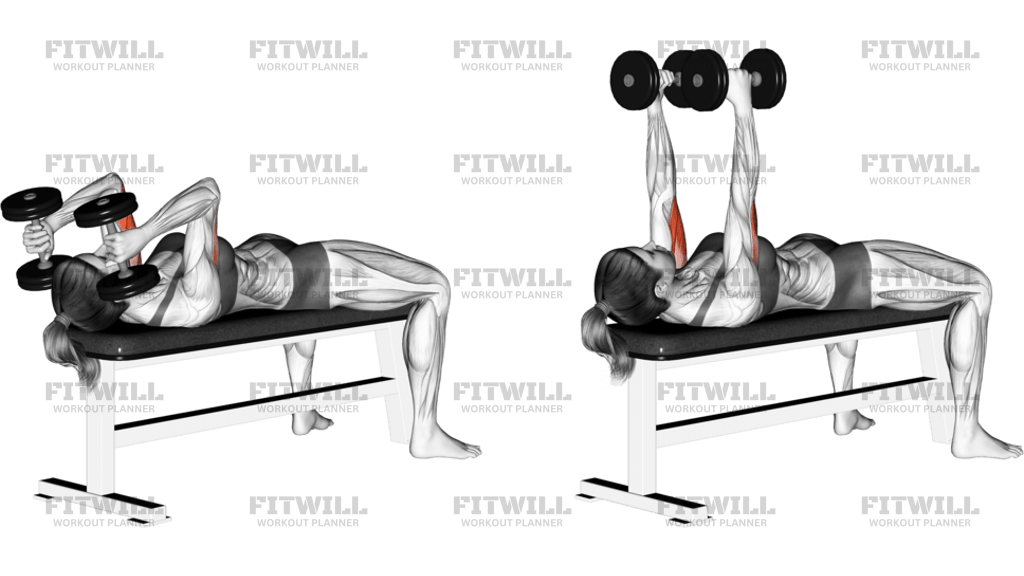
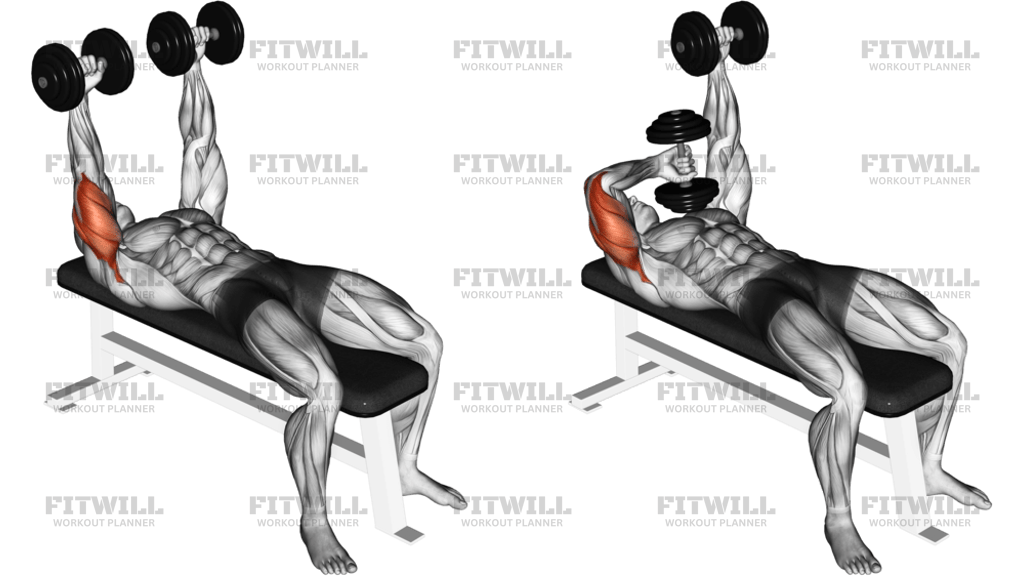
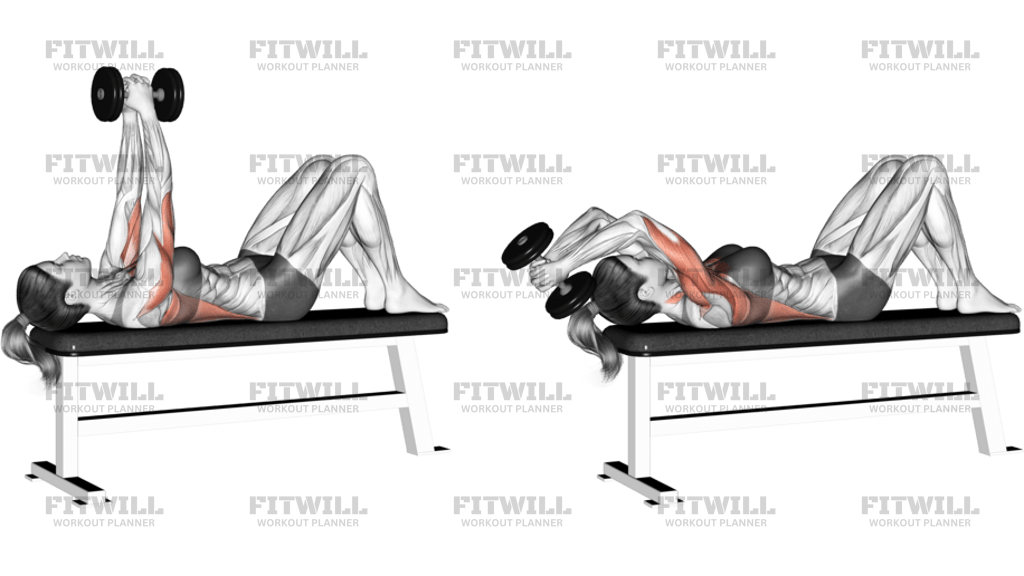
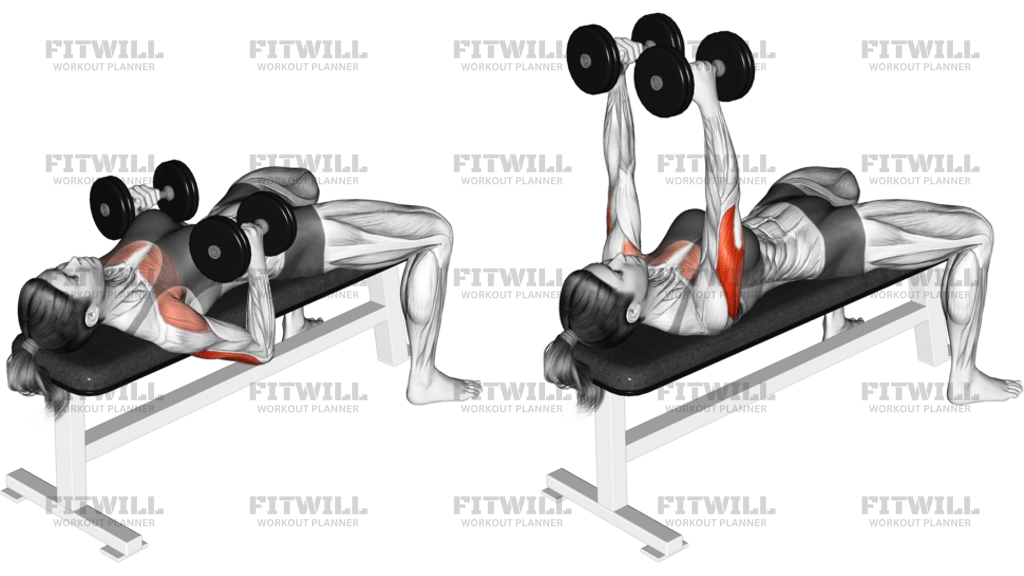
In the image, the lifter is lying flat on a bench with both feet planted, the dumbbells starting beside the chest and finishing stacked above the shoulders. That bench position matters because it gives you a stable base to press from while the shoulder blades and upper back stay pinned to the pad. If you lose that contact and start sliding or arching hard through the lower back, the press becomes less precise and the shoulders usually take over.
The main training target is the triceps, especially the elbow extension portion of the lift, with the chest and front delts assisting the press and the forearms working hard to keep the dumbbells steady. Because each arm controls its own weight, this version also exposes left-right differences quickly. One side drifting higher, turning in, or finishing early is usually a sign that the load is too heavy or the setup is uneven.
Performance is best when the descent stays controlled and the dumbbells travel toward the lower chest or upper ribs rather than dropping wide. Keep the wrists stacked over the elbows, lower until the upper arms are close to the bench without forcing the shoulders into an uncomfortable stretch, then press the bells back up to a strong lockout. The top position should feel firm and aligned, not shrugged or loose.
Use this exercise as a triceps-focused strength or hypertrophy press, especially on chest or arm days, or as an accessory when you want a joint-friendly horizontal press with more triceps bias. It works well for beginners if the load stays modest and the range stays comfortable. Choose dumbbells you can control evenly, keep the bench stable, and stop the set if the elbows flare hard or the dumbbells start drifting apart.
Fitwill
Log Workouts, Track Progress & Build Strength.
Achieve more with Fitwill: explore over 9600 exercises with images and videos, access built-in and custom workouts, perfect for both gym and home sessions, and see real results.
Start your journey. Download today!




Instructions
- Lie flat on a bench with your feet planted, shoulder blades gently retracted, and a dumbbell in each hand held close to the outside of the chest.
- Set your palms in a neutral grip and keep the dumbbells about shoulder-width apart or slightly narrower before you start the first rep.
- Brace your torso, keep your ribs down, and stack each wrist over its elbow so both arms start from an even position.
- Press the dumbbells upward in a straight, controlled line until your elbows are extended and the weights finish above the shoulders.
- Keep the dumbbells close together at the top without banging them together or losing tension in the arms.
- Lower the weights slowly toward the lower chest or upper ribs, letting the elbows track close to the torso instead of flaring wide.
- Stop the descent when the upper arms are near the bench or when your shoulders begin to lose a comfortable position.
- Exhale as you press up, inhale on the way down, and keep the neck and upper back anchored to the bench throughout the set.
- Reset each rep with the same wrist, elbow, and bench position before starting the next press.
Tips & Tricks
- Keep the dumbbells close enough that your elbows stay tucked; if they drift wide, the chest and shoulders will take over more of the work.
- Lower under control for two to three seconds so the triceps stay under tension instead of letting the weights drop into the bottom.
- Use a neutral wrist the entire time; bent wrists make the press feel unstable and usually cut the force you can transfer through the dumbbells.
- Let the upper arms stop just short of an aggressive stretch if your shoulders feel pinched on the bench.
- Plant both feet before each rep so your torso stays fixed against the pad and you do not bridge the bench to finish the press.
- Pick a load that allows both dumbbells to rise at the same speed; one arm racing ahead is a sign the set is too heavy.
- Finish with the elbows extended but not slammed hard into lockout, especially if your elbows get irritated on pressing work.
- If the dumbbells wobble at the top, reduce the weight and tighten the descent before chasing more reps.
Frequently Asked Questions
What muscle does Dumbbell Close Grip Press target most?
The triceps are the primary target, with the chest and front shoulders helping to drive the press.
Why keep the dumbbells close together on the bench?
A narrow press line keeps the elbows tucked and shifts more of the work toward elbow extension instead of a wide chest press.
How deep should I lower the dumbbells?
Lower until the upper arms are near the bench and the shoulders still feel stable. You do not need an exaggerated stretch at the bottom.
Should my elbows flare out during the press?
No. Keep them close to the torso so the press stays triceps-focused and the shoulders do not dominate the movement.
Is this a good beginner dumbbell press variation?
Yes, as long as the load is light enough to keep the wrists stacked, the bench contact steady, and both arms moving evenly.
What should I do if one dumbbell rises faster than the other?
Lower the weight and match the tempo side to side. Uneven lockout usually means the set is too heavy or your setup is off.
Where should the dumbbells finish at the top?
They should finish above the shoulders with the elbows extended and the weights still under control, not drifting far forward.
What is a common mistake on the bench?
Letting the ribs pop up and the lower back arch hard. Keep your torso braced so the press comes from the arms, not body English.