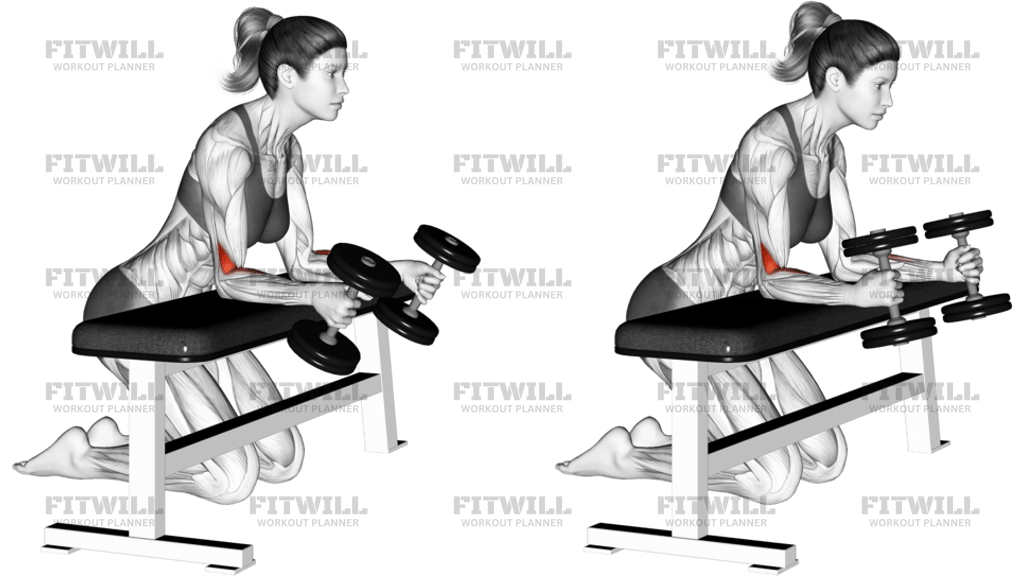
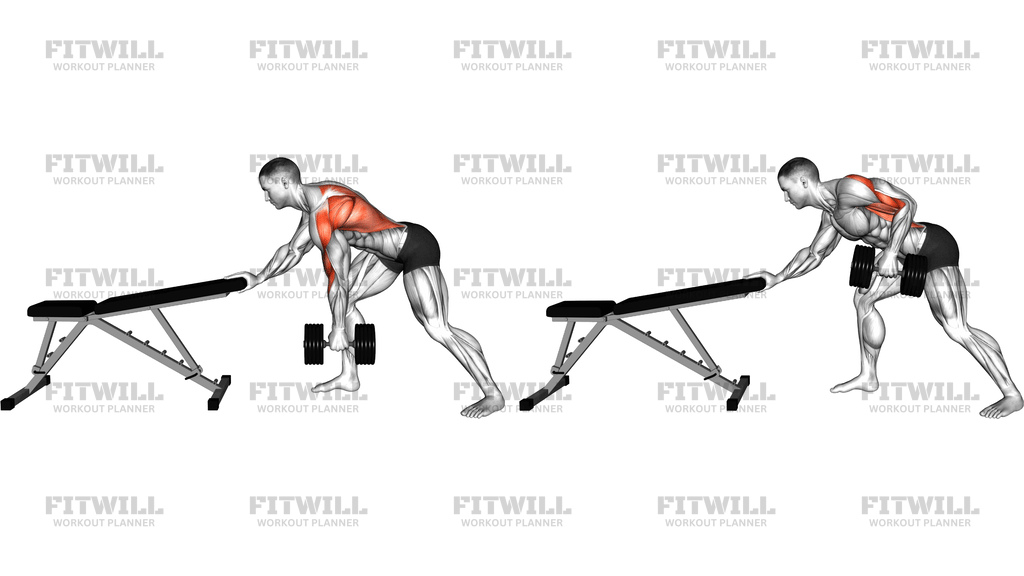
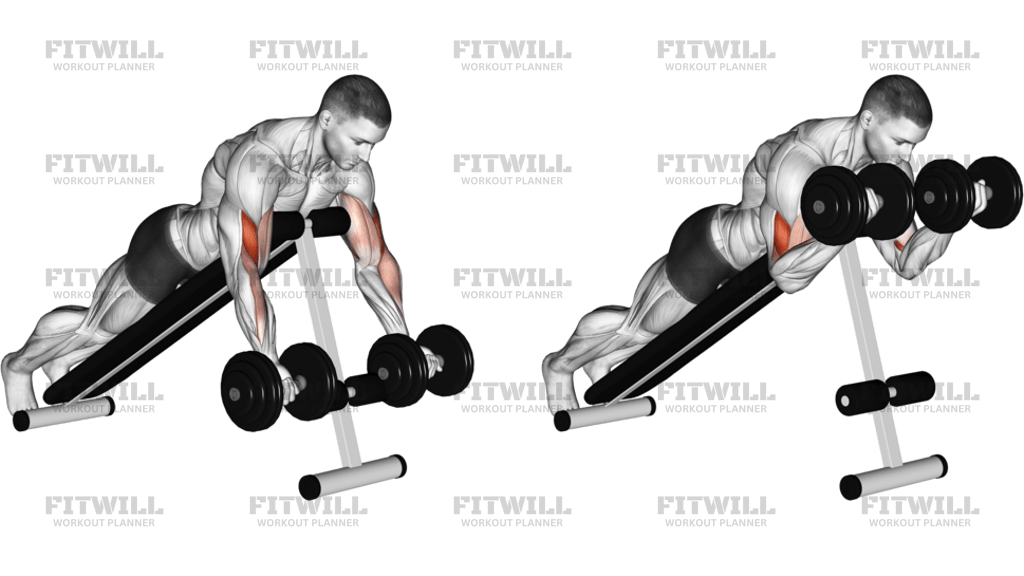
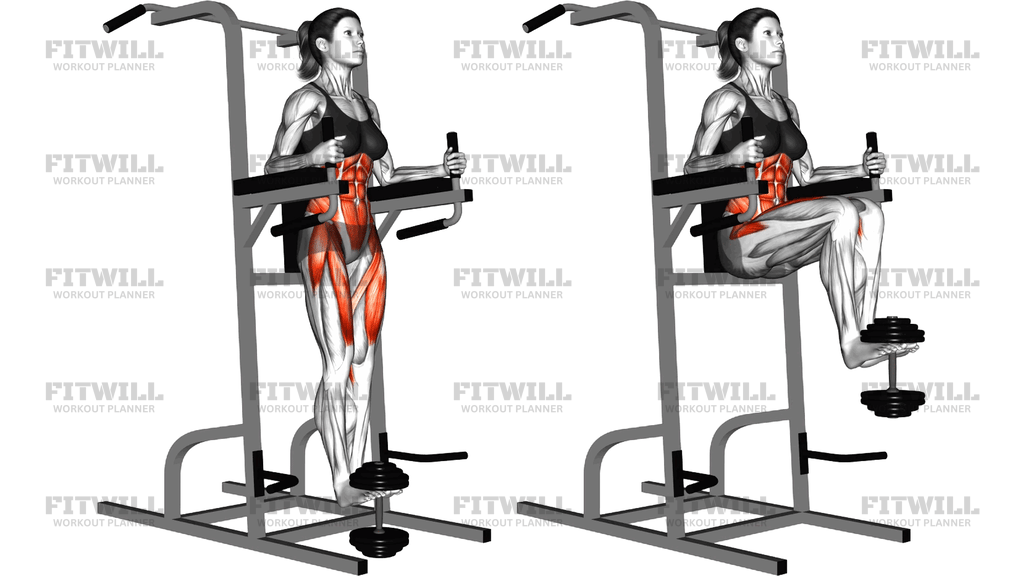
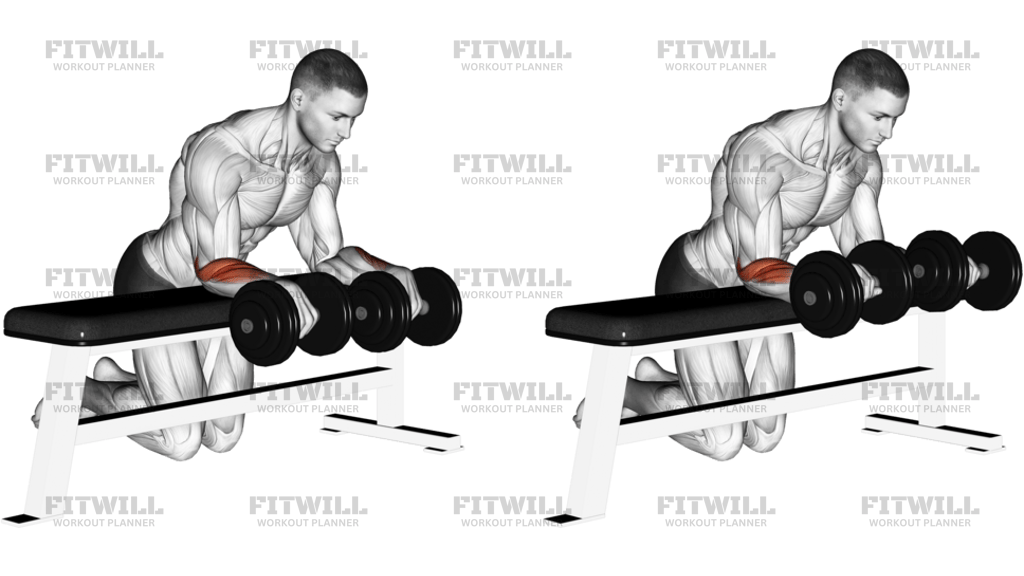
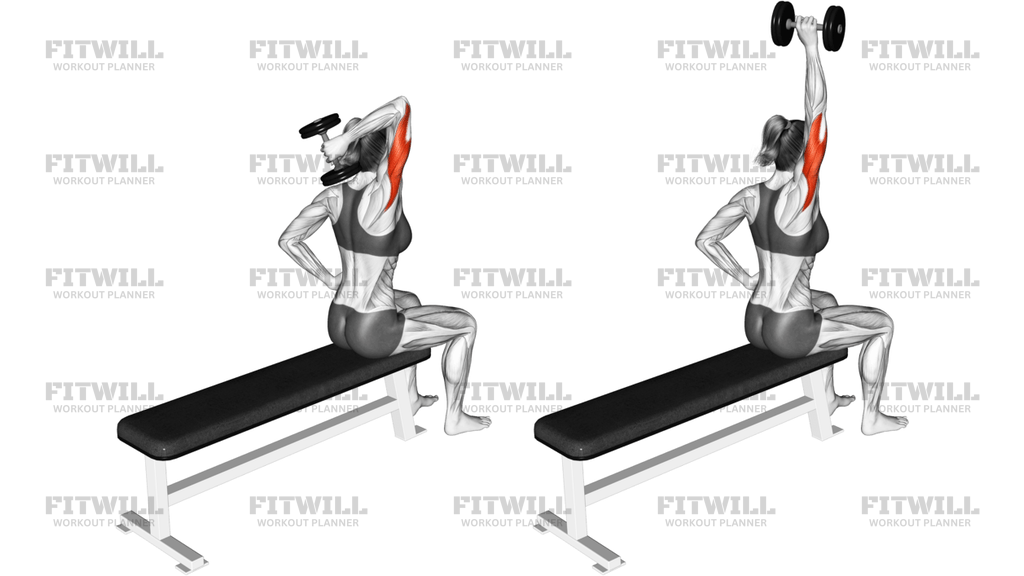
Dumbbell One-Arm Reverse Wrist Curl
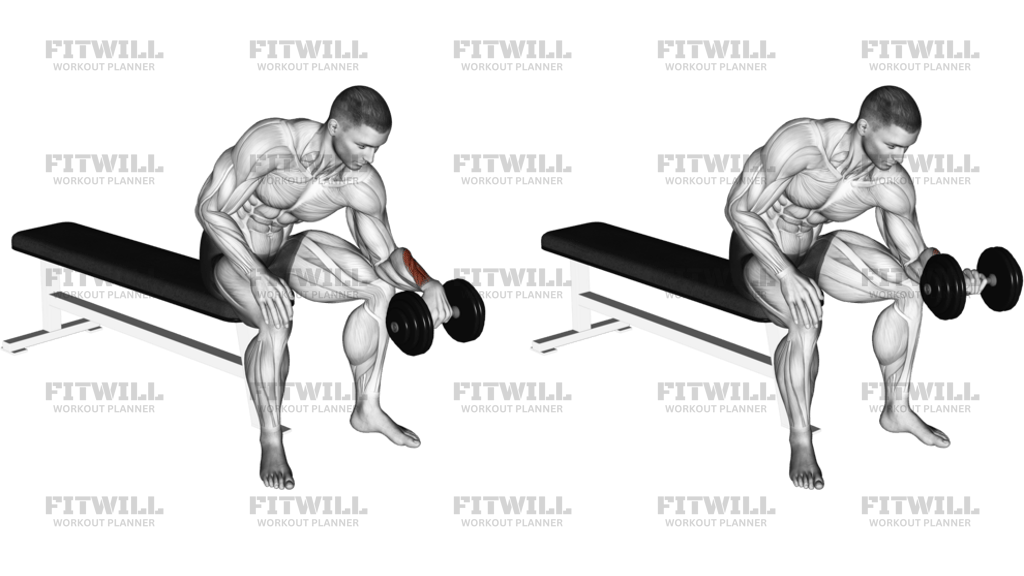
Dumbbell One-Arm Reverse Wrist Curl is a forearm isolation exercise done with a dumbbell and a forearm support. The palm-down grip shifts the emphasis toward the wrist extensors on the top of the forearm, while the brachioradialis and grip muscles help stabilize the load. Because the movement is small, the setup matters more than it does in a bigger dumbbell lift.
The best setup is seated and controlled. Rest the working forearm on the thigh or on a bench with the wrist hanging just past the edge so the hand can move freely. Keep the elbow planted, keep the shoulder quiet, and let the dumbbell sit in a secure pronated grip. From that position, the wrist can travel through a clear arc without turning the exercise into a partial curl or a body English lift.
Each rep should feel like a clean wrist motion, not an arm swing. Curl the back of the hand toward the forearm, squeeze briefly at the top, then lower the dumbbell slowly until the wrist opens again under control. A light load is usually enough to create a strong forearm burn, especially if the lowering phase is deliberate and the forearm stays glued to the support.
This exercise is useful as accessory work for grip endurance, forearm size, and balanced elbow training. It often fits well after pulling sessions, arm days, or as a small finisher when the forearms are already warm. It also works well for side-to-side comparison because one arm at a time makes it easier to keep the range, tempo, and effort consistent.
If the wrist starts to deviate, the elbow lifts, or the dumbbell becomes hard to control at the bottom, the set is too heavy or the range is too long. Keep the motion smooth, avoid forcing end range, and stop the set if the wrist or elbow feels pinchy rather than muscular. Done well, this is a precise, low-load exercise that rewards control more than brute strength.
[ Workout Log & Planner ]
Put your next workout in Fitwill
Keep your plan and training log ready when you are.


Instructions
- Sit on a bench and rest the working forearm across the top of the thigh or on a flat bench so the wrist can hang just past the edge.
- Plant both feet and keep the torso still, then hold a light dumbbell with a palm-down grip.
- Let the wrist drop into the starting position while the forearm stays pressed into the support.
- Curl the back of your hand up toward the forearm without letting the elbow lift or the shoulder roll forward.
- Squeeze briefly at the top when the wrist is as far up as you can control.
- Lower the dumbbell slowly until the wrist opens back down under control.
- Keep the dumbbell moving only through the wrist joint; the forearm should not slide or twist.
- Finish the set, then repeat the same setup and range on the other arm.
Tips & Tricks
- Start lighter than you think; reverse wrist curls usually become sloppy long before they feel hard.
- Keep the forearm pinned to the thigh or bench so the elbow does not drift into a mini curl.
- Let the wrist move through a smooth arc instead of snapping the dumbbell upward.
- Use a slow lowering phase to keep tension on the wrist extensors for the full rep.
- If the dumbbell wobbles in the fingers, the load is too heavy for this movement.
- Stop short of a painful end range; a strong forearm stretch is fine, joint pinching is not.
- Keep the shoulder relaxed so you do not turn the rep into an upper-arm lift.
- Match both arms carefully so one side does not use extra range or speed to cheat.
Frequently Asked Questions
What muscles does Dumbbell One-Arm Reverse Wrist Curl work?
It mainly works the wrist extensors on the top of the forearm. The brachioradialis and grip muscles help control the dumbbell while the wrist moves.
Is Dumbbell One-Arm Reverse Wrist Curl beginner-friendly?
Yes, as long as you use a very light dumbbell and keep the forearm supported. Beginners usually need less load than they expect for this exercise.
Should my forearm rest on a bench or my thigh?
Either works if the forearm is stable and the wrist can hang off the edge. The goal is the same: keep the elbow and upper arm still while the wrist does the work.
How heavy should I use?
Choose the lightest load that still lets you complete smooth reps with a controlled pause and lowering phase. If the dumbbell pulls your shoulder or elbow out of position, it is too heavy.
What is the difference between this and a regular wrist curl?
A regular wrist curl uses a palm-up grip and emphasizes the wrist flexors. This reverse version uses a palm-down grip and shifts the focus to the wrist extensors.
Why does my forearm burn so fast on this movement?
The wrist extensors are small muscles, so they fatigue quickly when the wrist is isolated. That early burn is normal if your form stays strict.
Should the dumbbell travel in a big range?
No. Use a range that lets the forearm stay supported and the wrist move cleanly. Forcing extra range usually turns the rep into a joint strain instead of a forearm exercise.
What mistake should I avoid?
Avoid lifting the elbow, swinging the shoulder, or curling the whole arm to move the weight. The movement should come from the wrist alone.
How do I progress Dumbbell One-Arm Reverse Wrist Curl?
Add reps, slow the lowering phase, or increase the load in very small steps once every rep looks identical. Clean control matters more than heavy weight here.