Dumbbell Standing Alternating Tricep Kickback
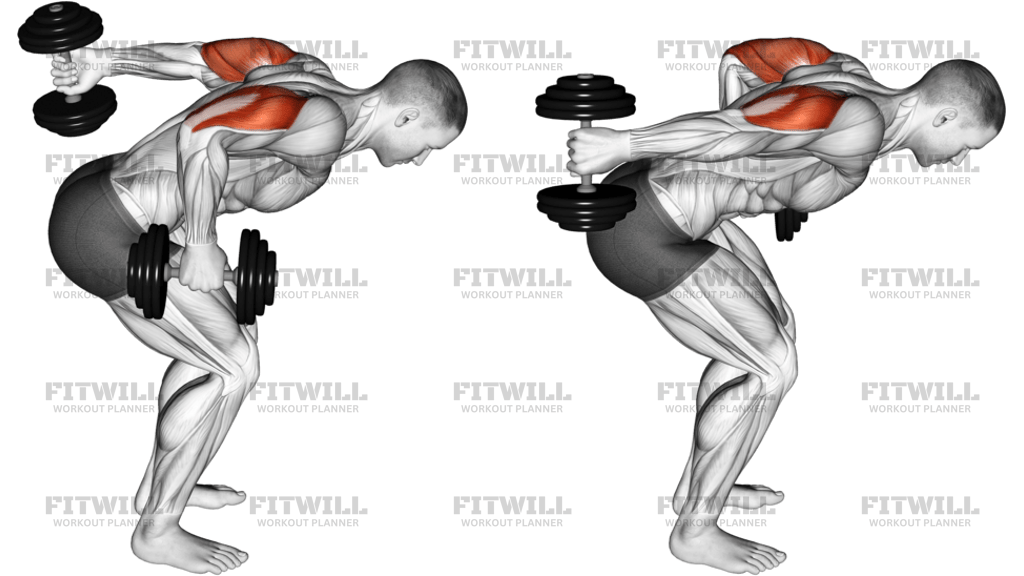
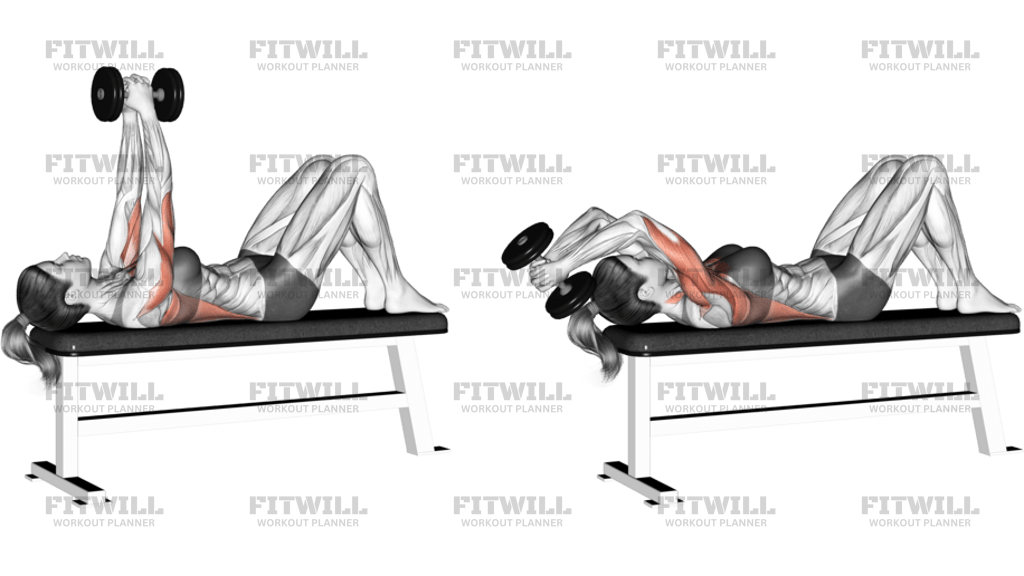
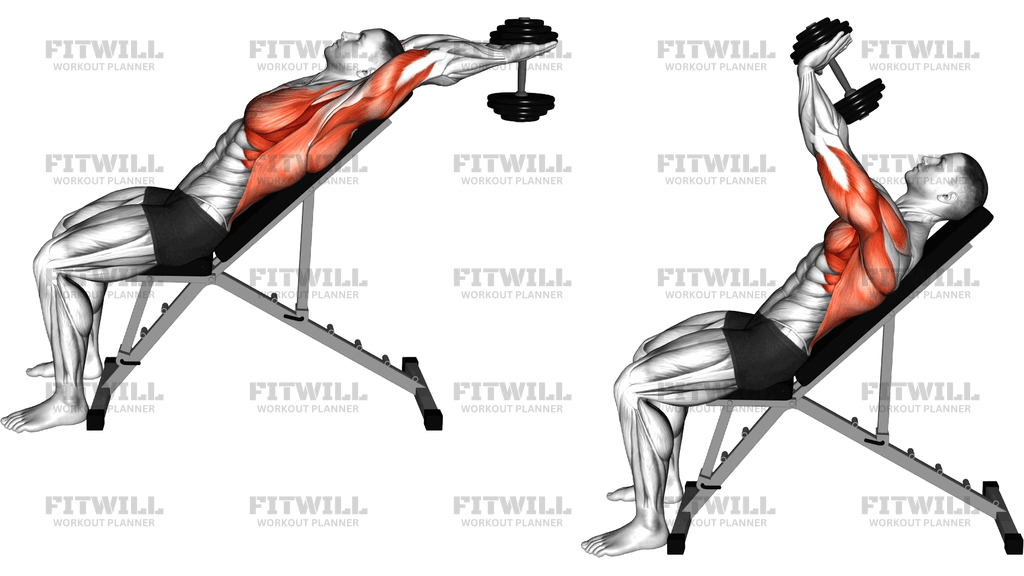
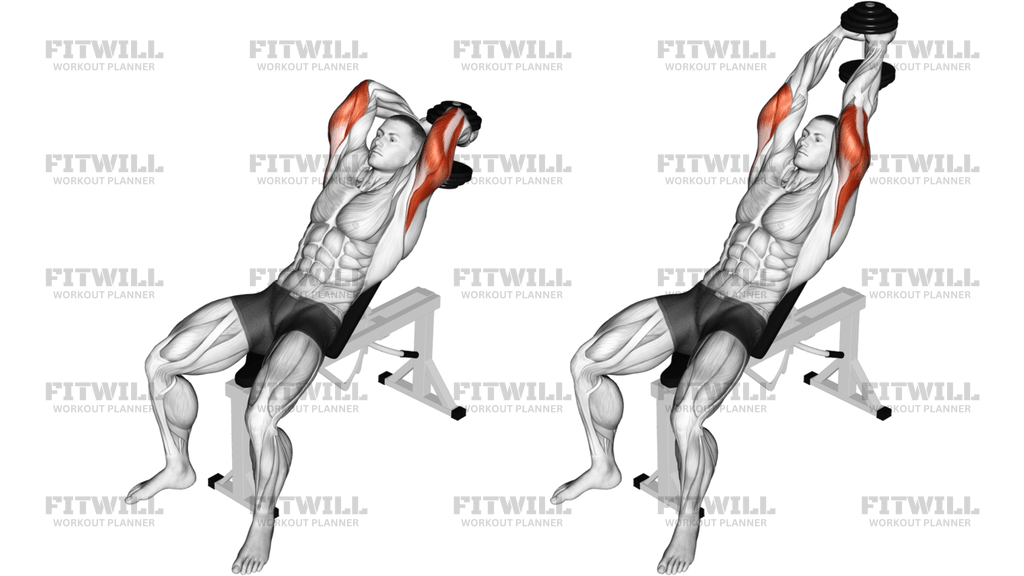
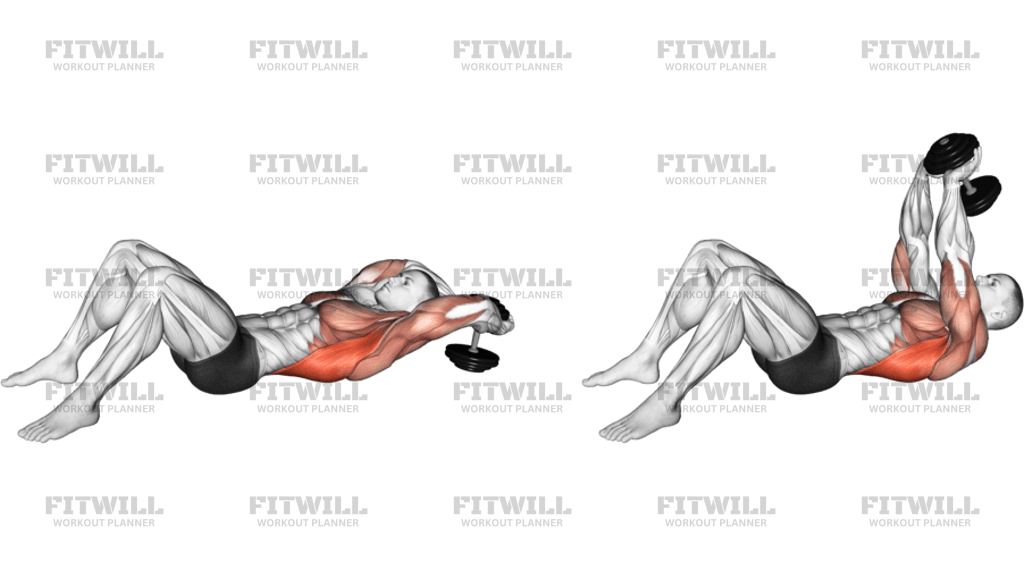
Dumbbell Standing Alternating Tricep Kickback is a bent-over dumbbell isolation exercise that emphasizes elbow extension against gravity. The image shows a hip-hinged stance with the torso nearly parallel to the floor, both dumbbells hanging under the shoulders, and one arm extending behind the body at a time. That setup matters because the exercise is only effective when the upper arm stays fixed and the forearm moves through a clean kickback arc instead of turning into a row or a swing.
The main training target is the triceps, especially the long and lateral heads that drive elbow straightening. The forearms help hold the dumbbell steady, while the rear shoulders, mid-back, and core keep the hinge position from collapsing. In technical terms, the triceps brachii is the prime mover, with forearm flexors, posterior shoulder stabilizers, and trunk muscles working to keep the torso quiet while each rep is performed one side at a time.
Use a light to moderate load and take the hinge seriously before you start the first rep. Stand with your feet planted, soften the knees, tip forward from the hips, and keep the spine long so the rib cage does not flare. The upper arm should stay close to the torso and roughly parallel to the floor. If the shoulders roll forward or the torso rises as the dumbbell moves, the set is too heavy or the hinge is too loose.
Each repetition should start with the elbow bent and the dumbbell hanging under the shoulder, then finish with the arm straightened behind the body and the triceps fully contracted. The forearm should travel back on a controlled line while the elbow stays near the same point in space. Lower the weight slowly, alternate sides with a steady rhythm, and breathe out as you kick back so the trunk stays braced instead of twisting.
This movement is useful as accessory work when you want direct triceps volume without heavy joint loading from presses or skull crushers. It fits well in upper-body, arm, or bodybuilding sessions, and beginners can learn it safely if the load stays very light and the hinge is stable. The main risks are swinging the dumbbell, turning the rep into a shoulder extension, or using a posture that puts strain on the lower back. Keep the motion strict, smooth, and repeatable so the triceps do the work.
[ Workout Log & Planner ]
Put your next workout in Fitwill
Keep your plan and training log ready when you are.


Instructions
- Stand with your feet about hip-width apart and hinge forward until your torso is almost parallel to the floor.
- Hold a dumbbell in each hand with your arms hanging under your shoulders and your palms facing inward.
- Keep your knees softly bent, chest long, and lower back neutral before the first rep.
- Pin your upper arm close to your side so only the forearm can move.
- Kick one dumbbell straight back by extending the elbow until the arm is fully straight.
- Squeeze the triceps at the top without twisting your torso or lifting the shoulder.
- Lower that dumbbell back to the hanging position under control, then repeat on the other side.
- Alternate sides for the planned number of reps while keeping the hinge angle and torso position steady.
- Exhale as you extend the arm and inhale as you lower it back down.
- Finish the set by standing up from the hinge in a controlled way rather than snapping upright.
Tips & Tricks
- Choose a weight that lets you keep the upper arm still; if the shoulder starts moving, the load is too heavy.
- Think about moving the dumbbell behind you, not lifting it upward, so the triceps stay responsible for the rep.
- Keep the elbow close to the rib cage or just slightly behind it to avoid turning the kickback into a rear-delt swing.
- A longer pause at full elbow extension will make light dumbbells feel much harder without adding momentum.
- Do not let the torso rise every time you alternate sides; keep the same hinge angle from first rep to last.
- If your lower back starts working harder than your triceps, shorten the set or use a better hinge position.
- Move the non-working dumbbell quietly so it does not pull your torso off balance between sides.
- Use smooth reps instead of snapping the elbow shut, which often shifts tension away from the triceps.
- Keep your neck in line with your spine and look a few feet in front of you to reduce strain in the hinge.
- This variation usually works best in moderate-to-high reps because the lever is short and the load should stay light.
Frequently Asked Questions
What does the dumbbell alternating tricep kickback train most?
It mainly trains the triceps by extending the elbow while the torso stays hinged and still.
Why do I need to hinge forward for this exercise?
The bent-over position gives the dumbbell room to travel behind the body and makes it easier to keep the upper arm fixed.
Should my elbow move during the kickback?
The elbow should stay nearly in place while the forearm swings back; the upper arm should not drift with the weight.
How heavy should the dumbbells be?
Use a light load that lets you keep your torso, elbow, and wrist stable through every alternating rep.
Is it normal to feel this in my shoulders?
A little shoulder stabilization is normal, but the rep should still feel centered in the back of the upper arm.
What is the most common mistake with this movement?
People usually swing the dumbbell, let the torso rise, or turn the kickback into a rowing motion.
Can beginners use this exercise?
Yes, beginners can use it if they start very light and learn to hold the hinge before adding speed or load.
When should I use alternating kickbacks instead of both arms at once?
Alternating reps are useful when you want more focus on each side and a little more time to stabilize the torso.