Dumbbell One-Arm Wrist Curl
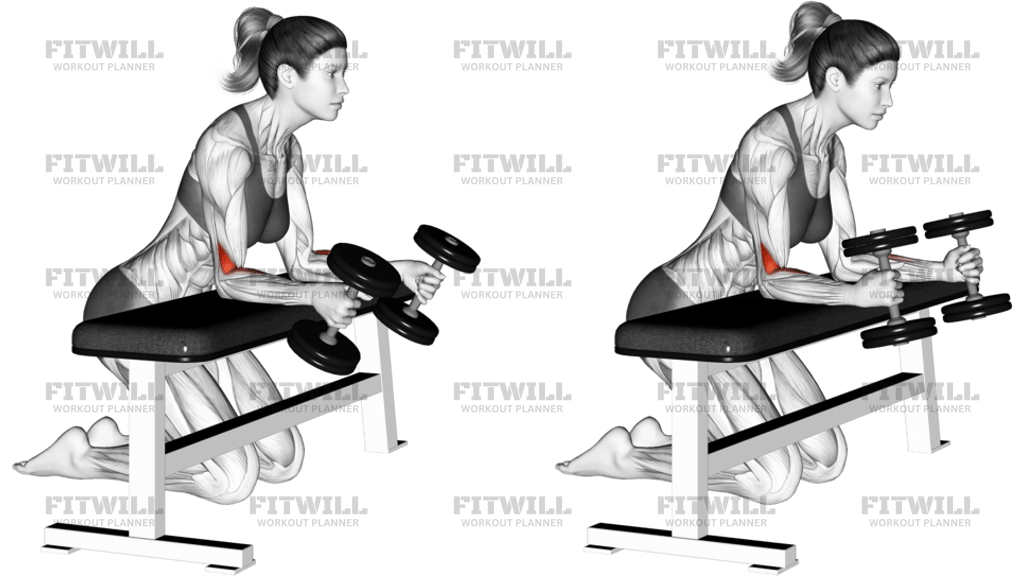
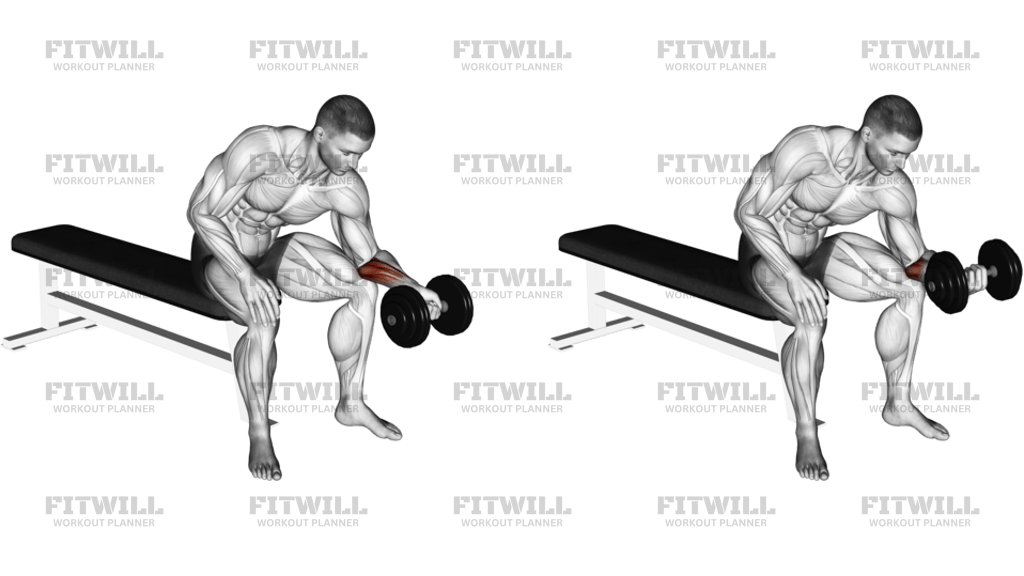
Dumbbell One-Arm Wrist Curl is a seated forearm isolation exercise that loads the wrist flexors through a short but very specific range. In the image, the working arm is braced across the thigh with the wrist hanging past the knee so the dumbbell can move without help from the shoulder, elbow, or torso. That setup matters because the lift is small: once the forearm starts drifting, the exercise stops being a wrist curl and turns into a messy partial curl.
The main training effect is on the wrist flexors and the deeper forearm muscles that help you close the hand, stabilize the wrist, and maintain grip. It is also useful for improving control in presses, rows, deadlifts, and carries, where the wrist has to stay organized under load. Because the lever is long and the target muscles are relatively small, the best results usually come from light weight, strict tempo, and a consistent position on the thigh.
Set up by sitting tall on a flat bench, planting both feet, and pinning the working forearm across the same-side thigh. Let the wrist hang just beyond the knee with the palm facing up and the dumbbell resting in the fingers and palm. The forearm should stay supported while the wrist starts in a slightly extended position. From there, flex the wrist to bring the knuckles toward the forearm without changing the angle of the elbow or letting the upper arm swing.
On the way up, think about curling the hand, not lifting the dumbbell with the shoulder. Hold the top briefly when the forearm feels fully contracted, then lower under control until you feel a clear stretch through the palm side of the forearm. Breathing should stay steady: exhale through the curl, inhale as you return to the start. If the dumbbell bounces, the wrist folds backward, or the elbow slides off the thigh, the load is too heavy or the range is too aggressive.
Use this exercise as accessory work for forearm size, wrist strength, or grip endurance. It works well near the end of an upper-body session, after the heavier compounds are done. It also works well bilaterally as a right-then-left comparison movement, because the thigh-supported position makes side-to-side differences obvious and easy to correct.
[ Workout Log & Planner ]
Put your next workout in Fitwill
Keep your plan and training log ready when you are.


Instructions
- Sit on a flat bench with both feet planted and your torso tall.
- Hold one dumbbell in the working hand and rest that forearm across the same-side thigh, just above the knee.
- Let the wrist hang past the knee so the palm faces up and the dumbbell sits in a controlled stretched position.
- Keep the upper arm and elbow quiet; the forearm should stay pinned to the thigh.
- Flex the wrist to curl the knuckles toward the forearm without lifting the shoulder.
- Pause briefly at the top and squeeze the forearm without changing elbow position.
- Lower the dumbbell slowly until the wrist opens back to the start position.
- Breathe out as you curl, breathe in as you return, and then repeat for the other side.
Tips & Tricks
- Choose a light dumbbell that lets you pause at the bottom and top without shaking.
- Keep the forearm braced on the thigh; if the elbow slides forward, reset your setup.
- Let the dumbbell roll toward the fingers on the way down, then close the hand around the handle before curling back up.
- Move the wrist through a clean arc instead of turning it into a partial elbow curl.
- Stop just short of a painful forearm stretch; the bottom position should feel loaded, not sharp.
- Use a slower lowering phase than lifting phase to keep tension on the wrist flexors.
- Keep the shoulder relaxed so the upper arm does not help the rep.
- If your grip fails before the forearm does, the weight is too heavy for this exercise.
Frequently Asked Questions
What muscles does Dumbbell One-Arm Wrist Curl work?
It mainly trains the wrist flexors and deeper forearm muscles, with the grip helping to hold the dumbbell. The thigh-supported position keeps the load focused on the wrist instead of the shoulder or elbow.
Where should my forearm sit during the rep?
Rest the forearm across the same-side thigh with the wrist hanging just past the knee. That support keeps the movement strict and prevents you from swinging the dumbbell.
Should my palm stay facing up the whole time?
Yes. This version is a wrist curl, so the palm stays up while the wrist flexes and extends. If you turn the hand over, you change the exercise.
Is Dumbbell One-Arm Wrist Curl beginner-friendly?
Yes, if you start with a very light dumbbell and a controlled range. The motion is small, so beginners usually learn it best with slow reps and a strict thigh brace.
How heavy should I go on this exercise?
Use a weight that lets you keep the wrist path smooth and the forearm pinned to your thigh. If the dumbbell starts bouncing or your elbow lifts, the load is too heavy.
What is the most common mistake?
The biggest mistake is turning the wrist curl into an elbow curl by letting the upper arm move. Keep the elbow fixed and let only the wrist flex and extend.
Why do I feel this in my grip and forearm so quickly?
The wrist flexors work through a long lever with very little help from the rest of the body, so fatigue shows up fast. That burn is normal as long as it stays in the forearm and not in the joint.
What should I do if the bottom stretch feels sharp?
Shorten the range slightly and lower the weight. You want a loaded stretch on the palm side of the forearm, not a painful jab in the wrist or elbow.